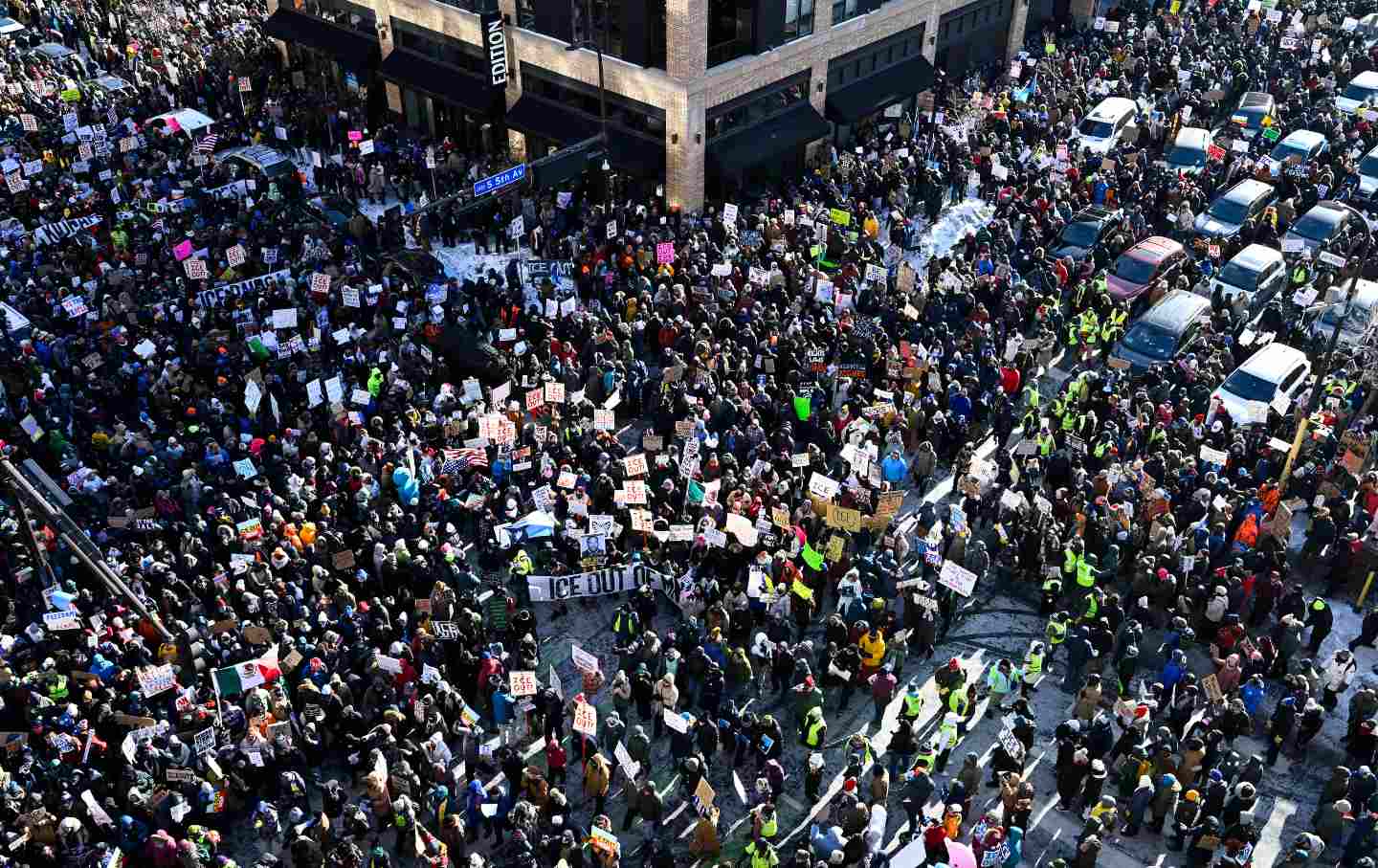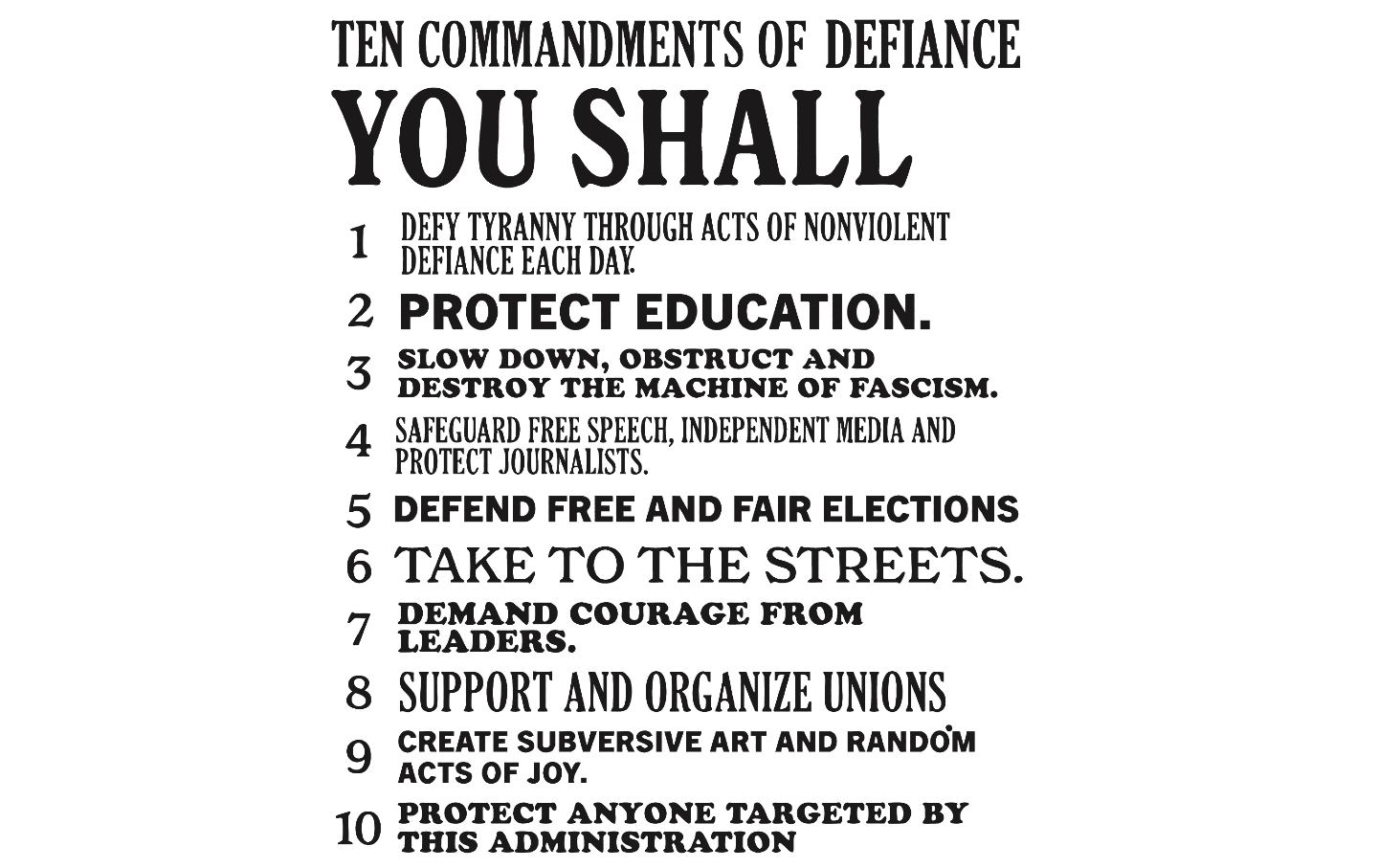
The 10 Commandments of Defiance were inspired by a similar list created by 17-year-old Arne Sejr during World War II to encourage Danes to resist to Nazi occupiers.
When the Nazis invaded and occupied Denmark in 1940, the Danes faced a choice: obey or resist. In an article in The Nation earlier this month, Sarah Sophie Flicker details the Danes’ everyday acts of disobedience in the face of the fascist regime. As the organizer and artist explains, the people of Denmark followed “Ten Commandments for Danes”—a set of moral instructions created by 17-year-old Arne Sejr. The guidance was simple and included such rules as “don’t work for the Nazis or support their businesses,” “work slowly or do a bad job when you must work for the Germans,” and “protect anyone who is ‘chased’ by Nazis.”
Following the commandments wasn’t without risk. Some people had their electricity or water cut off; others were beaten, deported to camps, or killed. But their collective actions helped to change the mindsets of some of the Germans occupying Denmark, including one official who leaked a plan to deport the country’s 8,000 Jews to concentration camps. Because of that leak, the Danes were able to protect 99 percent of Danish Jews, many of whom were ferried to and welcomed in Sweden. Flicker writes that the country also emerged from World War II “with a stronger sense of community, buoying its unparalleled social policies.” She argues that Americans today would be wise to follow in their footsteps.
In response to her article, a group of artists and organizers in the United States put together a “10 Commandments of Defiance,” inspired by the Danish list.
The contemporary list of commandments includes demands to protect education, free speech, and fair elections and calls to support unions and the people who are under attack by the administration. It encourages people to create “subversive art and random acts of joy” and to “slow down, obstruct, and destroy the machine of fascism.” And the graphic, which is being shared across social media, includes a QR code directing people to a document of resources that recommends specific actions people can take, such as joining a protest, pushing back against disinformation, providing community care resources, or studying one (or more) of the listed books about fascism and resistance.
Those in the group have chosen to be anonymous, explaining in a statement:
This campaign isn’t meant to elevate a single voice, but to remind us that we only create change when we move together. In a society that rewards individualism, we’re choosing instead to emphasize collective responsibility. It’s a way of re-rooting ourselves in community—because that’s where lasting transformation begins.
One of the organizers told me that people in our society tend to believe that because we are witnessing disappearances, violence, and genocide alone on our phones, we must solve these problems alone. But this, they said, makes us feel like we can’t do anything so we should just not do anything. “The way to wake up from that spell is to remember none of us individually can do all the things,” they said. “We have to come together collectively. The minute we do that, we remember that that is not only how we find power and build power, but it’s where we find joy, and it’s where we find care, and it’s where we find meaning, and it’s where we find ourselves, reestablishing ourselves as community members.”
A second organizer told me that with these commandments, “there’s a place for everybody to see themselves and the potential for showing up.” And while given the religious connotations, the word itself—commandments—might not resonate with everyone, it’s a word that’s “legible wherever you’re coming from.”
The organizers hope the commandments remind people of the power of collective action. Whether we’re conscious of it or not, by going about business as usual, each of us is already participating in an agreement to follow the rule of law and uphold democracy. And when there’s an autocrat in the White House, each of us becomes complicit in the wrongdoing being done under the law. “That’s not to diminish the nuisance that living your life can be quite hard or feel dangerous or all of those things,” the organizer said. “But at the end of the day, it’s ordinary people—it’s only ordinary people—who ever shift extraordinary circumstances.”
Indeed, it’s been ordinary people who have elevated the crisis in Gaza, contributing to global awareness and support for Palestinians that did not exist in the decades before. It’s why the Trump administration is targeting Palestinian activists and hoping to keep students, professors, and movement leaders in line. “You can’t understand Gaza without understanding the whole world,” said one of the organizers. “It is a beautiful, horrible microcosm of what is everything around us.… I never thought I would see the day where the world was saying Palestine.”
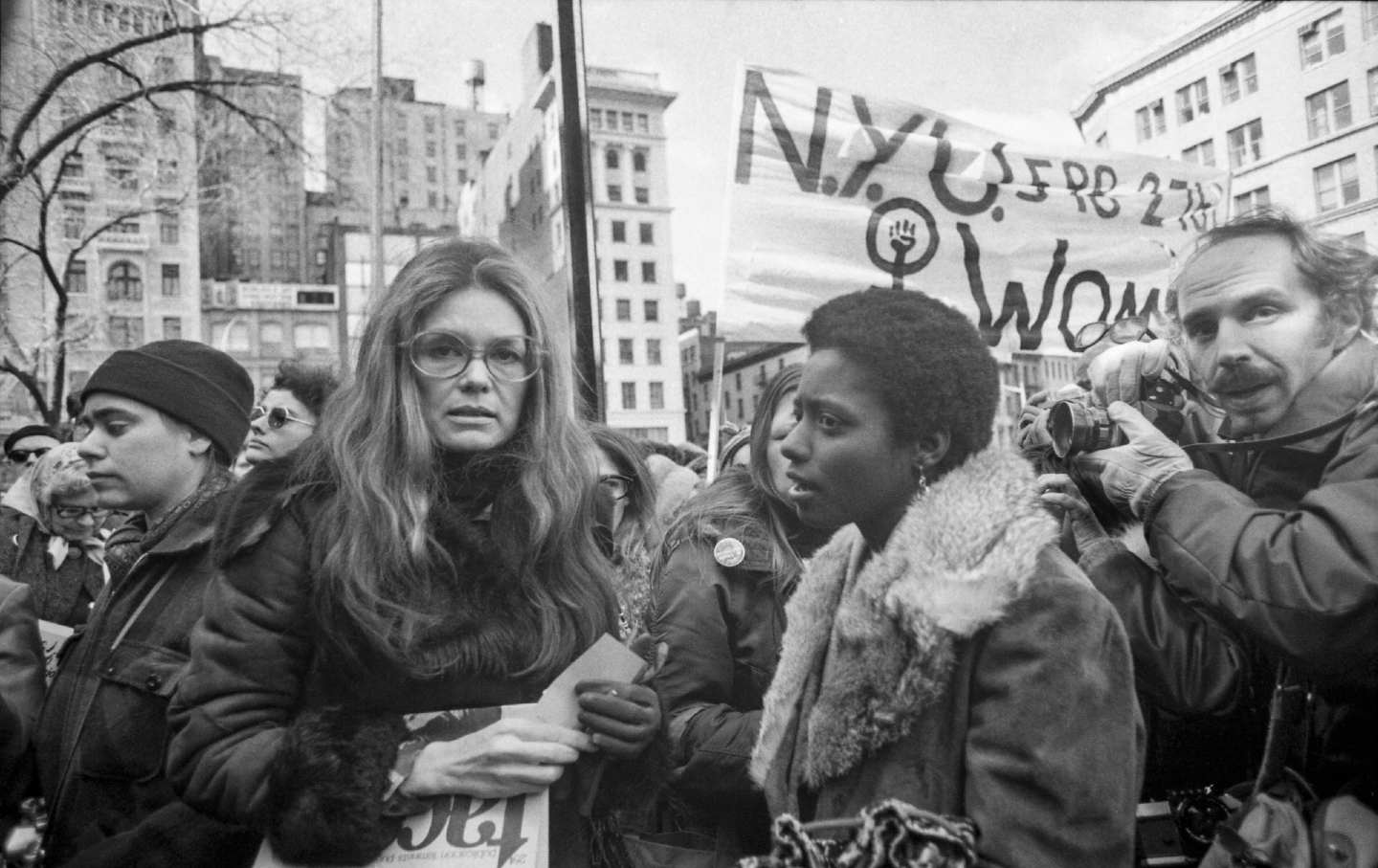
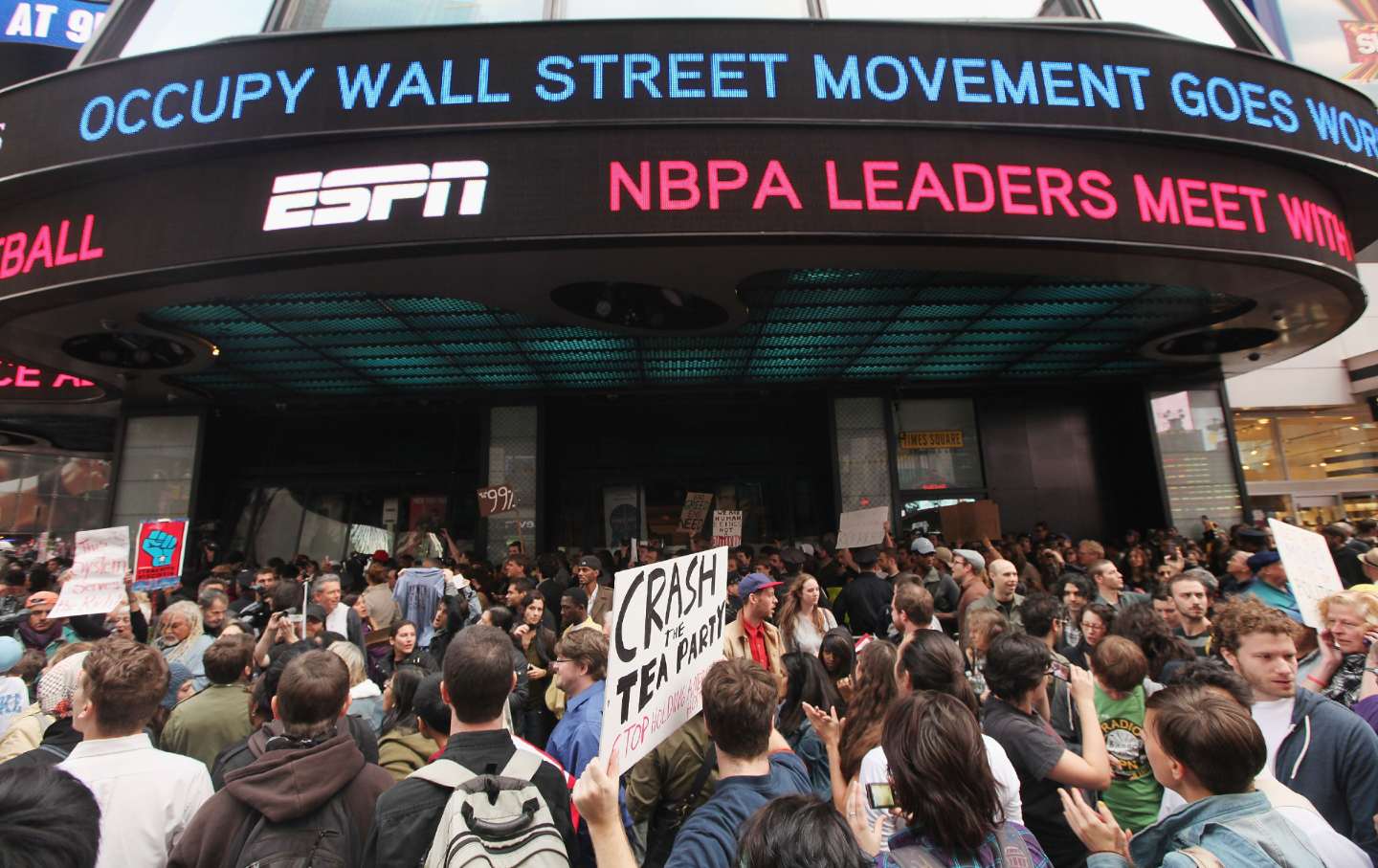
The awakening that has happened is grounded in the social movements that have come before—the George Floyd uprisings, Black Lives Matter, Occupy Wall Street, the civil rights movement—and what so many, including Angela Davis and Noam Chomsky, have been saying for decades, “but nobody cared, nobody listened, few gave it a second thought.”
Now people see “the machine that we have been complicit in and have been forced to be a part of, and we are awakening to the fact that we do not want to be a part of that.” The Ten Commandments of Defiance, the organizers explained, is a call to “keep front and center our obligation to remain morally unruly and completely committed to what our sense of morality is.”
Popular
“swipe left below to view more authors”Swipe →We hold the power, much like the Danes did. If we weren’t powerful, they said, “there would be no fear of us working together. There would be no fear of us voting together, of marrying one another, of living love-filled lives.”
Still, the organizers recognize that for some people, the cost of engaging in these actions might be greater than for others. A person of color or a queer or trans person or an undocumented person might be punished more severely for taking some of the actions on the list or a person who is employed or is a citizen might have more agency than folks who have more vulnerabilities. “We each are coming from different places in different moments and are going to be put in a variety of contexts,” one organizer said. But “it can’t be that we do nothing. It’s what’s the something that we can do that allows us to provide and receive care that allows us to provide and receive refuge and allows us to act and be in solidarity.”
Put another way, we should focus on where we each have power, because “that is exactly what they want us to forget.” If we do that, together, we can build a society where empathy prevails over fascism.
Become a Sustaining Donor This September
Between the reemergence of right-wing red-baiting and Donald Trump’s use of the chilling National Security Presidential Memorandum–7 to criminalize left political organizing, we’re seeing McCarthyism reborn before our eyes.
This assault on democracy cannot be ignored or wished away. Resisting it requires bravery in the face of threats and repression, a steadfast commitment to the truth, and the unwavering belief that we can—and will—overcome this darkness.
We must have an independent media that sets the record straight, unearths corruption and abuses of power, and advances a politics of justice and dignity for all if we’re to win this fight.
That’s why I’m writing to you today. This September, The Nation needs to add 100 monthly donors to sustain our progressive journalism. Your contribution makes the next investigative report, the next truth-speaking column, and the next pathbreaking essay all possible.
I hope you’ll support our work with a recurring donation today. If you donate $10 or more a month, we’ll send you a brand new “Hands Off the Free Press!” sticker to recognise your commitment to our cause. Please, donate today.
Onward,
Katrina vanden Heuvel
Editor and Publisher, The Nation