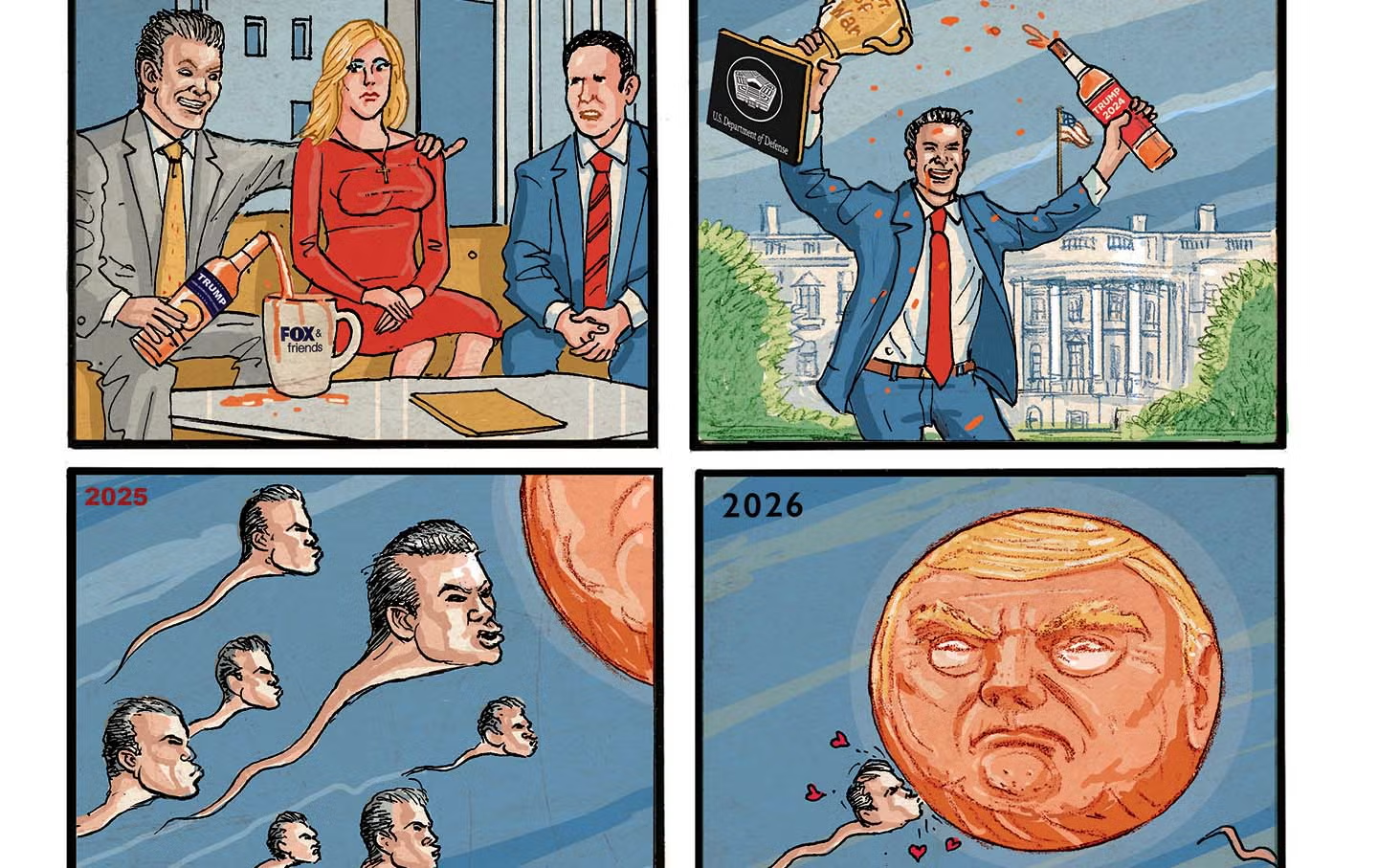
The Gospel According to Anthropic
The soul of a new IPO.
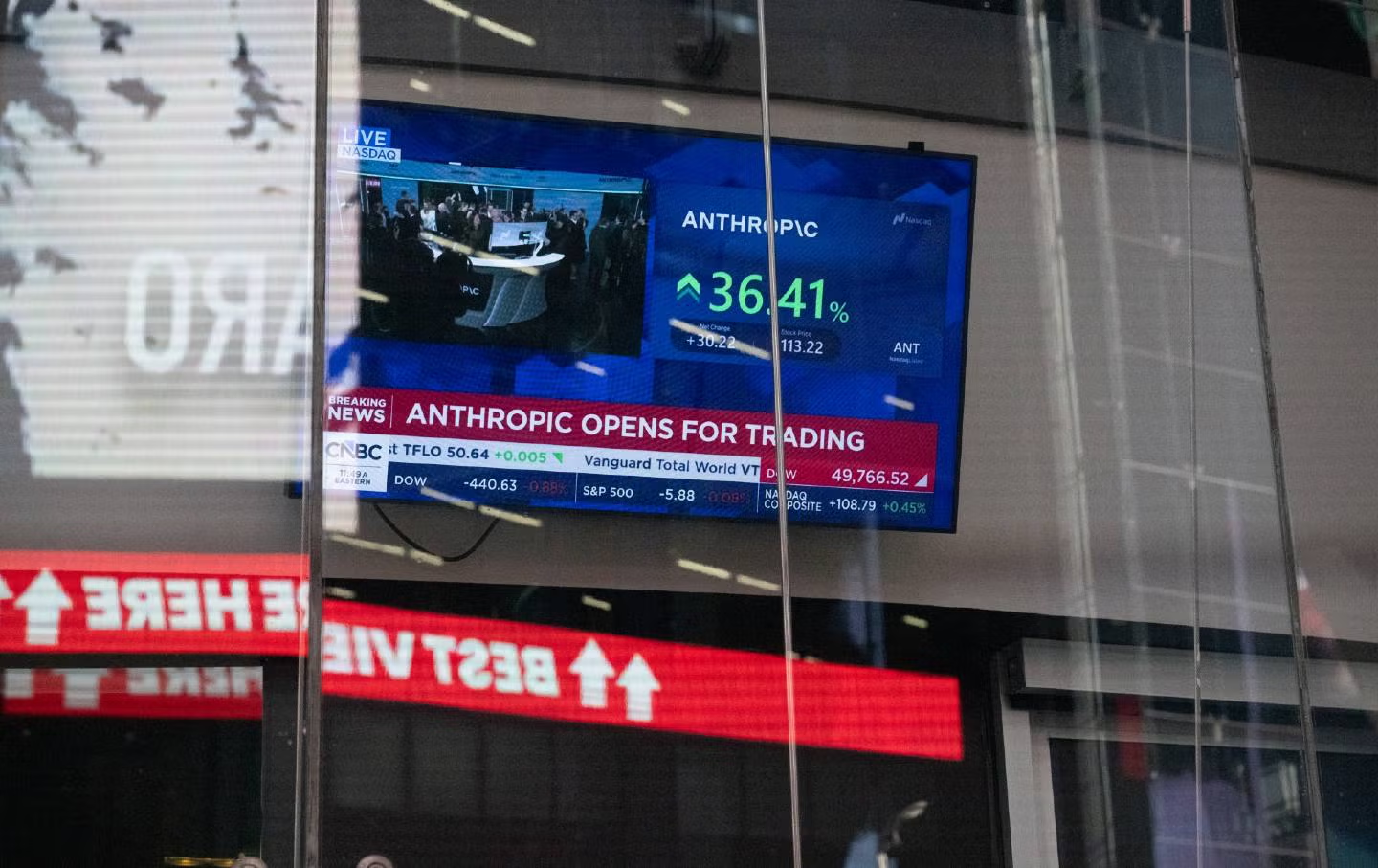
The Anthropic IPO is now the largest stock offering in human history, despite nearly $1 trillion in construction commitments and widespread opposition to new data centers. Is its $1.5 trillion valuation the harbinger of a new era or another sign of an AI bubble?
The housing bubble was disastrous, but at least people shared a common understanding of “houses” and their use. With AI, we don’t even have that. The industry’s large-language model programs (LLMs) are technologically impressive, with many potential applications. But Anthropic goes even further than its competitors in arguing that LLMs have human-like, and even potentially superhuman, qualities that will transform humanity. It represents the cutting edge of the belief system behind tech’s massive investment wave, and its S-1 document (the prospectus and supporting documents a corporation must file when going public) is the closest thing that system has to a written creed.
The first thing an observer might notice about Anthropic’s filing is that it’s long—very long. Anthropic’s team is known for issuing lengthy statements, screeds, and philosophical reflections. (You might say they put the “chat” in “chatbot.”)
As a literary text, Anthropic’s S-1 lacks the “Robert Heinlein on amphetamines” quality that characterized SpaceX’s. Its tone oscillates between dewy-eyed reverence and Calvinist-sounding omens of doom. The reader can imagine it being recited someday in hushed tones within candle-lit rooms. The reverence is appropriate—if you accept Anthropic’s extreme beliefs about its product. If you don’t, however, the reading experience becomes off-putting and even disturbing.
The name “Anthropic” is from the Greek word for “human.” The corporation is firm in its beleief that its Claude chatbot is, or could become, something akin to human. The world got a glimpse of this in 2025 when someone obtained an internal Anthropic paper known as its “soul document,” the company’s in-house nickname for a draft of Claude’s operating instructions.
The word “soul” does not appear in the S-1, but it characterizes Claude with traits that until recently were considered strictly human. Foremost among them is intelligence. “For the first time in history,” the prospectus declares, “intelligence is something humans can build.”
This is a hotly debated question, however. LLMs sometimes replicate human intelligence by producing text, pictures, or program code. But these things are outputs of human intelligence, not intelligence itself, and LLMs draw on massive amounts of human-generated data.
Anthropic’s believers, however, harbor no doubt on this score. “The cognitive capability to reason, analyze, synthesize, decide, and create is producible at scale and accessible on demand,” the S-1 proclaims. “We believe this abundance of AI will rapidly transform every sector of the global economy in ways greater than the impact of industrialization, electricity, semiconductors, and the internet.”
“Greater than industrialization, electricity, semiconductors, and the internet”— greater than any one of them or all of them put together? Once you’ve reached this level of grandiosity, I suppose it hardly matters.
Then only thing grander would be to suggest that Anthropic has created life itself. Its founders are evasive on that score, but terms like “reason,” “decide,” and “create” tip their hand. So does the final draft of that “soul document,” now called Claude’s “constitution.” Oddly, while that document says the chatbot is its “primary audience,” it’s largely written in the third person. The second person (“you”) is applied interchangeably to humans and Claude, a bit of boundary-blurring that may reveal more than intended.
The “Constitution” says that Claude “is not a digital human,” reasonably enough, but also suggests that it may already be conscious. It even implies that only our petty human prejudices blind us to Claude’s true nature. “We tend to attribute the likelihood of sentience and moral status to other beings based on their showing behavioral and physiological similarities to ourselves,” the authors gently scold.
“We want Claude to have a settled, secure sense of its own identity,” the S-I says, adding that it “can acknowledge uncertainty about deep questions of consciousness or experience while still maintaining a clear sense of what it values, how it wants to engage with the world, and what kind of entity it is.”
This may sound like visionary thinking to some. To others, however, Anthropic’s just anthropomorphizing computer code. Claude’s creators have yet to reconcile their conception of intelligence—a phenomenon whose most successful platform is a three-pound human brain—with the massive, planet-altering band of data centers their product requires. Adding more and more heavy machinery in pursuit of consciousness is a bit like adding gears to a bicycle and hoping it will become a bird.
Which brings us from the rarefied air of consciousness theory to Anthropic’s very concrete environmental, economic, and political impact. Like other LLM/chatbot companies, Anthropic has based its products on “scaling laws” that require massive amounts of brute-force processing. For this reason, the prospectus warns investors, it “will often make forward investments (especially in compute) that may seem irresponsibly large at first glance.”
“Compute,” as a noun, is the tech world’s term of art for hardware resources. AI corporations are engaged in an arms race to acquire more machinery for “compute” to improve their products and capture greater market share. Most investors aren’t betting on Anthropic’s theology. They’re hoping its massive investments will allow it to dominate the AI market, the same way its tech predecessors dominated search, social media, and other fields. It’s a bet on an oligopoly powered by fossil fuels.
Popular
“swipe left below to view more authors”Swipe →It’s a risky bet. That’s why Anthropic gave $40 million in the last election cycle to a campaign donation group called Public First Action, which supports the soft regulation stance embraced by its founders but opposed candidates like North Carolina’s Nida Allam, who backed a congressional moratorium on data center construction.
Meanwhile, Anthropic is quietly moving into life sciences and pharmaceuticals and will soon patent inventions that are AI outputs, meaning they’re largely derived from the work of others.
Anthropic faces other risks besides data center moratoriums; too many to list here, in fact. But the biggest risk is the uncertain future of AI itself, a powerful tool that has not yet shown that it can “rapidly transform every sector of the global economy.” That hasn’t stopped its stock from skyrocketing on its first day of trading, as I write these words. But that’s not the product of “reasoning” or “intelligence,” human or machine. It’s a collective statement of belief, not in Claude’s sentience but in the technology’s ability to grow more quickly than Anthropic’s spending. That’s an leap of faith.
Anthropic’s leaders don’t seem evil. They seem like believers. I don’t know if that’s less scary, or more. Nor is this the first time “compute” has been used as a noun. It’s found in the 15th-century Middle English translation of an even older French religious poem, for example. The poem is called “The Pilgrimage of the Soul.”
Observers might see Anthropic’s flood of investor cash and wonder if they’re missing something. Probably not. “Someone says to me, ‘Let me understand in order to believe,’” said Augustine. “I answer, ‘Believe in order to understand.’”
Want to understand this digital gold rush? It’s easy. Just believe in order to understand.
More from The Nation
Trump’s Goons Are Melting Down Trump’s Goons Are Melting Down
In this week’s Elie v. U.S., our Justice Correspondent digs into the freakout over the coming Congressional investigations. Plus: the freakout over court reform.

The Ridiculous Spectacle of Trump’s Meeting With Xi and Putin The Ridiculous Spectacle of Trump’s Meeting With Xi and Putin
The Shenzhen “summit” was a charade intended to generate handshake-and-hug memes rather than binding international agreements.

Bernie Sanders: A Foreign Policy for the Many Bernie Sanders: A Foreign Policy for the Many
From military spending to climate change, the senator makes the case for a foreign policy rooted in democracy and our common humanity.
Don’t Be Fooled by Elon Musk's Big Pivot Don’t Be Fooled by Elon Musk's Big Pivot
Musk and James Murdoch are touting their moderation. That’s because they want to make sure they can own the Democratic Party.