
Is America Headed Toward A New “Nuclear Golden Age”?
As the attempted revival of a nuclear plant in Michigan is revealing, actually running a nuclear reactor is a risky, and expensive, proposition.
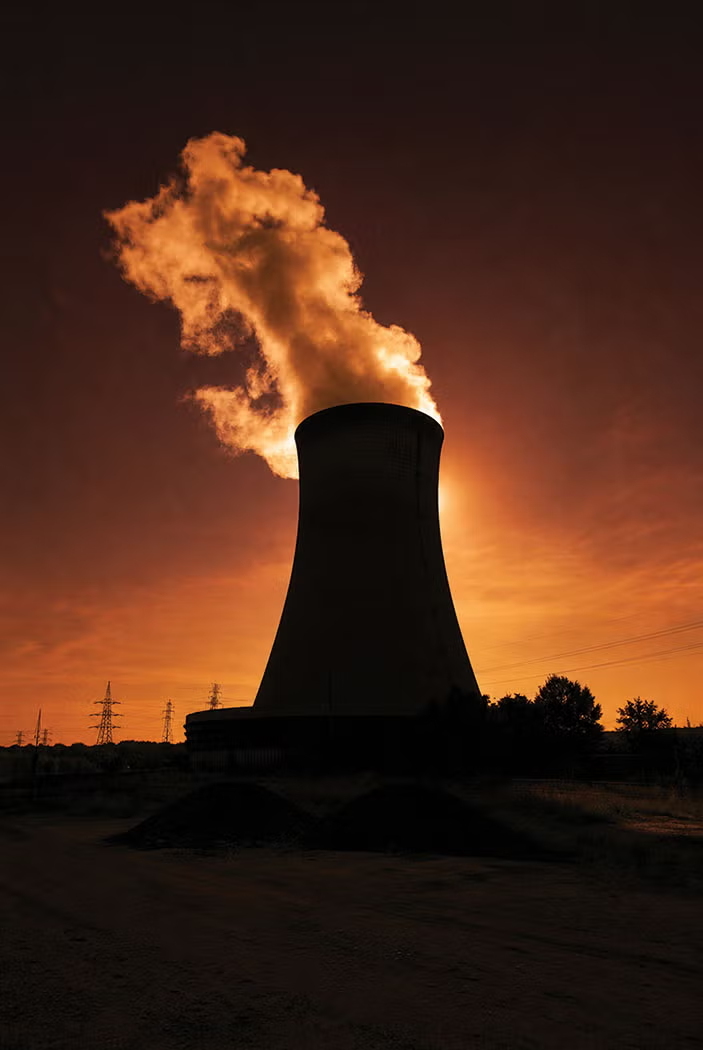
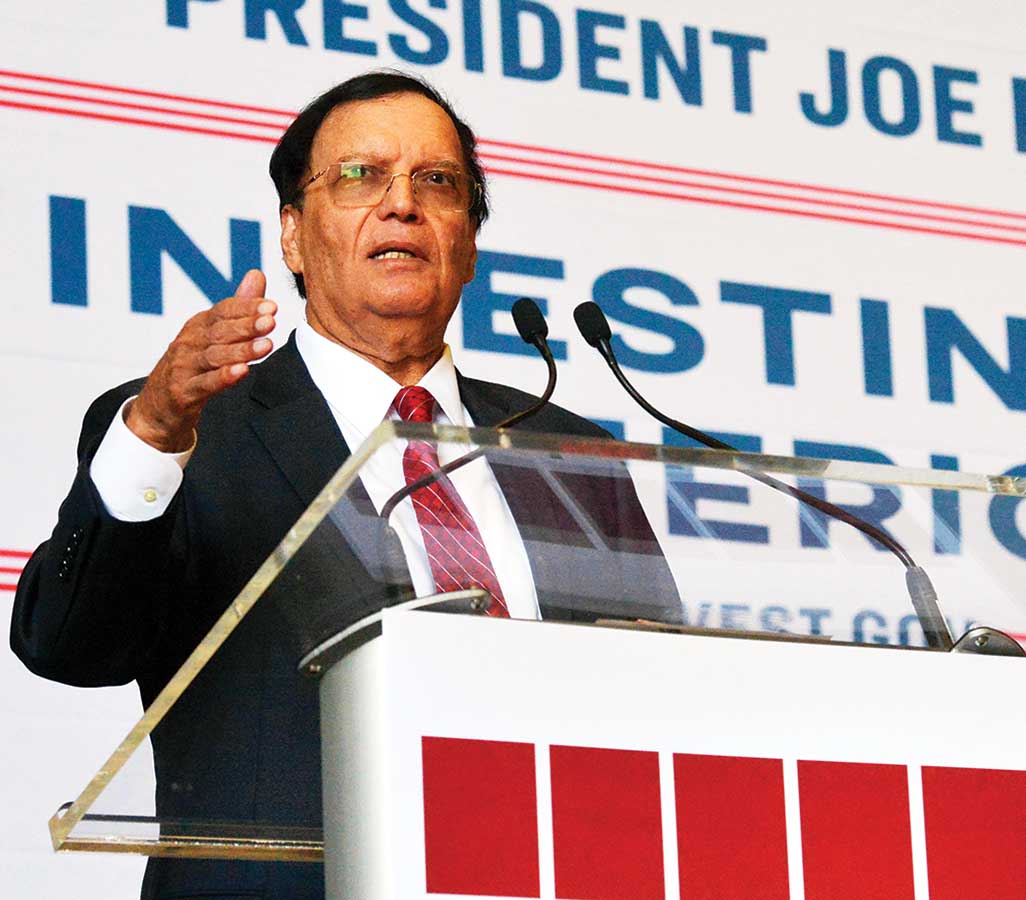
In 2022, Jigar Shah, a clean-energy entrepreneur who was serving as the director of the Loan Programs Office (LPO) at President Joe Biden’s Department of Energy, reached out to Kris Singh, the multimillionaire founder and CEO of Holtec International, with a bold question. Holtec was in the process of buying the Palisades Nuclear Generating Station, an aged 800-megawatt nuclear plant in southwestern Michigan, to decommission it. Would Holtec consider resurrecting it instead? The company, which makes nuclear-waste storage casks and provides other industry services, had never operated a nuclear facility before. Nor had a shuttered nuclear plant that was due for decommissioning ever been revived in the United States.
“Well, sell me,” Singh replied, according to an interview Shah gave to the Odd Lots podcast in 2024. In March 2022, before Holtec had even finalized the purchase of Palisades, Shah sent Singh an e-mail that outlined the subsidies Holtec might receive from the federal government if the plant was refurbished, including tax credits from Biden’s Bipartisan Infrastructure Law. Shah estimated that the plant would require as much as $1 billion to bring it up to operating standards. The LPO “is committed to exploring the full range of financial structures under our authorities to support the refurbishment and potential uprate of the Palisades plant,” Shah wrote.
Singh, evidently, was sold. Roughly a week after Holtec closed its purchase of the plant in late June 2022, the company applied for federal subsidies for the restart effort. According to e-mails obtained from a public-records request, Shah and Singh corresponded many times and scheduled meetings and meals together in the following years. “We appreciate the diligent efforts being made by the LPO office to engage with us,” Singh wrote to Shah and his DOE colleague in 2023. “The whole world is watching if America can pull off the restart of Palisades.”
In March 2024, the Department of Energy announced that it would provide a conditional $1.5 billion loan guarantee to Holtec to support the Palisades restart. Biden’s Department of Agriculture also awarded a total of $1.3 billion to subsidize two Midwestern power cooperatives that agreed to purchase the electricity from the revived Palisades plant. And the State of Michigan, under Governor Gretchen Whitmer, provided Holtec with $300 million in additional subsidies. Holtec plunged headfirst into the challenging task of reviving Palisades, promising hundreds of jobs and “clean energy reliability, 24/7/365.” Should its efforts succeed, the company stands to gain a major cash-generating asset for decades to come.
But now, several years later, Holtec has blown past its self-declared timeline. It is not clear when exactly Palisades will restart or, when it does, whether Holtec can achieve financial sustainability while maintaining safe and reliable operations over the long term. Meanwhile, some local residents, nuclear critics, and at least one former high-ranking Palisades employee have raised questions about both the safety and the economic viability of the plant, which is one of the oldest nuclear facilities in the country. “We are desperate for ways to protect ourselves,” said Karen Davis, whose home sits just a few hundred yards from the plant’s property line on the shores of Lake Michigan.
The resurrection of Palisades comes amid a resurgence of proposals for new nuclear-energy projects all over the United States. Its supporters say that it is a safe and steady source of low-carbon baseload energy—the kind that runs around the clock—and thus something to be encouraged. But the industry poses unique challenges, including highly complex and costly systems; a history of accidents and unmet ambitions; and the ever-present specter of radioactive contamination, which can linger in the environment for hundreds or even thousands of years and cause lethal disease. Given that the industry rests on huge public subsidies, it would likely take just one high-profile failure in the US to plunge it back into a dark age.
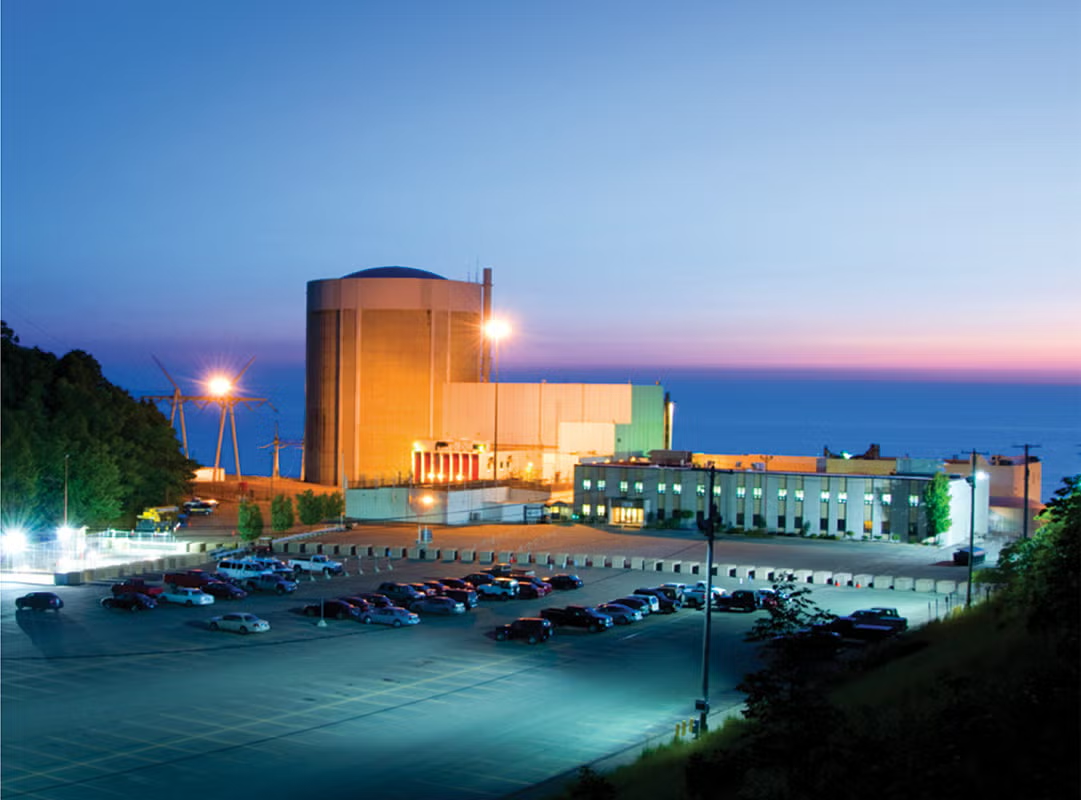
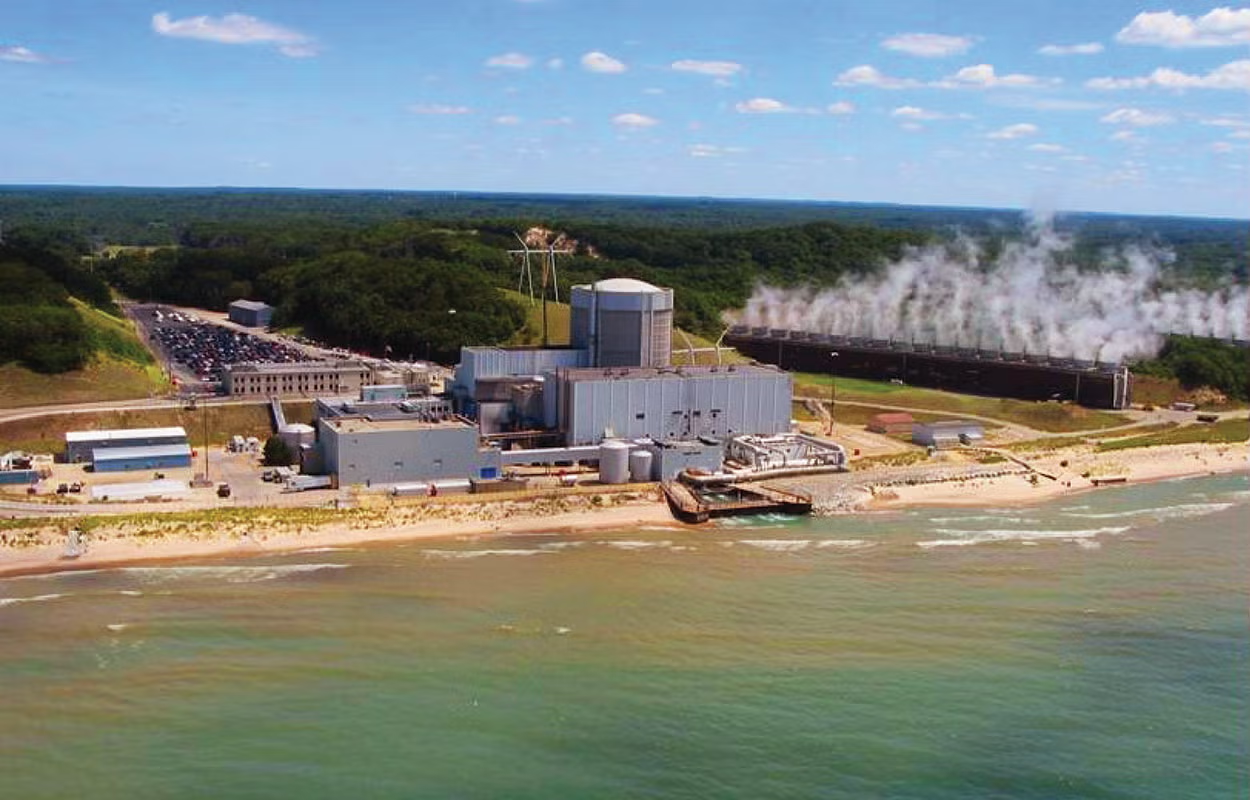
Fully operational by the early 1970s, with a single-unit pressurized water reactor, the Palisades plant for decades provided enough electricity to power as many as 800,000 homes in Michigan. Its long life of supplying low-carbon energy to the state came to an end in early 2022, after the plant’s owner at the time, the behemoth electric utility Entergy, decided to shut it down amid fierce competition from cheap natural gas and looming maintenance expenditures. When Holtec acquired the facility to decommission it later that year, the plant’s fate seemed sealed.
That is certainly how it seemed to Karen Davis and her husband, Bruce, residents of a small Michigan community just south of the nuclear plant. Known among its denizens as Palisades Park, it is a tightly packed collection of some 200 cottages along a small creek and connected to the outside world by a single dirt road with a gate at the entrance. Though it has full-time residents, the community is mostly a summer retreat, a place where families from all over the Midwest have been coming for generations to enjoy the woods and beaches that line Lake Michigan.
The Davises were relieved when Entergy announced the Palisades closure. Decades of summers spent next to a nuclear-power plant were quite enough. Karen, her sister, and her mother have all suffered from thyroid tumors in recent years, and her daughter and daughter-in-law also struggle with thyroid dysfunction. The thyroid—a gland that is part of the body’s endocrine system—is uniquely vulnerable to radiation exposure, and Karen attributes the family’s diagnoses to their neighbor to the north. All of them have had a “lifelong proximity” to the nuclear plant, she said of her family. “One hundred percent.” Karen had her own thyroid removed in 2004, when she was 41 years old.
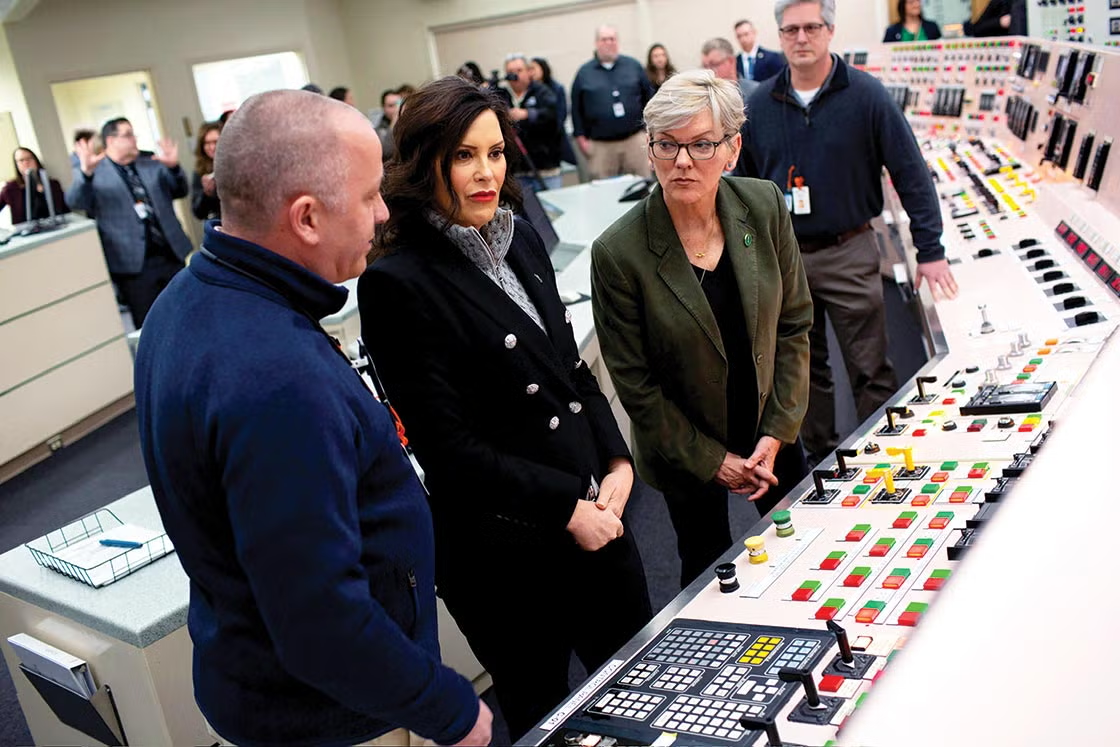
With the nuclear plant’s closure assured, or so they believed, the Davises decided to move full-time to Palisades Park. But then Holtec pivoted. By early 2023, Holtec had officially filed paperwork with the federal Nuclear Regulatory Commission to begin the process for the plant’s resurrection. The Davises were stunned. Bruce and some of his neighbors protested at a press conference in March 2024 in southwestern Michigan, during which Governor Whitmer and Biden-era Energy Secretary Jennifer Granholm celebrated the loan guarantee for Holtec’s restart efforts. Holtec also received a $400 million award from the Department of Energy in late 2025 to help it start deploying new small modular reactors, or SMRs, a type of advanced nuclear reactor that many see as the future of the industry, at Palisades.
After Holtec’s plans were made public, similar proposals followed. In 2024, the nuclear-energy giant Constellation announced that it would restart a reactor at Three Mile Island that sits adjacent to the site of the infamous 1979 partial meltdown that shocked the nation. “The decision here is the most powerful symbol of the rebirth of nuclear power as a clean and reliable energy resource,” Constellation CEO Joe Dominguez said at the time of the announcement.
Holtec’s lavish public funding stems primarily from Biden’s aggressive agenda to promote green energy. Biden officials saw nuclear energy—which emits minimal greenhouse-gas pollution—as an essential strategy in the pursuit of the administration’s commitment to achieve net-zero emissions in the United States no later than 2050. The federal government showered the industry with loans, tax credits, and favorable legislation. Palisades “was operating safely for decades and was shut down prematurely due to economics above all else,” said Katy Huff, the chair of the nuclear-engineering department at the University of Wisconsin–Madison and a former assistant secretary at Biden’s Department of Energy. “That is antithetical to what we are trying to do, which is increase the amount of reliable carbon-free electricity on the grid.”
Though the Trump administration has eviscerated most of Biden’s green-energy agenda, it has kept the money spigot turned all the way on when it comes to nukes, promising “more nuclear power than ever before.” Last summer, the Department of Energy announced $17.5 billion in conditional loans to help facilitate the development of 10 new large reactors across the country. Trump himself has business interests in nuclear power. Last year, the Trump Media and Technology Group announced a merger agreement with a nuclear company called TAE Technologies, which has received financial support from the DOE. And Trump’s current energy secretary, Chris Wright, formerly sat on the board of the nuclear-energy company Oklo, which has also received federal largesse.
According to Gallup, public support for the industry is near record highs. Demand for electricity is surging, driven in part by the insatiable energy needs of the emergent artificial-intelligence economy, and grid operators are struggling to meet the enormous demand while keeping costs down. Some tech giants, like Microsoft and Meta, are striking stand-alone deals with nuclear plants to power their data centers.
Nuclear energy also boasts a smaller land-use footprint and higher reliability than other green-energy sources, making nuclear plants an important resource within the dual context of the climate crisis and the country’s increasingly overtaxed transmission grid, said Huff, the former DOE official. She notes that greenhouse-gas emissions from nuclear energy are similar to those from wind energy, citing figures from the Intergovernmental Panel on Climate Change.
The nuclear industry benefits too from an increasingly vocal and well-funded movement. And many state-based prohibitions on nuclear-power generation have recently fallen; last year, Illinois lifted its 40-year moratorium on the construction of large nuclear plants. Meanwhile, Russia and China are pursuing their own expansion of nuclear energy, fueling domestic arguments that the United States must keep up if it hopes to compete with its principal adversaries.
With Trump in the White House, the nuclear industry has been transformed by more than just subsidies. In May 2025, Trump issued an executive order directing the Nuclear Regulatory Commission to undertake a sweeping revision of its structure and regulations in collaboration with Elon Musk’s DOGE. Among other things, the NRC was ordered to effectively speed up the approval of new plants and advanced technologies. Since then, the agency has unveiled a stream of regulatory changes, including loosening its implementation of the National Environmental Policy Act, a key environmental law. And in early 2025, Trump issued an order that effectively abolished the independence of regulatory agencies like the NRC, which had previously been structured to prevent political influence.
These maneuvers have greatly troubled some former NRC officials and other industry observers. “There has been a policy sledgehammer to destroy government oversight and regulation,” said Edwin Lyman, a physicist who works as the director of nuclear-power safety at the Union of Concerned Scientists. “Through the executive orders, they have fully compromised the independence of the NRC and have made it another tool of administration policy.”
“I don’t feel so confident anymore about what is being regulated and what isn’t,” said Allison Macfarlane, a former chair of the NRC under Barack Obama. The NRC had “a great mission to ensure public health and environmental health and the security of these facilities and nuclear materials. And now I don’t know what it is.”
In a statement published in September, Trump’s NRC chair, Ho K. Nieh, wrote that the agency’s “mission remains unchanged: protect the public, protect the environment, maintain security—and enable nuclear technology to serve the nation.”
Nothing, of course, would halt the current nuclear momentum more quickly than an accident on American shores. But skeptics of the current renaissance argue that it is more likely to founder due to the cost of generating nuclear energy, and that the huge public subsidies flowing into the industry would be better spent elsewhere, including on solar, wind, and battery-storage projects. A plant like Palisades was abandoned because it wasn’t a good asset, said Greg Jaczko, a physicist and another former NRC chair under Obama. Without subsidies, such plants “are nowhere close to being economic, and probably aren’t economic even with the subsidies.” Even with the favorable macroeconomic conditions of today, he questions whether newly built plants will fare any better.
“You have got Bill Gates building a reactor,” Jaczko added, referring to an advanced reactor being built by Gates’s company TerraPower in Wyoming. “You’ve got X-energy building their thing down in Texas. But one reactor does not an industry make.”
“People can wish all they want. I think it is misguided,” said Mark Jacobson, a professor of civil and environmental engineering at Stanford and a prominent critic of nuclear power. “There have only been two reactors built in the last 30 years, and they took 17 or 18 years, cost $35 billion, and produce electricity for $16 a watt. And new solar and wind are $1 a watt, and they take only two to five years from planning to operation. So you are waiting around 15 years for something that costs 16 times more.”
Huff, the former DOE official, argues that a grid dominated by wind and solar, which are intermittent power sources that can vary depending on the weather, requires an expensive “combination of storage, expanded transmission, dispatchable generation, and substantial excess generating capacity…. The cost and performance of the complete system required to deliver sufficient electricity at every hour of the day and throughout the year is improved by including nuclear energy.” But she acknowledges that she shares the anxiety about obstacles that could derail the nuclear revival. Noting her apprehensions about the changes that could undermine the NRC’s independence, she said, “I certainly wonder if we will truly realize this dream.”
In December 1953, as the Soviet Union and the United States raced to expand their nuclear arsenals and the awesome devastation of Hiroshima and Nagasaki still thrummed in the zeitgeist, President Dwight Eisenhower delivered his famous “Atoms for Peace” address to the United Nations General Assembly, seeking to reshape public perceptions about the purpose of humankind’s dalliance with the split atom. Though acknowledging the grave danger of nuclear war, Eisenhower extolled the peaceful civilian promise of the new atomic era, envisioning a future in which nuclear technology would “provide abundant electrical energy in the power-starved areas of the world.”
His bright vision was echoed by other powerful figures in the early nuclear period, including Lewis Strauss, the chairman of the Atomic Energy Commission, who in 1954 said that “it is not too much to expect that our children will enjoy in their homes electrical energy too cheap to meter.”
Just days before Strauss’s speech, the United States broke ground on the Shippingport Atomic Power Station along the Ohio River northwest of Pittsburgh. The first full-scale civilian nuclear-power plant in America, Shippingport was designed as a pressurized water reactor, in which heat from nuclear fission is transferred via pressurized water running through metal tubes to a secondary source of water that produces steam, spins turbines, and generates electricity. Such plants also use massive amounts of water to cool their reactor cores, which is why they are located near lakes, rivers, or oceans. Shippingport’s design became a prototype for most of the civilian nuclear-power plants in the US today.
By 1974, there were 54 nuclear reactors operating within the United States and more than 190 proposed, planned, or ordered. It was around this time that Herbert Kouts, who led the reactor-safety division of the Atomic Energy Commission, told the Associated Press, “Preliminary results suggest there will never be a major accident in a nuclear power plant.” Not long after, disaster arrived.
On March 28, 1979, at the Three Mile Island Nuclear Generating Station on Pennsylvania’s Susquehanna River, the cooling system of one of the plant’s two reactors malfunctioned, flooding the containment building with hundreds of thousands of gallons of radioactive water and releasing radioactive gas into the environment. Fear and panic set in as more than 100,000 people evacuated the area. The disaster, the worst nuclear accident in US history, was front-page news across the country.
Even before Three Mile Island, the civilian nuclear industry faced mounting challenges, from inflation, rising interest rates, and shifting electricity demand to intensifying local opposition, including an effective moratorium on new nuclear plants enshrined in California law in 1976. Construction costs for nuclear facilities had risen fivefold between 1967 and 1978. Though no one died at Three Mile Island, and later reports found that the release of radioactivity had been minimal, the incident greatly exacerbated the nuclear industry’s woes. Support for the industry cratered across the United States.
Closer federal oversight of the nuclear industry was one consequence of this high-profile disaster. By 1975, the Atomic Energy Commission had been dissolved amid fears that its dual mandate of both promoting and regulating nuclear energy amounted to a conflict of interest. It was replaced by the Nuclear Regulatory Commission, charged with maintaining the safety of the civilian nuclear-reactor fleet, and the Energy Research and Development Administration, which later merged with the Department of Energy, tasked with advancing the development of nuclear energy across the nation. In the aftermath of Three Mile Island, the NRC overhauled many of its regulations, upgrading plant-design requirements, strengthening the inspection regime, imposing new emergency-planning mandates, and revamping staffing protocols. The industry itself established the Institute of Nuclear Power Operations, or INPO, which worked to infuse the civilian nuclear sector with a stricter safety culture. Growing public opposition pushed states and localities to impose moratoriums on the construction of new facilities or other restrictions on the industry. New York, for example, saw a massive protest movement against the Shoreham Nuclear Power Plant on Long Island in 1979. Fierce public opposition ultimately forced the closure of the multibillion-dollar plant before it ever entered commercial operation.
The combination of escalating construction costs, soaring interest rates, public backlash, increased regulatory scrutiny, and diminished investor support whittled away the industry’s grand ambitions. Of the 197 nuclear reactors on order in 1974, more than half were never completed. Since 1990, around 20 reactors have shut down in the United States. The 94 reactors operating in the country today are, on average, 44 years old, and the vast majority were proposed, planned, or ordered before 1974, including Palisades, according to a study by Lucas W. Davis, a professor of economics at UC Berkeley.
Strauss’s “too cheap to meter” never materialized; indeed, the cost of electricity from newly built nuclear plants is generally more expensive than energy from new gas, coal, solar, or wind facilities. But the nuclear industry was never moribund in America. The United States currently generates more power from nuclear energy than any other country in the world. The industry provides roughly 20 percent of the nation’s electricity and nearly half of its low-carbon power. In some states, like Illinois, it is a dominant energy source. The industry has also made great strides in efficiency in recent decades, becoming much more adept at keeping its reactors running without lengthy outages. And the government has continued to pour money into nuclear research and development.
By the early 2000s, amid high gas prices and global concern about carbon pollution, the industry seemed ready for a revival after roughly a decade without the completion of a new reactor in the United States. Both the George W. Bush and Obama administrations provided loan guarantees and subsidies to new nuclear facilities. Proposals for more than 20 new reactors were submitted to the federal government between 2007 and 2009, but again the expectations did not bear out. Among other obstacles, the industry struggled to compete with the sudden influx of cheap gas produced by the emergent fracking boom. The vast majority of the proposed plants were canceled or paused. Those that moved forward, including a proposal to build two new reactors at Georgia’s Vogtle Electric Generating Plant, ran into major problems, including long delays and massive cost overruns. After more than a decade, the Vogtle reactors finally entered commercial service in the mid-2020s at a cost of more than $30 billion.
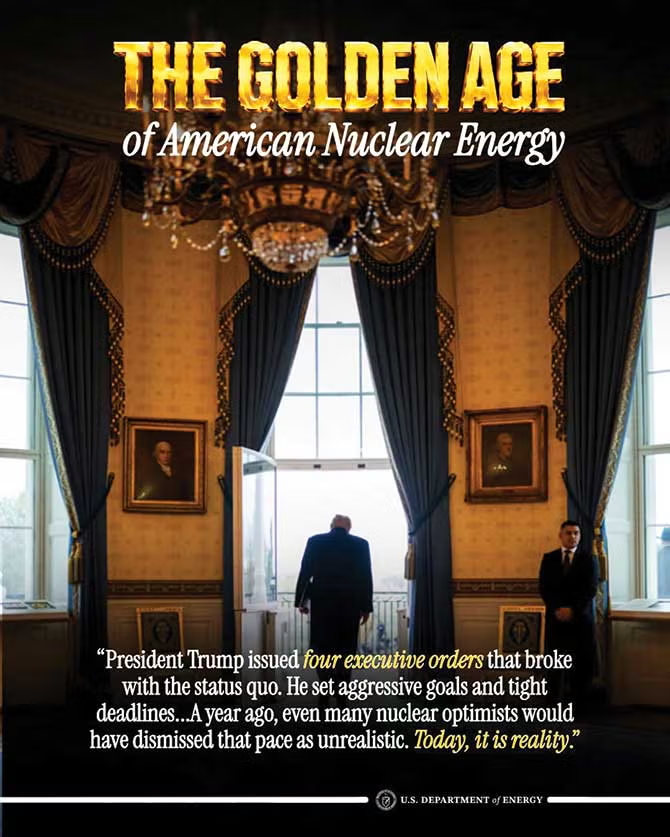
And here we are in another supposed nuclear renaissance. Indeed, according to a recent announcement from Trump’s Department of Energy, “The Golden Era of American Nuclear Energy Has Arrived.” We shall see. The revival of Palisades, itself a relic of the industry’s past, is an early test of such proclamations.

Despite the massive federal loan, the subsidies for its customers, surging energy demand, and the favorable regulatory interventions of the Trump administration, Holtec has struggled to reopen the Palisades plant. A company that has never operated a nuclear facility before seems to be learning in real time about the costly and complex nature of the undertaking. In a July 2022 application sent to the Department of Energy, Holtec said it would take as much as $1.9 billion and one to two years of work to bring the plant up to operating standards. The company subsequently blew past its self-declared reopening target of October 2025. This fall, it postponed a planned IPO on the NASDAQ, attributing its decision in part to “a perfect storm of adverse developments, driven primarily by uncertainty over data center development.” If it is to meet its contractual deadlines, Holtec has until March 2027 to get things up and running at Palisades. One Holtec official recently admitted to The New York Times that the company “didn’t take the time to really plan out the whole project before we started doing work. It’s like building a fire truck on your way to the fire.” Regarding the delays, Holtec said in a statement to The Nation and Type Investigations: “Since acquiring Palisades, Holtec has undertaken extensive engineering, inspections, equipment maintenance and refurbishment…and operational testing. As that work progressed, the scope of the project was further developed and refined based on the condition of the plant.”
Much of the trouble stems from the fact that Palisades is more than 50 years old, and at the time it was shuttered, it was not being maintained in a manner that was amenable to its revival. A plant like Palisades houses thousands of steam-generator tubes that are filled with radioactive water and are used to transfer heat from the reactor vessel to the main steam system, which spins turbines and produces electricity. Steam-generator tubes serve as a key safety barrier in reactors but are prone to corrosion and cracking.
Flawed steam-generator tubes played a major role in the early closure of the San Onofre Nuclear Generating Station in Southern California in 2013. In February 2000, 25 miles outside of New York City, a steam-generator tube at the Indian Point 2 nuclear reactor ruptured, causing superhot radioactive water to leak from the reactor core into other parts of the plant. The accident forced the reactor to temporarily shut down and ignited fear and outrage in the local community. Ultimately, the Indian Point power plant was permanently shut down in 2021.
Alan Blind, a nuclear engineer and 40-year veteran of the industry, was the vice president for nuclear power at Indian Point 2 when the steam-generator tube ruptured. “I know how bad they are,” he said of such accidents. In 2006, Blind took a job at Palisades, where he served as engineering director. He is now retired and lives about 30 miles south of the plant. Despite his support for nuclear energy, he has been outspoken about his misgivings with the Palisades resurrection. His most pressing concern centers on the plant’s steam generators. Not long after Holtec took over the plant, the company discovered that the facility’s steam-generator tubes were more seriously degraded than anticipated. Made of antiquated materials, they were nearing or even at the end of their service life, according to Blind. But rather than replace them, the company decided to plug the most defective tubes and installed thousands of metal sleeves over other tubes in order to keep them in service. The maintenance effort delayed the project by months.
Blind believes that the steam generators should have been fully replaced, as was done at Indian Point, and he has made known his concern about the situation, speaking to the press and sending letters to government officials. In a letter last year to Gretchen Whitmer, he highlighted the degraded conditions of the steam-generator tubes and explained that a rupture would likely result in a release of radiation into the environment that would force nearby residents to evacuate.
Since Blind’s letter, an NRC-sanctioned assessment of the plant’s repaired steam-generator systems found that they would need frequent safety inspections. Normally, a plant like Palisades would run for at least 18 months and then temporarily shut down to replace its fuel supply. But the Palisades reactor will need to temporarily shut down after about 14 months so that its steam generators can be assessed again to ensure their integrity. Blind thinks that the repaired generators could run safely if the company adheres to frequent inspections, but “the expense of maintaining [the steam-generator tubes] could be so high that you can’t operate the plant with a profit,” he said. Replacing the steam generators could cost as much as $510 million, according to Holtec’s own estimates.
Asked about Blind’s letter, a spokesperson for Holtec said in a statement that “Palisades conducted extensive inspections of the steam generators, which were scheduled early in the restart effort to account for potential discovery and repair. Upon identifying tubes that required corrective action, the company…undertook a comprehensive repair campaign using established industry methods, including tube sleeving and plugging…. Each repaired tube is subject to rigorous inspection and testing before being returned to service.” The company would not say how much it had spent to restart the plant or whether it was over budget, stating: “Holtec does not disclose detailed project expenditures beyond information contained in publicly available filings and financing documents.”
When asked for comment by The Nation and Type, the NRC pointed to a letter it published in September stating it had determined that the extensive inspection and repair of the tubes, the agency’s oversight, and other evaluation and maintenance activities “provide reasonable assurance that tube integrity will be maintained.”
Jigar Shah, the former Biden official who helped back Holtec’s efforts, said he does not believe the plant is over budget or behind schedule. The costs of maintaining or even replacing the steam-generator tubes were all anticipated, he said, and the DOE’s Loan Programs Office expected the plant to open by the end of this year and no sooner. As for safety concerns, he said nuclear power is the “safest form of energy we have ever had on planet Earth. I get it has been part of a lot of scary movies, but it objectively has the safest track record in the history of electricity.”
On a warm morning last spring, a group of Palisades Park residents met around picnic tables not far from the lapping waters of Lake Michigan. The group included families who had owned homes in the community for generations and were deeply distrustful of the Palisades restart. Some residents already have experience with the plant malfunctioning, including in 2013, when diluted radioactive water leaked from the plant into Lake Michigan, and in 2008, when plant employees were subjected to undetected radiation exposure. Some residents questioned whether Holtec, which has a spotty ethical reputation, was up to the job of reviving a nuclear plant. In 2024, Holtec agreed to pay a $5 million fine to defer criminal prosecution after New Jersey investigated the company for using faulty documents to obtain tax credits from the state. In 2023, Holtec’s former CFO filed a whistleblower complaint alleging that he had been fired after refusing to sign off on false statements about the company’s finances. For Bruce Davis and some of his neighbors, Holtec’s conduct at Palisades has also not inspired confidence. Davis said the company shut down a system of loudspeakers on the plant’s property that was meant to alert residents in the event of an accident and replaced it with a cell-phone-based text-alert program that does not work well. “All they have been doing is kicking the can down the road throughout this whole ordeal and getting exemptions from the NRC, and only fixing what they absolutely have to,” Davis added. (Holtec refused my requests to visit the Palisades site.)
Residents recently established a committee to monitor the plant’s activities. Some have bought new Geiger counters to do their own radiation monitoring. Some are stocking up on potassium-iodide pills, which help prevent the uptake of radiation into the thyroid gland, in the event of a nuclear emergency. And the community is pushing for a new road out of the area to facilitate a speedy evacuation if the worst should occur. A recent study by public-health researchers at Harvard suggests that their concerns are warranted, finding that “counties located closer to operational nuclear power plants have higher cancer mortality rates than those farther away.” In a statement to The Nation and Type, an NRC spokesperson said that “the recent papers from Harvard researchers do not demonstrate radiation dose or establish causation. Decades of environmental-monitoring data required by the NRC consistently show that routine releases from operating reactors result in extremely small public radiation doses.”
Holtec, meanwhile, suffered a significant mishap while loading fuel into the plant this fall. One of the fuel assemblies containing fissile material tilted from its upright position inside the reactor core, forcing the company to suspend fuel loading and build a retrieval device to remove the faulty fuel assembly and discard it in a spent fuel pool. Holtec eventually informed the NRC and said that “a root cause evaluation has been initiated to determine the cause of the event and identify any resulting corrective actions.” Alan Blind told a Michigan news outlet that in his “40-year career, I never experienced anything like that.” (In a statement, a Holtec spokesperson said: “Plant personnel evaluated the incident and determined that it did not trigger the safety reporting requirements under NRC regulations. The fuel assembly remains intact, with no identified fuel damage, no release of radiation, and no injuries associated with the event.”)
Critics of the plant believe that the incident may have been a cause of the company’s postponed IPO. “It is not a coincidence that Holtec’s IPO, years in the planning, could not go forward with pending bad news of a major refueling SNAFU at the end of August,” said Michael Keegan, chair of Don’t Waste Michigan, a local group opposed to the Palisades restart. In a statement, Holtec said that it delayed its IPO “based on market conditions.”
Shah remains excited about the nuclear industry’s prospects in America today. “There are genuinely 20-plus companies reaching for the stars right now, and that is awesome,” he said. “Do I think that will turn into a nuclear renaissance? Hell if I know. But they are genuinely trying their best.”
More from The Nation
Abby Martin on the Climate Cost of US Empire Abby Martin on the Climate Cost of US Empire
The filmmaker discusses military pollution, her reporting in Hawai’i, and why the climate and antiwar movements belong together.

Trump Is Making Deals With Big Oil Trump Is Making Deals With Big Oil
Democrats and the press should be paying attention to how this pay-to-play behavior relates to the midterms
This Lawsuit Could Make Big Oil Pay for the Harm It’s Caused This Lawsuit Could Make Big Oil Pay for the Harm It’s Caused
The question is whether the Supreme Court will let it.

Germany and California Make Up an Environmental Superpower Germany and California Make Up an Environmental Superpower
The world’s third- and fourth-largest economies have pledged to environmental protections. Will others follow suit?

Gavin Newsom Comments on Climate Gavin Newsom Comments on Climate
On the sidelines of the UN General Assembly meeting and New York Climate Week, the California governor called AOC “the real damn deal.”

Cities as Climate Labs: Inside the U20 Summit Cities as Climate Labs: Inside the U20 Summit
Mayors at the Urban 20 Summit worked across borders to confront the climate crisis at the local level.

