
Ukraine: Time to End the War
For both Russia and Ukraine, the war has taken a staggering toll and poses an ever-greater danger of spreading.
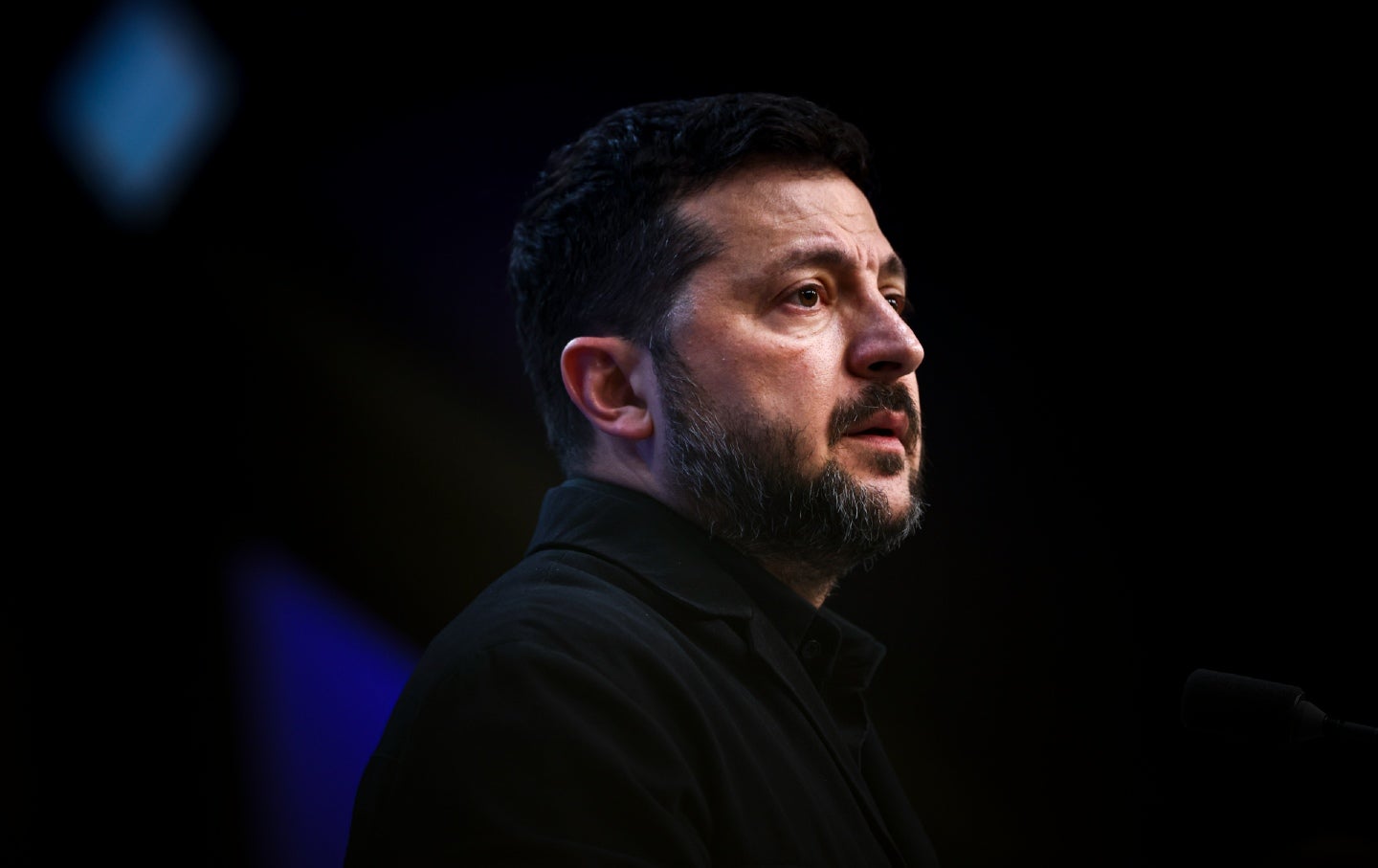
It is long past time to bring the brutal war between Russia and Ukraine to an end. Now, just as both countries seem open to serious negotiations, Donald Trump perversely seems intent on giving peace a bad name.
Even as his amateur emissaries—real estate investors Steve Witkoff and Jared Kushner, Trump’s son-in-law—launched separate discussions with Ukraine’s President Volodymyr Zelensky and Russia’s Vladimir Putin, Trump decided to tilt the board for Putin. He lashed out at Zelensky, saying Ukraine needed a new president. For domestic midterms consumption, he announced an “energy ceasefire” that neither combatant had heard of, temporarily approved the purchase of Russian diesel oil, and shelved the intensified sanctions contained in legislation he had signed. He delusionally claimed that “Russia, frankly, had been fine on Ukraine. They haven’t been doing much,” even as Russia’s attacks on Ukraine intensified. Witkoff risibly hailed Putin as a “humanitarian,” while salivating over economic deals that the United States could cut with Russia when the war ends. Trump embraced Putin’s suggestion of a tripartite summit—Putin, Xi, and Trump—to settle the war, although Trump said it should focus on nuclear weapons, not Ukraine.
Delivery of defensive Patriot missiles paid for by the Europeans has been mysteriously held up. And although Trump denied that he was responsible, Ukraine suffered sudden restrictions on its use of Starshield, the Starlink satellite program vital to providing early warning of Russian missile attacks, restrictions that Elon Musk claimed only the White House could order.
Not surprisingly, these actions spurred outrage in Europe and condemnation in the US, even echoed by some Republican senators. They also inevitably triggered the Trump derangement syndrome that muddles liberal analysis. The New York Times editorial page indicted Trump for “helping Mr. Putin wage war,” and called on the West to “continue to punish Mr. Putin, the oligarchs who support him, and Russia’s war-making economy,” ignoring the terrible price Ukrainians are paying. At stake, the Times intoned, is “whether the West can rally to protect democracy and innocent lives,” although the Times carefully noted that in this “defense of democracy,” only Ukraine should put troops and civilians at risk, and Europe should bear most of the cost.
Hillary Clinton weighed in, painting Trump once more as “a willing Putin puppet,” warning that “Putin’s not going to stop with Ukraine.” She charged that Trump wants to “divide the world: He gets the Western Hemisphere, Putin gets Russia and Europe, and Xi Jinping gets the rest of the world,” a fantasy that makes the unlikely assumption that Trump would accept the smallest piece of the world and ignores European and other nations that might have something to say about the division. In contrast, the popular liberal historian Heather Cox Richardson scorned Russia as a “minor economic player whose military is flailing at its attempt to absorb its neighbor,” charging that Trump is “openly embracing Putin and is working to destroy the strongest and most successful alliance in human history to cement that partnership, apparently with an eye to enriching himself.”
Trump’s scorn for our allies and solicitude for strongmen like Mr. Putin and Xi Jinping are notorious. And his brazen use of his office to enrich himself is contemptible. Offering bribes to Putin while undermining Zelensky is more likely to undermine than facilitate negotiations.
That said, the understandable fury at Trump’s antics should not blind us to reality. This is a war that needs to come to an end.
For both Russia and Ukraine, the war has taken a staggering toll. Russia has suffered an estimated 1.5 million casualties; Ukraine, 500,000. Both find it harder to replace the losses. A million Russians have fled the country, disproportionately the most educated and skilled of the young. Over 20 percent of the Ukrainian population has been displaced, with over 5 million leaving the country. The Russian Navy has been driven out of the Black Sea; the key Ukrainian port of Odesa, center of its grain trade, has been shut down. Ukraine, with 80 percent of its power generation and 90 percent of its food logistics infrastructure destroyed, faces a brutal winter. Russia is suffering far greater damage than Putin would have imagined. Recent attacks on its oil industry have shut down some 30 percent of its refining capacity.
With continued oil sales to China, India, and other countries, Russia has managed to avoid a recession. Ukraine’s economy has been devastated, its GDP down by a quarter since the war began, its survival utterly dependent on European assistance. The World Bank estimated the cost of rebuilding Ukraine to be $588 billion over a decade even before the most recent devastating Russian missile and drone attacks.
And the war poses an ever-greater danger of spreading. Ukrainian drones striking St. Petersburg have been reported as traveling through or being launched from NATO countries. European allies warn of an escalating Russian “hybrid war,” with suspicious drone sightings and arson at Starlink hubs. Germany has called the threat of Russian sabotage of troop facilities “significant.”
Riots are spreading across Europe, a reaction to rising economic pain significantly worsened by the sanctions that cut off Russian oil and the renewed European military buildup, topped by the soaring energy prices resulting from Trump’s Iranian debacle. Ukraine requires ever more aid just as European economic turmoil makes that ever more difficult.
The assumption in the European and American foreign policy commentariat that Putin is on his last legs, and that with renewed aid and weaponry Ukraine can win the war, is both fantasy and folly. Fantasy because it ignores the reality that Ukraine verges on collapse; folly because, were Putin facing defeat, it would increase the peril of a wider war that no rational person would risk. Nor does the hysteria that Putin will take on NATO after Ukraine make sense: Ukraine has exposed Russia’s weakness, not its strength, and inflicted a steep price for its aggression.
Popular
“swipe left below to view more authors”Swipe →Polls show majorities in both Russia and Ukraine are open to peace negotiations. Both Putin and Zelensky have accepted the need for negotiations, and preliminary talks have begun.
With Russia occupying nearly 20 percent of Ukraine, any settlement will be painful. The inescapable reality is that Mark Milley, chairman of the Joint Chiefs of Staff, was right in 2022, after Ukraine had repelled the initial Russian invasion, when he urged Ukraine to “seize the moment” and negotiate. After all the casualties and destruction, the settlement will be worse now than it would have been then.
Still, we would be well advised not to allow Donald Trump’s biliousness to give peace a bad name. What’s needed instead is a global movement for ending the war. The European allies now bearing the brunt of the cost of sustaining Ukraine should help lead the negotiations, bringing expertise and experience to an American team that badly needs it. The countries that ignored US sanctions—China, India, and others—should join the push for a negotiated settlement.
Zelensky, first elected as a peace candidate, has led a courageous resistance. Now he needs even more courage to lead the country to a settlement before it is completely destroyed.
More from The Nation
“This Election Was a Defeat for Lies”: Read Lula’s Inspiring Victory Speech “This Election Was a Defeat for Lies”: Read Lula’s Inspiring Victory Speech
“I doubt that Russia, China, or the United States has an army as victorious as the army of democracy of this country,” the president told his supporters.
Lessons From Lula’s Historic Victory Lessons From Lula’s Historic Victory
The Brazilian left has stopped the right-wing wave in Latin America. Now it has four years to work out a succession plan.
France’s Permanent State of Emergency France’s Permanent State of Emergency
The bad habits Emmanuel Macron will pass on to his successor.
Democrats Can Contain the Donroe Doctrine Democrats Can Contain the Donroe Doctrine
Democrats have the tools to challenge Trump’s military interventions and electoral interference in Latin America—if they’re willing to use them.

Israeli Elections: Fanatics, Generals, and the Question of Palestine Israeli Elections: Fanatics, Generals, and the Question of Palestine
The central question is whether defeating Netanyahu would change Israel’s policies or simply change the people managing them.
“LULA!” Progressives Hail Brazil’s Stunning Election Result “LULA!” Progressives Hail Brazil’s Stunning Election Result
“The people united will never be defeated!” declares Zohran Mamdani.

