
A Spreading War Rattles Global Energy Markets
Analysts say the consequences for energy prices and the world economy may be more serious in this later phase of a war that many had expected to be largely over by now.
Saudi Arabia is in a jam. The kingdom suffered little damage in the early phases of the conflict launched by Donald Trump and Israel against Iran last winter. Now, though, Mohamed bin Salman, the Saudi crown prince and de facto ruler, finds himself harried by both Iran and its Iraqi proxies in the north and the Tehran-allied, militarily proficient Houthi group that controls a swath of Yemen to the south.
The Houthis and Saudis had been observing a ceasefire, but it recently broke down, and the Yemeni group is on the move, attacking a Saudi refinery near the southern border and trying to obstruct Saudi shipping. “They are being squeezed on both sides,” said Karen E. Young, a senior research scholar at Columbia University’s Center on Global Energy Policy.
Like President Trump, who does not want to cede control of the Strait of Hormuz to Iran, the Saudis, too, appear to be locked in a stalemate with an opponent that, while vastly inferior in terms of resources, is still capable of inflicting economic pain. Because Saudi Arabia has long been the world’s cornerstone oil exporter, its predicament has roiled energy markets.
Already Brent crude has tested $110 a barrel in recent days. There is even greater upward pressure in the markets for the oil products that consumers and businesses must buy to power their cars and run their factories. Analysts say the consequences for energy prices and the world economy may be more serious in this later phase of a war that many had expected to be largely over by now.
With jitters over government debt growing, bond traders appear to be closely watching whether rising oil prices will further feed inflation and lead to interest rate hikes. The buffers that cushioned the shock waves of the early months of the war are worn down.
“We’re back on the escalatory ladder,” said Richard Bronze, head of geopolitics at Energy Aspects, a London-based research firm. “Each attack and each disruption will cause that much more economic fallout because of the oil market being more vulnerable than it was in the spring.”
The energy markets coped with the disruptions of the early months of the war between the United States and Iran better than many analysts expected, given the massive loss of supplies of oil and natural gas from the Persian Gulf, a key petroleum region. The International Energy Agency, the Paris-based monitoring group, estimates that supplies from the Gulf in August were 10.1 million barrels a day below prewar levels—a drop of roughly one-third.
Tapping strategic reserves of oil in the United States and other countries, drawing down brimming storage tanks, and rerouting tankers helped head off shortages. Optimistic comments from President Trump and other officials about an end to the war made oil traders wary of betting on too-high prices, analysts say.
Prices even fell sharply to near prewar levels of just above $70 a barrel for Brent crude in July as Washington and Tehran agreed on a temporary ceasefire. Now, though, attacks have resumed, and there seems to be no end to the war in sight. Of particular concern to the markets was an attack last week on the East-West pipeline, possibly by an Iran-backed Iraqi militia.
The Saudis have used this pipeline, which runs from the eastern part of the country, where most Saudi oil is produced, to send oil to the Red Sea port of Yanbu on their west coast. In this way they have managed to partly compensate for Iran’s largely blocking the Strait of Hormuz, which until the war was the exit route for most of the region’s oil and natural gas.
Popular
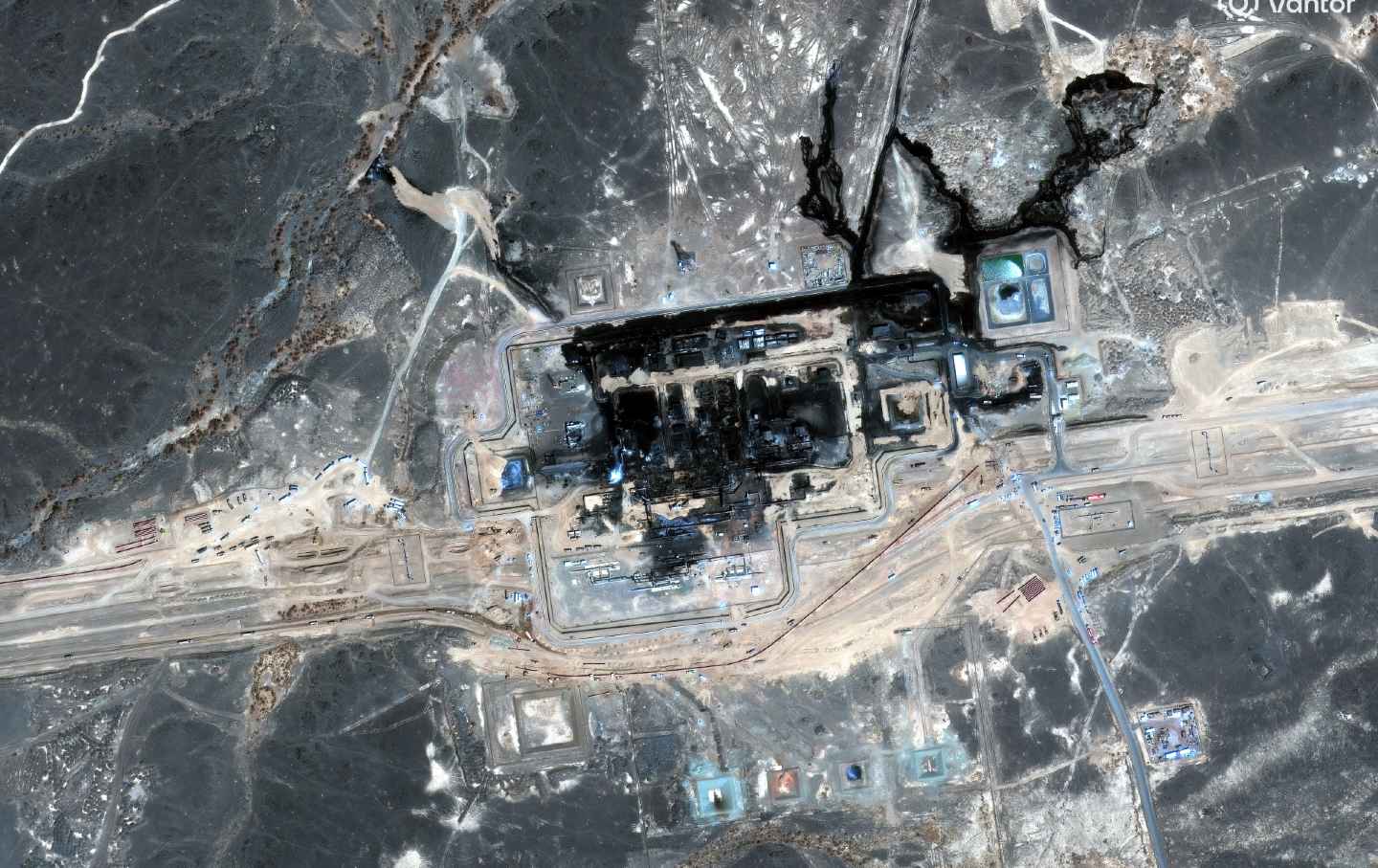
“swipe left below to view more authors”Swipe →Satellite photos show what appears to be extensive damage to what is known as a pumping station on the pipeline. The Saudis said they have shut the pipeline down as a precaution. A prolonged halt to shipments through the line would likely mean a further drop in Saudi exports and production, which fell to the “lowest level in more than three decades” in August, the International Energy Agency said in a recent report.
The Houthis are also trying to further stymie Saudi exports by seizing control of the Bab al-Mandeb, the narrow exit from the Red Sea.
Bronze said that the markets were on high alert because months of oil consumption exceeding production had drained inventories and raised questions about how much more oil the United States and other governments could release from their reserves to ease shortages. In addition, he said, China, which helped soften the crunch earlier this year by cutting back on imports and refinery runs, now appears to be raising its purchases.
Already, Brent crude, the international benchmark, has tested the $110-a-barrel level. There is greater pressure, though, in the markets for the products made from oil that consumers and businesses buy. Gasoline inventories are at 10-year lows, according to S&P Global Energy, a market research firm.
In the tight market, refiners are making enormous profits turning oil into products like gasoline. The price of diesel, which is used in heavy vehicles, industry, and agriculture, has hit record levels in the United States. Bronze warned of a risk that in this situation prices could become “trapped in an upward spiral.”
GasBuddy, a website, reported on September 14 that average gasoline prices in the United States had risen by more than 17 cents to $4.25 a gallon over the last week, while diesel soared to $6.18 a gallon. “Motorists should brace for continued volatility,” wrote Patrick De Haan, an analyst at the website.
Become a Sustaining Donor This September
Between the reemergence of right-wing red-baiting and Donald Trump’s use of the chilling National Security Presidential Memorandum–7 to criminalize left political organizing, we’re seeing McCarthyism reborn before our eyes.
This assault on democracy cannot be ignored or wished away. Resisting it requires bravery in the face of threats and repression, a steadfast commitment to the truth, and the unwavering belief that we can—and will—overcome this darkness.
We must have an independent media that sets the record straight, unearths corruption and abuses of power, and advances a politics of justice and dignity for all if we’re to win this fight.
That’s why I’m writing to you today. This September, The Nation needs to add 100 monthly donors to sustain our progressive journalism. Your contribution makes the next investigative report, the next truth-speaking column, and the next pathbreaking essay all possible.
I hope you’ll support our work with a recurring donation today. If you donate $10 or more a month, we’ll send you a brand new “Hands Off the Free Press!” sticker to recognise your commitment to our cause. Please, donate today.
Onward,
Katrina vanden Heuvel
Editor and Publisher, The Nation
More from The Nation
The Reality Today Is That Foreign Policy Hawks Are a Minority in the Democratic Party The Reality Today Is That Foreign Policy Hawks Are a Minority in the Democratic Party
It is damn time we all started acting like it.
Trump Has Lost Interest in the Iran War, but It’s Still Quite Interested in Him Trump Has Lost Interest in the Iran War, but It’s Still Quite Interested in Him
The United States is losing the conflict, stoking chaos in the region, and inviting economic calamity—all with no end in sight.

Gloria Steinem: A View From 1990s Moscow Gloria Steinem: A View From 1990s Moscow
“Keep women’s solidarity in mind: Don’t forget how we empower each other through mutual support,” she reminded us.

Accountability for the Gaza Genocide Can’t Focus on Netanyahu Alone Accountability for the Gaza Genocide Can’t Focus on Netanyahu Alone
Getting rid of one bad leader won’t bring justice.
How the AfD Benefits Politically From the Ukraine War’s Backlash How the AfD Benefits Politically From the Ukraine War’s Backlash
No election result is monocausal, and there are clearly many factors that have converged to make the AfD Germany’s most popular party.
Cuba: The “Pandora’s Box” of US Humanitarian Assistance Cuba: The “Pandora’s Box” of US Humanitarian Assistance
As the US strangles Cuba economically, Marco Rubio is running a $100 million “hearts and minds” program on the island.

