This Isn’t About Rosebud, David Ellison
Antitrust law exists so that a free press and an open market never hang on the temperament of one well-meaning billionaire.
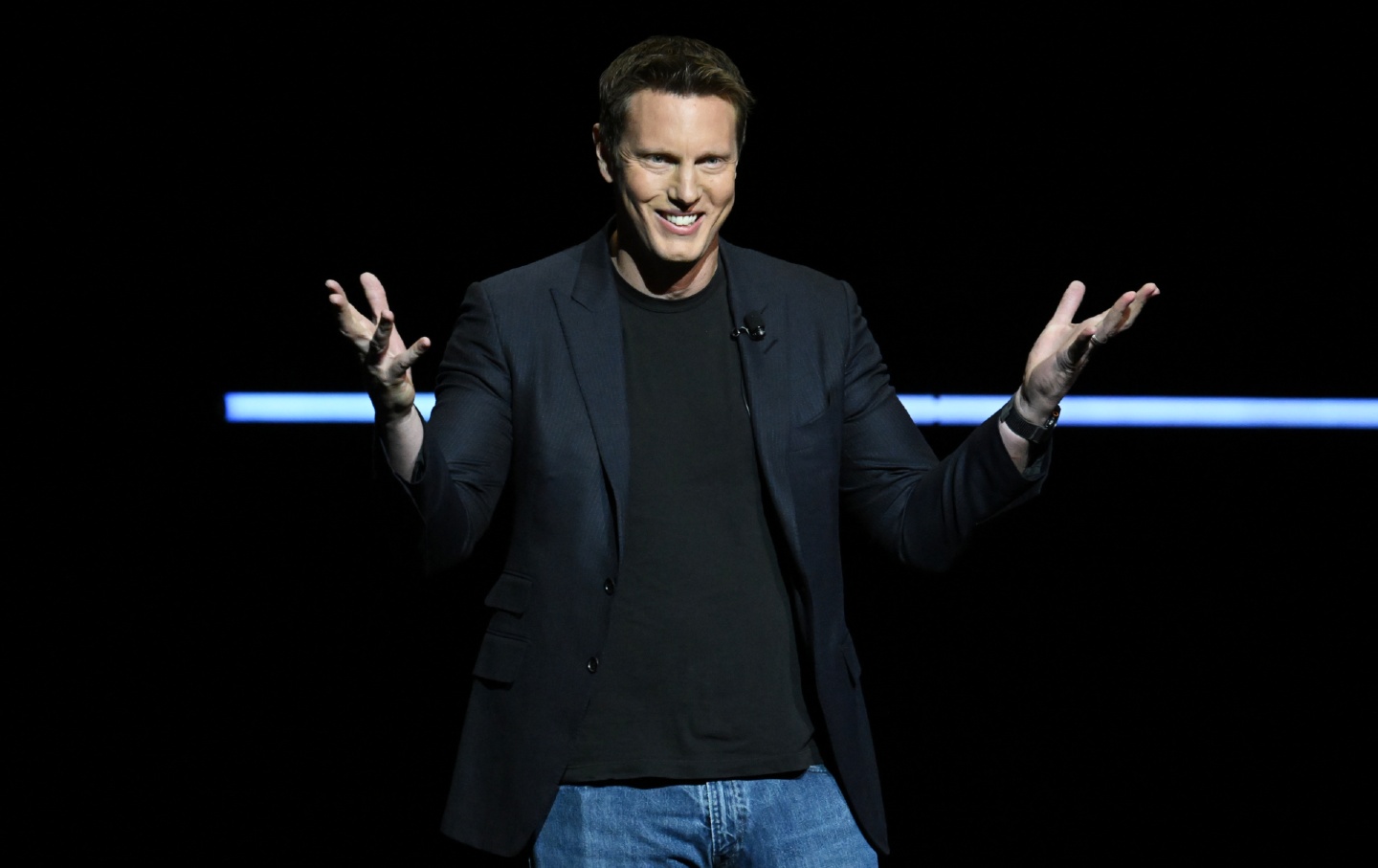
The heir to one of the largest fortunes on earth, who currently runs a billion-dollar media colossus, David Ellison has come hat in hand to New York Times readers asking for their sympathy. He would like, he shares in the op-ed, for us to understand his heart, and imagine him as the child he once was who simply loved movies, and wants only to make people feel what he felt in the dark. He’s a would-be Alfredo threading the projector in Cinema Paradiso! He’s a keeper of the flame! He also, he makes clear in the midst of this saccharine plea, a voter of both parties.
These points miss the mark.
Ellison, so buffeted by billions and flatterers, embarrasses himself. He cannot imagine that the public actually cares about law, statutes, power, or really about anything except him, his politics, whether he can be “trusted” as a steward of CNN. The essay’s thesis is “it’s all about me,” which of course is part of the problem. Research on power shows that those who wield it cannot actually perceive others’ interests and minds. One researcher has compared excessive power to traumatic brain injury; and Ellison appears to be a case study.
But why did he write it? The reason Ellison is so desperate is that 12 state attorneys general, led by California’s Rob Bonta, have sued to block the Paramount–Warner Bros. Discovery merger under the Clayton Act. And days later, the Writers Guild of America followed suit, with its own case. Both are solid, textbook antitrust cases applying well-established legal standards to the merger’s competitive effects across three markets. We’re not talking about novel legal theories or untested applications of the law. Just facts: This deal would result in multiple highly concentrated markets with devastating effects for writers, movie theater owners, and consumers, to name just a few of the impacted markets. A judge granted a temporary restraining order recognizing the strength of their legal case.
Knowing this and the seriousness of these cases helps to understand this solipsistic letter. The tone is that of bewilderment. He might actually lose, which he will, because he is up against law and the public, not someone who needs more emotional connection.
Ellison knows how to manage Washington with dinner parties, like those he just threw for Donald Trump, and lobbyists. But state antitrust enforcement is a different world. It runs on statutes: law wielded by people who have to respond to the public. Ellison is reduced to writing personal essays in The New York Times because his usual tools of persuasion don’t work when state attorneys general are listening to the statutes.
And history tells us he has reason to be scared. We have seen monopolists like him, and his ilk, come before. And antitrust laws then, and now, ensure a fair playing field. May 3, 1948, Justice William Douglas wrote for a 7–1 Supreme Court that the “Big Five” studios, including Paramount, Warner Bros., and the “little three,” including Universal, Columbia, and United Artists, conspired to monopolize the film industry. The studios were ordered to completely separate film production and distribution from theater exhibition by selling off their owned cinema chains. The decision permanently prohibited anti-competitive methods like forcing theaters to buy multiple films in bundles and coordinated ticket prices. The decision opened the industry to allow for independent producers and actors, leading to an explosion of creativity.
Douglas understood, as we do now, that emotional pleas like the one Ellison penned this week are a distraction.
Industrial power should be scattered into many hands, Douglas wrote in a dissent opinion that year, “so that the fortunes of the people will not be dependent on the whim or caprice, the political prejudices, the emotional stability of a few self-appointed men.”
When he wrote that, he anticipated the howls of the Ellison elite: “The fact that they are not vicious men but respectable and social-minded is irrelevant.” His argument was later echoed by the great SCOTUS chief Earl Warren, who noted that Congress built decentralization into the statute because Congress was under risk of great concentrations of power.
Antitrust law is not about David Ellison’s Rosebud. Antitrust law exists so that a free press and an open market never hang on the temperament of one well-meaning billionaire.
Become a Sustaining Donor This September
Between the reemergence of right-wing red-baiting and Donald Trump’s use of the chilling National Security Presidential Memorandum–7 to criminalize left political organizing, we’re seeing McCarthyism reborn before our eyes.
This assault on democracy cannot be ignored or wished away. Resisting it requires bravery in the face of threats and repression, a steadfast commitment to the truth, and the unwavering belief that we can—and will—overcome this darkness.
We must have an independent media that sets the record straight, unearths corruption and abuses of power, and advances a politics of justice and dignity for all if we’re to win this fight.
That’s why I’m writing to you today. This September, The Nation needs to add 100 monthly donors to sustain our progressive journalism. Your contribution makes the next investigative report, the next truth-speaking column, and the next pathbreaking essay all possible.
I hope you’ll support our work with a recurring donation today. If you donate $10 or more a month, we’ll send you a brand new “Hands Off the Free Press!” sticker to recognise your commitment to our cause. Please, donate today.
Onward,
Katrina vanden Heuvel
Editor and Publisher, The Nation