
Mamdani’s Team Redefined Political Video. Now They’re Betting on Short Films.
Premiering exclusively in The Nation, a new short film produced by City Hall and narrated by Morgan Spector highlights the efforts of the biggest tenant-led union in New York City.
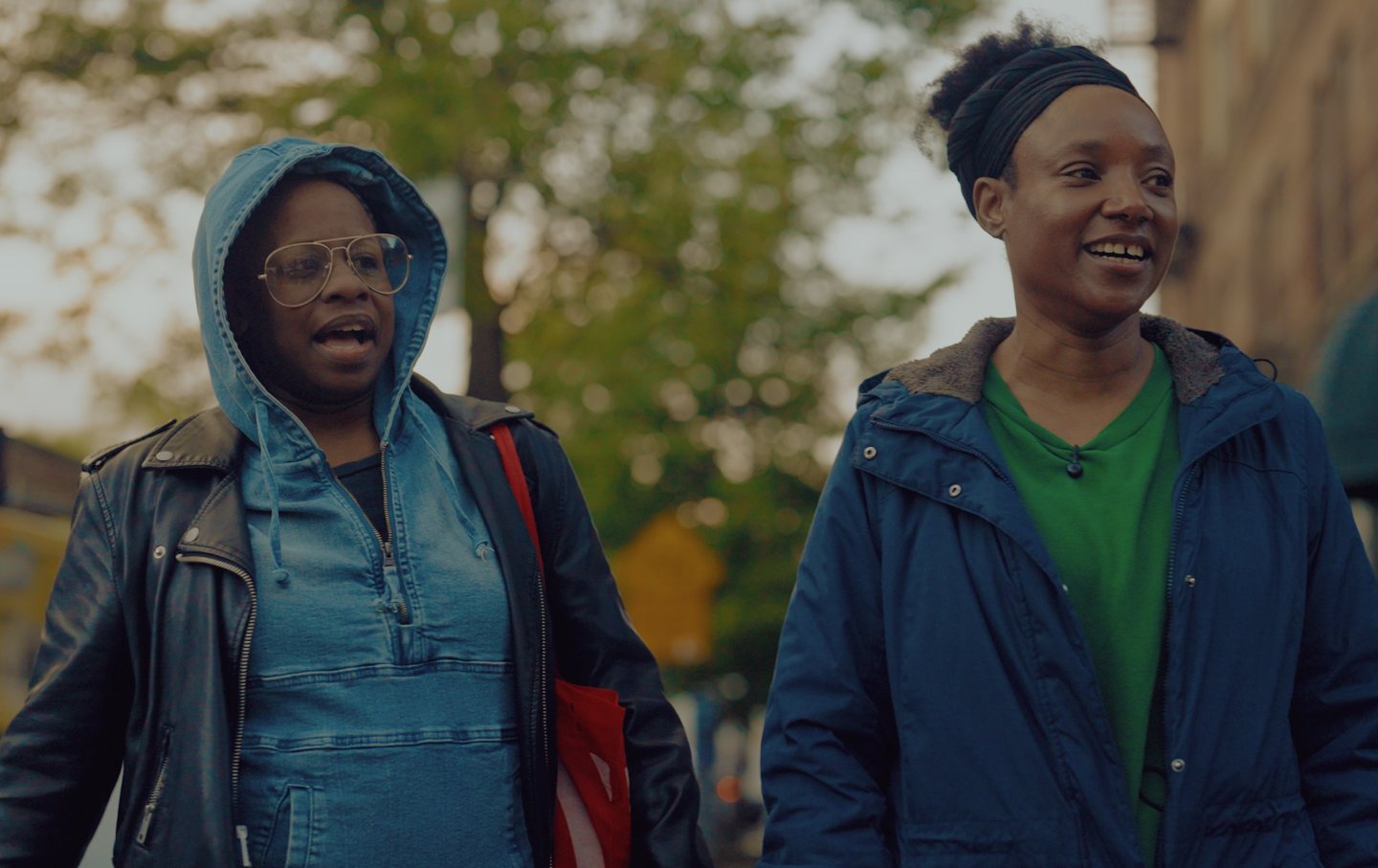
Still from Union of Pinnacle Tenants.
(City Hall video team)On January 1, hours after Zohran Mamdani was sworn in as mayor of New York City, he visited a rent-stabilized apartment building in the Flatbush neighborhood of Brooklyn. For months, residents of 85 Clarkson Avenue had been raising the alarm that their homes, managed by Pinnacle Group, were falling into disrepair: Pipes were rusting, leaks spreading; in one unit, a crack in the ceiling had released a cascade of cockroaches.
Pinnacle’s 93-building portfolio had accrued more than 5,000 open hazardous violations and 14,000 complaints, Mamdani said during a press conference held in the 85 Clarkson lobby. He paced the hallways alongside tenants and toured an apartment with faulty heating. He knelt on the floor, peeling back crumbling vinyl tiles.
Trailing the mayor that day, as they had throughout his runaway campaign, was a video team whose energetic, cinematic style has become a hallmark of Mamdani’s political brand. Work by that team—currently made up of six filmmakers whose backgrounds span from video journalism to streaming documentaries—created a modern, buzzy visual language that helped propel Mamdani to an unlikely victory.
It’s a common refrain that politicians campaign in poetry and govern in prose. But Mamdani has been governing in the same language that made him mayor. On the first day of 2026, the team continued to hone its visual instincts, resulting in their most ambitious project yet: a 13-minute documentary titled Union of Pinnacle Tenants.
The short film, which will be released tomorrow on the mayor’s social-media platforms, signals an evolution in how the administration is using video to communicate with New Yorkers. Part explainer, part issue-driven documentary, the film pairs observational footage of the tenants at 85 Clarkson Avenue with an interview with Cea Weaver, the head of the Mayor’s Office to Protect Tenants.
Throughout, the documentary takes a notably jaunty tone: It’s narrated by Morgan Spector, an actor and outspoken advocate for progressive politics, who intones his lines over a pizzicato-string score with the literary panache of Alec Baldwin in The Royal Tenenbaums. “She’s here to tell us a story,” Spector says as he introduces Weaver, who gazes into the camera from a stately, upholstered armchair.
More Andersonian whimsy: The film unfolds its account over five chapters, each introduced by an onscreen title. The chapter headings—“The Buildings,” “The Landlord,” “The Tenants,” and so on—and chyrons are rendered in a sans-serif, sunflower-yellow typeface with a red drop shadow.
Our central subject is Josie Wells, a longtime tenant of the 85 Clarkson. She grew up there, and holds memories of its earlier days, when the building was clean and well maintained. Garbage was kept under control. Christmas decorations were even installed in the lobby over the holidays. “This notion that people who live in rent-stabilized buildings can’t have these amenities, I think, is crazy,” she says early on in the film.
Wells, we come to learn as the film progresses, began sharing complaints with her neighbors, and eventually organized a tenants’ association. They went on to connect with residents of other buildings managed by Pinnacle Group, and after months of discussion, formed a union. The group hoped to challenge their landlord and have a say in who manages their property. In referring to Pinnacle, they prefer the term “slumlord.”
“The Union of Pinnacle Tenants has shown what becomes possible when neighbors organize,” Mamdani said in a statement to The Nation. “Across nearly 100 buildings, tenants came together and won important victories that made real, material impacts in New Yorkers’ lives. I’m proud to stand with them as they continue the fight for affordable, dignified housing across the city.”
The film shows how, in the mid-2000s, Pinnacle snapped up more than 100 rent-regulated buildings, then pursued aggressive efforts to push out tenants. In 2025, the company filed for bankruptcy, putting its buildings up for auction in court. The film pairs Pinnacle’s story with a brisk history of New York’s rent protections, beginning with the post–World War I housing shortage and culminating in the landmark 2019 Housing Stability and Tenant Protection Act.
The film marks a departure from much of the work that the Mamdani administration has produced thus far. There’s no news peg, no rush to release it for a holiday or anniversary. At once a triumphant David and Goliath story and a how-to guide for grassroots organizing, the film is closer in kind to sleekly produced public-access television than the scroll-and-you-miss-it vertical content you’d normally find on social media.
“Thoughtful, accessible video is a great way to communicate with the greatest city in the world,” Matt Rauschenbach, a spokesman for the mayor, told me. “New Yorkers deserve to see themselves reflected in world-class content about their city and government that is free and accessible to all.”
Become a Sustaining Donor This September
Between the reemergence of right-wing red-baiting and Donald Trump’s use of the chilling National Security Presidential Memorandum–7 to criminalize left political organizing, we’re seeing McCarthyism reborn before our eyes.
This assault on democracy cannot be ignored or wished away. Resisting it requires bravery in the face of threats and repression, a steadfast commitment to the truth, and the unwavering belief that we can—and will—overcome this darkness.
We must have an independent media that sets the record straight, unearths corruption and abuses of power, and advances a politics of justice and dignity for all if we’re to win this fight.
That’s why I’m writing to you today. This September, The Nation needs to add 100 monthly donors to sustain our progressive journalism. Your contribution makes the next investigative report, the next truth-speaking column, and the next pathbreaking essay all possible.
I hope you’ll support our work with a recurring donation today. If you donate $10 or more a month, we’ll send you a brand new “Hands Off the Free Press!” sticker to recognise your commitment to our cause. Please, donate today.
Onward,
Katrina vanden Heuvel
Editor and Publisher, The Nation
More from The Nation
The Impossible Will Take a Little While: The Power of Persistence The Impossible Will Take a Little While: The Power of Persistence
In troubled times, history offers a lesson: Seemingly impossible change can begin with ordinary people who refuse to give up.
Gloria Steinem’s Many-Splendored Feminist Life Gloria Steinem’s Many-Splendored Feminist Life
The feminist icon lived the struggle for gender equality and always found time to lend support and solidarity to other women leaders, even in her final days.
No, Woke 1 Was Not Crazy No, Woke 1 Was Not Crazy
AOC and others are laughing off 2020 as a wild, isolated moment. None of that is true.
How Occupy Wall Street Still Explains Politics Today How Occupy Wall Street Still Explains Politics Today
It sowed the seeds for a new era of social movements—but its politics of powerlessness should act as a cautionary tale.

Abdul El-Sayed’s Win Is a Landmark. But the Fight Is Far From Over. Abdul El-Sayed’s Win Is a Landmark. But the Fight Is Far From Over.
Even though the Palestine movement is on the march, we can’t afford any complacency.
The Weapons Manufacturer Next Door The Weapons Manufacturer Next Door
It’s been six years since I began attending pro-Palestine demonstrations. The most recent campaign at the Brooklyn Navy Yard feels different.

