
New Yorkers Won a Rent Freeze. But We Can’t Stop There.
There is so much more to be done to seize power from landlords and real estate directly.
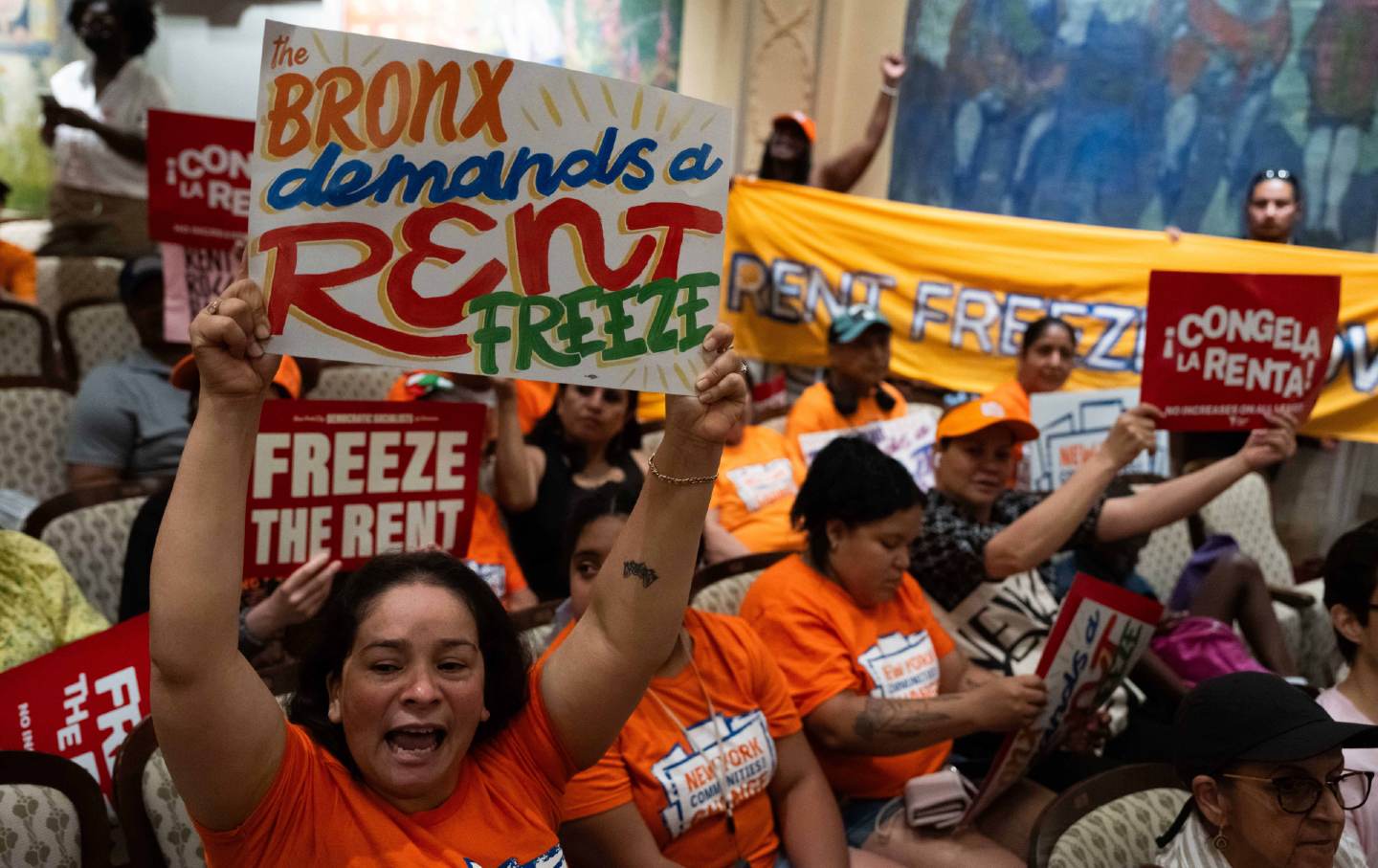
Attendees react during a vote by the Rent Guidelines Board in New York, on Thursday, June 25, 2026.
(Adam Gray / Bloomberg via Getty Images)Last year, New Yorkers—70 percent of them tenants—put a democratic socialist in Gracie Mansion. Last month, we froze the rent.
Thanks to a 7–1 vote by New York City’s Rent Guidelines Board, 2.4 million rent-stabilized tenants will be able to claim one- and two-year leases with 0 percent rent increases starting October 1.
Organized tenants made this victory possible. We knew what our landlords would rather we ignored: that rent is political, and that we have the ability to control it. But there is more to be done to seize the city’s tools and take power from landlords and real estate directly. We need to build majorities at the building, portfolio, and state levels—majority tenant unions in our buildings and portfolios, and a massive movement that can credibly represent half the state.
New York’s mayor appoints the members of the board, who review data and public testimony and decide the level of increases landlords are able to charge rent-stabilized tenants each year. These appointments matter. Eric “I am real estate” Adams appointed an RGB that passed 12 percent rent hikes over the course of his term (during this era, it was common for tenants to testify while board members yawned and looked at their phones); Bill de Blasio’s board, meanwhile, froze rents three times, though never on two-year leases.
Tenants strategized to intervene in the 2025 mayoral election. Over last spring, canvassers with the Tenant Bloc collected over 20,000 signatures from rent-stabilized tenants to demand that the next mayor freeze the rent. Meanwhile, Zohran Mamdani, who’d protested alongside us at past RGB hearings, made this long-standing demand from the movement his top campaign promise. That promise helped galvanize more than 1 million New Yorkers around his agenda, gave the rent freeze a decisive democratic mandate, and cemented tenants as a majority voting bloc and a distinct political class.
But we didn’t stop organizing just because Mamdani won. Tenant participation in this year’s RGB process doubled over last year’s, outnumbering in-person landlord testimony 10-to-one. And tenants had the numbers in the data the RGB reviewed: in the last four years, our rent burdens expanded while landlord profits grew 30 percent. Tenants made an explicit demand for a two-year rent freeze—some even demanded rent reductions. By seeing and seizing an opportunity to push beyond a campaign promise, tenants won an unprecedented rent freeze on both one- and two-year leases. The policy will collectively save us up to $3.1 billion.
A rent freeze—like rent stabilization itself—flexes tenants’ sectoral bargaining power at the scale of the city. Rent stabilization was a hard-won policy that stems the tide of displacement of New Yorkers of color and keeps 140,000 New Yorkers out of poverty each year. (Nearly 40 percent of very low-income households, as well as nearly 40 percent of Latino and 30 percent of Black New Yorkers, live in rent-stabilized homes.) By winning a rent freeze, tenants intervened in the housing market shaped by decades of landlord greed, leveraging the arcane but significant regulatory powers of the Rent Guidelines Board to limit our landlords’ capacity to extract profit from us. But to match our growing power in the city, tenants need to build majority power in our own homes and across New York State.
We have the numbers to challenge the power of our landlords directly—building by building, portfolio by portfolio.
When we organize into tenant associations and tenant unions, we can coordinate direct actions, expose landlord exploitation, and, most importantly, turn our individual rent checks into a collective source of leverage by withholding our rent. Turning conversations with our neighbors into durable and democratic organizations that can power map, strategize, and win takes work, but the rewards are worth it. NYC tenants have decades of past victories to learn from, and dynamic portfolio-wide campaigns are already underway across the city—against Pinnacle Group & Summit Properties, Emerald Equities, and Duckler, just to name a few.
Our landlords are used to setting the terms of our relationship. But we can reset those terms. Like unionized workers winning collective bargaining agreements to claim the share of the profits they create, unionized tenants can win collective bargaining agreements that force our rents back into our homes. Unlike our individual leases, these collective contracts can oblige our landlords to address deferred repairs, cancel rent debts, gain us a say over our supers and management, or enshrine our ability to add family members to our leases and secure our housing across generations—wins that can both enforce housing law as well as more ambitious goals that give us more control over our homes.
Our power over the executive has given us new tools to support this work, many outlined in the Mayor’s Housing Plan. A responsive administration can use its bully pulpit, coordinate inspections, collect fines, file lawsuits, and bind tax abatements to strict regulatory agreements, in partnership with organized tenants.
At the same time, we should understand the city’s powers as a set of carrots and sticks for us to access and leverage alongside our own tactics. The city can offer social, legal, and economic sanctions (which can enforce our housing code and help us bring landlords to the negotiating table), but it can’t win our demands for us. Our real power comes from organized majorities capable of wielding the economic power of our rent.
The rent freeze creates new urgency for tenants to exert control over our homes. What landlords see as an impending crisis of financial distress in rent-stabilized housing is a once-in-a-generation opportunity to shift the balance of power in the city—if we seize it.
We agree with these landlords on something: their business model is failing. For decades, predatory landlords have run rent-stabilized buildings into the ground to maximize profits, while recklessly speculating on future gains. Rather than reinvesting in our homes, they used our rents to make themselves rich and take on massive loans to buy up more buildings, knowing they could only be made whole if they drove up rents and drove out long-term tenants. This cycle of strategic neglect and speculation robbed buildings of repairs and tenants of their homes—until we organized to stop it.
The 2019 Housing Stability and Tenant Protection Act was the culmination of a hard-fought battle waged by New York’s tenants to close loopholes that rewarded tenant harassment and displacement. Now, those same landlords who gambled on our homes are essentially demanding that tenants bail them out for their bad bets. But tenants will not be fooled.
Rent-stabilized portfolios in or at risk of foreclosure give tenants outsized leverage to fight for the ownership of our homes: a weakened target and the ability to triangulate with banks, federal loan regulators, and the city. Rather than addressing distress through deregulation and rent hikes, organized tenants can chart a new course by taking these homes out of the private market for good. If our landlords can no longer take care of our buildings, tenants—backed by the public—will.
The Mamdani administration has already set aside $2 billion to take housing out of the hands of exploitative landlords and put it into tenant and community control. Organized tenants must contest for these resources, so we become the long-term stewards of our housing. But scaling up this power will take new tools. We need legislative mechanisms that give tenants the right to collectively purchase their buildings and pathways to remove negligent landlords from owning our homes. We need to expand the tools the city already has—land banks, public trusts, and acquisition funds—and develop capacities and pipelines to control our homes that don’t yet exist.
The backlash to the rent freeze is already here. The landlord lobby has all but promised a lawsuit and is eagerly plotting to go over our heads to weaken rent stabilization through the state legislature. NYC tenants have to join with those across the state to defend what we’ve won in our city and expand it. Rather than let the victories for rent-stabilized tenants segment us from tenants without these benefits, we have to build solidarity with market-rate tenants and win universal rent stabilization such that all of us are protected. Every tenant deserves a rent freeze and more.
Popular
“swipe left below to view more authors”Swipe →The state, of course, also controls the budget and the resources we need to see our full agenda through. So tenants must participate in the statewide movement to tax the rich and redistribute the resources from the wealthiest to housing for the rest of us. To acquire over-leveraged rent-stabilized buildings and address the years of landlords’ strategic neglect, we need a bigger budget for public acquisitions, repairs, and building management.
All new housing that benefits from city financing is rent-stabilized, a necessary intervention that expands the political bloc and political power of rent-stabilized tenants in the city. But until we can control the market to bring down rents across the board, housing will only be truly affordable if we have the money for subsidies to make it so. Finally, we need funding from the state for our city’s existing public housing, which has been subject to years of federal austerity; tenants of public housing deserve to live in dignity and with the assurance of public stewardship of their homes. And we need resources to expand the public’s role as a housing developer in its own right.
Tenants run New York, and we can make it run for us. Wielding majoritarian power in our buildings, at City Hall, and at the state house, we can reclaim thousands of homes from the private market, gain control of thousands more with bargaining agreements, win universal rent control, and fund truly public housing. The stage is set for tenants to wrest control of our homes from landlords and real estate if we organize. If you are a tenant, you belong in this fight. A rent freeze is just the beginning.
More from The Nation
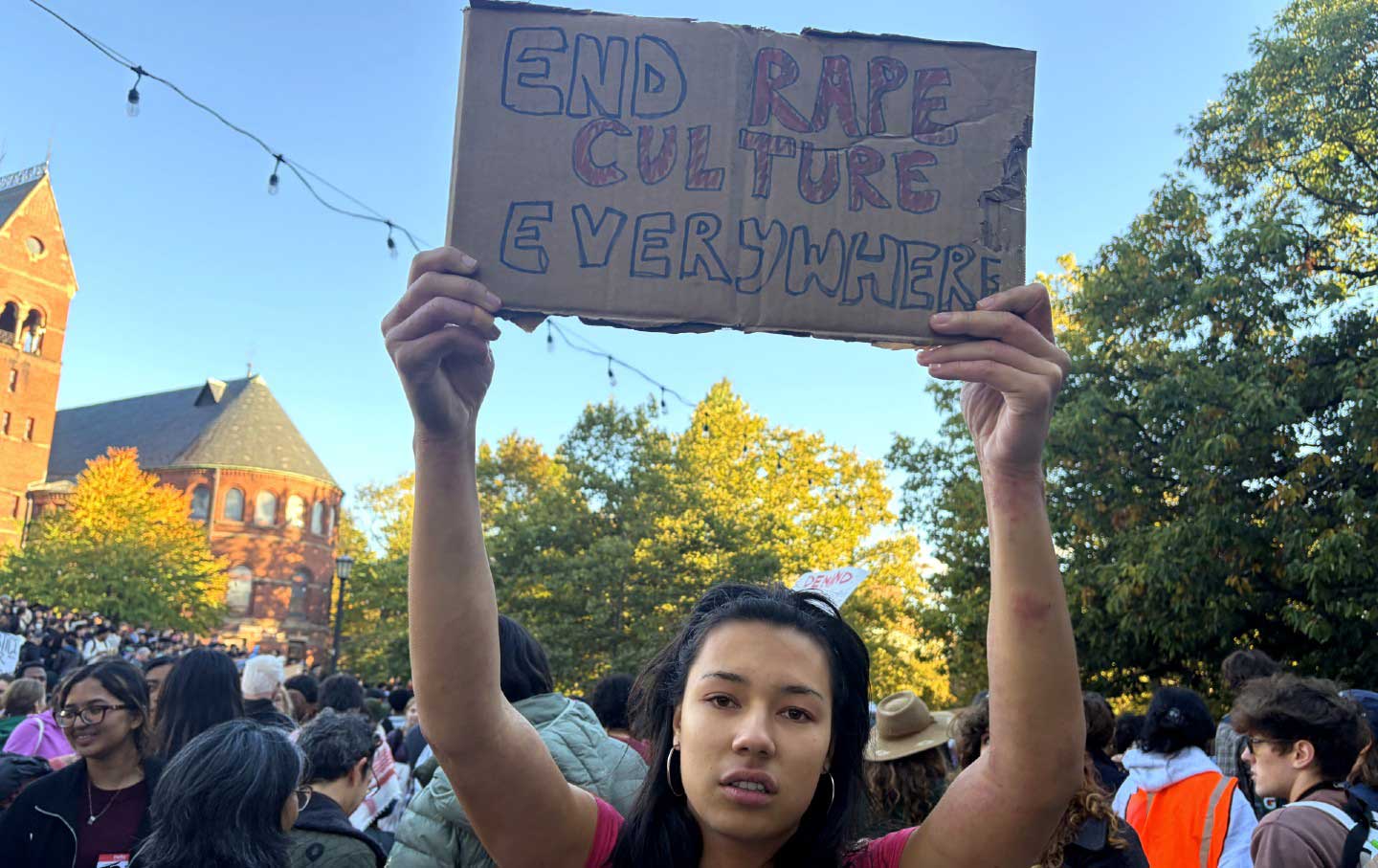
Inside Cornell’s Week of Protest Inside Cornell’s Week of Protest
“We won’t be silenced anymore. Our university needs to start protecting us, like they should’ve with Jane Doe and all other survivors on campus.”
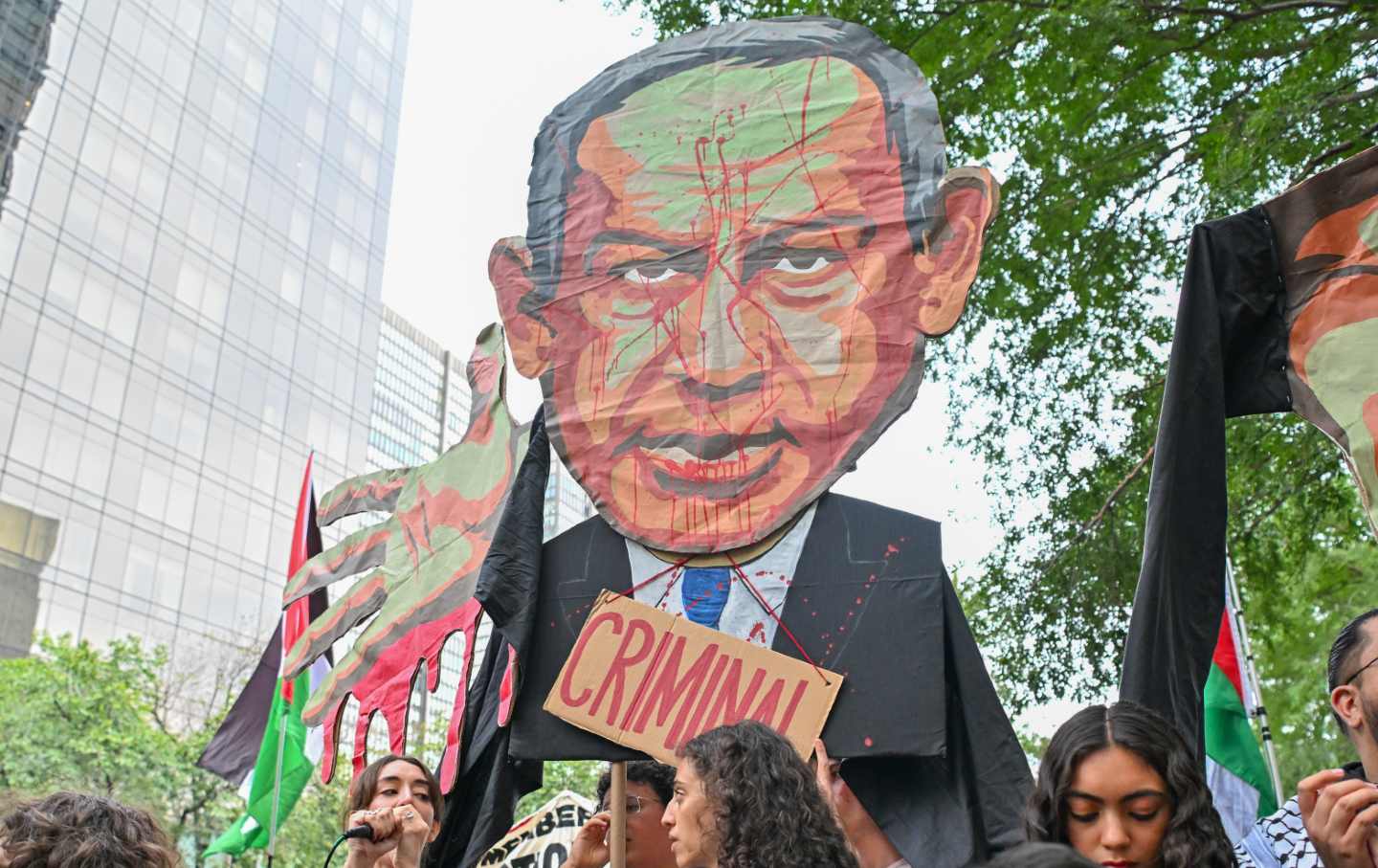
Netanyahu Came to New York. New Yorkers Were Ready for Him. Netanyahu Came to New York. New Yorkers Were Ready for Him.
Scenes from the defiant protest against the genocidal leader’s UN speech.
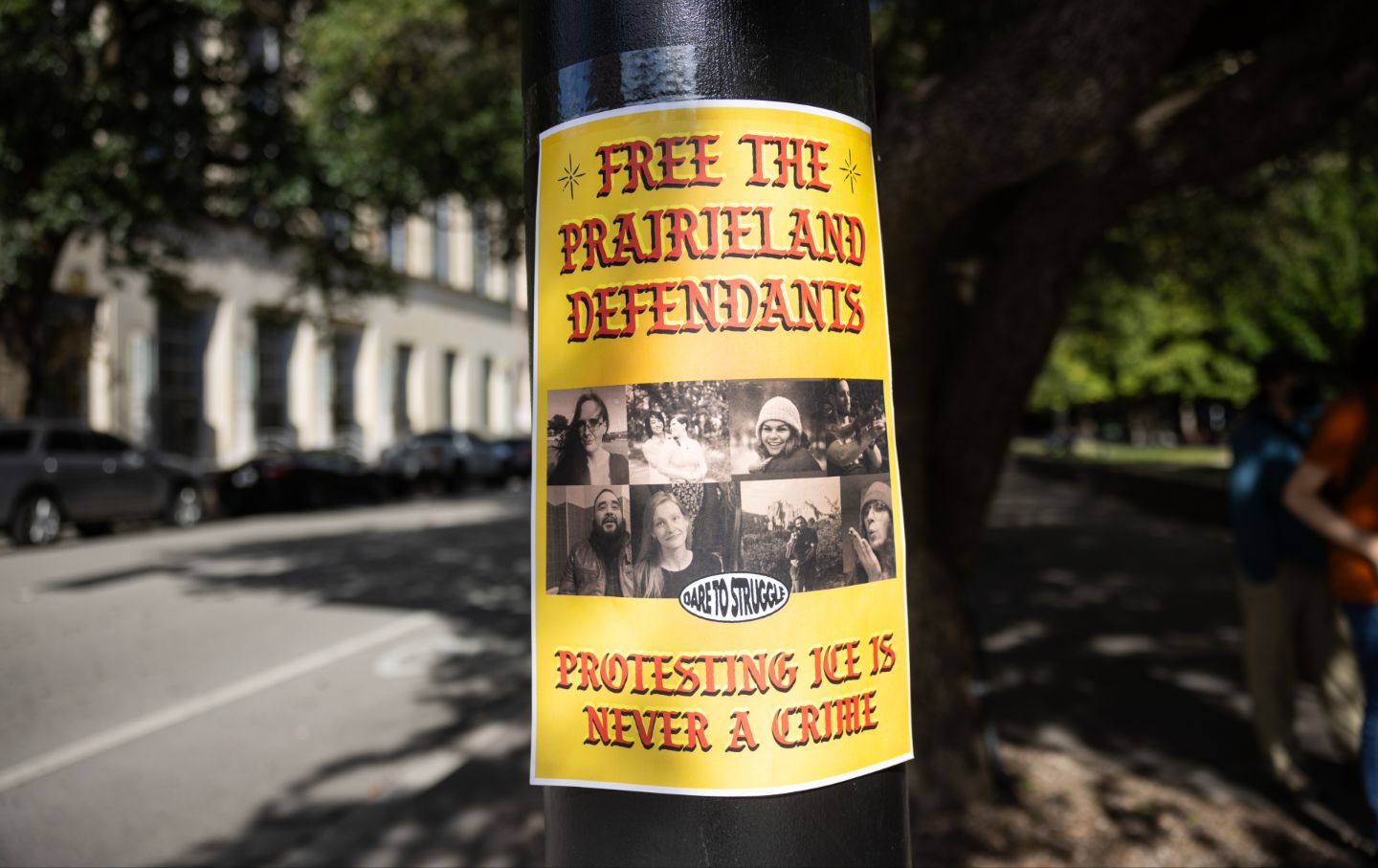
A Message From Prairieland Prisoner Autumn Hill: “Don’t Be Afraid” A Message From Prairieland Prisoner Autumn Hill: “Don’t Be Afraid”
I talked to the political prisoner about the politics of love, her case, surviving as a trans woman in a men’s prison, and how she makes it through the day.
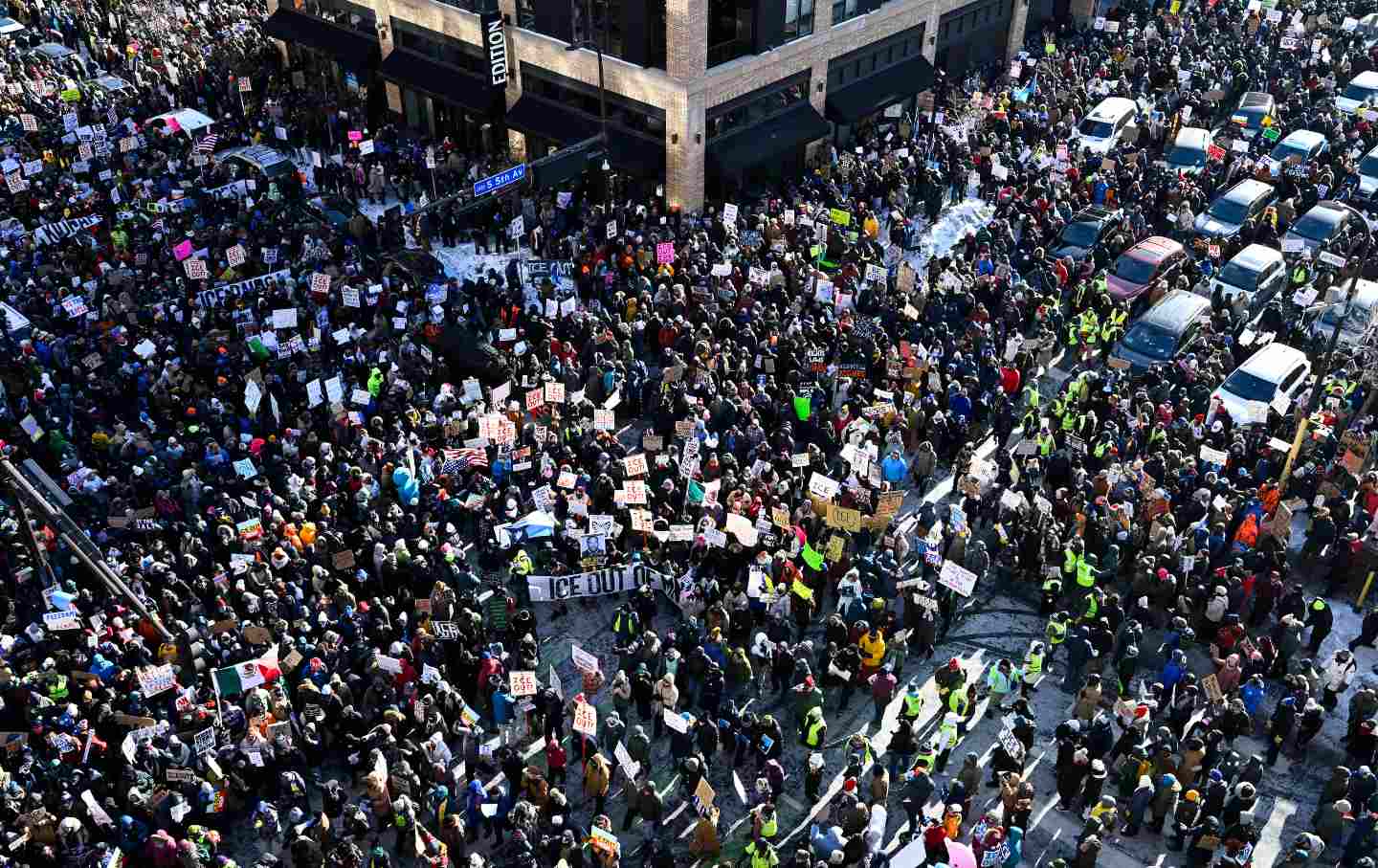
The Impossible Will Take a Little While: The Power of Persistence The Impossible Will Take a Little While: The Power of Persistence
In troubled times, history offers a lesson: Seemingly impossible change can begin with ordinary people who refuse to give up.
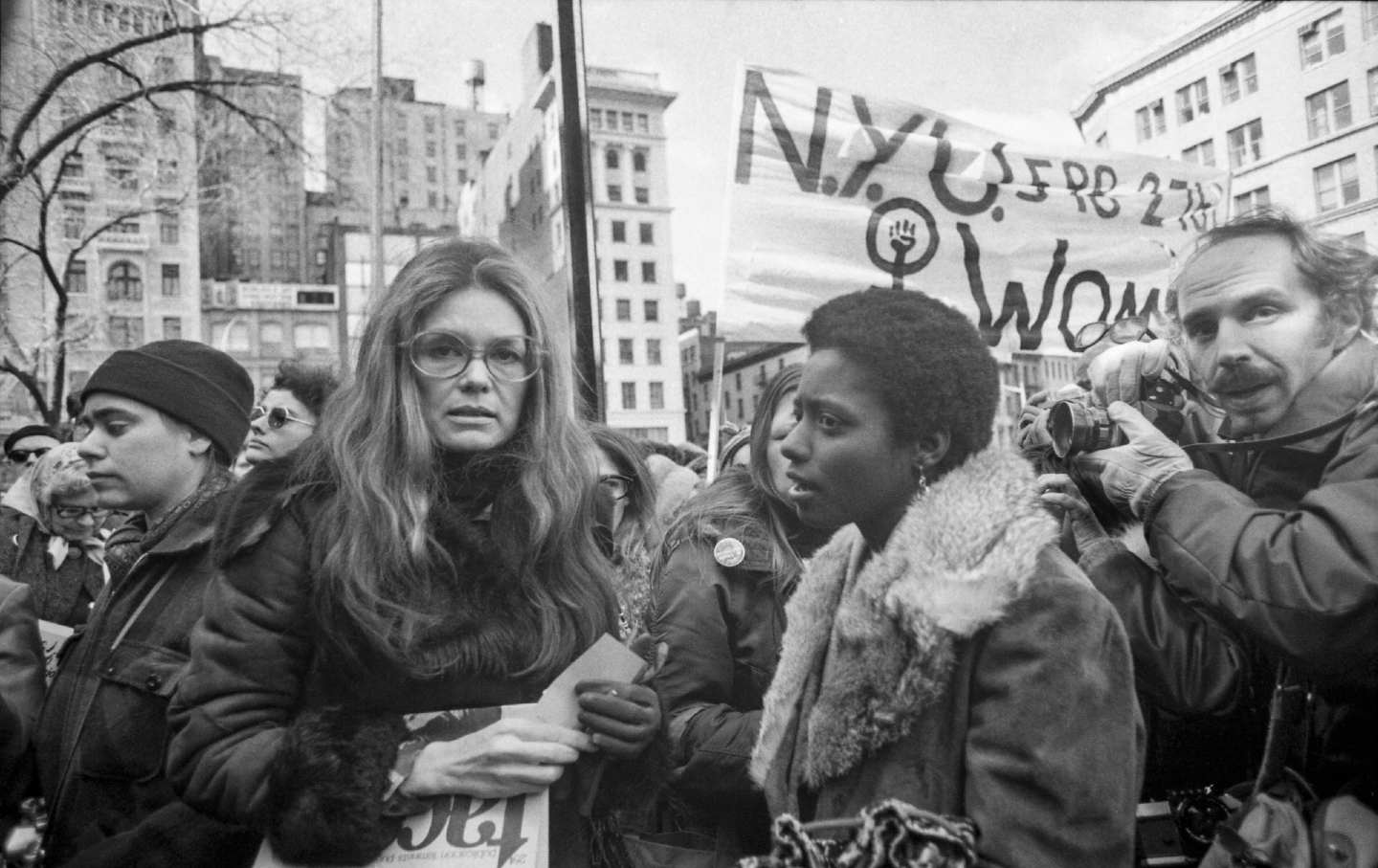
Gloria Steinem’s Many-Splendored Feminist Life Gloria Steinem’s Many-Splendored Feminist Life
The feminist icon lived the struggle for gender equality and always found time to lend support and solidarity to other women leaders, even in her final days.
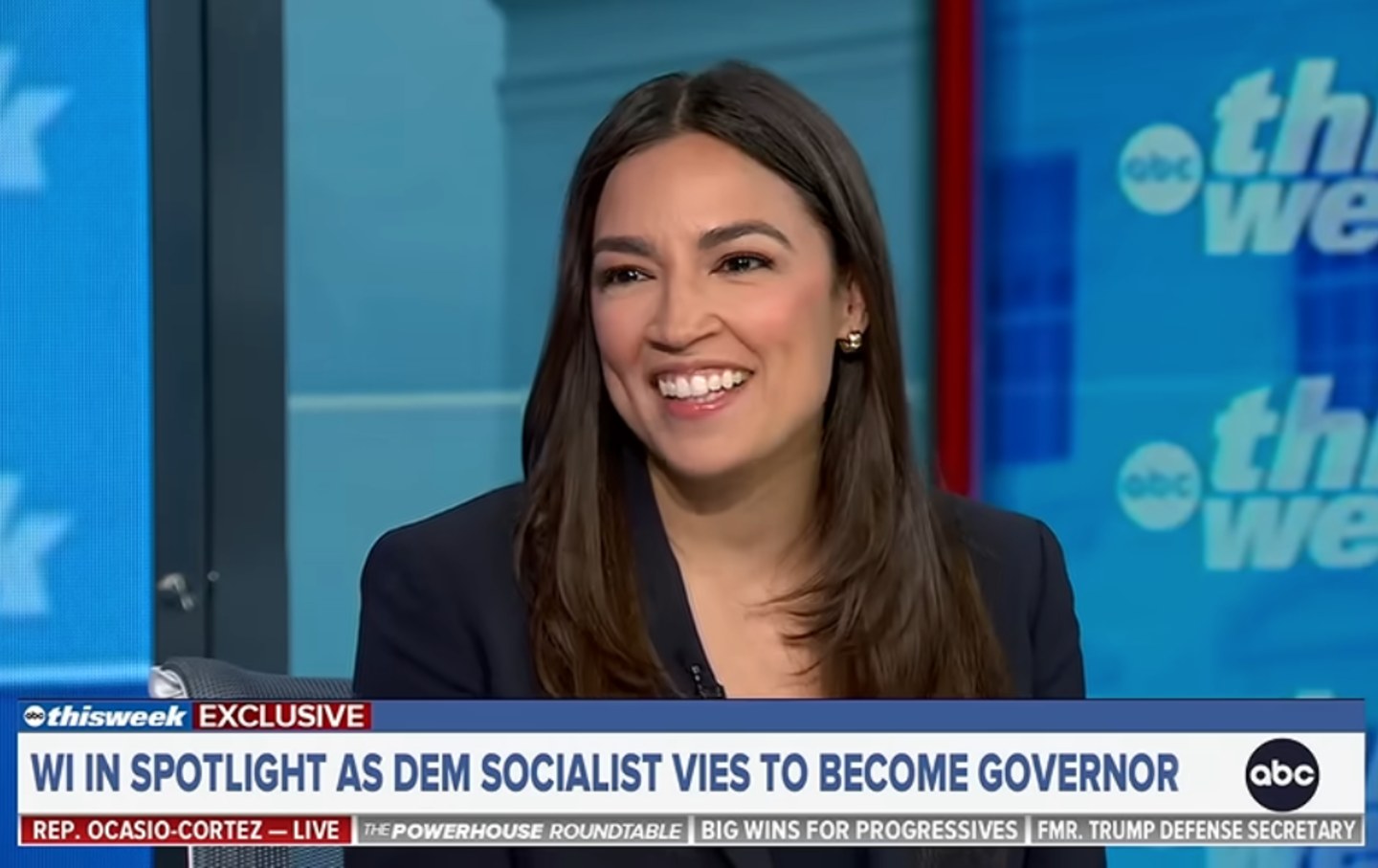
No, Woke 1 Was Not Crazy No, Woke 1 Was Not Crazy
AOC and others are laughing off 2020 as a wild, isolated moment. None of that is true.

