
Jerry Nadler Is Still Campaigning
His name isn’t on the ballot, but the veteran congressman’s working overtime for Micah Lasher.
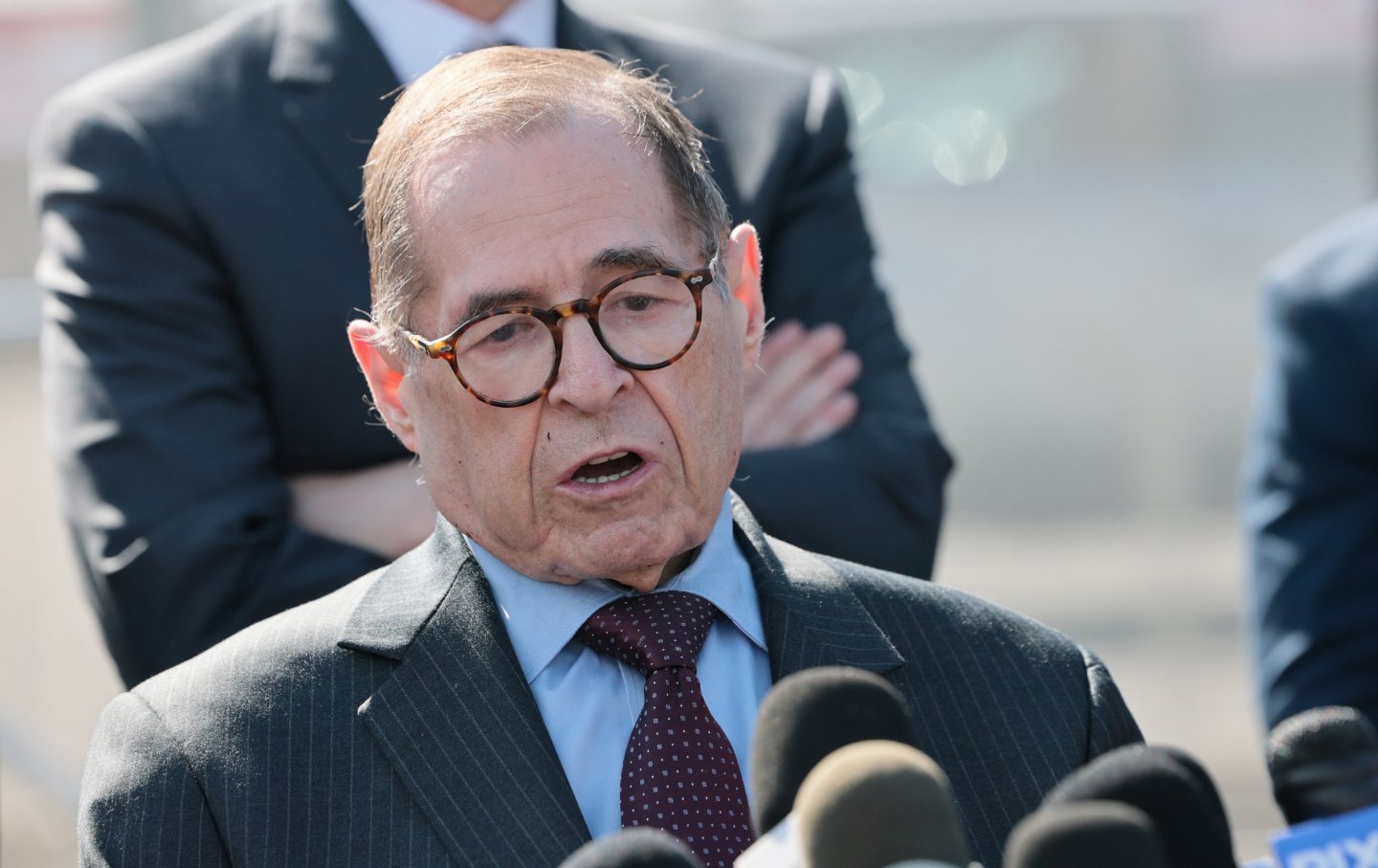
Representative Jerry Nadler (D-NY) speaks on May 27, 2026, in Newark, New Jersey, after inspecting Delaney Hall, which is being used as an Immigration and Customs Enforcement detention center.
(Michael M. Santiago / Getty Images)On a mild late spring evening last week, members of the Trust for Public Land, along with veterans of a liberation struggle that transformed New York City and the world, gathered to mark the 10th anniversary of the Stonewall National Monument, the first national park site dedicated to LGBTQIA+ history. There, in the midst of the celebration, was the 79-year-old New Yorker who, as part of his decades of advocacy for economic, social, and racial justice, had authored the Stonewall National Historic Site Establishment Act.
A beaming Jerry Nadler commemorated the Greenwich Village monument’s anniversary with a call to “recommit to the fight for equality, fairness, and dignity for all.”
Nadler, the dean of New York City’s congressional delegation, is retiring as the representative for New York’s 12th Congressional District after 50 years as a member of the New York State Assembly and the US House. He moves through Manhattan neighborhoods these days as a venerable yet approachable figure, widely admired for putting progressive values into practice to transform his city and his country. Former speaker Nancy Pelosi has described Nadler as “the conscience of the House”—a relentless champion of civil rights, civil liberties, and the rule of law who, as chair of the House Judiciary Committee, twice oversaw impeachments of Donald Trump. He is also the senior Democrat on the House Transportation and Infrastructure Committee, whose fierce advocacy for projects like the Second Avenue Subway extension into East Harlem serves as a reminder of Nadler’s storied determination to use his federal role to build up the nation’s largest city.
At a time when public approval of Congress is dismal, Nadler maintains a 67 percent approval rating in recent polling of NY-12 voters. Even as Democrats around the country express frustration with their party’s aging leadership, The New York Times points out that “few incumbents remain more popular at home than Mr. Nadler, a fixture of Manhattan politics who served as a leading foil to Mr. Trump during his two impeachments.”
This week that popularity will be put to the test in the political fight to succeed Nadler.
A crowd of candidates is competing to replace Nadler in Manhattan’s overwhelmingly Democratic 12th district, which covers some of the most historically liberal and politically engaged turf in the country. Tuesday’s Democratic primary has attracted tens of millions of dollars in outside spending on television, social media, and ubiquitous mailings. Yet the quiet voice that may well be heard above the free-spending cacophony is that of Jerry Nadler.
All of the major contenders are touting their endorsements. But Nadler’s early endorsement of state Assembly member Micah Lasher could turn out to be the most resonant. the Times has argued that “Mr. Nadler’s imprimatur unquestionably positions Mr. Lasher in the inside lane.”
That’s a significant factor in a primary contest where former Ambassador Caroline Kennedy, the daughter of a president and niece of two serious contenders for the post, is actively campaigning for her son, Jack Schlossberg; and where the vast majority of the city’s major unions (the United Federation of Teachers, the Uniformed Firefighters Association, AFSCME DC-37, the Retail, Wholesale and Department Store Union, the New York State AFL-CIO, among others) have joined key LGBTQIA+ groups (Stonewall Democrats of New York, Equality New York, the Jim Owles Liberal Democratic Club), the New York Progressive Action Network, and Our Revolution in endorsing Assemblyman Alex Bores.
Another candidate, public health advocate Nina Schwalbe, touts endorsements from Tom Duane, the first openly gay member of the New York State Senate, who once represented much of the district. She’s also backed by Tony Award–winning playwright, author, and activist V (formerly Eve Ensler), which resonates in one of the most arts-conscious districts in the country. Attorney George Conway, a fierce critic of President Trump, is also in the race, and polling reasonably well.
But Lasher knows the power of Nadler’s declaration that “Micah is not just ready for the fight ahead of him in Washington. He’s ready to lead it.“ A former aide to Nadler who has established his own track record as a diligent liberal member of the Assembly, Lasher features an endorsement video from the retiring representative on his campaign website where Nadler declares that “one candidate, by every measure, stands above the rest.”
Lasher’s also got the backing of Governor Kathy Hochul and that of former Manhattan Borough president Ruth Messinger, a beloved figure among West Side progressives who is well remembered for her courageous 1997 mayoral campaign against Republican Rudy Giuliani.
Endorsements are a major factor in many of New York City Democratic congressional primaries this year. Mayor Zohran Mamdani’s support for a slate of candidates—former City comptroller Brad Lander, who is challenging two-term Representative Dan Goldman in NY-10; Assembly member Claire Valdez, who is running to replace retiring US Representative Nydia Velázquez (who is backing another contender, Brooklyn Borough President Antonio Reynoso) in NY-07; and veteran activist Darializa Avila Chevalier, who hopes to unseat US Representative Adriano Espaillat in NY-13—has shaken up races all over town. When he rallied with his preferred candidates (and US Senator Bernie Sanders) less than a week before the primary, the mayor announced, “People often ask me what I think of the state of the Democratic Party. This slate here today is our answer.”
Popular
“swipe left below to view more authors”Swipe →Mamdani, as it happens, is now a NY-12 voter, thanks to his move to the mayor’s residence at Gracie Mansion on the Upper East Side. But he has not endorsed any candidate in the race, a factor that may give Nadler’s endorsement even greater consequence.
Endorsements are not always decisive, especially when races get as intense as the one in the 12th, where Bores’s determination to regulate AI put that issue front and center in debates and drew massive spending for and against him. Issues matter, and Bores and Lasher, in particular, have outlined detailed and generally progressive domestic policy platforms. On foreign policy, The Forward notes, there has been “relative consensus among the leading candidates on Israel”—with contenders criticizing Israeli Prime Minister Benjamin Netanyahu but refusing to characterize Israel’s assault on Gaza as a genocide.
That lack of distinction on an issue that has become central to other New York City congressional races—especially in NY-10, where Brad Lander has, as part of his stark challenge to incumbent Dan Goldman, identitied the Gaza assault as a genocide and speaks eloquently about the need to block the sale of offensive weapons to Israel—is a reminder that there are plenty of political parallels between Bores and Lasher.
In such a circumstance, few doubt the political significance of having Jerry Nadler in the papers, online, and on the streets of the Upper West Side of Manhattan—where the senior congressman was Sunday afternoon, making a last-minute pitch for Micah Lasher.
Become a Sustaining Donor This September
Between the reemergence of right-wing red-baiting and Donald Trump’s use of the chilling National Security Presidential Memorandum–7 to criminalize left political organizing, we’re seeing McCarthyism reborn before our eyes.
This assault on democracy cannot be ignored or wished away. Resisting it requires bravery in the face of threats and repression, a steadfast commitment to the truth, and the unwavering belief that we can—and will—overcome this darkness.
We must have an independent media that sets the record straight, unearths corruption and abuses of power, and advances a politics of justice and dignity for all if we’re to win this fight.
That’s why I’m writing to you today. This September, The Nation needs to add 100 monthly donors to sustain our progressive journalism. Your contribution makes the next investigative report, the next truth-speaking column, and the next pathbreaking essay all possible.
I hope you’ll support our work with a recurring donation today. If you donate $10 or more a month, we’ll send you a brand new “Hands Off the Free Press!” sticker to recognise your commitment to our cause. Please, donate today.
Onward,
Katrina vanden Heuvel
Editor and Publisher, The Nation
More from The Nation
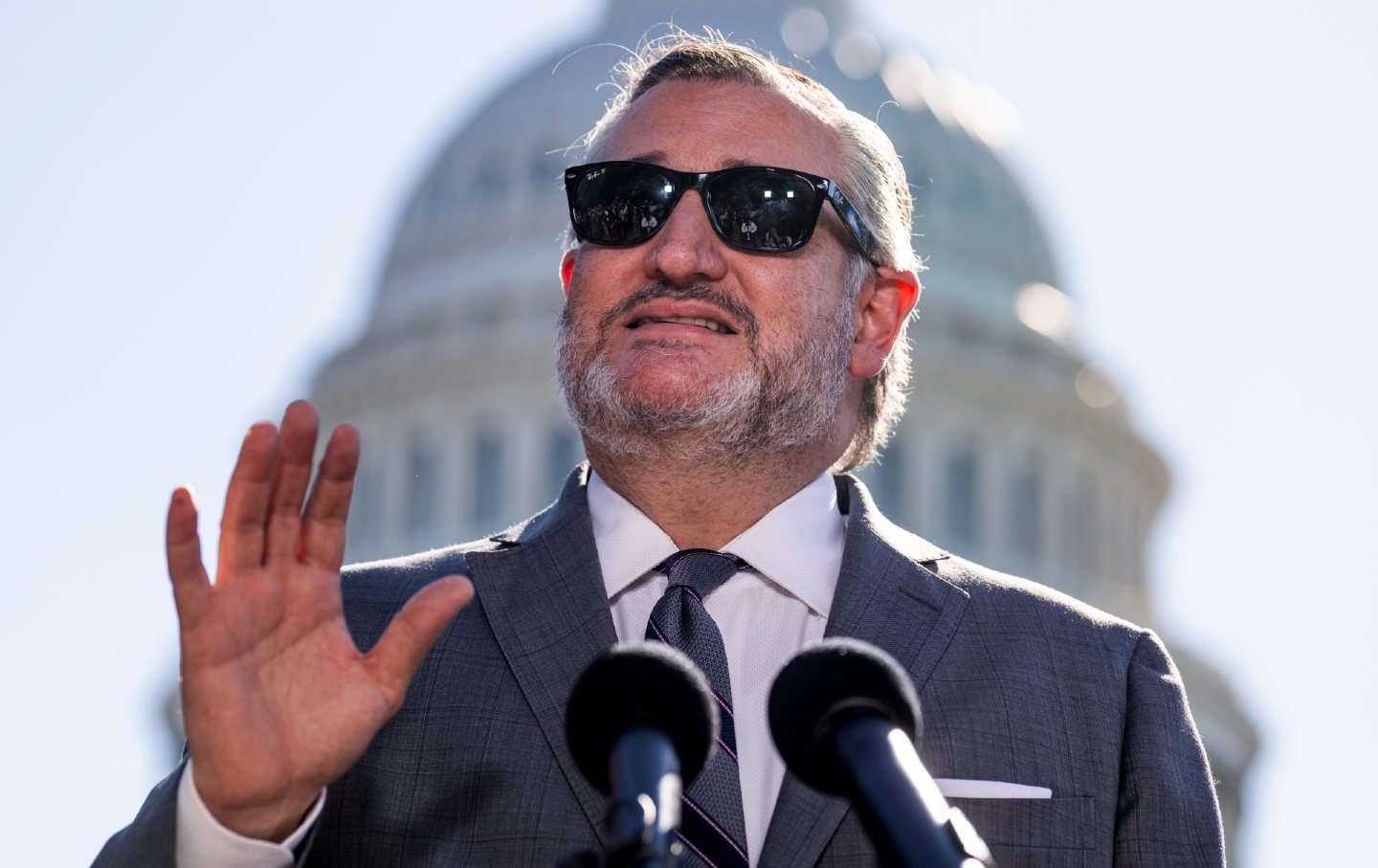
We Need to Protect College Sports from Ted Cruz We Need to Protect College Sports from Ted Cruz
In this week’s Elie v. U.S., our justice correspondent looks at the Supreme Court’s rejection of Trump’s latest move to restrict mail-in voting. Plus, why Ted Cruz’s college-...
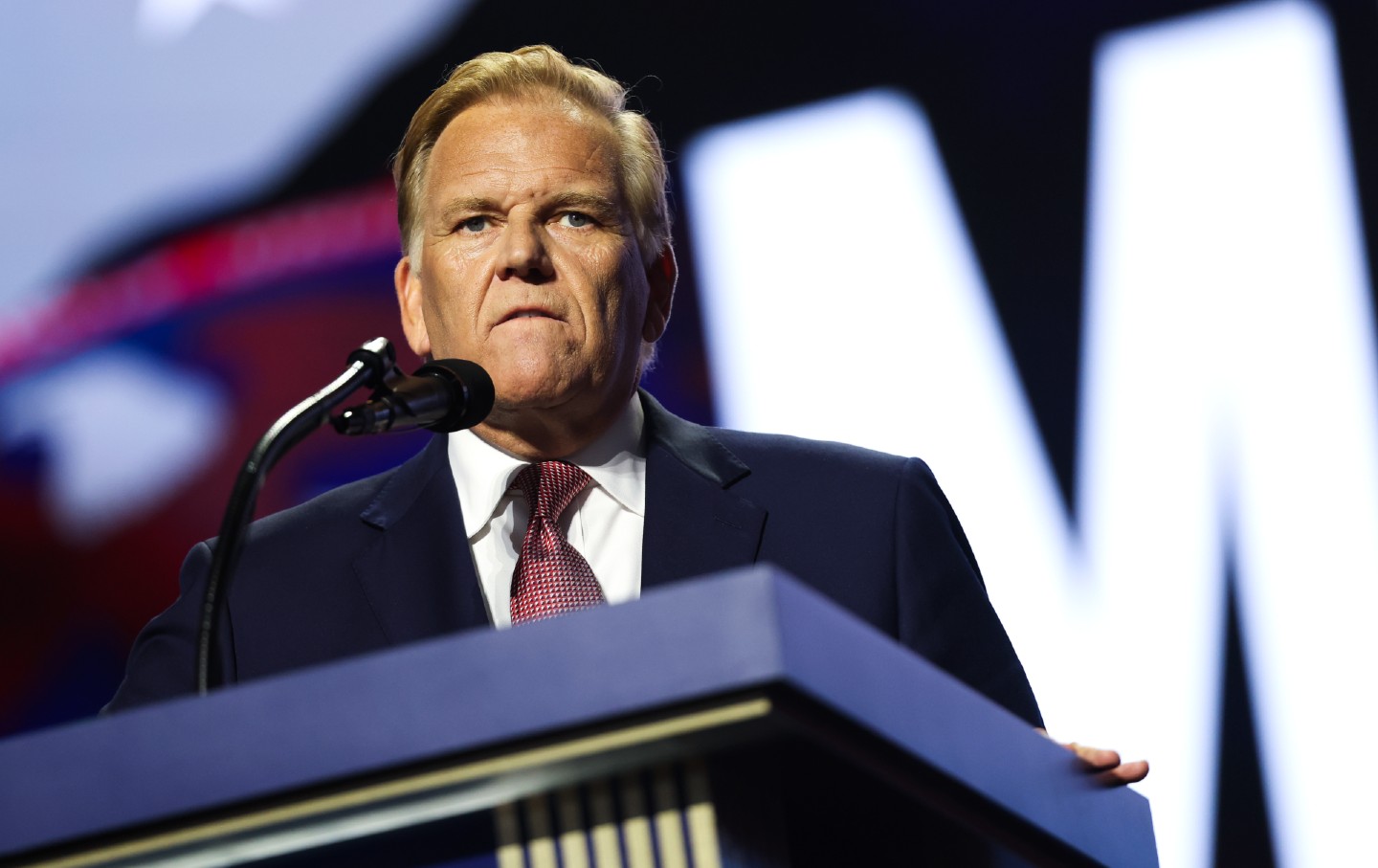
Why Aren’t We Talking About the Warmongering Lies of Mike Rogers? Why Aren’t We Talking About the Warmongering Lies of Mike Rogers?
The media’s relentless focus on Hasan Piker allows the dishonest GOP hawk (and actual Michigan Senate candidate) to evade scrutiny.

Netanyahu Is Accused of Ignoring Warnings About October 7 Netanyahu Is Accused of Ignoring Warnings About October 7
Will justice be served?
AI Is a Kitchen-Table Issue AI Is a Kitchen-Table Issue
And with the Trump administration encouraging unregulated growth in the industry, Democrats need to start acting like it.

