
Progressive Democrats Are Winning in Just About Every Corner of America
Sweet victories are fueled by demands of voters who want new leaders and authentic advocates.
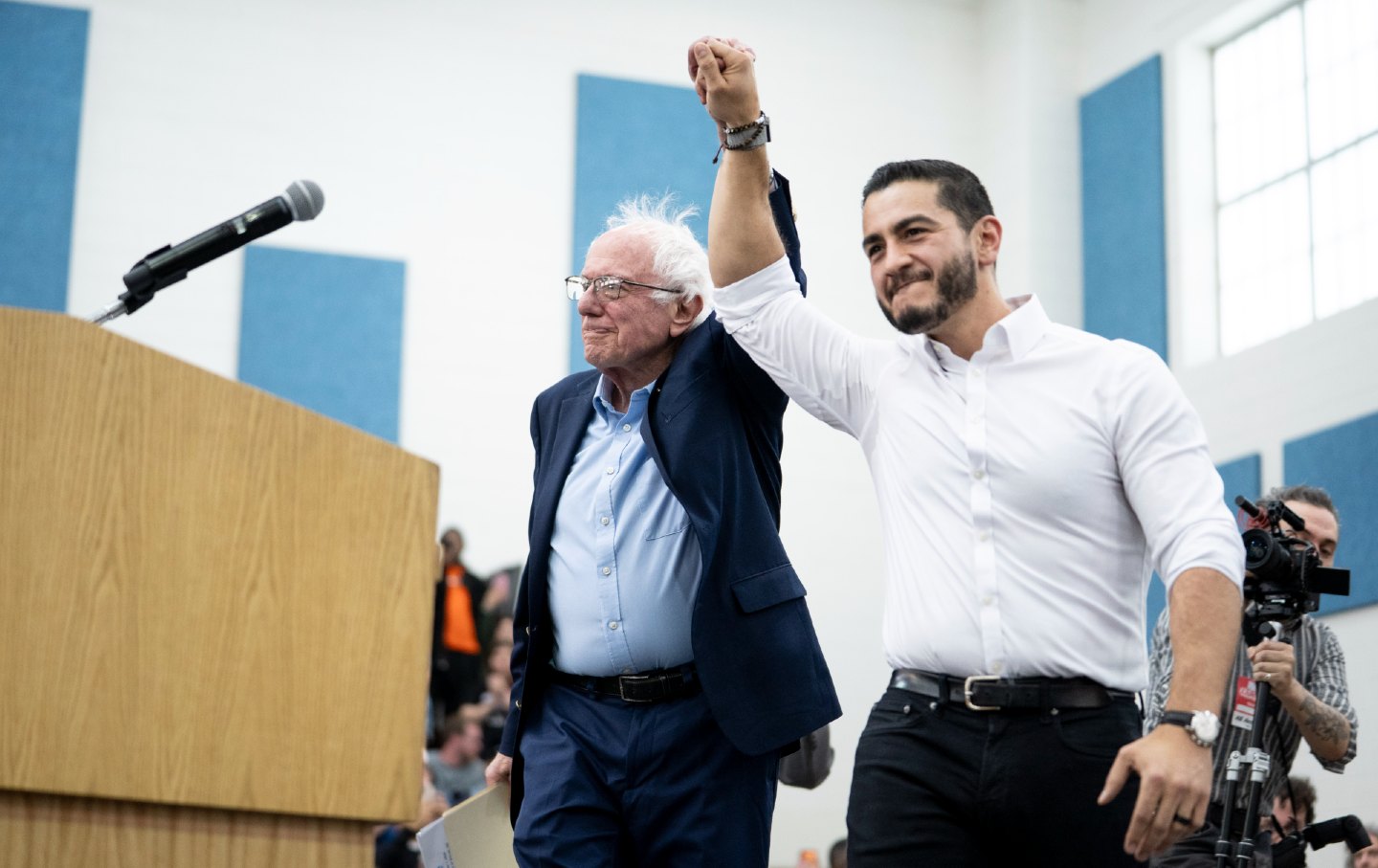
The conventional wisdom has historically been that the best primary outcome in a competitive election is for an experienced, moderate candidate—poll-tested and hand-picked by party leadership—to waltz to a nomination.
But in key primary elections this year, progressive leaders are pursuing a different approach. Elected officials like Bernie Sanders, Alexandria Ocasio-Cortez, and Ro Khanna—as well as organizations like the Democratic Socialists of America (DSA), Our Revolution, the Working Families Party (WFP), and Justice Democrats—are throwing their weight behind candidates whose values and records align with the growing economic populist movement on the left. And in just about every corner of America, they’re winning.
In Michigan’s open Senate race, Chuck Schumer has made his support of moderate Representative Hayley Stevens clear. But that hasn’t stopped Abdul El-Sayed from climbing in the polls. Running on a platform of taxing billionaires, ending the corrosive effects of money in politics, and Medicare for All, El-Sayed has picked up endorsements from Sanders, Representative Ro Khanna, Our Revolution, and the influential United Auto Workers union.
Meanwhile, despite being bruised by his list of scandals, oyster farmer and Marine corps veteran Graham Platner has risen in polls, demonstrating the burgeoning power of Maine’s voters and upstart progressive candidates. Facing almost certain defeat in Maine, Schumer’s hand-picked candidate Governor Janet Mills suspended her campaign and cleared the path to Platner’s primary victory.
In other races down the ballot, progressives are also demonstrating alternative leadership on foreign policy—particularly when it comes to Gaza.
As Sanders’s and occasional Ocasio-Cortez’s foreign policy adviser Matt Duss has argued in The Nation and to Ezra Klein, the future of the party’s success could depend on their willingness to show courage on this issue. Per Duss, Democratic voters “want their leaders to be on the right side of [Gaza], but it also gets to a much larger idea of: Can I trust this person? Are they for real? Or are they just going to regurgitate the usual set of establishment talking points.”
Sure enough, Khanna just endorsed activist Elijah Manley, who is challenging Debbie Wasserman Schultz after she jumped into the FL-20 race post-redistricting. The very first line of his endorsement? “Elijah Manley refuses corporate money and opposes genocide.” Meanwhile in NJ-12, Sanders-backed Dr. Adam Hamawy won his June primary on his history of service as a medic in Gaza and his belief that the US should be “spending on healthcare, not bombs.”
Same goes for Randy Villegas, who defeated an Israel lobby–backed opponent in California’s 22nd district; Analilia Mejia, a labor organizer who has strongly criticized Israel and who won the special election for the NJ-11 House seat; and Brad Lander, who divested the city’s pension funds from Israel as New York City’s comptroller and is well-positioned to defeat Dan Goldman in the NY-10 primary. All have taken a strong position on Gaza; all are endorsed by Sanders; all are likely to join Congress next year and help reshape the national conversation.
And if anyone doubts that these hotly contested campaigns can be followed by strong governance, they need look no further than Lander’s former mayoral opponent. Zohran Mamdani’s first months as New York mayor have resulted in an array of accomplishments, from laying the groundwork to expand free childcare to tapping the first-ever deputy mayor for economic justice to rebuilding trust in government itself. The city only gained, not lost, from a competitive primary process.
Now, building on the strength of Mamdani’s coalition, New York’s DSA chapter has a shot to elect two more members to the US House: Assembly member Claire Valdez in NY-12 and Darializa Avila Chevalier in NY-13. Meanwhile, the national organization now has over 100,000 members, doubled from the roughly 50,000 it had in October 2024—the month that Mamdani launched his mayoral campaign.
This is not to say that the so-called “Bernie wing” of the Democratic Party is likely to wrest control away from a well-entrenched establishment anytime soon—certainly not in a single election cycle.
But there is a palpable energy and momentum driving the growth of this faction of the party. Its leaders and upstart candidates alike are relentlessly focusing on a kind of economic populism that refuses to sacrifice compassion—an antidote for a country that just produced the world’s first trillionaire while allowing workers’ average hourly wages to slowly sink.
If it feels like a more organized approach than we’ve seen from this coalition before, it may be because it is.
As a presidential candidate, Bernie Sanders appealed to disillusioned Democratic voters in no small part because of his maverick, independent approach. He built a career around having the courage, time and again, to be the lone voice speaking up.
Popular
“swipe left below to view more authors”Swipe →But in the last decade, that has changed. A new generation of political leaders have stepped up that are inspired by Sanders, and share both his critical views of the Democratic Party and his affirmative vision for how much greater it could be—or they see their electoral home in DSA.
Sanders’ electoral strategy has shifted in kind. He is endorsing candidates early and strategically. He is coordinating with “protégés” like Khanna and Ocasio-Cortez—who themselves have now been in office long enough to be influential leaders in their own right.
Together, they are slowly but surely growing what was once a smattering of like-minded renegades into an established, formidable bloc of the Democratic Party—more prepared than ever to meet the loudening demands of progressive voters who desperately want new leadership and authentic advocates.
As Sanders himself said at the height of his 2020 presidential bid: “I have cast some lonely votes. Fought some lonely fights. Mounted some lonely campaigns. But I do not feel lonely now.”
Become a Sustaining Donor This September
Between the reemergence of right-wing red-baiting and Donald Trump’s use of the chilling National Security Presidential Memorandum–7 to criminalize left political organizing, we’re seeing McCarthyism reborn before our eyes.
This assault on democracy cannot be ignored or wished away. Resisting it requires bravery in the face of threats and repression, a steadfast commitment to the truth, and the unwavering belief that we can—and will—overcome this darkness.
We must have an independent media that sets the record straight, unearths corruption and abuses of power, and advances a politics of justice and dignity for all if we’re to win this fight.
That’s why I’m writing to you today. This September, The Nation needs to add 100 monthly donors to sustain our progressive journalism. Your contribution makes the next investigative report, the next truth-speaking column, and the next pathbreaking essay all possible.
I hope you’ll support our work with a recurring donation today. If you donate $10 or more a month, we’ll send you a brand new “Hands Off the Free Press!” sticker to recognise your commitment to our cause. Please, donate today.
Onward,
Katrina vanden Heuvel
Editor and Publisher, The Nation
More from The Nation
We Need to Protect College Sports from Ted Cruz We Need to Protect College Sports from Ted Cruz
In this week’s Elie v. U.S., our justice correspondent looks at the Supreme Court’s rejection of Trump’s latest move to restrict mail-in voting. Plus, why Ted Cruz’s college-...

Why Aren’t We Talking About the Warmongering Lies of Mike Rogers? Why Aren’t We Talking About the Warmongering Lies of Mike Rogers?
The media’s relentless focus on Hasan Piker allows the dishonest GOP hawk (and actual Michigan Senate candidate) to evade scrutiny.

Netanyahu Is Accused of Ignoring Warnings About October 7 Netanyahu Is Accused of Ignoring Warnings About October 7
Will justice be served?

AI Is a Kitchen-Table Issue AI Is a Kitchen-Table Issue
And with the Trump administration encouraging unregulated growth in the industry, Democrats need to start acting like it.

