
Ending Aid to Israel?
Nope. It’s three-card Bibi.
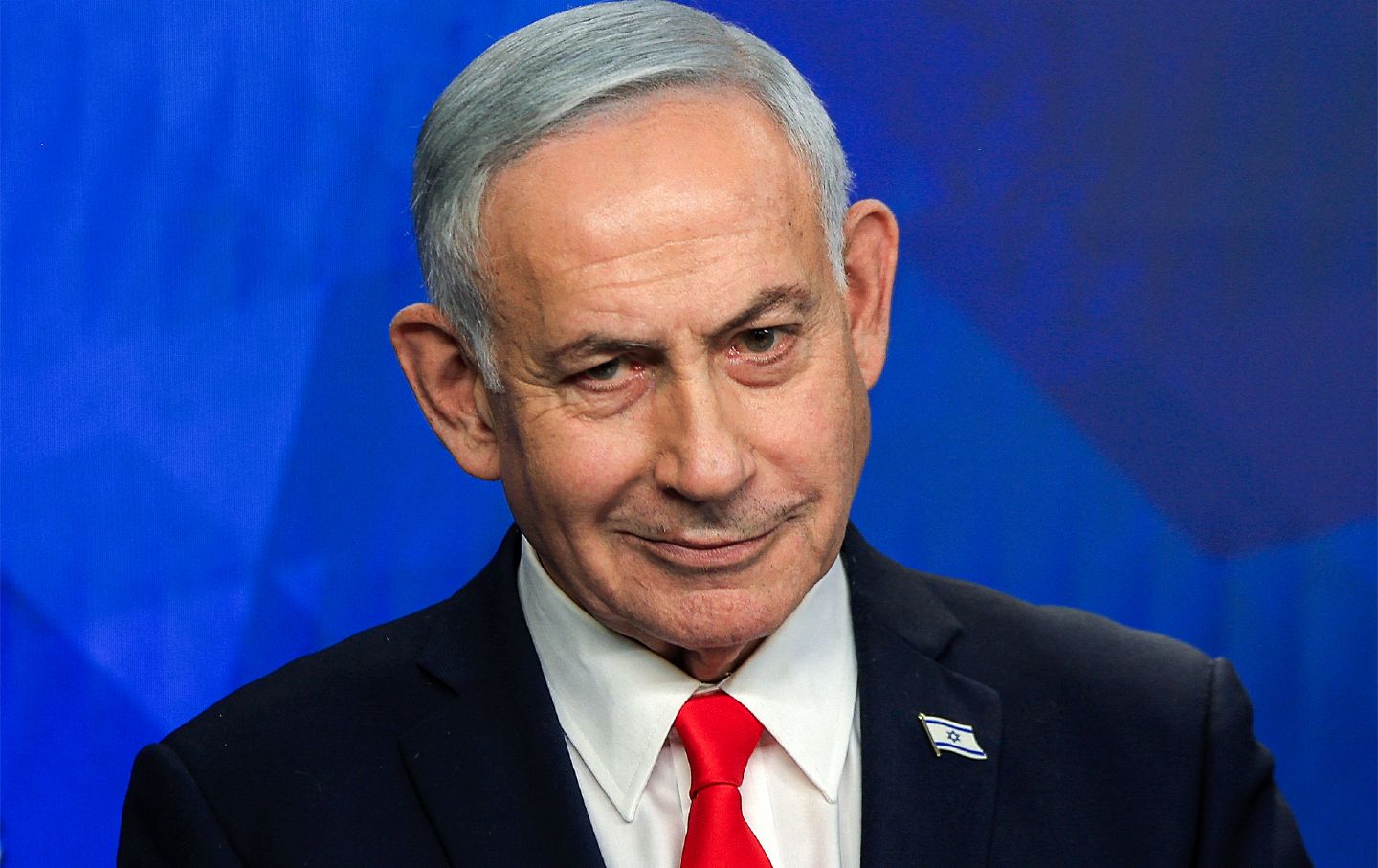
This month, the United States and Israel formally launched talks to end the largest military aid package in American history. The $38 billion Memorandum of Understanding will almost certainly not be renewed when it expires in 2028. After decades in which American aid to Israel was considered untouchable, it’s clear that a big change is afoot.
At first glance, this looks like a shift away from taxpayer-funded American aid in light of the actions of the Netanyahu government, and the subsequent shrinking American public support for Israel. Over the past four years, the number of Americans who have an unfavorable view of Israel jumped from 42 to 60 percent. That number is particularly pronounced among younger Americans and on the left, although it has grown among every demographic.
Prime Minister Benjamin Netanyahu himself fed the narrative that aid to Israel is going away, telling 60 Minutes, “I think that it’s time that we weaned ourselves from the remaining military support.”
Don’t be fooled. This is three-card monte. Netanyahu is not giving up on US funding. He’s just moving the cards to make the money harder to follow.
To see why, start with what this fight was actually about. For those of us who pushed to condition US aid to Israel, cutting off the money was never the goal. It was a means to an end. The goal was—and remains—changing the Israeli government’s behavior: halting settlement expansion in the West Bank, upholding international law and the human rights of Palestinians in Gaza and elsewhere, and preserving the possibility of an independent Palestinian state.
The money mattered because it was leverage toward those outcomes—the most visible, most accessible pressure point Americans had.
For Netanyahu, and some of his allies on Capitol Hill, the end of the MOU is an opportunity to dodge that pressure while keeping American funding for the Israeli government. A new framework, described in proposed legislation, envisions replacing traditional military assistance with a new set of agreements on “joint defense cooperation” and the “codevelopment, coproduction, and mutual investment” in defense technologies. In a letter to that bill’s sponsor, Representative Marlin Stutzman, Netanyahu took credit for this framework, calling it “my plan.” The National Defense Authorization Act now being considered by the House would establish a formal US-Israel Defense Technology Cooperation Initiative inside the Pentagon.
In other words, the MOU is being replaced with a new mechanism for American government funding for Israel’s military. One with less oversight, less accountability, and less leverage.
The current MOU, for all its flaws, has one indispensable virtue: It is transparent. There is a $3.8 billion line item, appropriated annually by Congress, reported in the press, and visible to every voter. That visibility is precisely what made it the most accessible lever Congress had over Israeli conduct. Conditions could be attached. Disbursements could be reduced. Advocates, lawmakers, and ordinary citizens could point to a number and demand accountability for how it was used.
To be clear, that lever has mostly not been pulled. Congress after Congress declined to attach meaningful conditions even as Israel expanded settlements, entrenched its occupation, and prosecuted a war in Gaza that has shocked the conscience of the world. Washington never had the stomach to bring real consequence to bear.
That political will is finally arriving. And that may be exactly why the new framework is being engineered now such that there would be no lever. Support reframed as “partnership” rather than “aid” cannot be easily quantified or targeted. It becomes funding embedded in Pentagon procurement, in classified programs, and in hundreds of defense contracts scattered across vendors and, more importantly, congressional districts. Co-production deals will bind American defense contractors to the arrangement. The next time Israeli conduct provokes a crisis of conscience in Washington, there will be no annual appropriation to debate, no line item to block, no MOU to renegotiate.
So here is where the three-card monte leaves us: Israeli behavior is unchanged; American funding likely increases, and the one instrument of pressure Americans were finally ready to use is removed before it was ever seriously tried. Ending the money was the means, not the end. If the old framework ends in a way that makes the goal harder to reach, those of us who have been pushing to condition aid in order to change Israeli government behavior have lost ground.
That is reason enough to oppose this new framework. But there is something far more important that needs to happen: Our government must learn to wield the influence it retains. Yes, that includes any funding that takes place between now and the end of the MOU. But American leverage does not end when the checks stop. It encompasses weapons sales—every weapon and military system Israel buys, even with its own money, still passes through US export law and can be blocked by Congress—and a host of diplomatic arrangements. The political energy that made ending aid a mainstream position must now be redirected toward these instruments.
Popular
“swipe left below to view more authors”Swipe →As discussions over the end of the MOU are underway, the real question is not the mechanism for American financing. It is whether settlement expansion halts, whether Israel abides by international law, and whether an independent Palestinian state comes to be. We need to keep our eye on that outcome, not the card that Netanyahu wants us to follow.
Become a Sustaining Donor This September
Between the reemergence of right-wing red-baiting and Donald Trump’s use of the chilling National Security Presidential Memorandum–7 to criminalize left political organizing, we’re seeing McCarthyism reborn before our eyes.
This assault on democracy cannot be ignored or wished away. Resisting it requires bravery in the face of threats and repression, a steadfast commitment to the truth, and the unwavering belief that we can—and will—overcome this darkness.
We must have an independent media that sets the record straight, unearths corruption and abuses of power, and advances a politics of justice and dignity for all if we’re to win this fight.
That’s why I’m writing to you today. This September, The Nation needs to add 100 monthly donors to sustain our progressive journalism. Your contribution makes the next investigative report, the next truth-speaking column, and the next pathbreaking essay all possible.
I hope you’ll support our work with a recurring donation today. If you donate $10 or more a month, we’ll send you a brand new “Hands Off the Free Press!” sticker to recognise your commitment to our cause. Please, donate today.
Onward,
Katrina vanden Heuvel
Editor and Publisher, The Nation
More from The Nation
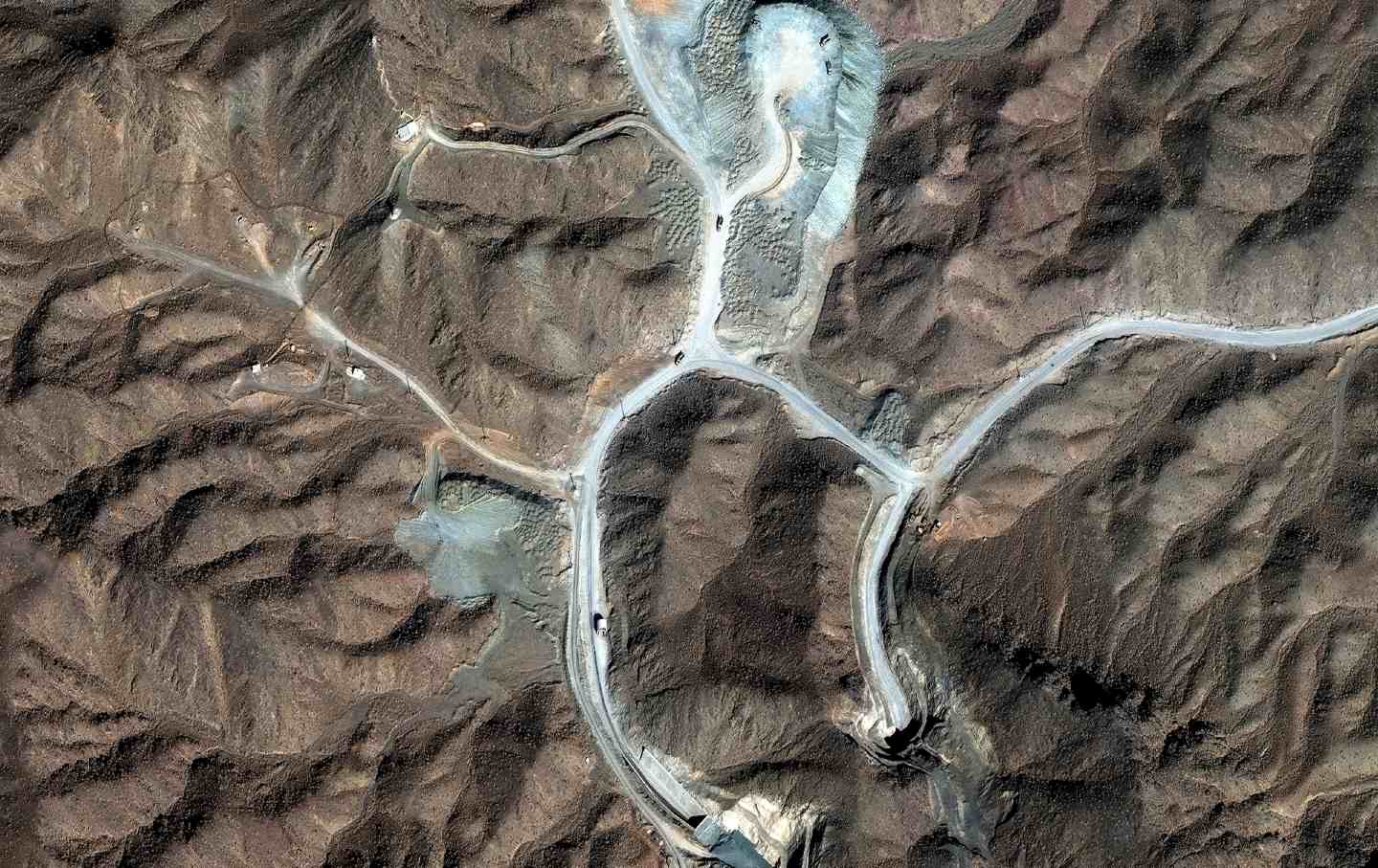
The Peril of Trump’s Final Act: Would He Use a Tactical Nuclear Weapon in Iran? The Peril of Trump’s Final Act: Would He Use a Tactical Nuclear Weapon in Iran?
Trump is trapped in a war that has already been lost, a reality that he will never allow himself to admit.
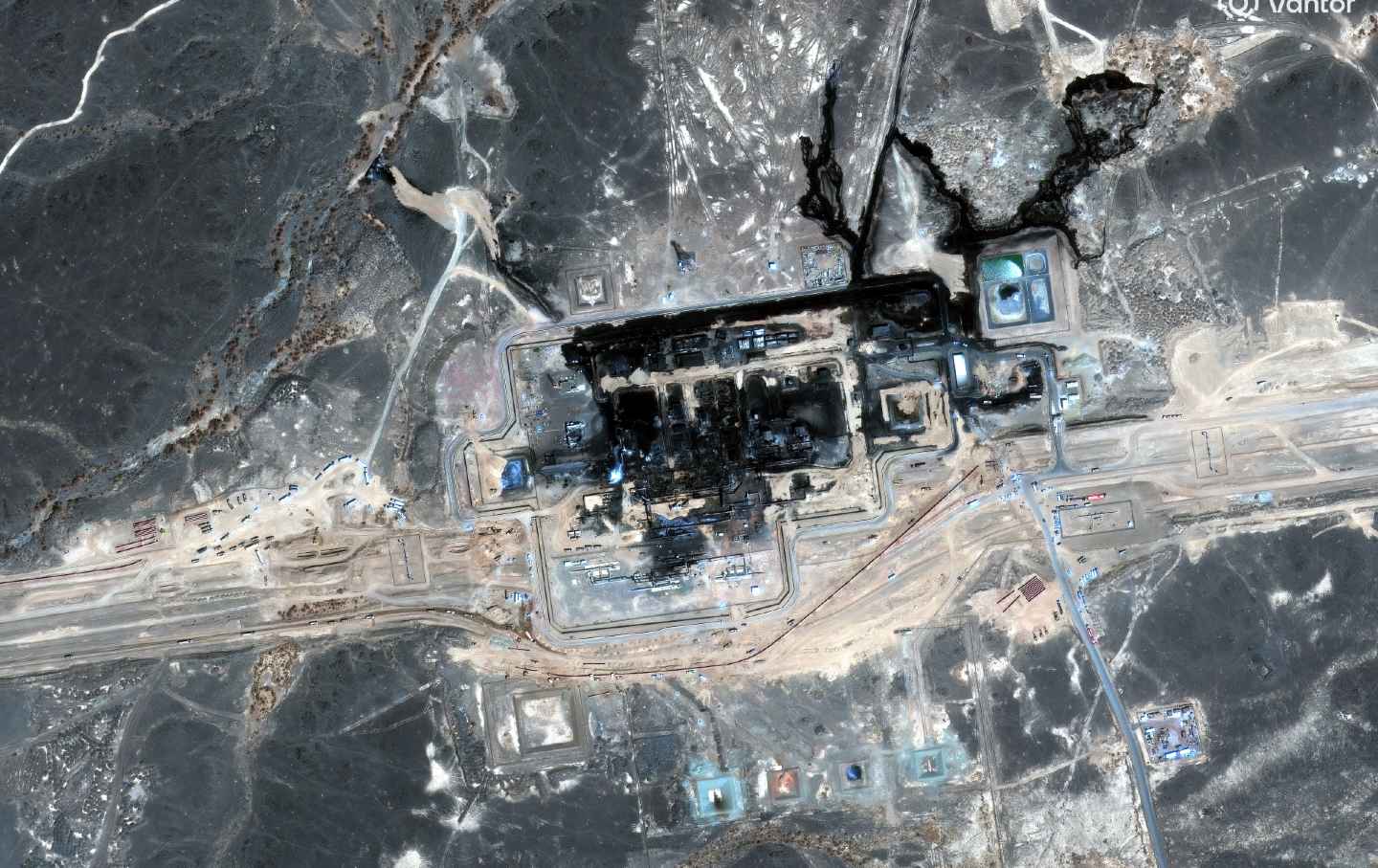
A Spreading War Rattles Global Energy Markets A Spreading War Rattles Global Energy Markets
Analysts say the consequences for energy prices and the world economy may be more serious in this later phase of a war that many had expected to be largely over by now.
The Reality Today Is That Foreign Policy Hawks Are a Minority in the Democratic Party The Reality Today Is That Foreign Policy Hawks Are a Minority in the Democratic Party
It is damn time we all started acting like it.
Trump Has Lost Interest in the Iran War, but It’s Still Quite Interested in Him Trump Has Lost Interest in the Iran War, but It’s Still Quite Interested in Him
The United States is losing the conflict, stoking chaos in the region, and inviting economic calamity—all with no end in sight.

Gloria Steinem: A View From 1990s Moscow Gloria Steinem: A View From 1990s Moscow
“Keep women’s solidarity in mind: Don’t forget how we empower each other through mutual support,” she reminded us.

Accountability for the Gaza Genocide Can’t Focus on Netanyahu Alone Accountability for the Gaza Genocide Can’t Focus on Netanyahu Alone
Getting rid of one bad leader won’t bring justice.

