This Midterm Election Just Burst Republicans’ 2028 Bubble
Yesterday’s results showed a full-throated rebuke of Republican dominance—so what does that mean for 2028?
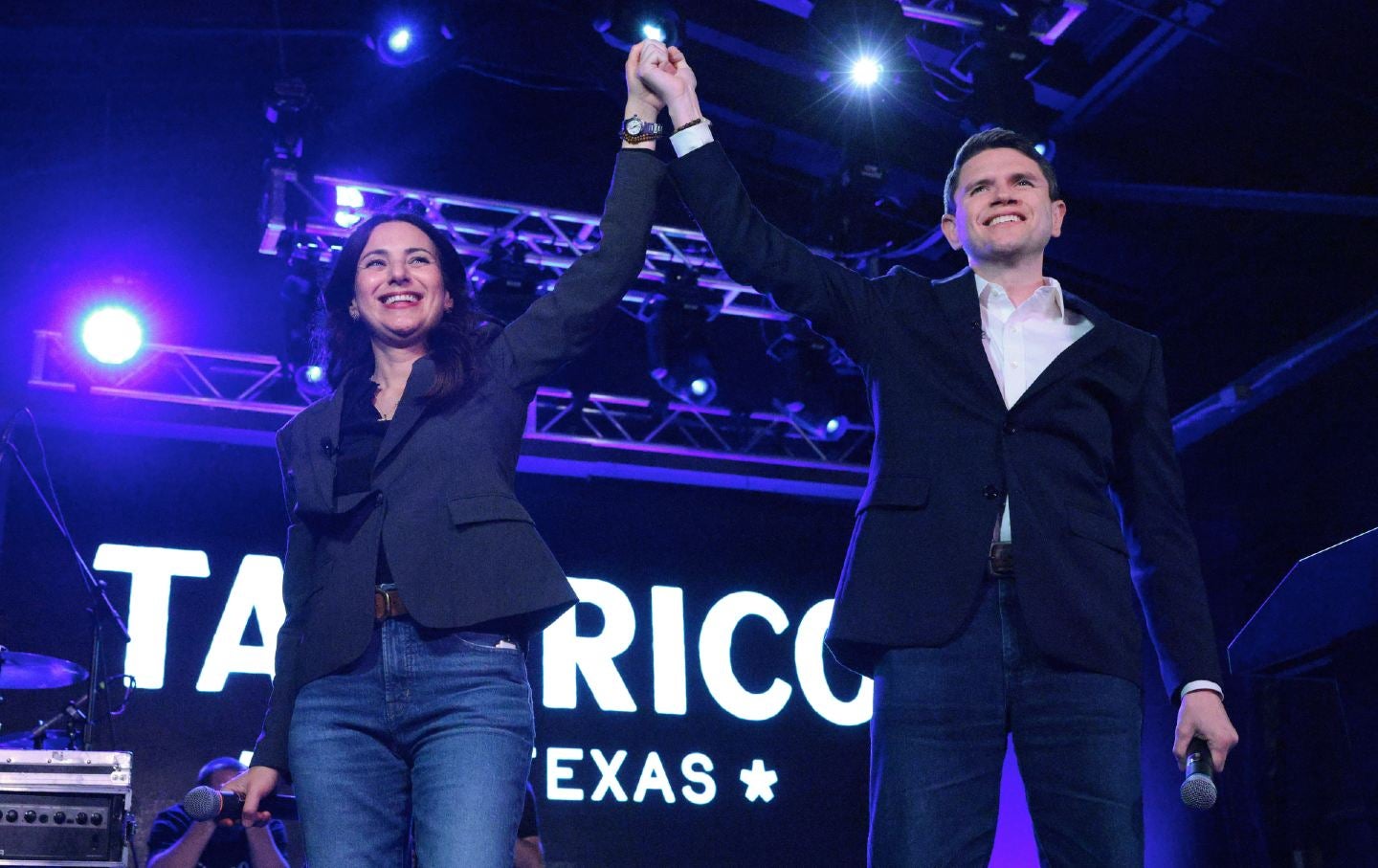
Texas Democratic gubernatorial race winner Gina Hinojosa and Democratic US Senate race winner James Talarico take the stage during a Dia de los Muertos concert rally at The Espee on November 1, 2026 in San Antonio, Texas.
(Chip Somodevilla / Getty Images)There are an overwhelming number of once-in-a-generation stories coming out of Tuesday’s elections. One could focus on the improbable outcome of the South Carolina Senate race, or the nail-biter in Mississippi, or the restructuring of the Midwest’s political architecture. The sheer number of flipped House and Senate seats is its own story, with many races producing Democratic wins so overwhelming that—as was the case in Hungary this past April—the autocrats simply had no wriggle room to challenge their defeat.
But to my mind, the biggest story, by far, is Texas, where James Talarico defeated Ken Paxton by more than a million votes in the Senate race, and where Gina Hinojosa knocked long-time Governor Greg Abbott off of his perch. This has been the Democrats’ holy grail for 30 years—and on Tuesday they finally grabbed it.
Up and down the ballot in Texas, Democrats won. They won every statewide race—including the contest to replace Paxton as attorney general; it’s likely they won enough state House seats to control one chamber of the legislature and make inroads into the Senate majority. And they won all four of the state Supreme Court justices’ positions that were up for election, meaning a 9–0 hyper-right Supreme Court is now split 5–4. In one brutal night, the GOP’s decades-long dominance over Texas politics evaporated. The Lone Star State, long the dominant force amongst a coalition of diehard red states, is now tinted blue.
Texas in 2026 is California in the late 1990s, post–Prop 187, or Arizona after state legislators passed a string of venomously anti-immigrant measures in the 2000s. In both of those states, the political backlash, and the organizing of Latino communities to push back, transformed politics and broke GOP dominance. So, too, in Texas, massive voter mobilization efforts—in the valleys along the Rio Grande, in particular—transformed the makeup of the state’s electorate. After years of false starts, Talarico and Hinojosa ushered into power a truly multiracial coalition in the country’s second-most-populous state.
Speaking of Arizona’s decade-and-a-half-long quest to turn blue: Yesterday the Democrats won both the state House and Senate, meaning that Arizona now has a democratic trifecta, joining California, neighboring Nevada—whose voters ousted GOP Governor Lombardo and replaced him with Aaron Ford—New Mexico, Colorado, Oregon, and Washington. New Mexico will be governed by Deb Haaland, the country’s first Native American governor. California and Texas will both be governed by people of Latino descent. Though Xavier Becerra’s victory in the governor’s race in California was a comprehensive win that in a normal election year would have merited national headlines, it barely registered among commentators, so vast were the shifts occurring all around the country yesterday.
It’s possible that the results were a one-off fluke, a product of the unique fissures and furies running through the nation’s electorate in 2026, and that come 2028 Texas will revert to being a red bastion. But I doubt it. If the Democrats can consolidate their position, implementing policies on wages, housing affordability, healthcare access, and humane immigration reforms that meaningfully impact Texans’ lives for the better, and if they can keep engaged the vast numbers of people who in 2026 made the leap into political participation for the first time, the consequences will be far-reaching. The Texas revolt will, in the long run, likely have an impact on national politics as profound as California’s transformation away from Pete Wilson–era GOP dominance in the 1990s. It will alter the national calculus on everything from abortion access to environmental policies, from immigration enforcement strategies to minimum-wage policies. And it will make it infinitely more difficult for the next Republican presidential candidate to get the Electoral College to break in his or her favor.
Four of the five biggest states in the country are now firmly Democratic, and the fifth, Florida, came within a whisker of joining the club. Had the Democrats invested in Florida even a fraction of what they poured into Texas, Floridians would, today, also be waking up to a new political reality. Increasingly, as these elections have shown, Republican dominance can be guaranteed only in the most rural of Midwestern, Mountain-Western, and Southern states. And no matter how you slice and dice it, that is simply not enough to form the core of an electoral coalition capable of winning on the national level.
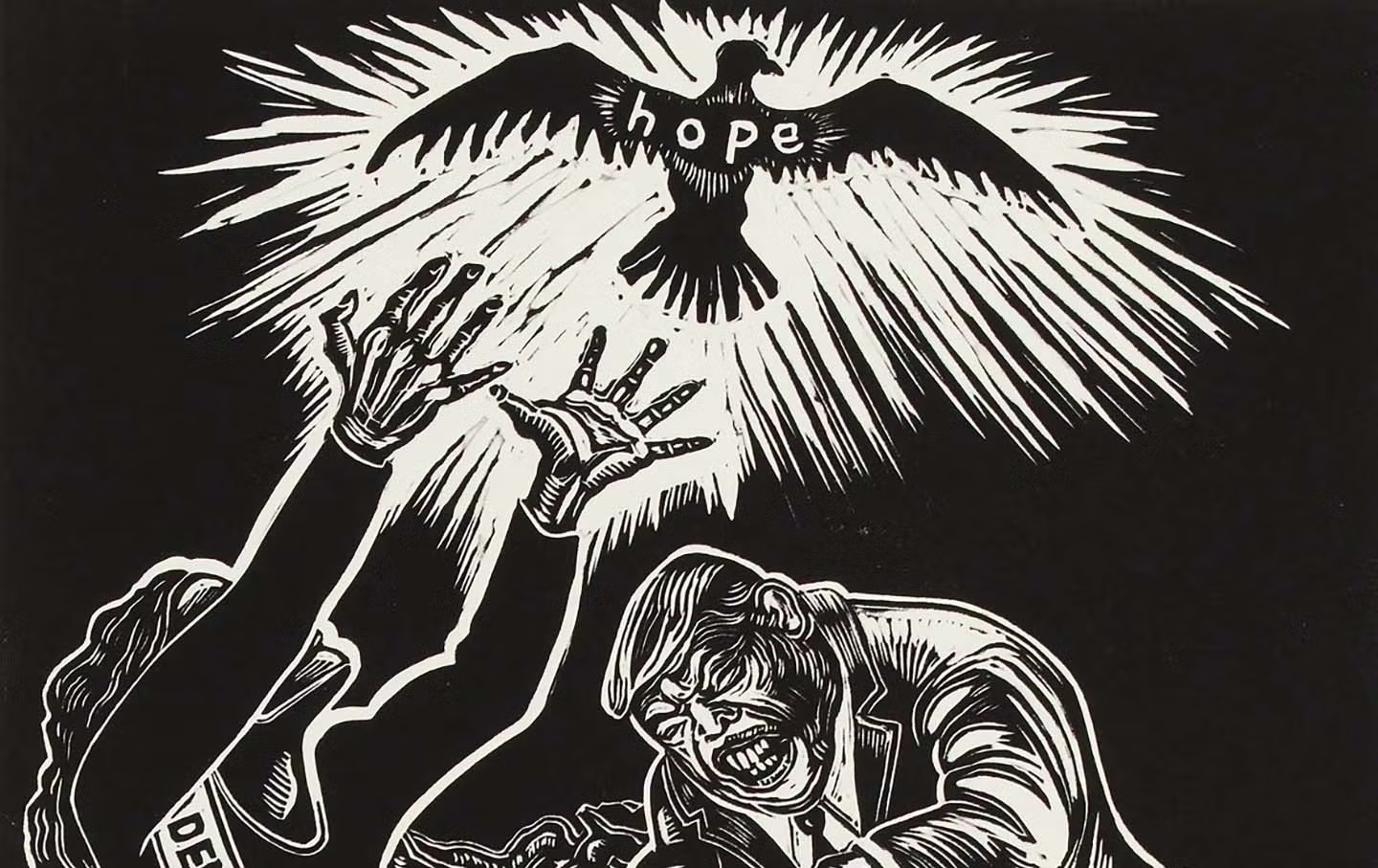
A decade ago I wrote, optimistically, that Donald Trump would become Lonesome Rhodes, the silver-screen demagogue portrayed so powerfully by Andy Griffith in the 1957 movie A Face in the Crowd. Shunned by his own fans, spurned by the people who had previously cheered his every word, and ultimately left bellowing into the rafters of an echoing, empty mansion, Rhodes collapses into his own narcissistic madness. It didn’t happen to Trump in 2016; it did happen this week, in 2026. MAGA’s coalition was shattered beyond repair, and Trump’s hold on his audience was finally, irretrievably, obliterated.
All evening long, Trump bellowed and ranted into a social-media void. His insanity flowered as, perhaps, it has never flowered before. He blamed Fox News. He blamed Greg Abbott. He blamed the RNC. He blamed the pollsters. He announced that “I wasn’t on the ballot, and if I was we would have won IN A LANDSLIDE! Thank you for your attention to this matter. President DONALD J TRUMP”
At one point, after the addled president had spent hours blaming everyone but himself for the electoral debacle, one of his own followers replied on Truth Social that it wasn’t “them” who were to blame but Trump himself. “You fucked us,” his follower wrote in a message that flashed on my screen but that, alas, I forgot to save before it disappeared. It may well have been the most accurate commentary of the evening.