
The Dismantling of Black Studies
Everyone committed to democracy, intellectual freedom, and the rule of law should be alarmed at what is happening—and prepared to act.
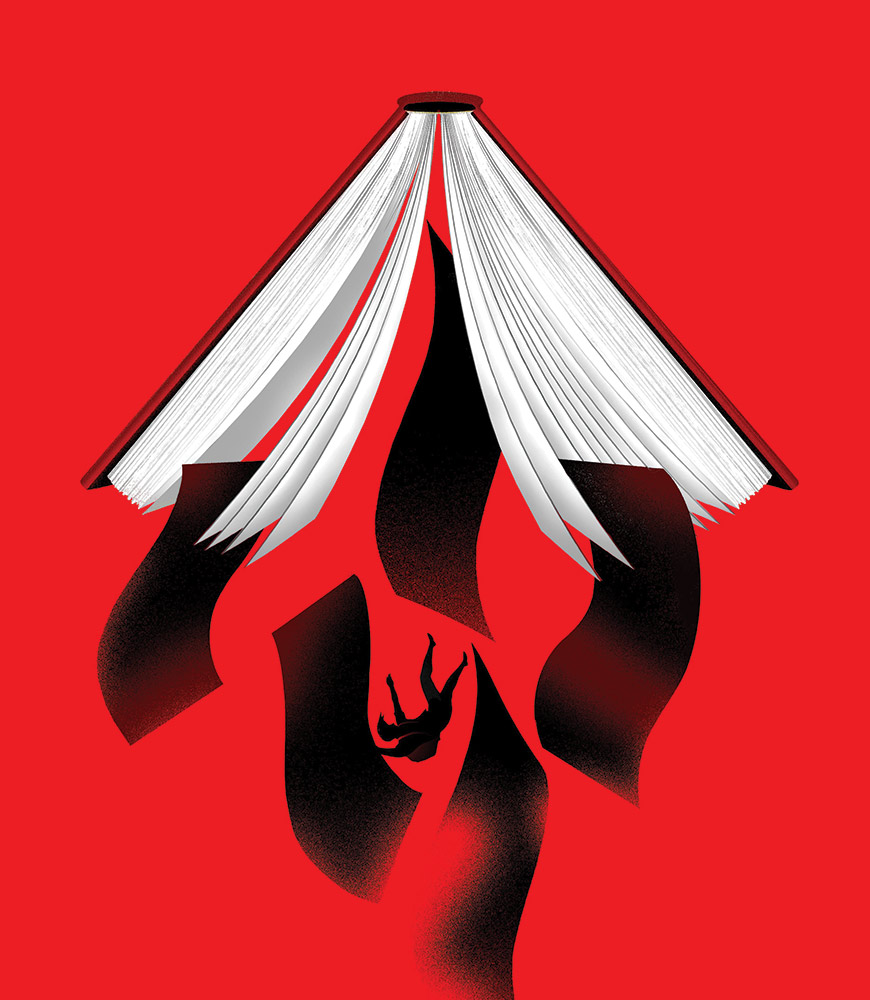
Everyone I know in the US academy—students, staff, faculty, university publishers, and cultural-institution workers—is afraid. But the recent assault on higher education is not evenly distributed. Black studies is where the attack has been the most deliberate, the most structural, and the most revealing of what is at stake. In recent months, university leaders have dismantled departments and deliberately narrowed the pipeline producing the next generation of Black scholars. What is happening is not just a series of isolated bureaucratic decisions; it is a coordinated assault.
The overall chilling effect on academia of these moves, and what they reveal about the erosion of democracy and freedom of thought in the United States, can be enervating, but I have turned to an admonition from Audre Lorde, in a poem that was itself an act of self-preservation:
it is better to speak
remembering
we were never meant to survive
For students and scholars of Black studies across the country, the process of collective speaking began in earnest on March 5, when Columbia University’s Institute for Research in African American Studies, which I lead, hosted a virtual event titled “What We Stand to Lose: A National Forum on Black Studies Under Fire.” I counted 780 people in the webinar at the height of the discussion. The cases presented were specific and damning: The University of Texas at Austin had folded its renowned Department of African and African Diaspora Studies into a generic Social and Cultural Analysis Studies unit; Florida’s Senate Bill 266 had stripped Black-studies courses of their general-education status and cut the research funding that faculty depend on; Kentucky’s House Bill 4 had suspended the University of Louisville’s Pan-African Studies doctoral program and eliminated all graduate assistantships. What emerged from that evening was not despair but a shared and pointed diagnosis: that these were not isolated local crises but nodes in a coordinated sequence—first rhetorical, then legal, then administrative—and the field’s most urgent challenge is not only the government’s relentless crackdown on higher education but also the preemptive measures that institutions are taking to comply with anticipated attacks. Given its scale, this assault is not ours alone to fight: Everyone committed to democracy, intellectual freedom, and the rule of law should be alarmed at what is happening—and prepared to act.
The attacks on Black studies are not only connected to the tectonic rightward shifts we are experiencing in every terrain of public life in the United States, but fundamental to them. It is at the nexus of a project funded by a network of conservative foundations that aims to reverse generations of hard-won progress. The government has waged this war on behalf of those interests to restore an order in which certain kinds of knowledge, certain kinds of people, and certain kinds of life are returned to the margins—where, in this worldview, they belong. What is happening is the product of a sequence that is familiar to students of American history.
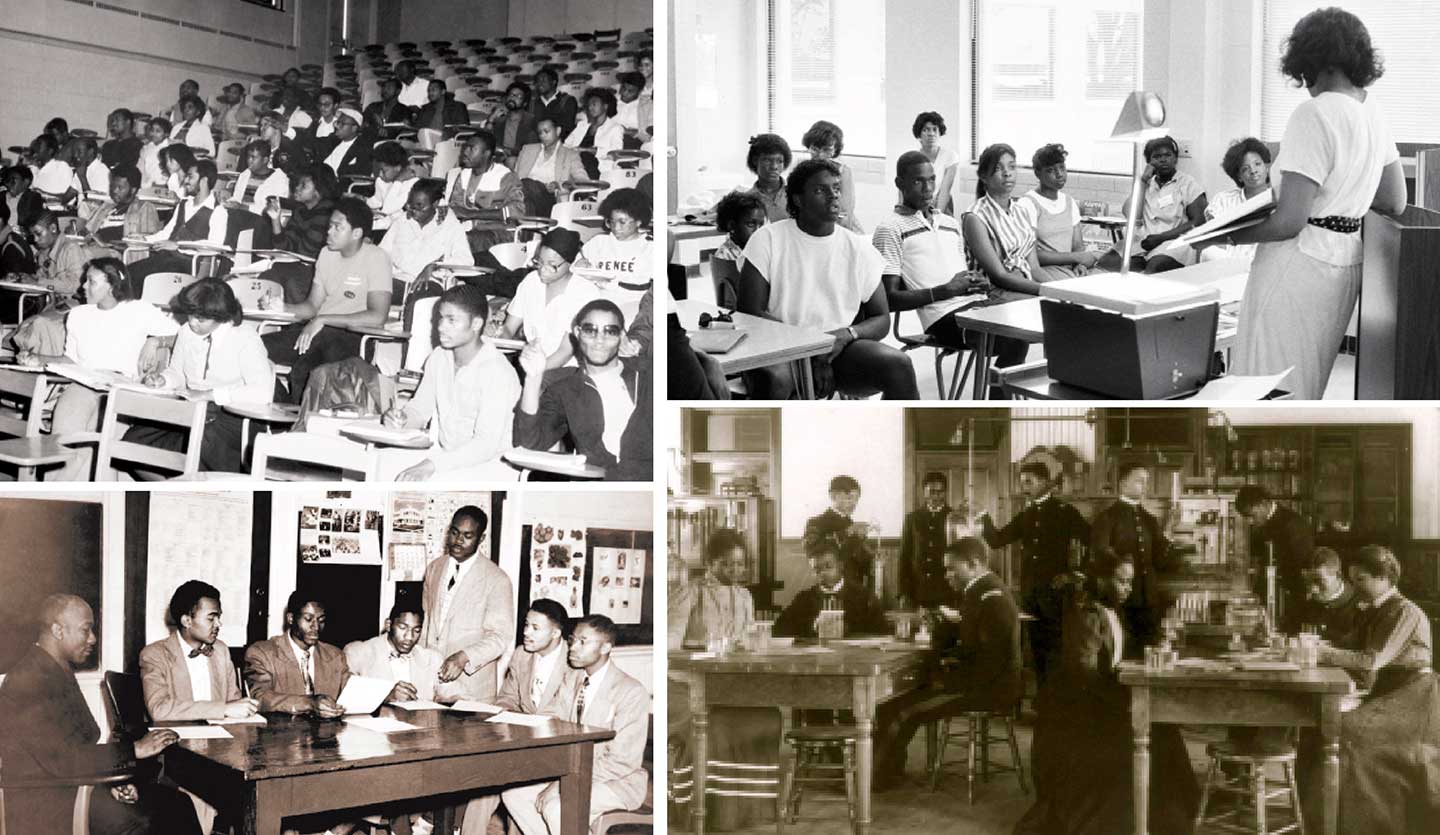
Following the rapid progress that took place during the Reconstruction era, the Supreme Court systematically dismantled the legal architecture of Black citizenship, and the country settled back into an arrangement that white citizens apparently found more comfortable. This reneging on the promise of Reconstruction happened in a short period—after the Civil War amendments had been ratified, after Black men had served in Congress and held office across the South, and after the Freedmen’s Bureau had built more than a thousand schools in a decade. Everything that had been won was reversed—not in spite of the law but through it. We are watching that sequence again. What is being unmade this time is not only the right to vote or the right to citizenship—both of which are being whittled away—but also the right to know, the right to make knowledge, and the right to tell the truth.
Black studies is not merely a container for scholarship. It is the set of practices and habits of mind developed over the long intellectual tradition that began before Black people were permitted to attend any educational institution in the United States. Learning to read was itself an act of resistance, routinely punished with violence and sometimes death. South Carolina’s Negro Act of 1740, or “An Act for the Better Ordering and Governing of Negroes and Other Slaves in this Province,” made it a criminal offense to teach enslaved people to write, among the other ways it redefined the enslaved as chattel. Every state in the Deep South followed suit. These new laws targeted writing because writing is the technology of legal personhood—contracts, passes, manumission papers, and official testimony. The logic was clear: Writing is a tool with which to make claims of personhood and belonging.
The long Black intellectual tradition did not wait for institutional permission. It built itself in churches and newspapers; in art, music, and literature; in the margins of Qurans and Bibles; and in the holds of ships. When it finally won its way into the academy, it built itself again. While the standard account of how Black studies came to exist in the American university is accurate and should not be minimized—strikes at San Francisco State in 1968 and a campus takeover at Cornell in 1969, campus shutdowns, and occupations that spread across the country—that account does not always acknowledge what happened after students’ demands were partially met, or how those demands were channeled into particular institutional forms, or who underwrote those forms. As Noliwe Rooks argues in White Money/Black Power, the philanthropic funding of Black studies did not simply help expand the field—it shaped it in specific ways. Grants from the Ford Foundation during the field’s early years favored supplementing the existing curricula at predominantly white institutions over the autonomous, self-governing departments that Black student activists had demanded, producing a field that has been dependent on administrative goodwill from its inception. The American-studies scholar Roderick Ferguson extends this analysis: The university’s incorporation of Black studies was an exercise of power, calibrated to absorb the field’s critical force precisely by appearing to welcome it.
Black studies, strengthened by the diversity within the field, has revised, expanded, and corrected history and transformed academic disciplines and the terms of popular debate. It has provided generations of students of every racial and ethnic background with the tools to participate productively in a multiracial democracy. This success is precisely why it is under attack. But there is a second reason, inseparable from the first: At the very moment Black studies became impossible to ignore, its opponents decided they could no longer tolerate it. Visibility and vulnerability arrived together.
My colleague Farah Jasmine Griffin captured what this moment of “Blacklash” revealed. “Movements are long in the making,” she wrote. “Activists, organizers, artists, and thinkers invest time, do the work, preparing, imagining new possibilities, and identifying the way. Finally, an ember ignited by a myriad of factors takes flame and becomes incandescent.” This is precisely what Black studies has been for more than 50 years—the long preparation, the imagining of new possibilities, the identifying of the way. After George Floyd was murdered by police on May 25, 2020, and protests erupted in all 50 states and more than 60 countries, that preparation became visible on a scale its opponents could not ignore. In June 2020, all of the top-10 nonfiction titles on the New York Times bestseller list were by Black authors or about race, a milestone in the world of publishing. The prevalence of PhDs and faculty members on the bestseller lists was a unique feature of the era. Strands of the long Black intellectual tradition became visible, legible, and highly marketable in unprecedented numbers, even as the backlash was being organized. The same summer that saw a record-breaking surge in sales of anti-racist books and protests for systemic reform also saw a rapid legislative and judicial reaction. The incandescence that cleared ground for transformation became another sort of beacon for those who feared transformation: a call to arms.
Christopher Rufo’s campaign to pervert and weaponize the term critical race theory—a campaign triggered by the College Board’s proposed Advanced Placement African American Studies curriculum—bore direct legislative fruit. By 2022, more than 40 states had introduced bills restricting the teaching of “divisive concepts”—a phrase lifted from the vocabulary of the first Trump administration. Texas’s House Bill 3979, Kentucky’s House Bill 4, and Florida’s Stop WOKE Act and Senate Bill 266 were among the most sweeping. The laws were immediately contested in federal court—Andrea Queeley, one of the scholars who spoke at the March 5 Black-studies forum, is a plaintiff in the ongoing federal lawsuit against Florida’s SB 266—but the litigation did not halt their effect, especially after the hard right secured a series of crucial wins.
In the culmination of a generations-long legal battle, in June 2023, the Supreme Court struck down race-conscious admissions in Students for Fair Admissions v. Harvard. The logic that had long treated Black studies as a demographic concession, a diversity mechanism, and a recruitment tool—rather than as a scholarly discipline with its own intellectual authority and reason for being—now had a legal warrant. This conflation with affirmation action and DEI made Black studies acutely vulnerable to whatever fate might befall affirmative action itself. Simply put, the terms of entry contained the terms of eviction.
After Trump’s second inauguration, his administration wasted no time in launching probes into institutions of higher education. His executive orders targeting diversity initiatives bear Orwellian titles like “Ending Illegal Discrimination and Restoring Merit-Based Opportunity,” which invoke the language of civil rights to dismantle civil-rights infrastructure, and directed civil-rights divisions to investigate and penalize the very programs designed to make civil-rights law meaningful.
In March 2025, the Department of Education opened civil-rights investigations against 45 universities for their participation in the PhD Project—a 32-year-old nonprofit that has helped more than 1,700 Black, Indigenous, and Latino students earn doctoral degrees. Thirty-one of those universities, including Yale, Duke, MIT, Ohio State, and Michigan, have since signed agreements cutting ties with the organization. Education Secretary Linda McMahon called this “the Trump effect in action.”
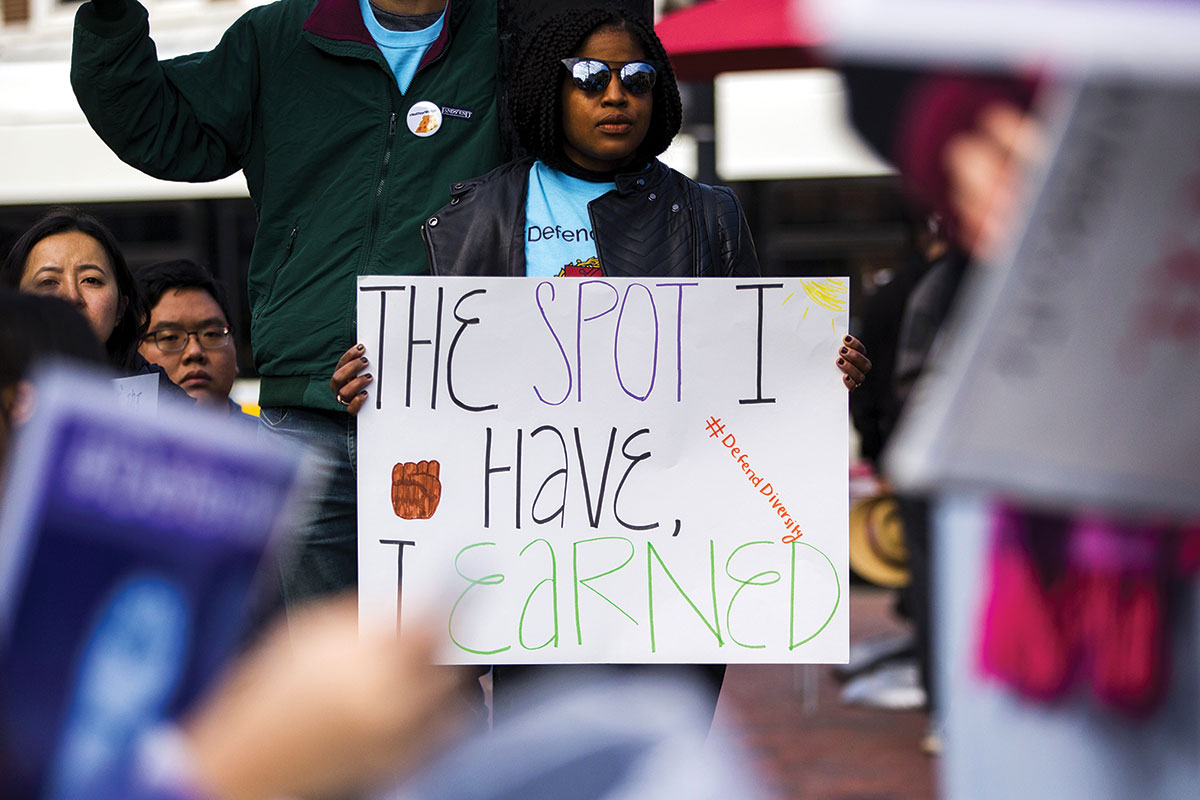
Iunderstand the situation not only from my vantage as the director of Columbia’s Institute for Research in African American Studies and a professor of African American and African Diaspora Studies, but also as a student. In the late 1990s, I returned to college after a long stint away. I was a work-study student in the Africana Studies program at New York University, which comprised a beautiful suite of offices, a seminar room, and a library filled with African art. Writers, musicians, artists, filmmakers, and actors regularly dropped by for what felt like an ongoing extracurricular graduate seminar. Across the hall was the Asian/Pacific/American Studies program, which had its own resources and intellectual agenda. The connections that formed—scholars thinking together about diaspora, colonialism, and belonging—were possible because each program could show up as itself. We were intellectual neighbors not because an administrator had decided that all the subalterns should be housed together to feed at the same shallow resource trough, but because each formation had been built into something that could stand on its own.
In 2005, NYU quietly folded its Africana Studies program into a broad administrative umbrella called the Department of Social and Cultural Analysis, without meaningful consultation with the faculty and students who would be affected. One day there was a program and an intellectually rich and generative space. The next day there was an announcement and a reorganization. At the time, this move was called “prudent.” We should have paid more attention.
Dissolving into “Social and Cultural Analysis” what took 50 years to build was a ruthless redistribution—a wresting away—of earned power. What remains of a distinct scholarly project is being subjected to a process whose outcome has not merely already been determined but has been decided off-campus, in what I can only imagine are dank, smoke-filled bunkers at the Heritage Foundation and the Manhattan Institute, which coauthored the model anti-DEI legislation that Texas enacted and then praised the Texas campaign—calling on the federal government to defund universities that do not comply. Their work is financed by the same groups that have spent decades building the legal and legislative infrastructure now being deployed against public universities.
On February 12, 2026, the news arrived the way bad news often does now: colleagues pinging one another across time zones about the latest development in what had become a litany of academic catastrophes that had been mounting since Students for Fair Admissions v. Harvard, but which took on head-spinning velocity with Trump’s second inauguration and the crackdowns by universities on students protesting in solidarity with Gaza. The leaders of the Black-studies program at UT Austin learned, in a 30-minute Zoom call, that the department would be folded—along with American studies, Mexican American and Latina/o studies, and women’s, gender, and sexuality studies—into yet another Department of Social and Cultural Analysis, the blandly efficient label that’s shaping up to be the preferred nomenclature. More than 800 students are currently enrolled in the departments being dismantled.
One week after UT Austin announced the consolidation, the university’s governor-appointed regents voted unanimously to limit what they called “unnecessary controversial subjects” in the curriculum. This purposefully vague language is part and parcel of the moves by the Trump administration to censor Smithsonian museum exhibits and limit the “guilt” white people might feel when confronting US history, for example. Undefined “controversy” as an administrative criterion is a mandate to be afraid. And the mandate is being issued everywhere at once.
On February 20, NYU canceled 13 culture-, identity-, and faith-based graduation celebrations—including for Black, Latine, LGBTQ+, and first-generation students—citing “the current political climate” without elaboration. NYU is not a public university in a red state; it is a private research university in Manhattan’s Greenwich Village. The false dichotomy of red state/blue state, public/private, flagship/Ivy has become not only debilitating but dangerous. The assault on the academy does not recognize those distinctions. Neither should our resistance.
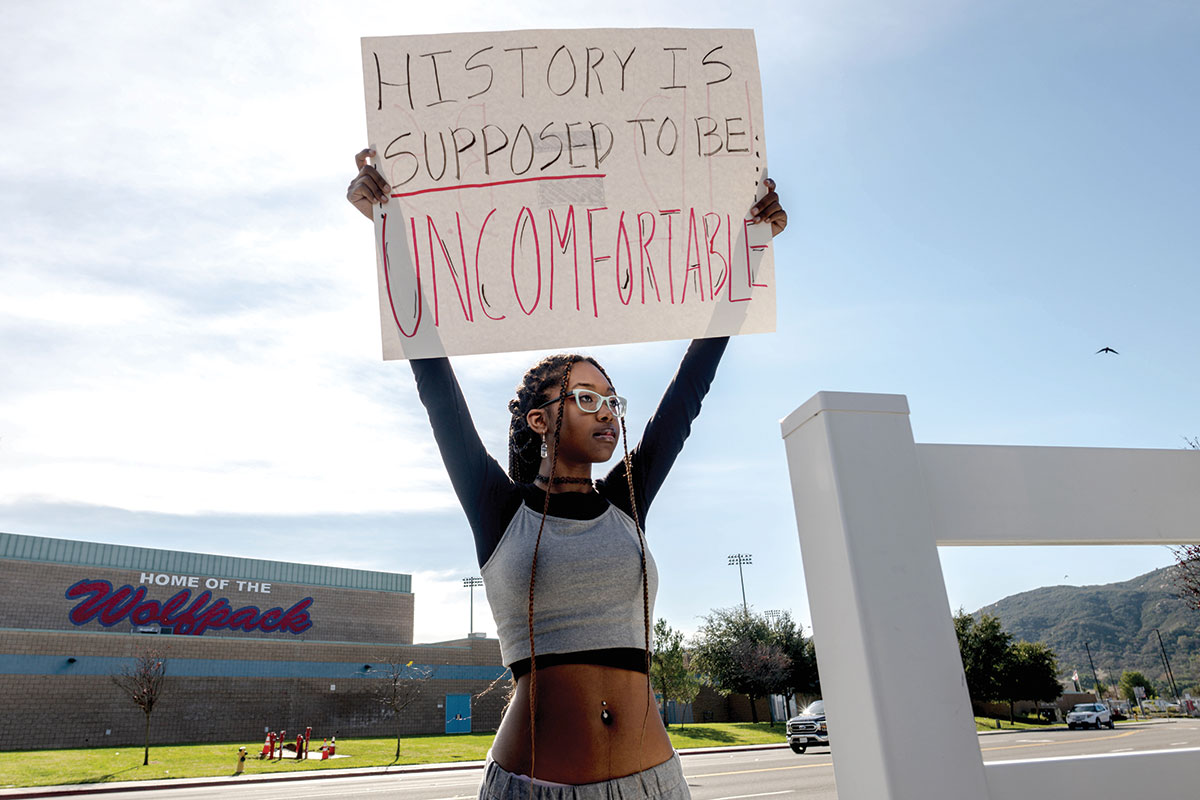
Ikeep returning to an image that heather McGhee gives us in her book The Sum of Us: What Racism Costs Everyone and How We Can Prosper Together: the city of Montgomery, Alabama, in 1959, filling its public swimming pools with cement rather than allow Black children to swim in them. And it wasn’t just the pools: The parks, the zoo, the community center—all public spaces were shuttered for more than a decade. McGhee documents this pattern throughout American public life: the willingness to destroy the commons rather than share them. Pools around the country were not drained because they were expensive or dangerous or posed any harm. They were drained because white citizens found Black presence in those pools intolerable. And as white children sweltered in the heat—believing that something had been taken from them that was rightfully theirs—their parents continued to insist that the pools had been closed for everyone’s benefit.
Black studies is the pool. All over the country, you can hear cement trucks rumbling down the streets.
The political theorist Juliet Hooker gives us the analytical frame this moment requires. In Black Grief/White Grievance, Hooker argues that American democracy is structured by a fundamental asymmetry: Black citizens are expected to absorb political loss without breathing a word of grief, while white citizens are permitted to experience and bemoan losses that have not yet occurred—and in many cases never will—as legitimate political wounds demanding remedies. What the current moment calls a restoration, a return to some undivided and uncontested American knowledge before things became “unnecessarily controversial,” is a grievance projected from a past that never existed.
“Those were the days,” sang Archie and Edith Bunker. “Make America great again,” chant the president and his supporters. The regents of UT Austin, solemnly voting to protect students from subjects they cannot name, are singing the same song. The harm they insist be remedied cannot be documented, because it has not occurred. This is anticipatory grievance—laundered through the administrative process and dressed in the false attire of stewardship and public trust. And yet the performance of that imaginary loss produces entirely real consequences for actual people.
Vice President JD Vance, who holds degrees from Ohio State and Yale, has called educators “enemies.” He and the other Ivy League–educated men and women in the administration who are attacking academic freedom do not want to destroy the university because it is “elite.” They want to remake all universities in their own old image and with all the old exclusions. Their quarrel is not with so-called elite universities, and it is certainly not with real elites. They are mad at what their alma maters look like when Black students and scholars are fully present in them—when the pool, in other words, is open. The knee-jerk accusation of elitism is key scene-setting shtick in the political theater: performed to force those who object to the destruction to disqualify themselves before speaking, so that the work of destruction may continue without witness.
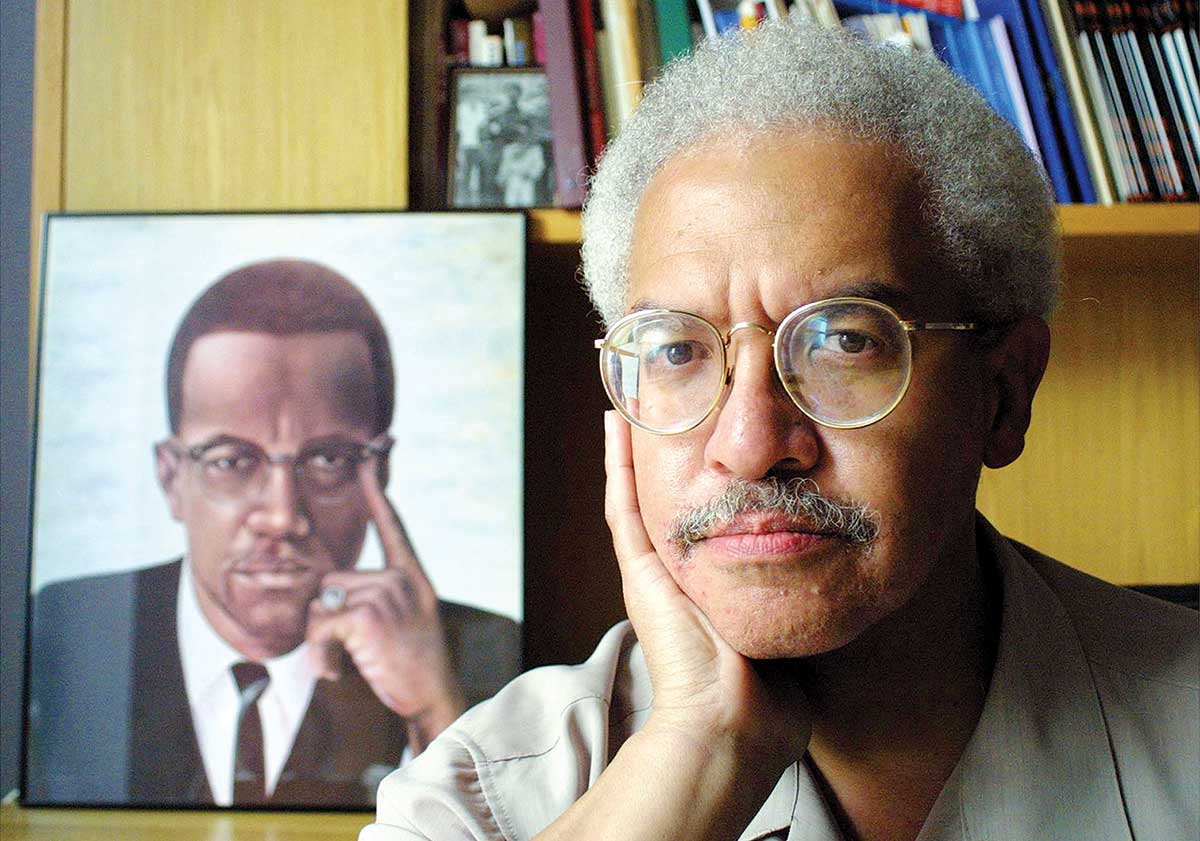
I joined Columbia’s Department of African American and African Diaspora Studies, which grew out of the Institute for Research in African American Studies, in 2023. Founded by Manning Marable, who was one of the most widely read and influential scholars of the late 20th century, the department also publishes Souls: A Critical Journal of Black Politics, Culture, and Society, which Marable launched in 1999. As its editor, I often sit in his chair, not metaphorically but literally. I am telling you this not to establish a credential but to offer an orientation: I know what it feels like to inherit hard-won infrastructure and to feel, in the same moment, how fragile that infrastructure is.
Columbia has been specifically targeted by the current administration: federal funding frozen, governance restructured under duress. The institution—and, by definition, all universities—was never and should not be the uncomplicated sanctuary that some, from the outside, thought it to be.
Marable understood this. He spent decades insisting that the intellectual life of Black people deserved a permanent institutional home at one of the world’s great universities—adjacent to Harlem, in the city of New York. He knew that Black studies was neither a gift that any university bestowed on Black people nor a cosmetic service to an institution. It was a demand that Black people made: that their lives and their thought be treated as the center of inquiry rather than the margin of someone else’s paradigm. Marable and many others worked so that the next generation would inherit infrastructure rather than rubble. I feel the weight of that inheritance precisely because what was built is not permanent. Right now in the United States, it is being tested in ways that he anticipated, and that we are still learning to meet.
Across this country, university leaders and trustees seduced by the path of least resistance that the words “Social and Cultural Analysis” seem to promise must recognize that diminishing or dissolving departments in Black, gender, queer, and ethnic studies, canceling graduation ceremonies, and placing academic programs under federal conditions are not educational judgments or even smart budgetary decisions. These are choices to participate in a political project whose trajectory is already historically clear—a project whose other nodes include book bans, voting restrictions, and the suppression of immigrant and LGBTQ+ rights, leading to the diminishment of everyone’s rights and making “rule of law,” “academic freedom,” and “citizenship” meaningless rhetoric left for the dustbin of history. The signal they send—that belonging is conditional and subject to revision whenever the political climate makes it inconvenient—will outlast this administration. It will be remembered, even if these shortsighted decisions destroy the university and fill it with cement.
This country has been here before—and more than once, sweltering in the heat of the disappearance of a common good and blaming the wrong folks. The question is not whether we understand the arc of this history. The question is whether we will bend it—or, silently, watch it break.
Become a Sustaining Donor This September
Between the reemergence of right-wing red-baiting and Donald Trump’s use of the chilling National Security Presidential Memorandum–7 to criminalize left political organizing, we’re seeing McCarthyism reborn before our eyes.
This assault on democracy cannot be ignored or wished away. Resisting it requires bravery in the face of threats and repression, a steadfast commitment to the truth, and the unwavering belief that we can—and will—overcome this darkness.
We must have an independent media that sets the record straight, unearths corruption and abuses of power, and advances a politics of justice and dignity for all if we’re to win this fight.
That’s why I’m writing to you today. This September, The Nation needs to add 100 monthly donors to sustain our progressive journalism. Your contribution makes the next investigative report, the next truth-speaking column, and the next pathbreaking essay all possible.
I hope you’ll support our work with a recurring donation today. If you donate $10 or more a month, we’ll send you a brand new “Hands Off the Free Press!” sticker to recognise your commitment to our cause. Please, donate today.
Onward,
Katrina vanden Heuvel
Editor and Publisher, The Nation
More from The Nation

Irish Goalkeeper Gavin Bazunu’s Refusal to Play Against Israel Puts Him on the Right Side of History Irish Goalkeeper Gavin Bazunu’s Refusal to Play Against Israel Puts Him on the Right Side of History
Bazunu’s decision raises the perennial question: Why is a country that is currently committing a genocide allowed to compete in the first place?
The Promises and Compromises of the University of California The Promises and Compromises of the University of California
I grew up in a neighborhood manufactured by the University of California, Irvine. It felt like a utopia for academics—until the university forsook its mission of serving the publi...

Is Platonic Co-Parenting the Future of the Family? Is Platonic Co-Parenting the Future of the Family?
Disillusioned with the nuclear family and apprehensive of tethering their reproductive futures to the bleak hellscape of modern love, young people are seeking a different way.
How Trump’s Crackdown on Speech Has Damaged the Student Press How Trump’s Crackdown on Speech Has Damaged the Student Press
I serve as editor in chief and president of The Stanford Daily. Our newsroom has keenly felt the effects of Trump’s campus crackdown, which is why we sued the federal government.
Treat Spotify Like a Public Utility Treat Spotify Like a Public Utility
Music streaming platforms have way too much control over musicians and music lovers. It’s time to rein them in.

