Tourists See a Luxury Hotel. We See Labor History and a City That Protects Workers.
New York’s hotel industry was built on labor struggles—and today’s protections show how worker rights and world-class hospitality go hand in hand.
As the clock struck noon on May 7, 1912, the servers at the Belmont Hotel had finally had enough.
In the dining room, a waiter stood up and blew his whistle: the signal for hundreds of workers to walk off their jobs and out into the streets of Midtown Manhattan. Over the next month, thousands more workers from over 50 hotels would join in the strike against endless shifts, unsanitary quarters, and pay that arrived unpredictably (or not at all). It became the first organized industry-wide movement in the nation, as hotel workers came together to demand safe, steady working conditions and contractual protections against unfair firings.
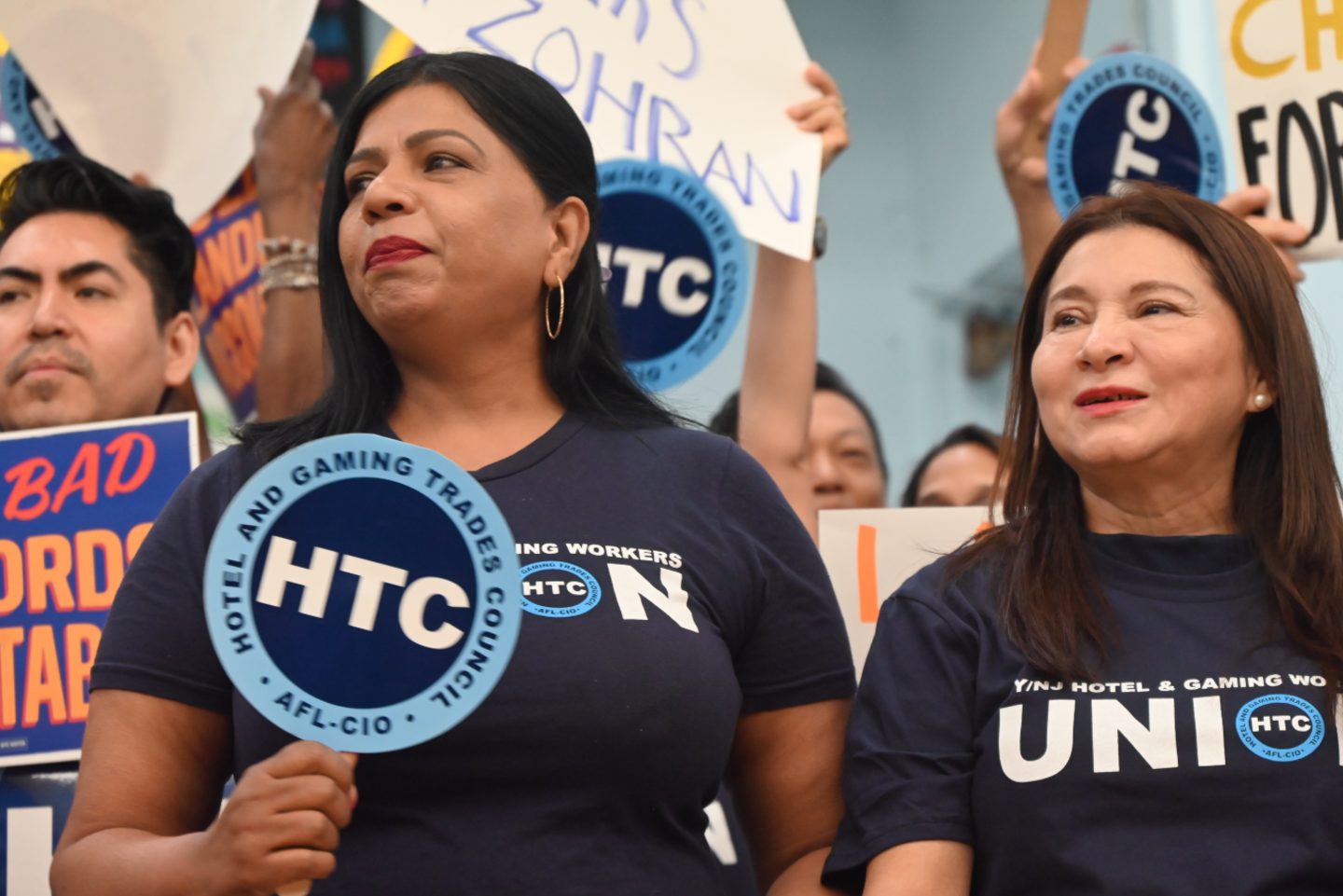
The “Waiters Strike” presaged what we know today as the Hotel and Gaming Trades Council, a powerful union representing tens of thousands of hotel workers across the five boroughs. Hotels, lest we forget, are workplaces: bustling ecosystems where housekeepers, bell staff, cooks, front-desk receptionists, and security guards attend to guests’ every need. When these workers do their job well, it often means they’re invisible to guests. But they are there around the clock, performing fast-paced, intensive labor on every floor.
More work needs to be done to protect them and those they serve. Unfortunately, New York remains among the top five states with the highest number of new or active sex trafficking cases and those involving minors. The privacy and security of workers and guests are not abstract suggestions. They are serious obligations with very real, very high stakes. That’s why the complexities of regulating this industry, of codifying worker safety measures into law, are far preferable to the perils of doing nothing.
New York City has an enormous opportunity at its feet to lead the way on workers’ rights. While the current administration in Washington, DC, feigns solidarity with American workers, it has undone workplace safety requirements, wrested collective bargaining rights away from millions of unionized workers, and kicked out civil servants that serve as sheriffs for corporate misconduct. Our city must offer the world a different path, a path that champions robust protections for the hotel workers and consumers that uphold this multibillion-dollar industry.
The framework is already in place. Under the landmark NYC Hotel Licensing Law, hotels must post a city license, staff overnight desks and security, train workers to identify signs of human trafficking, provide panic buttons and clean rooms, and employ core workers directly. It’s complemented by the Hotel Service Disruption Act, which requires guests to be notified within 24 hours of major disruptions—including worker strikes—with the option to cancel without penalty. And, as of February 22, 2026, hidden “resort” or “destination” fees are banned, bringing clearer prices and transparency to the city’s hotel industry. A prohibition on surprise credit card holds at hotels will also go into effect early next year, creating essential safeguards against hotel junk fees.
Taken together, these rules set a baseline expectation of dignified workplaces, honest pricing, and accountability to the public, all backed by the city’s economic justice watchdog, the New York City Department of Consumer and Worker Protection.
These rules shouldn’t be mistaken as obstacles to growth. In fact, they are the reason New York’s hospitality sector has maintained its sterling reputation for service and professionalism. Take a moment to consider the alternative. Cities that chase tourism numbers without protecting workers often find themselves trapped in a low-wage, high-turnover cycle that undermines service quality and economic stability. Visitors may come once, but they rarely return.
New York City’s protections are going to be on full display this summer throughout the World Cup, showcasing a city that is world-class in its hospitality and the way it treats its workers. For an industry that endured painful pandemic shutdowns, the biggest sporting event on planet Earth is a moment of revitalization. But revitalization must be built on fairness and the protections we have spent more than a century fighting for. When workers are protected and paid in full, when consumer standards are clear and enforceable, the industry is stronger. So is our city.
Just as New York’s workers helped power the reforms of the early 20th century, a new Progressive Era is emerging today, and hotel workers can once again be at its center: fueling business growth while winning safer workplaces, sensible regulations, and a City Hall that works for them. New York City’s hotels stand apart because they are so much more than the sum of their parts. With deep roots in this city, our hotels have always been about people—working people—and a singular promise: When New York welcomes the world, the people doing the welcoming share in the city’s success.
Become a Sustaining Donor This September
Between the reemergence of right-wing red-baiting and Donald Trump’s use of the chilling National Security Presidential Memorandum–7 to criminalize left political organizing, we’re seeing McCarthyism reborn before our eyes.
This assault on democracy cannot be ignored or wished away. Resisting it requires bravery in the face of threats and repression, a steadfast commitment to the truth, and the unwavering belief that we can—and will—overcome this darkness.
We must have an independent media that sets the record straight, unearths corruption and abuses of power, and advances a politics of justice and dignity for all if we’re to win this fight.
That’s why I’m writing to you today. This September, The Nation needs to add 100 monthly donors to sustain our progressive journalism. Your contribution makes the next investigative report, the next truth-speaking column, and the next pathbreaking essay all possible.
I hope you’ll support our work with a recurring donation today. If you donate $10 or more a month, we’ll send you a brand new “Hands Off the Free Press!” sticker to recognise your commitment to our cause. Please, donate today.
Onward,
Katrina vanden Heuvel
Editor and Publisher, The Nation