
Democrats Have a Chance to Offer a Smarter China Policy. Will They Take It?
It’s time to pursue a more pragmatic strategy—one that prioritizes domestic strength, targeted competition, and continued engagement.
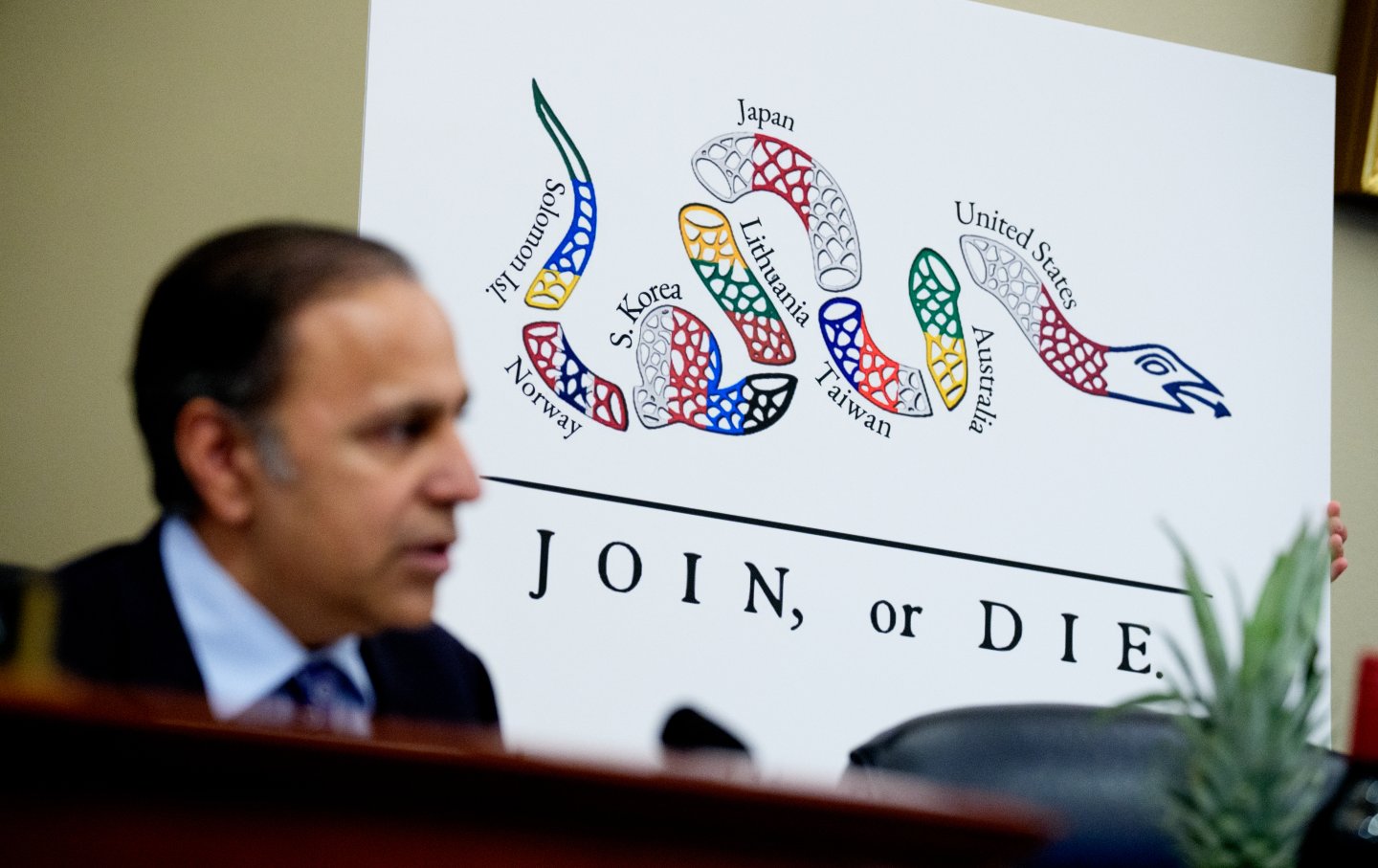
In January, I was supposed to participate in a routine academic exchange with China as part of my graduate education in international affairs at Columbia University. Congress canceled it. Making broad allegations about links between the trip’s funding partner, the China-US Exchange Foundation, and the Communist Party of China, the clunkily named House Select Committee on the Strategic Competition between the United States and the Chinese Communist Party demanded that Columbia end the exchange. Fearing another round of political scrutiny on top of recent turmoil, the university quietly complied.
My experience was no isolated incident. Since its establishment in 2023, the Select Committee has strong-armed myriad universities and businesses into ending long-standing and beneficial exchanges with Chinese counterparts. Recently, describing Chinese students as a “Trojan horse,” the Select Committee pressured Purdue University to stunningly ban admitting any graduate students from China.
US-China competition is here to stay, and real national security concerns exist. But the Select Committee’s conduct betrays a troubling overreach, where a congressional panel with neither lawmaking nor regulatory authority is able to stifle academic freedom and shut down exchange programs at will. Why does a body that styles itself as the vanguard of America’s strategic competitiveness focus so much on bullying American universities and businesses that interact with China, rather than fostering our own competitive edge? Whose interests does the committee’s anti-China zealotry actually serve?
In Washington today, it is nearly impossible to find an issue that Democrats and Republicans agree on. A rare exception has been a hawkish reaction to China’s rise as a peer competitor. Established against this backdrop, the Select Committee’s stated purpose is to “investigate and submit policy recommendations” on China’s “economic, technological, and security progress and its competition with the United States.” Yet, under bipartisan leadership, it has gone beyond that authority to effectively function as an enforcement body for a neo-McCarthyite political orthodoxy that treats any engagement with China as suspect and isolation as virtuous.
Paradoxically, for a body charged with “strategic competition,” it has done remarkably little to actually boost American competitiveness. The clearest illustration of the committee’s bipartisan “tough on China” bankruptcy is the multiyear TikTok saga which consumed a huge amount of political oxygen and crowded out real questions about how we should address our profound domestic malaise, increase our own strength, and both compete and coexist with China in ways that serve the interests of the American people.
Instead of cosplaying as the House Un-American Activities Committee of the Cold War past, the committee can much better serve the American public by focusing on the core foundations of American competitiveness: education, scientific research, and public investment.
There is a narrow opportunity for the committee to change tack. Democratic Representative Ro Khanna’s recent appointment as its ranking member presents an opening to question whether the committee, and the broader, paranoid approach to China it represents, can be reformed and its work channeled in a constructive direction.
Khanna has consistently articulated a more sober approach to US-China relations, and last year he participated in the first House delegation to China since 2019. His leadership, therefore, offers a test case for forward-looking Democrats: Can they develop an alternative vision for stewarding our most consequential diplomatic relationship, and can they withdraw the bipartisan political cover which has served to legitimize the committee’s most concerning activities?
Public opinion may buoy Khanna’s chances. Dismayed by domestic dysfunctions, cognizant of China’s growing strength, and weary of the cost of escalating rivalry, Americans increasingly have a more measured view of China, preferring cooperation over endless confrontation (a sentiment also seemingly reciprocated by the Chinese public). Among younger Americans, memes such as “becoming Chinese” and “Chinamaxxing” reflect a profound alienation from the bleak terms of the US-China relationship as imagined by the hawks in DC. These views stem not from a burning desire for Chinese-style authoritarian socialism, but deep frustration with US elites’ systematic failure to address aggravating domestic problems and simultaneous preoccupation with perpetuating a warlike global presence.
Khanna should take this somber reality as a starting point. For ambitious, reform-minded leaders looking to distance themselves from an increasingly gerontocratic and disconnected elite, curbing the committee’s abuse and offering a more serious and constructive agenda on China is essential.
First, the committee’s mandate and framing should be rethought. Tying much needed domestic reforms like investing in jobs and education, improving social well-being, and smart industrial policy to a single foreign rival turns every policy debate into a proxy geopolitical fight. American national purpose should not depend on invoking China as a political foil. Doing so undermines support for long-term institutional investments and substitutes geopolitical alarm for the harder reckoning with our own domestic dysfunctions. Indeed, years after bipartisan political elites pinned their hopes on confrontation with China as a unifying national project, our body politic today is as divided and morbid as ever.
Second, rather than using arbitrary political pressure to shut down all exchanges, the committee should help establish clear federal guidelines governing academic, research, and commercial collaborations with China. Securing critical sectors such as advanced semiconductors, pharmaceutical supply chains, and rare earth refining does not require broadly enclosing an open economic system. Generalizing all Chinese students, scientists, and businesses as security threats is wrong and strategically counterproductive, and adds yet more fuel to the anti-Asian racism, discrimination, and violence that has surged since the militarization of the US-China rivalry.
Popular
“swipe left below to view more authors”Swipe →Third, a serious competitiveness agenda should recognize that learning from superior foreign firms and tech ecosystems—many of which are now Chinese—strengthens American industry. The United States should encourage structured cooperation with China to study business models, production techniques, and organizational practices. Welcoming Chinese investments and introducing Chinese competition in the form of joint ventures will spur our domestic economy—a strategy sometimes described as “catfishing.” American industry has historically advanced by learning from foreign competitors, whereas closing ourselves off because of overblown national security fears increasingly amounts to self-harm and will all but seal the fate of US global competitiveness.
The Select Committee was created to help the United States compete. It may well still do so, but only if it abandons performative confrontation in favor of genuine national renewal. Reenacting Cold War red-baiting in the 21st century will only further corrode the civil openness and economic vitality on which American strength ultimately rests. For Khanna and the Democrats, the road map is clear. While Trump’s personalistic diplomacy with China is often ill-thought-out, the correct counter is offering a more coherent and constructive alternative, not throwing around the “soft on China” epithet and demanding a further escalation of tension. Competition with China in some areas ought not preclude broader coexistence; rather, it requires rebuilding the foundations that make American leadership worth preserving in the first place.
Become a Sustaining Donor This September
Between the reemergence of right-wing red-baiting and Donald Trump’s use of the chilling National Security Presidential Memorandum–7 to criminalize left political organizing, we’re seeing McCarthyism reborn before our eyes.
This assault on democracy cannot be ignored or wished away. Resisting it requires bravery in the face of threats and repression, a steadfast commitment to the truth, and the unwavering belief that we can—and will—overcome this darkness.
We must have an independent media that sets the record straight, unearths corruption and abuses of power, and advances a politics of justice and dignity for all if we’re to win this fight.
That’s why I’m writing to you today. This September, The Nation needs to add 100 monthly donors to sustain our progressive journalism. Your contribution makes the next investigative report, the next truth-speaking column, and the next pathbreaking essay all possible.
I hope you’ll support our work with a recurring donation today. If you donate $10 or more a month, we’ll send you a brand new “Hands Off the Free Press!” sticker to recognise your commitment to our cause. Please, donate today.
Onward,
Katrina vanden Heuvel
Editor and Publisher, The Nation
More from The Nation

The Peril of Trump’s Final Act: Would He Use a Tactical Nuclear Weapon in Iran? The Peril of Trump’s Final Act: Would He Use a Tactical Nuclear Weapon in Iran?
Trump is trapped in a war that has already been lost, a reality that he will never allow himself to admit.
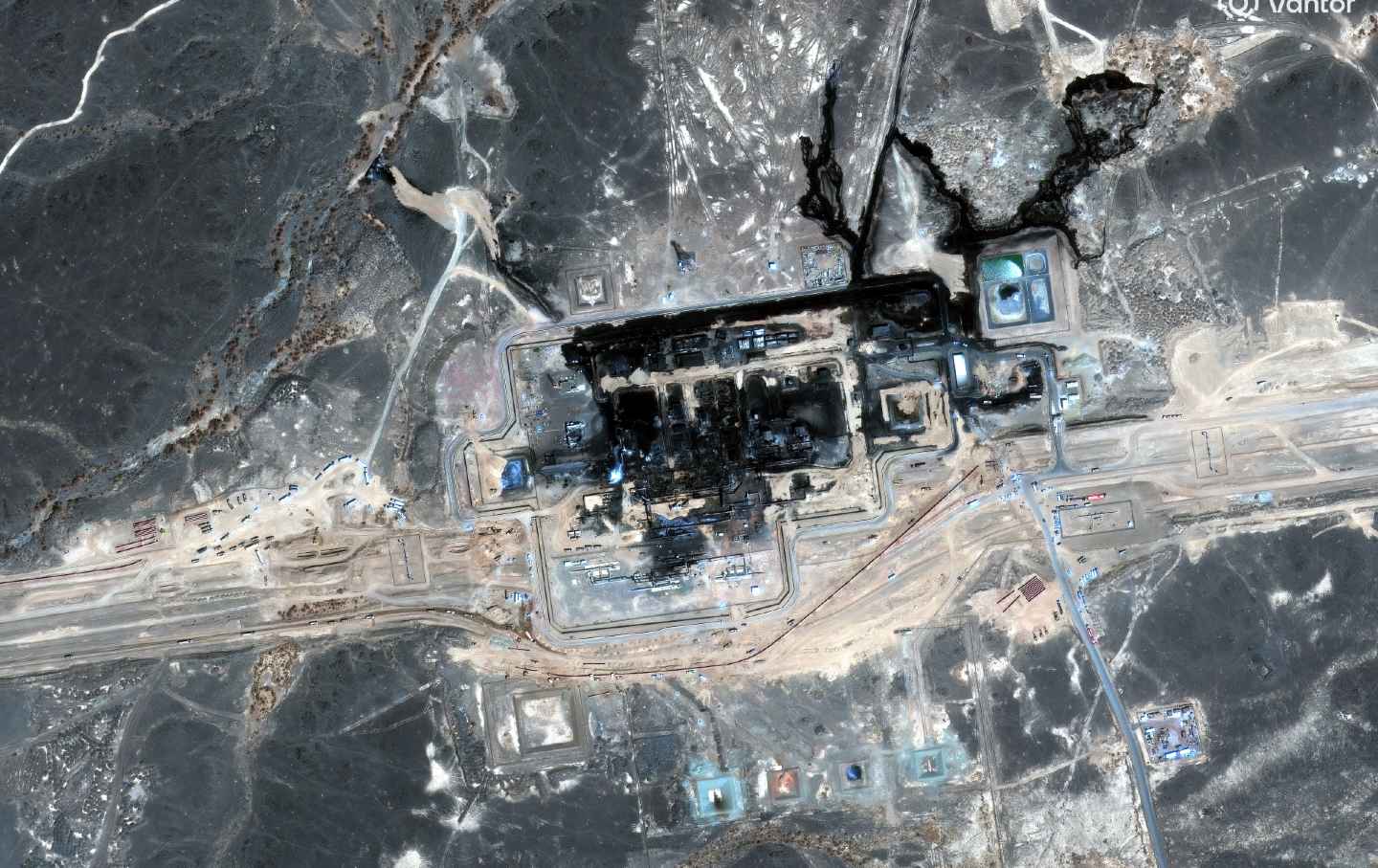
A Spreading War Rattles Global Energy Markets A Spreading War Rattles Global Energy Markets
Analysts say the consequences for energy prices and the world economy may be more serious in this later phase of a war that many had expected to be largely over by now.
The Reality Today Is That Foreign Policy Hawks Are a Minority in the Democratic Party The Reality Today Is That Foreign Policy Hawks Are a Minority in the Democratic Party
It is damn time we all started acting like it.
Trump Has Lost Interest in the Iran War, but It’s Still Quite Interested in Him Trump Has Lost Interest in the Iran War, but It’s Still Quite Interested in Him
The United States is losing the conflict, stoking chaos in the region, and inviting economic calamity—all with no end in sight.

Gloria Steinem: A View From 1990s Moscow Gloria Steinem: A View From 1990s Moscow
“Keep women’s solidarity in mind: Don’t forget how we empower each other through mutual support,” she reminded us.

Accountability for the Gaza Genocide Can’t Focus on Netanyahu Alone Accountability for the Gaza Genocide Can’t Focus on Netanyahu Alone
Getting rid of one bad leader won’t bring justice.

