Jeff Bezos’s Destruction of The Washington Post Is a Disgraceful Plutocratic Crime
Jeff Bezos’s Destruction of “The Washington Post” Is a Disgraceful Plutocratic Crime
It turns out that democracy doesn’t die in darkness at all—it succumbs to repeated group muggings at the hands of the moneyed power elite.
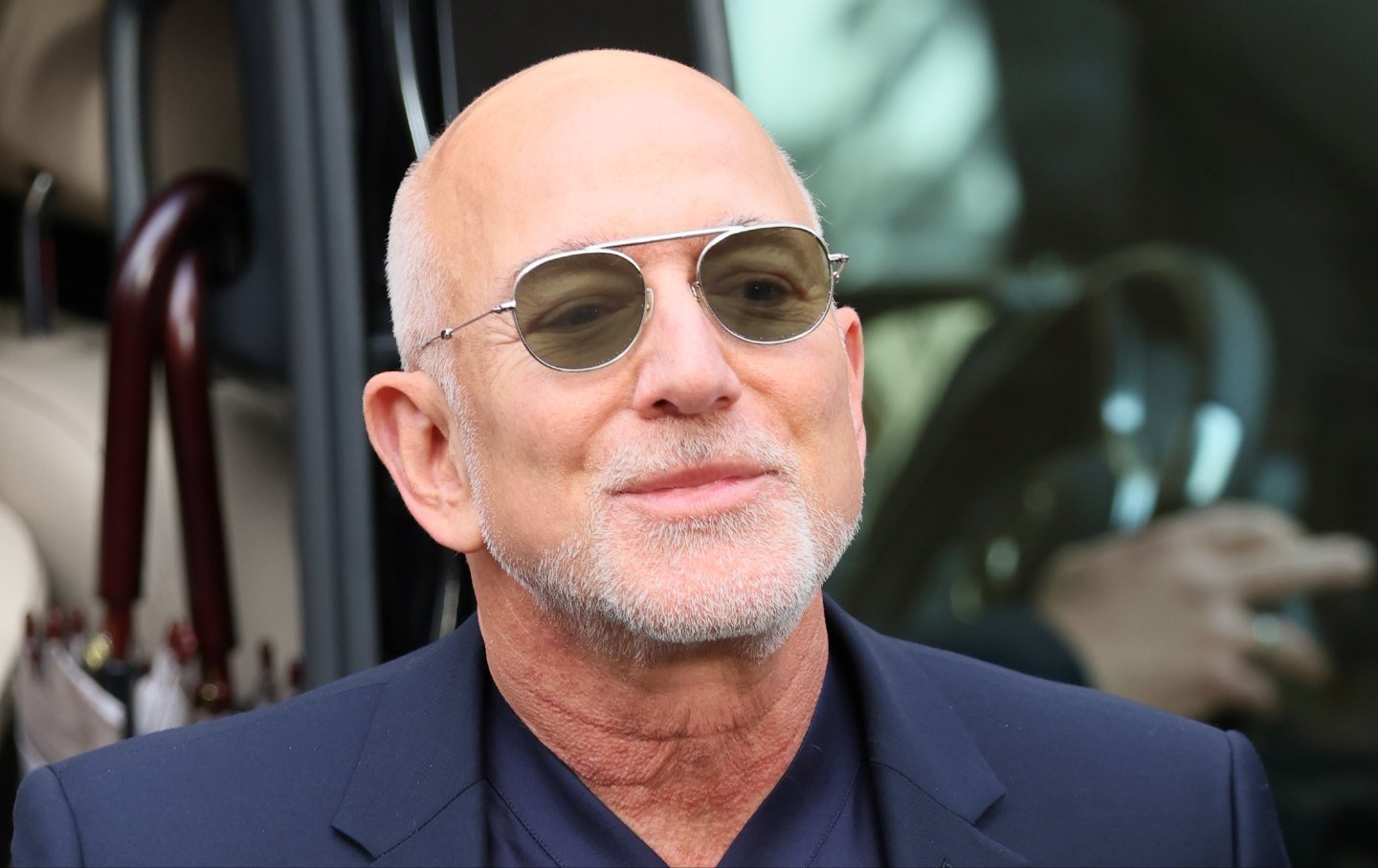
Jeff Bezos attends the Christian Dior Haute Couture Week Spring/Summer 2026 show as part of Paris Fashion Week on January 26, 2026.
(JB Lacroix / GC Images via Getty Images)For the past week, I’ve been unable to retrieve the copies of The Washington Post that usually get delivered to my home, since the brutal weather in the DC area has turned my front yard into an unfordable moat of frozen snow. This now seems a richly prophetic turn of events, since my hometown newspaper is being eviscerated under the disastrous ownership of centibillionaire monopolist and MAGA flunky Jeff Bezos.
Per a new report from The New York Times—cowritten by former Post media columnist Erik Wemple—the paper is initiating “a widespread round of layoffs.” Other outlets reported that at least a third of Post employees across business and editorial are being let go. In a Zoom call with the paper’s staff—one that neither Bezos nor his handpicked Post publisher Will Lewis deigned to attend—editor in chief Matt Murray announced that the Post’s sports section—a distinguished operation that formerly anchored a great deal of the paper’s market penetration in the mid-Atlantic—will be effectively dismantled, with a handful of staffers left to stoke a walking-dead version of it. Local news coverage—another historic strength of the paper, and one of the few coverage areas that cannot be easily replicated by other national titles—is also being gutted. The Post will also be shuttering its recently revived books section—where I worked as deputy editor in the early aughts. The paper’s daily news podcast will be deep-sixed, and its international desk is due to be hollowed out.
News of this impending bloodletting has been swirling around industry circles for weeks—so much so that foreign correspondents for the Post were reduced last week to publicly begging Bezos to save their jobs, and preserve the Post’s reputation as a serious news organization. Their pleas fell on deaf ears. Bezos didn’t bother to reply and kept an arrogant oligarchic silence during the buildup to this gruesome journalistic dismemberment. Bezos also offered no comment when Post reporter Hannah Natanson had her devices seized by the FBI in the investigation of a series of leaks from a government contractor—an act of intimidation from a Trump White House waging sustained ideological war on the fourth estate. Bezos’s silence on these fundamental assaults on news-gathering underscores his complacent indifference to the civic value of journalism; his true priorities became clear amid the Post’s death watch when he stirred out of his state of public hibernation long enough to host Defense Secretary Pete Hegseth—who has overseen the complete ideological purging of the Pentagon press corps—at his space start-up Blue Origin, which holds billions of dollars in defense contracts.
Bezos’s aloof posture isn’t so much a study in plutocratic reticence as the savvy impulse of a mobster determined not to return to a crime scene. The Amazon overlord was hailed as the paper’s savior when he purchased it from the Graham family in 2013. His takeover of the Post was part of a wave of tech-bro splurges in the legacy media market, including Facebook executive Chris Hughes’s ill-fated acquisition of The New Republic, and eBay cofounder Pierre Omidyar’s launch of First Look Media, whose signature outlet The Intercept is now in dire financial straits. Bezos’s acquisition of the Post stood out in this field, both because of the paper’s stature and because of his limitless resources. Surely, the thinking went, with this level of financial backing, the paper could reverse its declining circulation and jury-rig some sort of viable business model for daily journalism in the 21st century.
This scenario seemed plausible for a while, after Donald Trump was first elected president in 2016. The Post was able to reap a major surge in digital subscriptions by leaning into its image as a Trump-baiting organ of the resistance; its new Bezos-era slogan, crafted by Watergate veteran Bob Woodward, “Democracy Dies in Darkness,” neatly distilled this marketing agenda.
But as the mogul-heavy history of modern journalism shows in stomach-churning detail, news organizations that live by oligarchic support often die by it as well. In reality, the Post under Bezos’s watch was already embarking on myopic and counter-journalistic bids to goose revenues and harvest eyeballs via management-driven plans to bulk up its news-aggregation operations, while launching a wage-soaking freelance initiative dubbed “the Talent Network.” This latter operation, in the rapt telling of Marty Baron, the Post’s editor in chief during the Bezos honeymoon, served as “ the journalistic version of TaskRabbit (freelance labor for everyday tasks) and Amazon’s Mechanical Turk (a crowd-sourcing site for on-demand business tasks)…. Overnight, it dramatically expanded the journalistic reach of the Post at a bargain-basement price.”
The sugar highs of all this digital gimmickry proved short-lived, especially after Bezos, ever attuned to the main chance for piling up more billions, joined the rest of the Silicon Valley power elite in aligning behind Donald Trump’s 2024 presidential campaign. Bezos vetoed the Post’s planned endorsement of Kamala Harris, triggering the departure of the paper’s op-ed chief, David Shipley, and hundreds of thousands of canceled subscriptions from outraged readers. He then issued a new dictum for the paper’s opinion shop, ordering that it be devoted to the promotion of “free markets” and “personal liberties”—both long-standing items in the catechism of cosmically wealthy moguls courting public worship. The section has since become an unsightly congeries of glorified press releases from the Cato Institute—together with editorial board fantasias on the heroic leadership of Trump that read like they’d be a stretch for Pravda to pull off. In the wake of the exodus of its entire roster of accomplished liberal columnists, the section’s furthest-left regular contributor is arguably the Tory-Reaganite Never Trumper George Will.
This concerted ideological defacing of the Post, quite plainly, is at the heart of the paper’s most recent financial plight. But the logic of mogul newsroom dominance forbids Post management from squarely acknowledging this fact—or at least saying it aloud. So in a fraught 2024 newsroom meeting, publisher Will Lewis extended the great managerial tradition of blaming workers for the colossal fuckups of their bosses. “We are losing large amounts of money,” he proclaimed. “Your audience has halved in recent years. People are not reading your stuff.”
As any competent editor will tell you, Lewis’s use of the passive voice is telling. Audiences don’t halve themselves in a vacuum; the responsible parties were Bezos and his handpicked adjutant Lewis—an eager tabloid handmaiden for clownish and disgraced former British prime minister Boris Johnson, when he wasn’t running interference in the UK Telegraph’s phone-hacking scandal. It turns out that democracy doesn’t die in darkness at all—it succumbs to repeated group muggings at the hands of the moneyed power elite. But that’s a story you’re never going to read in Jeff Bezos’s Washington Post.