The Trump Administration Arrested Don Lemon Like He Was a Fugitive Slave
Lemon’s arrest is not only a clear violation of the First Amendment but also a blatant throwback to the Constitution’s long-discarded Fugitive Slave Clause.
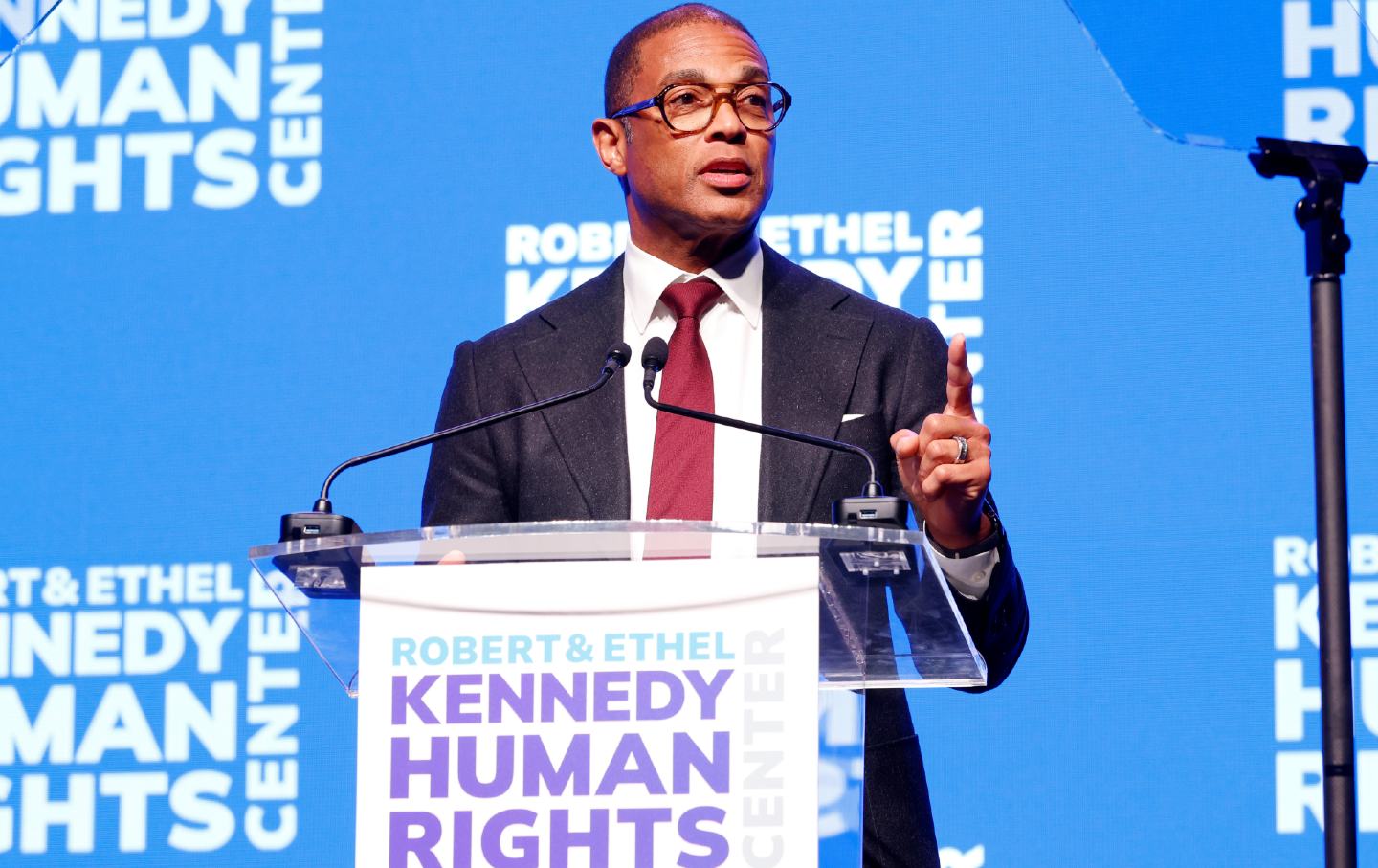
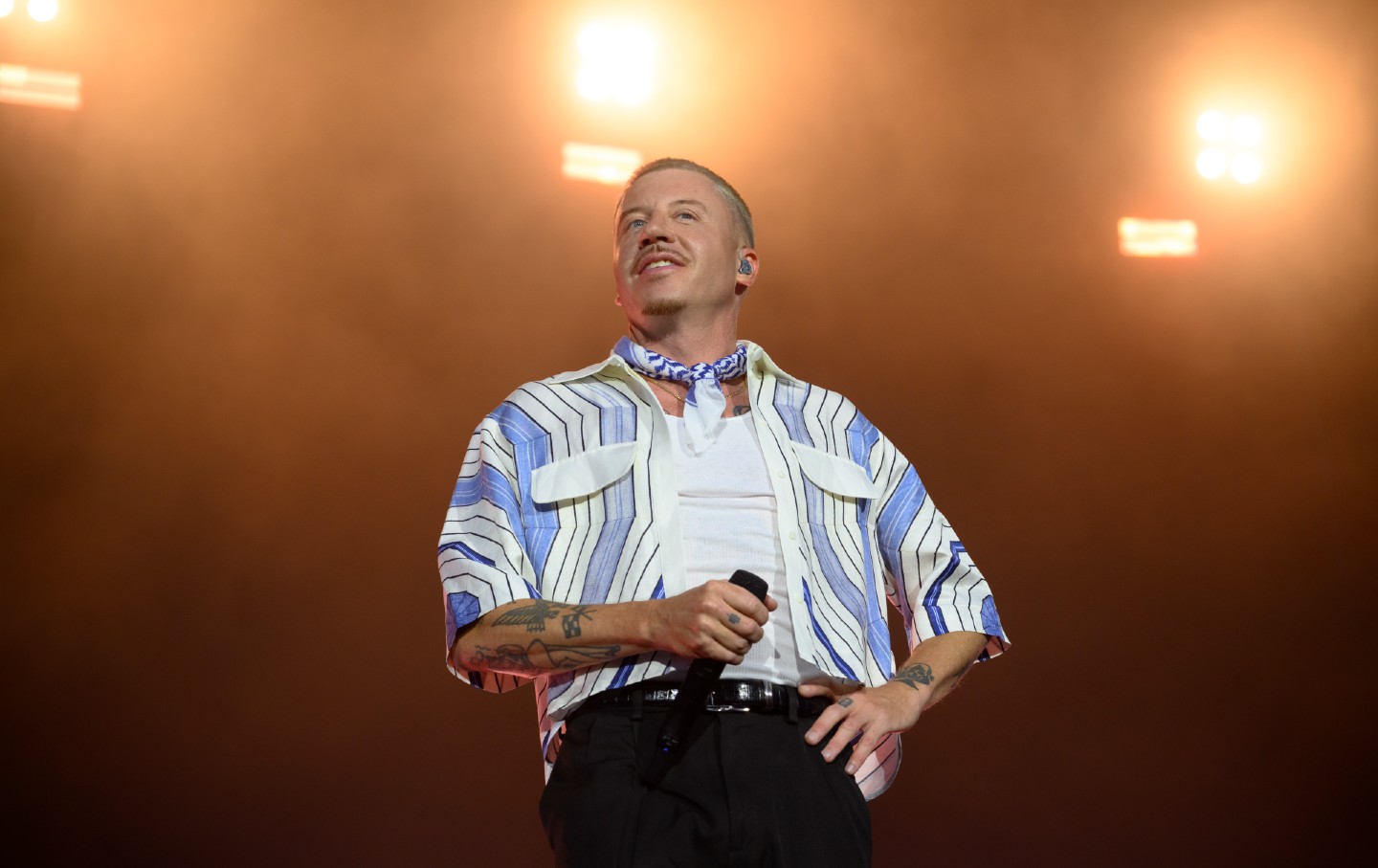
Don Lemon speaks onstage during the Robert & Ethel Kennedy Human Rights Center’s 2025 Ripple of Hope Gala in New York.
(Kevin Mazur / Getty Images for RFK Ripple Of Hope)The Department of Justice arrested two journalists, Don Lemon, and Georgia Fort, in connection with their coverage of a protest that took place inside a church in St. Paul, Minnesota on January 18. The DOJ also arrested two activists, Trahern Jeen Crews and Jamael Lydell Lundy, for their role in the protest. All four of the people arrested are Black.
The arrests of the two journalists are clearly unconstitutional. You don’t need to be a legal scholar to know that arresting journalists for covering the news is a clear violation of the First Amendment. Lemon’s arrest is also flatly illegal. Last week, the Trump administration went to a federal magistrate judge, Douglas L. Micko, to ask for an arrest warrant for Lemon. The judge refused. The Trump administration then appealed and lost that appeal. The legal system literally said the government couldn’t arrest Lemon, but the government arrested him anyway, and they went all the way to Los Angeles (far from Minnesota) to get him.
Georgia Fort is a prominent Black journalist based in Minnesota. She was out front in covering the George Floyd protests, and expertly covered the trial of his killer, Derek Chauvin. I have little doubt that this prior reporting is among the reasons she was targeted by the Trump administration.
I know less about the activists: Crews is a cofounder of Black Lives Matter Minnesota, while Lundy works in the Hennepin County Attorney’s office and recently announced his candidacy for the Minnesota state Senate. I also know that arresting people for protesting is a violation of the First Amendment.
In her tweet proclaiming the arrests, Attorney General Pam Bondi said that the four were arrested “at my direction.” Later reports suggested that the DOJ empaneled a federal grand jury that issued the arrest warrants for Lemon and Fort, but didn’t explain the cause for arresting Crews and Lundy. Going to a grand jury to get an arrest warrant that a judge and appeals court previously denied on constitutional grounds is highly unusual in a democracy, but I guess it’s how the fascists play the game.
I expect, at a minimum, that the arrests of Lemon and Fort will be thrown out in court eventually, since at least one of them already has been. I think the more important question is why all four of these Black people were arrested. To answer that question, we should start with the White House’s official tweet about Lemon’s arrest. They tweeted out: “When life gives you lemons…” followed by a chain emoji. This ties the arrest of Lemon to this country’s history of slavery in a way no sane person will miss.
The arrest of Lemon harks back to a discarded portion of our original Constitution: the Fugitive Slave Clause. That clause read: “No Person held to Service or Labour in one State, under the Laws thereof, escaping into another, shall, in Consequence of any Law or Regulation therein, be discharged from such Service or Labour, but shall be delivered up on Claim of the Party to whom such Service or Labour may be due.” It’s relevant because the Fugitive Slave Clause counteracted a different amendment in the Constitution, the 10th, which explicitly reserves all “police power” to the states.
To put it simply, the 10th Amendment says that states are in charge of deciding whom they need to arrest, but the Fugitive Slave Clause says the federal government can violate the 10th Amendment—if they need to capture Black people. Fundamentally, that is what’s happened to Lemon. The federal government has superseded the constitutional authority of Minnesota so that it can arrest a Black man who got away. And we know that’s how they’re thinking, because they’re using literal chain emojis to congratulate themselves on their accomplishment.
What we’re seeing is an obvious attempt to change the face of the victims of Trump’s fascism. I believe the Trump administration always assumed that the people on the front lines of the resistance to their tactics would be Black and brown. They assumed that the people who would be getting brutalized in the streets and shot and killed would be people of color. They did not assume that the victim of their brutality would be a white man who was a nurse for veterans. They did not assume it would be a white woman with children’s plushies in her glove compartment.
Arresting Black journalists and activists, and using explicit slavery imagery while doing it, is an attempt to inflame the Black community and remind white folks who the real targets are. Support for ICE and the Trump administration generally is falling among white folks. Trump wants to remind those white folks that he’s really just trying to arrest dangerous Black people.
Trump and Steven Miller want a race war. They think they’ll win it. They think white people will tune in for it. Their operating theory is that most white people are viciously racist, like they are, and that most whites secretly pine to live in apartheid South Africa.
I don’t think they’re right—and I say that as a person who is not known to have a particularly high opinion of the moral clarity of white Americans. My read has always been that most white people in this country are like most people who eat meat in this country: they want to enjoy a good steak, but they don’t want to go to a slaughterhouse and put a bolt gun in a cow. White people enjoy their privilege, but they don’t exactly want to see how their privilege gets made.
Popular
“swipe left below to view more authors”Swipe →Arresting a journalist like Lemon—who is not only “Black famous” like Fort is but crossover famous among white folks—is as likely to inflame the white community as it is to inflame the Black community. Lemon got arrested last night while covering the Grammys, of all things, not the Image Awards.
The arrests of the journalists cannot hold up legally. (The arrests of the activists shouldn’t hold up legally either, as Bondi is claiming the activist violated the First Amendment rights of churchgoers while Bondi is violating the First Amendment rights of protesters.) It is a shredding of the First Amendment that I don’t think even Trump’s plants on the Supreme Court can stand for (except for Clarence Thomas, who is probably titillated about the opportunity to use the Fugitive Slave Clause as the basis for his dissenting opinion from the more sane members of the court). I also don’t think the arrests will hold up socially. I don’t think they will change the narrative in the way Trump and Miller probably hope it will.
Of course, the road to bad takes is paved with a reliance on white people to do the right thing. I don’t think this will work, legally or culturally, but I’ll need white people to prove me right.
Become a Sustaining Donor This September
Between the reemergence of right-wing red-baiting and Donald Trump’s use of the chilling National Security Presidential Memorandum–7 to criminalize left political organizing, we’re seeing McCarthyism reborn before our eyes.
This assault on democracy cannot be ignored or wished away. Resisting it requires bravery in the face of threats and repression, a steadfast commitment to the truth, and the unwavering belief that we can—and will—overcome this darkness.
We must have an independent media that sets the record straight, unearths corruption and abuses of power, and advances a politics of justice and dignity for all if we’re to win this fight.
That’s why I’m writing to you today. This September, The Nation needs to add 100 monthly donors to sustain our progressive journalism. Your contribution makes the next investigative report, the next truth-speaking column, and the next pathbreaking essay all possible.
I hope you’ll support our work with a recurring donation today. If you donate $10 or more a month, we’ll send you a brand new “Hands Off the Free Press!” sticker to recognise your commitment to our cause. Please, donate today.
Onward,
Katrina vanden Heuvel
Editor and Publisher, The Nation