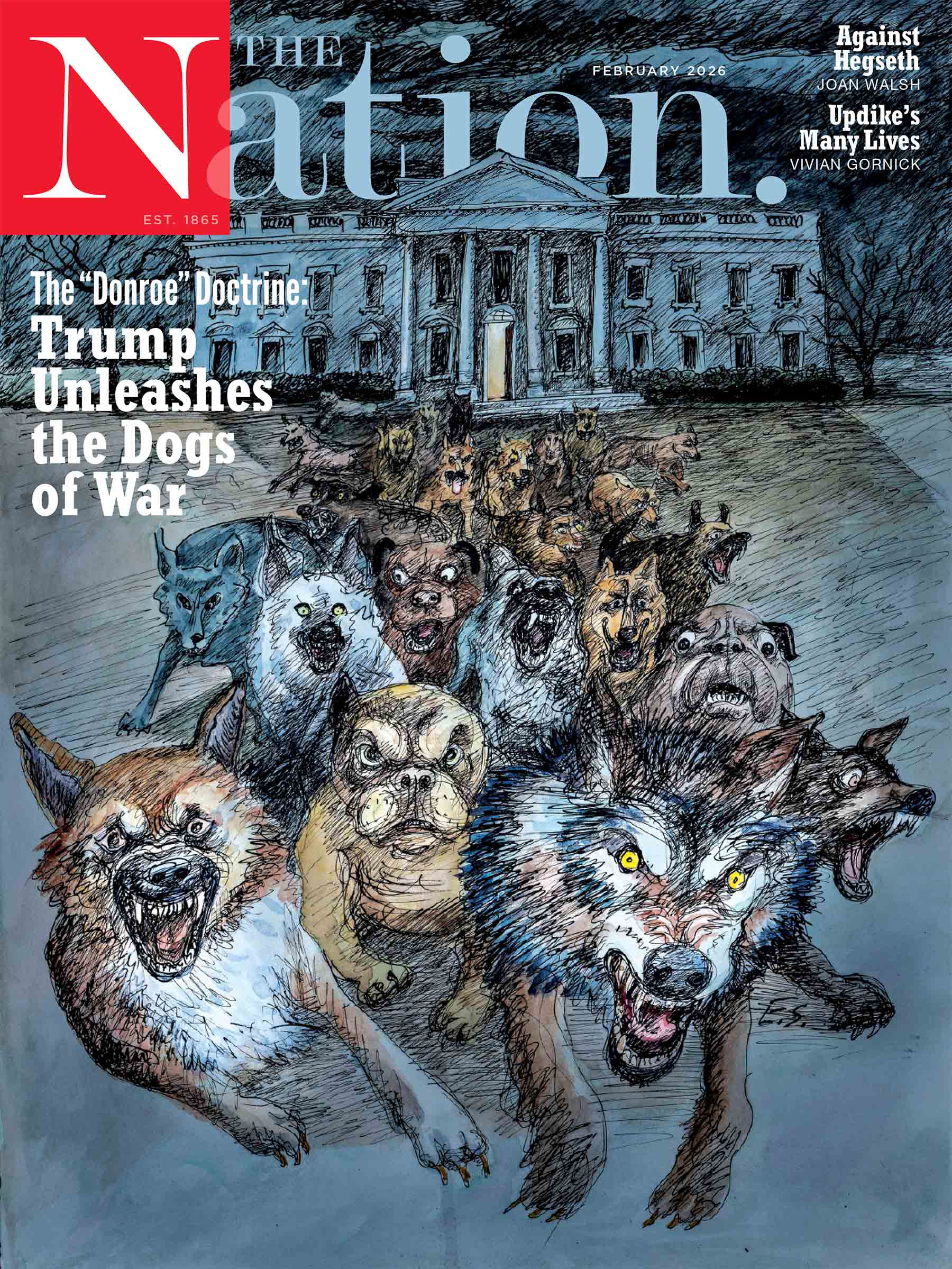
The “Donroe” Doctrine Is Dangerous
Trump’s brazen violation of international law destabilizes global security.
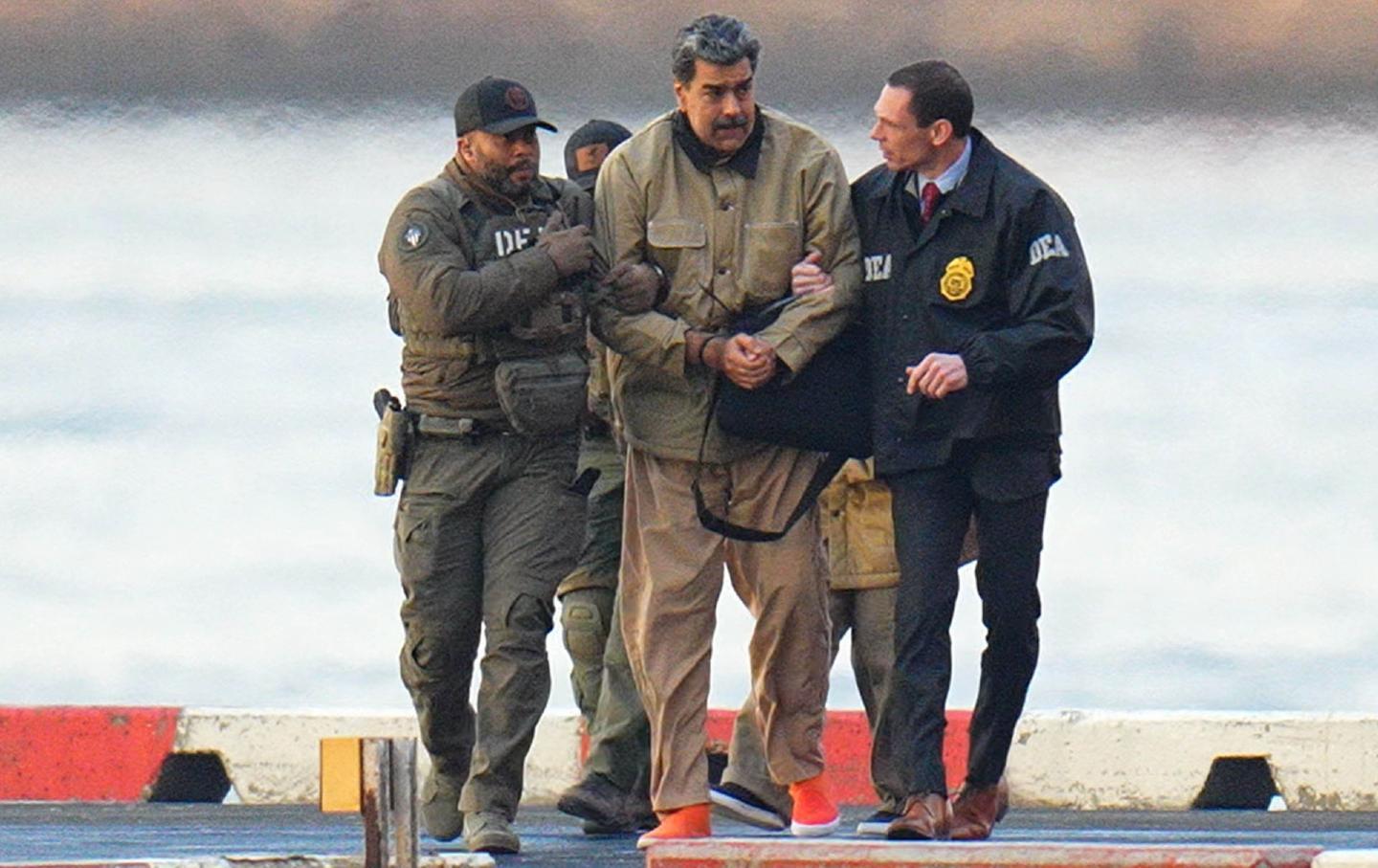
The wisest condemnation of Donald Trump’s decision to send us troops to the sovereign nation of Venezuela to remove President Nicolás Maduro, as part of the administration’s plan to “run” Venezuela in collaboration with US oil companies, came 205 years before Trump announced his “Donroe” Doctrine.
In 1821, Secretary of State John Quincy Adams, who played an essential role in crafting the Monroe Doctrine—the foreign-policy position that he and others hoped would guard the Western Hemisphere against the threat of European colonial expansion—explicitly rejected military interventions for the purpose of regime change and economic conquest. “Wherever the standard of freedom and Independence has been or shall be unfurled, there will [America’s] heart, her benedictions and her prayers be,” Adams told Congress. “But she goes not abroad, in search of monsters to destroy.”
Even where the United States might object to a foreign leader, Adams argued that the country must lead by example and with diplomacy, so that the fundamental maxims of US foreign policy would not change insensibly from liberty to force: “She well knows that by once enlisting under other banners than her own, were they even the banners of foreign independence, she would involve herself beyond the power of extrication, in all the wars of interest and intrigue, of individual avarice, envy, and ambition, which assume the colors and usurp the standard of freedom.”
Trump, acting very much as a European king of old, attacked Venezuela as this edition of The Nation went to press. His move represents a brazen violation of international law that destabilizes global security and seizes Congress’s exclusive authority to declare war. Military force is justified only in response to a clear, credible, and imminent threat to the security of the US or its treaty allies. Venezuela, whatever its internal dysfunctions or its connections to drug trafficking, poses no such threat.
Trump’s scheming to forcibly determine the political leadership of another sovereign nation represents a grave departure from our best principles—as stated by Adams—and a return to the most discredited habits of American foreign policy. We are not naïve about American history. Throughout the 20th century and into the 21st, The Nation has decried presidential abuses of the Monroe Doctrine as a tool for the creation of corporate client states. But Trump’s self-styled Donroe Doctrine proposes a fresh bastardization of US foreign policy that is so extreme—and so dangerous—that it demands an urgent response from Democrats and those Republicans whose oath to the Constitution takes higher precedence than their loyalty to an authoritarian president and his fossil-fuel-industry donors.
While Trump and his allies tried to justify naked aggression as part of a convoluted strategy to target “narco-terrorism,” Representative Pat Ryan (D-NY), a former Army intelligence officer who served two combat tours during the Iraq War, declared, “No matter what they say, it’s always oil.” Ryan was not alone in recognizing echoes of the WMD claims of former president George W. Bush, and how that blood-for-oil war went so horribly awry. In his first bid for the presidency, Trump positioned himself as something of an anti-war Republican. That was always a cynical gambit, and Trump is now exposed as an economic imperialist who learned nothing from Iraq and who is willing, as Representative Thomas Massie (R-KY) noted, to embark on a career of empire that risks the lives of US troops to make “oil companies (not Americans) more profitable.”
No one in their right mind believes that the madness—and danger—of Trump’s Donroe Doctrine will halt at the borders of Venezuela. His State Department declared on social media: “This is OUR Hemisphere, and President Trump will not allow our security to be threatened.” The American people see through the lies. A Reuters-Ipsos poll found that only 33 percent of Americans approve of the US military action to remove Maduro, while 72 percent worry about further US involvement in Venezuela.
This popular rejection of Trump’s territorial ambitions should inspire members of Congress to stand up to the administration—recognizing, as John Quincy Adams did, that if a president seeks to make America “the dictatress of the world,” this country will “be no longer the ruler of her own spirit.”