“I Will Govern as a Democratic Socialist”
Mayor Zohran Mamdani defies the cold and the calls to move to the center with the promise of a New York that belongs to the people who live in it.
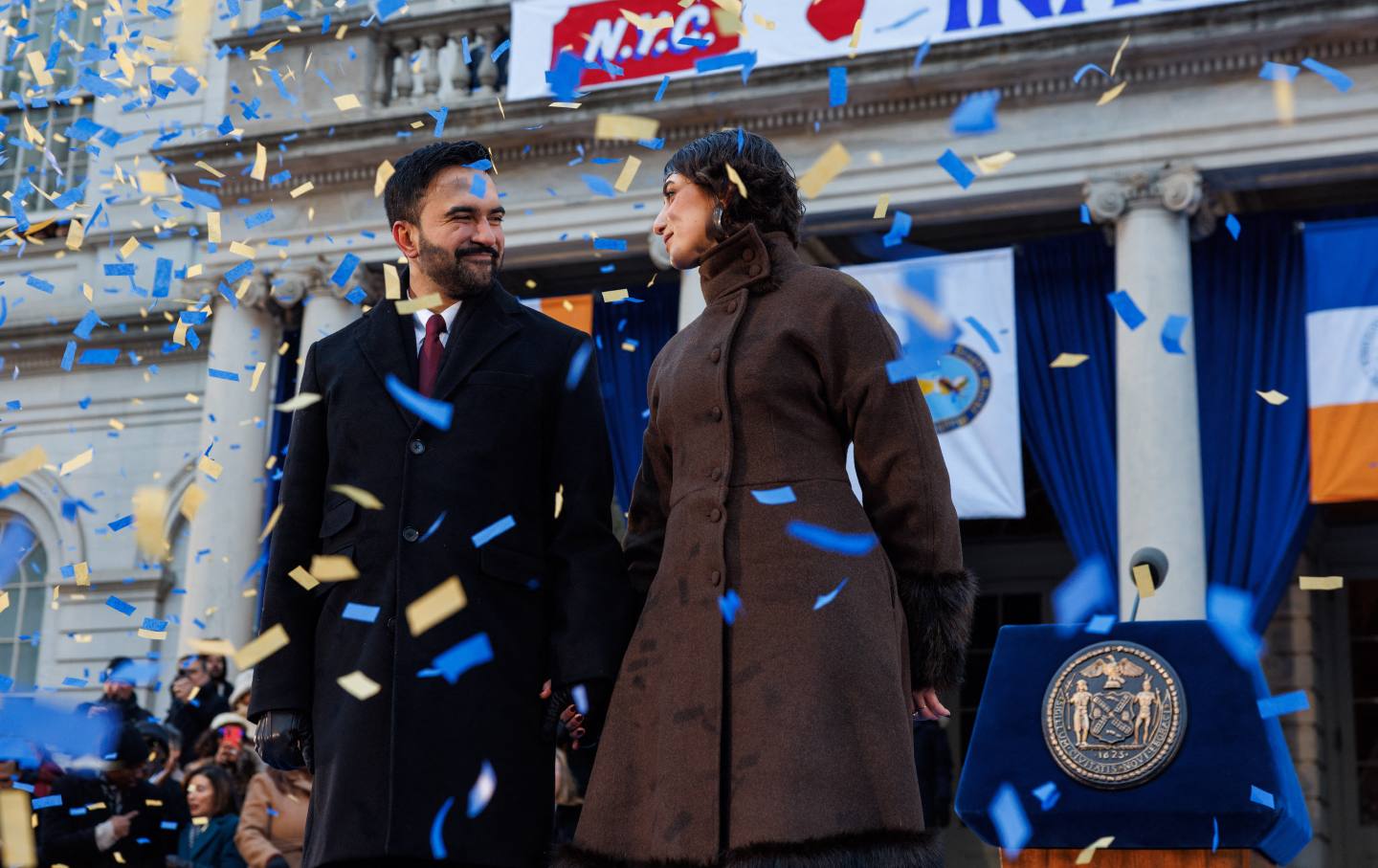
How cold was it in City Hall Park on the morning that New York’s “111th or 112th mayor” was inaugurated? So cold that I had to keep returning my pen to my pocket to keep the ink from freezing. So cold that Public Advocate Jumaane Williams, waiting on the dais for the proceedings to start, was visibly shivering—though he, like Comptroller Mark Levine and the mayor-elect (and former mayor Bill de Blasio, also on the podium), remained bare-headed throughout.
By the time Bernie Wagenblast—better known, as she noted, as the voice urging commuters to “stand back from the platform edge”—introduced Representative Alexandria Ocasio Cortez to begin the program, many of the tens of thousands gathered for what was billed as “a free, public block party” in the streets south of City Hall plaza, and who had been waiting in the cold for over three hours, were hopping from foot to foot just to keep circulation going. Yet only a handful departed early.
And once New York Attorney General Letitia James, herself a target of President Donald Trump’s vindictive Justice Department, and who had officially sworn in Zohran Mamdani at the stroke of midnight (and was sensibly keeping warm in a camel coat and matching beret), issued the oath of office to Levine the themes of the day—and the new administration—began to emerge.
The first was the affirmation that diversity is New York’s secret weapon. As Levine observed, “Today we have three swearings-in: one by a leader using a Quran, one by a leader using a Christian Bible, and one by a leader using a Chumash, or Hebrew bible.” Levine, who spoke briefly in Spanish, Hebrew, and Greek as well as English, noted that “while our city is booming for people at the top, it’s getting tougher and tougher for working families.”
The second theme was that New York must retain—and celebrate and protect—its status as “Mother of Exiles.” As Williams, himself the son of migrants from Grenada, reminded the crowd, “This celebration at City Hall is only blocks from tribulation at Federal Plaza.” Williams was introduced by the actor and producer Amadou Ly, whose own odyssey as an undocumented immigrant from Senegal to US citizenship—the subject of a front-page New York Times story in 2006—now seems like a relic of a lost era. But then so did Williams’s invocation of Grenadian revolutionary Maurice Bishop, who “took up the fight for ‘radical’ socialist ideals like housing, healthcare, and education.” It was Bishop, said Williams, who proclaimed that “revolutionaries do not have the right to be cowards.” Both of the office holders who preceded him harmonized on Mamdani’s message that in order for New York to truly belong to the people that live here, the city must become more affordable.
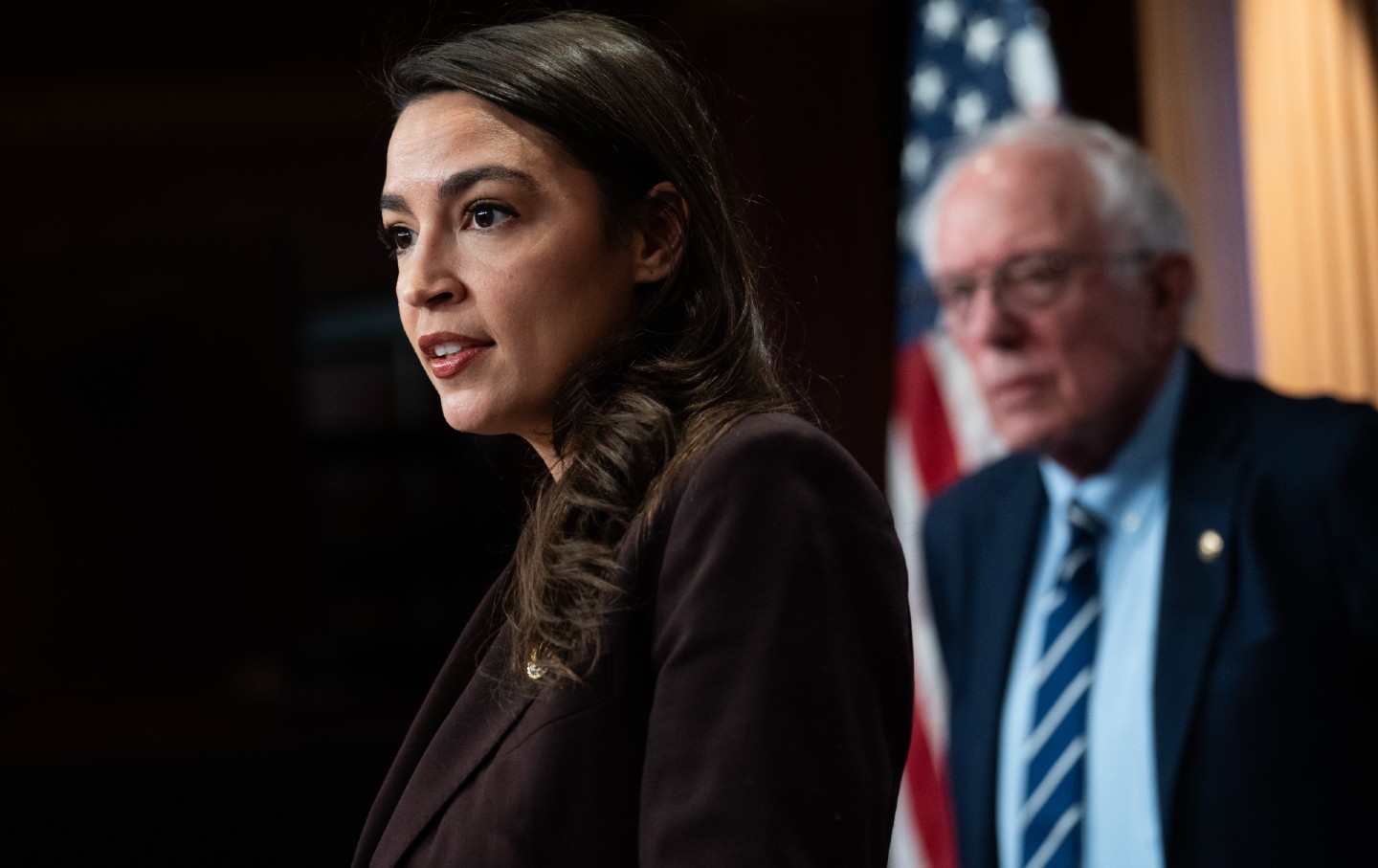
It was Bernie Sanders, of all people, who dialed back the day’s rising rhetoric, reminding the crowd, “In the richest country in the history of the world, making sure that people can live in affordable housing is not radical…. Providing free and high-quality childcare is not radical. Countries all over the world have done it for years.” Yet the historic nature of Mamdani’s victory and the genuinely radical expectations that victory has aroused were not to be denied.
When the Vermont senator also attempted to point out that “demanding that the wealthy and large corporations start paying their fair share of taxes” was not exactly radical either—as Sanders has frequently noted elsewhere, under Republican President Dwight Eisenhower the marginal tax rate on the wealthiest Americans was 92 percent—the crowd erupted in chants of “Tax the rich!” Mamdani merely smiled, but as everyone in viewing range of one of the many Jumbotrons around City Hall could see, his wife, Rama Duwaji, fortified against the cold in what The New York Times described as a “statement coat,” nodded along in approval.
As for the new mayor, he began by demonstrating the same blend of soaring rhetoric and street-smart semiology that carried him from less than 1 percent in the polls to his victories in September—the election that normally decides matters in this overwhelmingly Democratic city—and November. Invoking “New Yorkers watching from cramped kitchens in Flushing and barbershops in East New York, from cell phones propped against the dashboards of parked taxi cabs at LaGuardia, from hospitals in Mott Haven and libraries in El Barrio that have too long known only neglect,” Mamdani said he stood alongside “every person who makes the choice day after day, even when it feels impossible, to call our city home.”
Those who watched hoping for a tack to the center—a signal that while, as a politician from an earlier generation once observed, “you campaign in poetry, you govern in prose,” and that it was now time to begin reducing expectations—must have come away deeply disappointed:
Too often in our past, moments of great possibility have been promptly surrendered to small imagination and smaller ambition. What was promised was never pursued, what could have changed remained the same. For the New Yorkers most eager to see our city remade, the weight has only grown heavier, the wait has only grown longer.
He continued:
I have been told that this is the occasion to reset expectations, that I should use this opportunity to encourage the people of New York to ask for little and expect even less. I will do no such thing. The only expectation I seek to reset is that of small expectations.
Beginning today, we will govern expansively and audaciously. We may not always succeed. But never will we be accused of lacking the courage to try.
And finally, for the removal of all doubt:
I was elected as a democratic socialist and I will govern as a democratic socialist. I will not abandon my principles for fear of being deemed radical. As the great senator from Vermont once said, “What’s radical is a system which gives so much to so few and denies so many people the basic necessities of life.”
To what my late friend Paul Du Brul and former colleague Jack Newfield dubbed the city’s “permanent government,” those are fighting words. The last democratic socialist to take power in City Hall was David Dinkins (also, like Mamdani, a dues-paying member of DSA). I was there when he was sworn in, too, and remember the great hopes aroused by his declaration that “we are all foot soldiers on the march to freedom,” his vision of “a gorgeous mosaic of race and religious faith, of national origin and sexual orientation, of individuals whose families arrived yesterday and generations ago, coming through Ellis Island or Kennedy Airport or on buses bound for the Port Authority.” Dinkins, too, promised an administration that would “stand for, and speak for, justice around the world.”
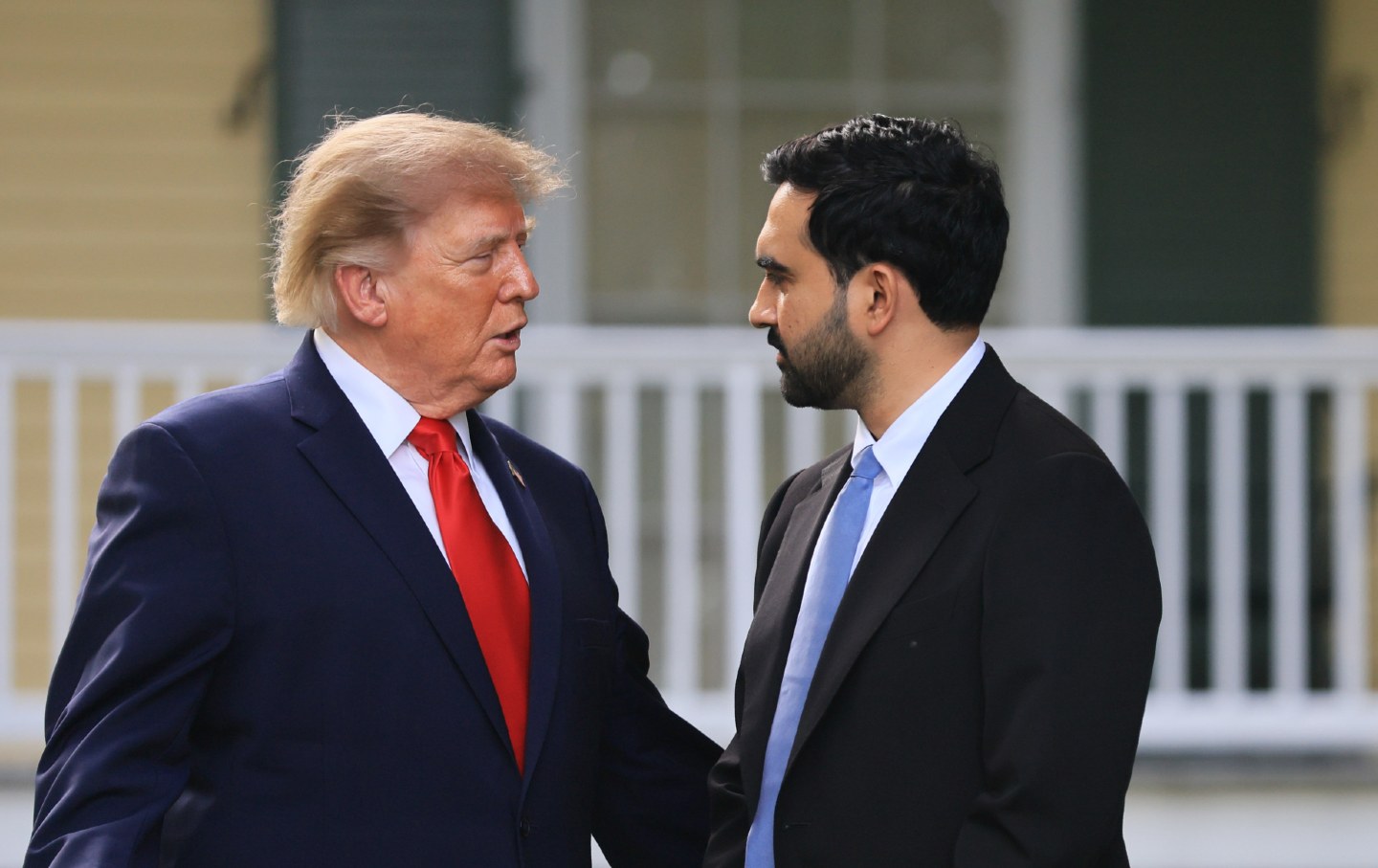
That was 35 years ago. And while Mamdani name-checked his democratic socialist predecessor—along with de Blasio and Fiorello La Guardia—only one of those mayors is widely viewed as successful. And LaGuardia had an ally in the White House, while Mamdani has… something completely different.
Popular
“swipe left below to view more authors”Swipe →Yet, even as he raised expectations, Mamdani acknowledged that only by delivering on those promises in government can he redeem his pledge to lead a city that “belongs to all who live in it.”
For now, let it be noted that he began well, and that in the coming fight, our new mayor has not just his own considerable resources of intelligence, charisma, and political sure-footedness but also an army of eager followers—tens of thousands strong—who defied the cold on Thursday just as they defied expectations in November.
Governor Kathy Hochul—whose cooperation will be crucial in providing the fiscal resources for Mamdani’s ambitious program of urban reconstruction and public sector resurrection—must have looked at the crowd filling a stretch of lower Broadway known as the Canyon of Heroes with a mixture of admiration and envy.