
The Math That Gave Us Trump
The party that built the New Deal now manages the raw deal. But there’s hope.
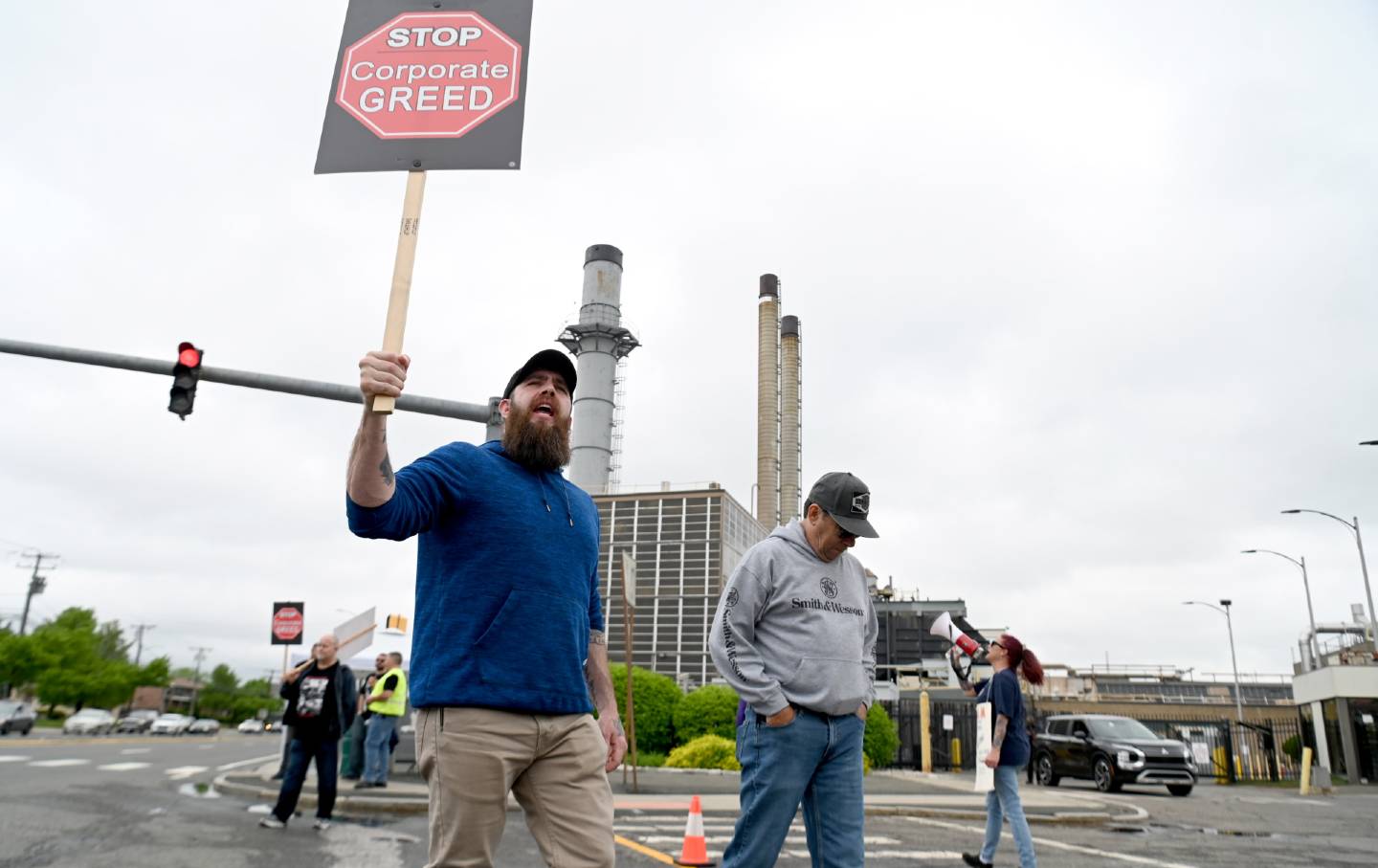
We’re watching Marines on the streets of LA after Trump’s immigration raids ICE running wild. National Guard mobilizing. Elected officials are getting handcuffed. Worse still, we are sleepwalking into war with Iran. The “opposition party,” Democrats, can’t figure out why they keep losing to a fascist game show host.
The answer is math. When a factory closes 100 jobs, it kills 844 total. That’s not a guess. That’s the Economic Policy Institute’s number for durable manufacturing. Every manufacturing job creates 7.4 additional jobs—machine shops, truckers, diners, suppliers, you name it. Retail? You lose 100 retail jobs, you lose just 222, one-fifth the impact. You can see the numbers for yourself in the table here.
I watched this multiplier destroy East Tennessee when NAFTA killed my furniture component factory. We didn’t just lose our jobs. The machine shops died. The truckers lost contracts. The diners lost customers. For every worker I laid off, seven more got destroyed.
Far too many Democrats look at this carnage and shrug. Manufacturing isn’t coming back, they say. The Chicago School says it’s inefficient. The future is services. They’d rather fund another war than rebuild a factory. They’d rather bail out banks than build anything.
And working-class voters abandoned the Wall Street Dems in droves. Not just white voters anymore. Latino workers, who were once solid Democrats, flipped to Trump. Black working-class voters are staying home or switching sides. The Democratic Party is becoming the party of college-educated professionals, while everyone who builds and makes and fixes things runs for the exits.
Some Democrats are starting to see an opening here. Melissa Morales runs Somos Votantes, a Democratic-leaning Latino group that’s been tracking how Trump’s doing with Latino voters. Their latest polling shows his support slipping, and Morales thinks she knows why.
“These numbers tell a pretty clear story—his economic credibility is eroding fast, and that’s a huge problem for him,” Morales said. She pointed out that Trump’s gains with Latino voters in the first place were mostly built on his promises to fix the economy. If that trust is breaking down, those gains could disappear just as quickly.
The opening is real. Democrats could win back these voters. But they won’t, because seizing this opportunity would require them to abandon the very ideology that defines them.
That ideology is neoliberalism, and it’s infected the leadership of the Democratic Party like a parasitic brain worm. It makes them incapable of responding to what people actually need. When voters say they want manufacturing jobs back, Democrats treat them like ungrateful children who don’t understand economics. When communities beg for investment in production, Democrats lecture them about comparative advantage while writing checks to defense contractors.
Americans want change. Big change.
We are told that we live in the richest nation in history, and sure, America has a lot of wealth, but more than 60 percent of it is held by the top 10 percent. The rest of us watch our towns die by the numbers while Democratic leaders wonder why their “save democracy” message doesn’t land with people who work for a living. You can’t save democracy when you’re actively destroying the communities that democracy is supposed to serve.
Trump doesn’t know shit about manufacturing. But he knows enough to pretend he cares. He speaks to the rage of people who’ve been told their desire to make things is irrational. But so many Democrats can’t even fake it. They’re too busy looking at GDP figures and the market to imagine anyone would want change.
Popular
“swipe left below to view more authors”Swipe →Working-class voters of every race understand the math. They’ve watched factories close in Black neighborhoods in Detroit, Latino communities in California, and white towns in Ohio. The destruction doesn’t discriminate. A lost factory kills jobs, whether you’re Black, brown, or white. The “return to the status quo” Democrats are the only ones who don’t seem to understand.
And don’t tell me that “it’s all robots now.” If manufacturing jobs are getting more productive—if every worker in that industry is creating more value for the whole economy—that’s even more reason those jobs need to be here, not overseas. Every time you automate a plant in America, that multiplier effect grows. If we let those jobs go to China or Germany, we’re not just losing jobs—we’re losing leverage, losing the ability to trade for what we need, losing the future. The dollar’s dominance isn’t guaranteed forever. Eventually, you need to have something people want to trade for. If we don’t make things, we’re just hoping the world keeps taking our IOUs.
Yeah, there’s been a lot of noise about the Inflation Reduction Act, the Bipartisan Infrastructure Law, and CHIPS. But they are falling short.
These laws are already being rolled back or slow-walked by the Trump administration. The rollout is too slow for dying towns. There’s no real direction or accountability to ensure that things are actually being built here, by us, for us. And they don’t get that manufacturing is an ecosystem. You can’t pick and choose a few “smart” parts and outsource the rest. You need the entire ecosystem—from R&D and education to local suppliers, foundational manufacturing capabilities, skilled trades, and infrastructure—to support high-tech manufacturing. You can’t just say, “We’re gonna make an advanced microprocessor.” It don’t work that way.
The Democratic Party’s consultants keep telling us to moderate on culture-war stuff, but never on the economic ideas that actually matter—breaking with neoliberal ideology, reinvesting in real industry, rebuilding the backbone of America, and doing it fast.
Some Democrats get it. When Ro Khanna called out Schumer, he showed what’s possible. But most of them are too infected by the neoliberal brain worm to see straight. They think wanting to manufacture things is nostalgia.
We’re heading toward war while our communities crumble. We’re building a police state while our industrial base rots. Democrats keep picking the wrong side because they’ve convinced themselves that making things doesn’t matter, that financial engineering is the same as real engineering, that you can run a country on services and debt.
The party that once represented workers now represents consultants and Wall Street. The party that built the New Deal now manages the Raw Deal. And working people know it. Every community that depends—or once did—on making things for a living is walking away from a party that walked away from them first.
Until Democrats understand this equation, they’ll keep losing. They’ll keep wondering why people vote against their “interests” when they can’t even identify what those interests are. They’ll keep funding wars instead of factories, choosing finance over production, treating the desire to make things as some primitive urge we should have evolved past.
One factory job gives us 8.4 total jobs. That math gave us Trump. Ignoring it will give us worse.
My call to action? Share this piece. Back amazing candidates like Saikat Chakrabarti, who’s running against Nancy Pelosi. Help lift up voices calling bullshit on this failed consensus. Currently, the conversation is dominated by think tanks and operatives who don’t know what a wrench feels like. We need people who understand that political power comes from economic power. Economic power comes from making things.
Support independent journalism that does not fall in line
Even before February 28, the reasons for Donald Trump’s imploding approval rating were abundantly clear: untrammeled corruption and personal enrichment to the tune of billions of dollars during an affordability crisis, a foreign policy guided only by his own derelict sense of morality, and the deployment of a murderous campaign of occupation, detention, and deportation on American streets.
Now an undeclared, unauthorized, unpopular, and unconstitutional war of aggression against Iran has spread like wildfire through the region and into Europe. A new “forever war”—with an ever-increasing likelihood of American troops on the ground—may very well be upon us.
As we’ve seen over and over, this administration uses lies, misdirection, and attempts to flood the zone to justify its abuses of power at home and abroad. Just as Trump, Marco Rubio, and Pete Hegseth offer erratic and contradictory rationales for the attacks on Iran, the administration is also spreading the lie that the upcoming midterm elections are under threat from noncitizens on voter rolls. When these lies go unchecked, they become the basis for further authoritarian encroachment and war.
In these dark times, independent journalism is uniquely able to uncover the falsehoods that threaten our republic—and civilians around the world—and shine a bright light on the truth.
The Nation’s experienced team of writers, editors, and fact-checkers understands the scale of what we’re up against and the urgency with which we have to act. That’s why we’re publishing critical reporting and analysis of the war on Iran, ICE violence at home, new forms of voter suppression emerging in the courts, and much more.
But this journalism is possible only with your support.
This March, The Nation needs to raise $50,000 to ensure that we have the resources for reporting and analysis that sets the record straight and empowers people of conscience to organize. Will you donate today?
More from The Nation

An Argument Against Voting for the “Electable” Guy An Argument Against Voting for the “Electable” Guy
In this week’s Elie v. US, The Nation’s justice correspondent shares his thoughts on the Texas primaries. Plus, a terrible Supreme Court decision and a bad play by Major League Ba...
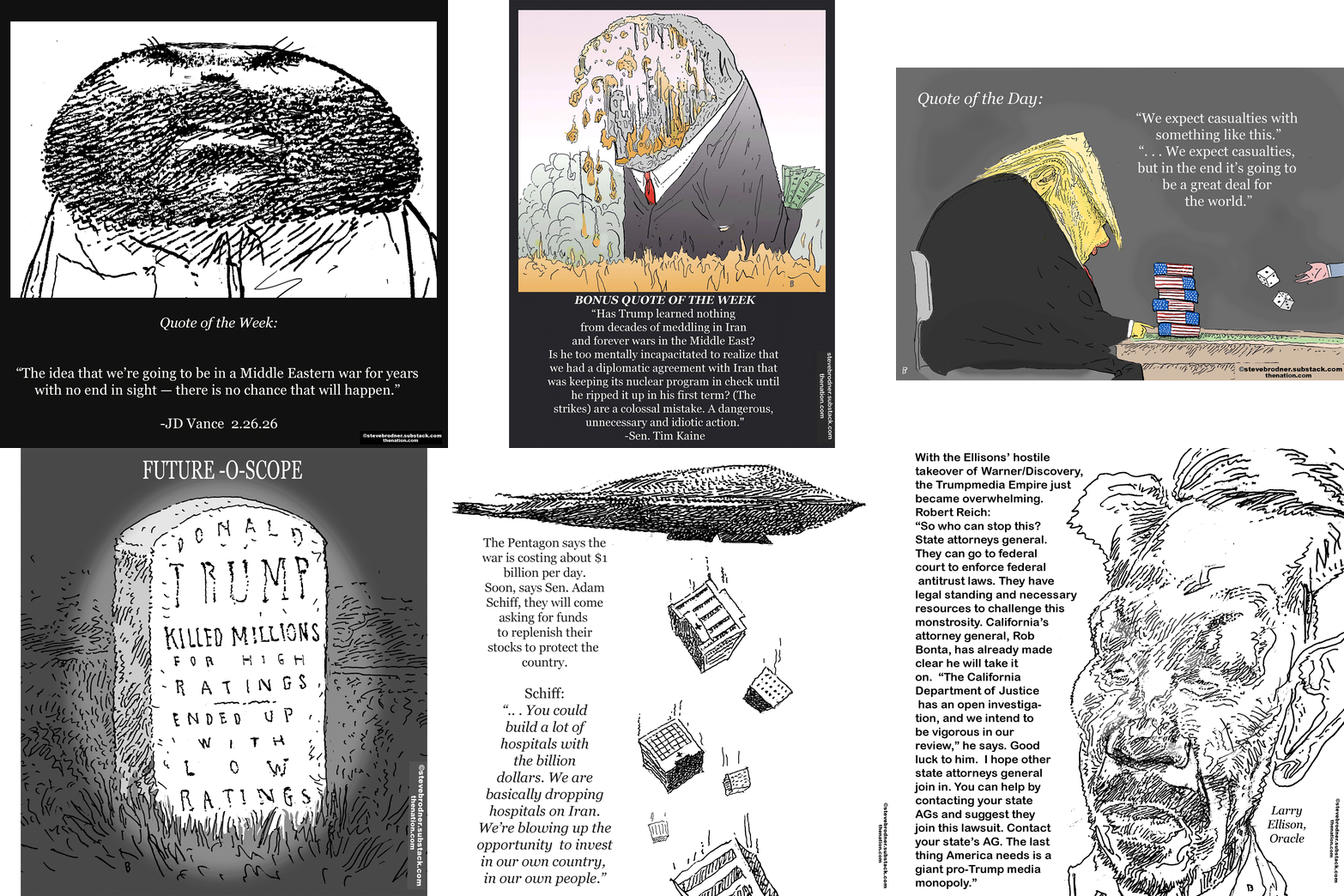

A Conflict Without Reason Has Become a Dangerous Holy War A Conflict Without Reason Has Become a Dangerous Holy War
Lacking a clear rationale for the attack on Iran, Trumpists are increasingly talking like crusaders.
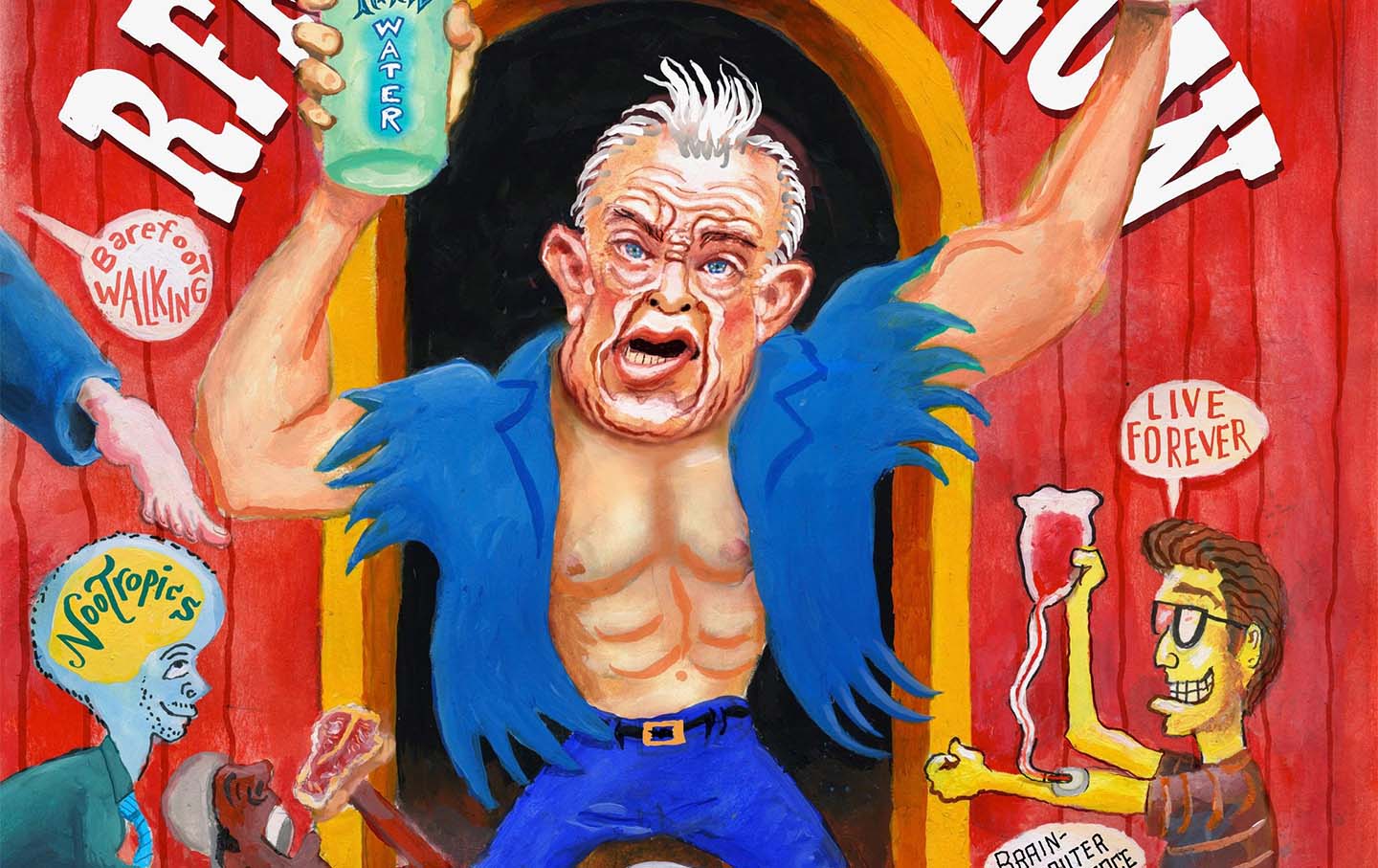
RFK Jr.: America’s Snake Oil Salesman RFK Jr.: America’s Snake Oil Salesman
Raw truth: MAHA is NUTS.

The Unfathomable Toll of the Syrian Civil War The Unfathomable Toll of the Syrian Civil War
How to make sense of the 13-year conflict?

Celebrate Kristi Noem’s Firing. But Keep Protesting ICE. Celebrate Kristi Noem’s Firing. But Keep Protesting ICE.
Finally, someone in the administration is paying for their cruelty and incompetence.

