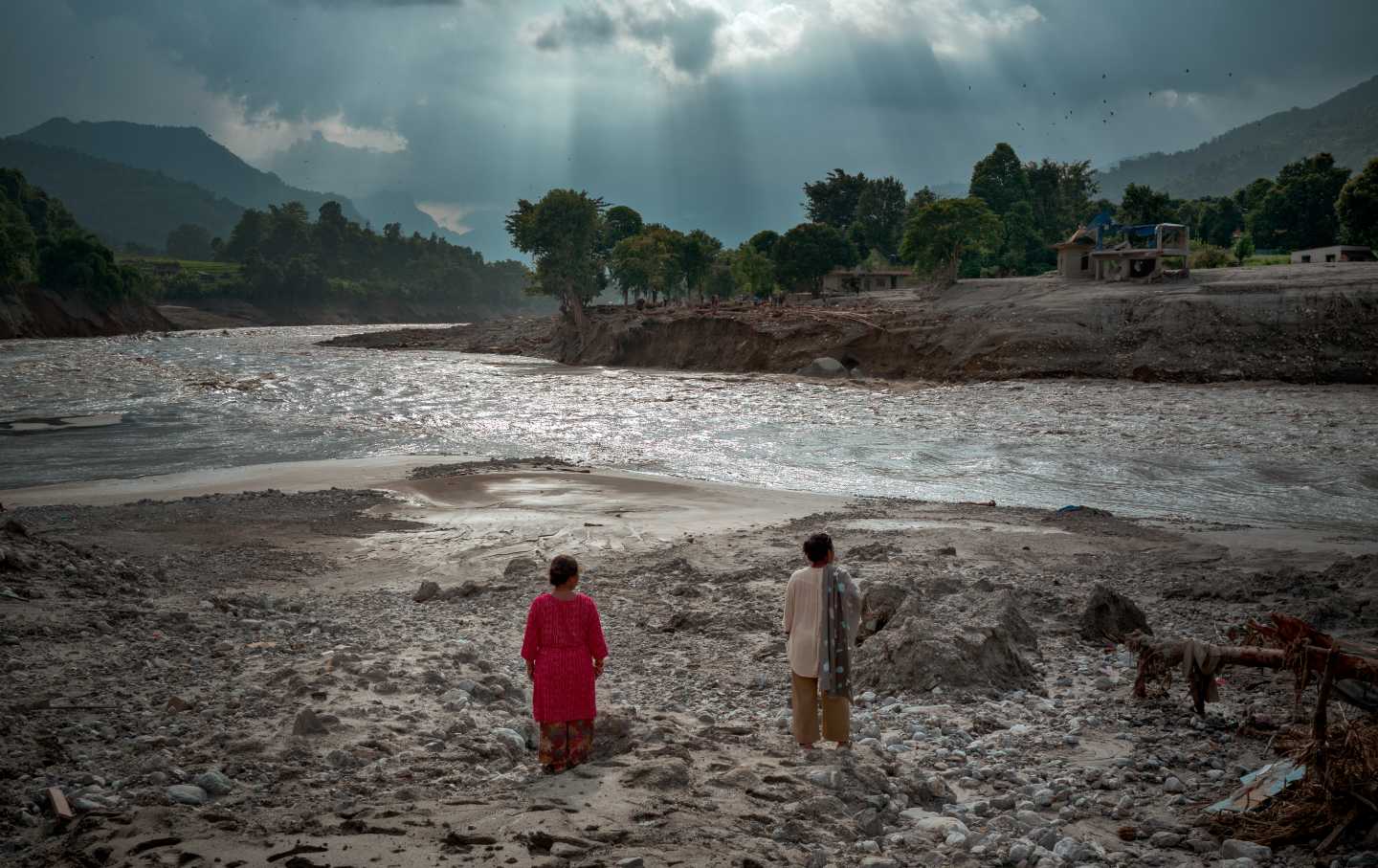
Sleepwalking Through the Climate Emergency
A shrewd observer of authoritarianism warns against normalizing what should shock us.
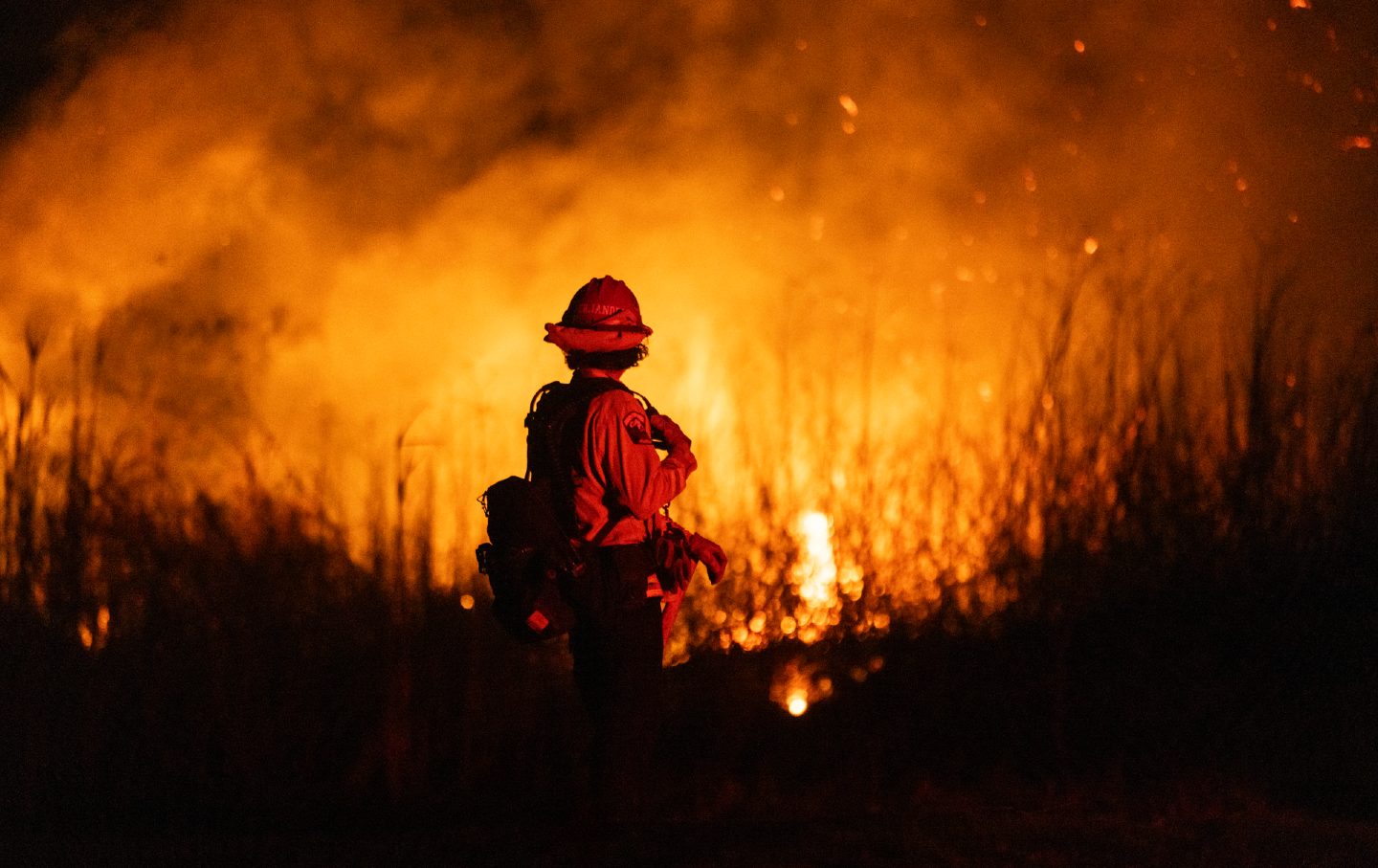
A firefighter monitors the spread of the Auto Fire in Oxnard, outside of Los Angeles, California, on January 13, 2025.
(Etienne Laurent / AFP via Getty Images)Writing in The New York Times on May 28, journalist M. Gessen recalled feeling “shocked many times” while “living in and reporting on Russia when Vladimir Putin took and consolidated power.” But as one outrage followed another and another ad infinitum, “the state of shock would last a day or a week or a month, but [as] time went on,” it faded, as Putin’s assaults on democracy simply “became a fact of our lives.”
Is something similar happening to us in the news media regarding climate change? When cutting-edge reporting warned in 2018 that climate scientists feared the Amazon could flip from a humid rain forest into a dry savannah, it was shocking. Later, when updated science concluded that this potential flip was on the verge of actually happening, there was little news coverage outside the region. In 2020, when San Francisco’s skies turned orange with smoke from distant wildfires driven by record heat, that too was shocking, and it caused many newsrooms to lead their broadcasts and home pages with those unforgettable images. When more wildfires brought orange skies to New York three years later, they made headlines again, but without the same alarm; after all, we’d seen this before.
The science is unequivocal: Our planetary house is on fire, and the flames are injuring more and more people every year, even as humanity fans those flames by burning ever more oil, gas, and coal. Yet most news coverage is sleepwalking through these developments as if they are simply the new normal.
When mega-fires scorched Los Angeles in January, the story led homepages and broadcasts around the world for days. But most reporting didn’t even mention climate change, an egregious lapse when the scientific link between mega-fires and a hotter planet is well-established. When the World Meteorological Organization last week revealed that the Paris Climate Agreement goal of limiting temperature rise to 1.5 degrees Celsius is now effectively unreachable and even the goal of 2 degrees Celsius is in peril, many newsrooms barely reported it, though either scenario would shrink polar ice sheets and unleash catastrophic sea-level rise. As US President Donald Trump and congressional Republicans try to pass a bill killing the Inflation Reduction Act’s clean energy measures, most news coverage highlights only the bill’s tax and immigration implications.
Thousands of scientists have long said in peer-reviewed journals that humanity faces nothing less than a climate emergency. Covering Climate Now has urged our fellow journalists to reflect this scientific judgment in our reporting. Doing so could well attract more readers, viewers and listeners, for as The 89 Percent Project has shown, 80 to 89 percent of the world’s people want their governments to take stronger climate action.
Yet climate change barely surfaces in most news coverage. The media is no longer guilty of “climate silence,” a small if important victory. But as Gessen observes, “comparatively small victories don’t alter the direction of our transformation—they don’t even slow it down measurably”; they simply normalize it. “And so, just when we most need to act…we tend to be lulled into complacency.”
Become a Sustaining Donor This September
Between the reemergence of right-wing red-baiting and Donald Trump’s use of the chilling National Security Presidential Memorandum–7 to criminalize left political organizing, we’re seeing McCarthyism reborn before our eyes.
This assault on democracy cannot be ignored or wished away. Resisting it requires bravery in the face of threats and repression, a steadfast commitment to the truth, and the unwavering belief that we can—and will—overcome this darkness.
We must have an independent media that sets the record straight, unearths corruption and abuses of power, and advances a politics of justice and dignity for all if we’re to win this fight.
That’s why I’m writing to you today. This September, The Nation needs to add 100 monthly donors to sustain our progressive journalism. Your contribution makes the next investigative report, the next truth-speaking column, and the next pathbreaking essay all possible.
I hope you’ll support our work with a recurring donation today. If you donate $10 or more a month, we’ll send you a brand new “Hands Off the Free Press!” sticker to recognise your commitment to our cause. Please, donate today.
Onward,
Katrina vanden Heuvel
Editor and Publisher, The Nation