
The “Crisis” of Male Adolescence Is Nothing New
Boys don’t need special treatment—it’s entitlement that’s getting them into trouble.
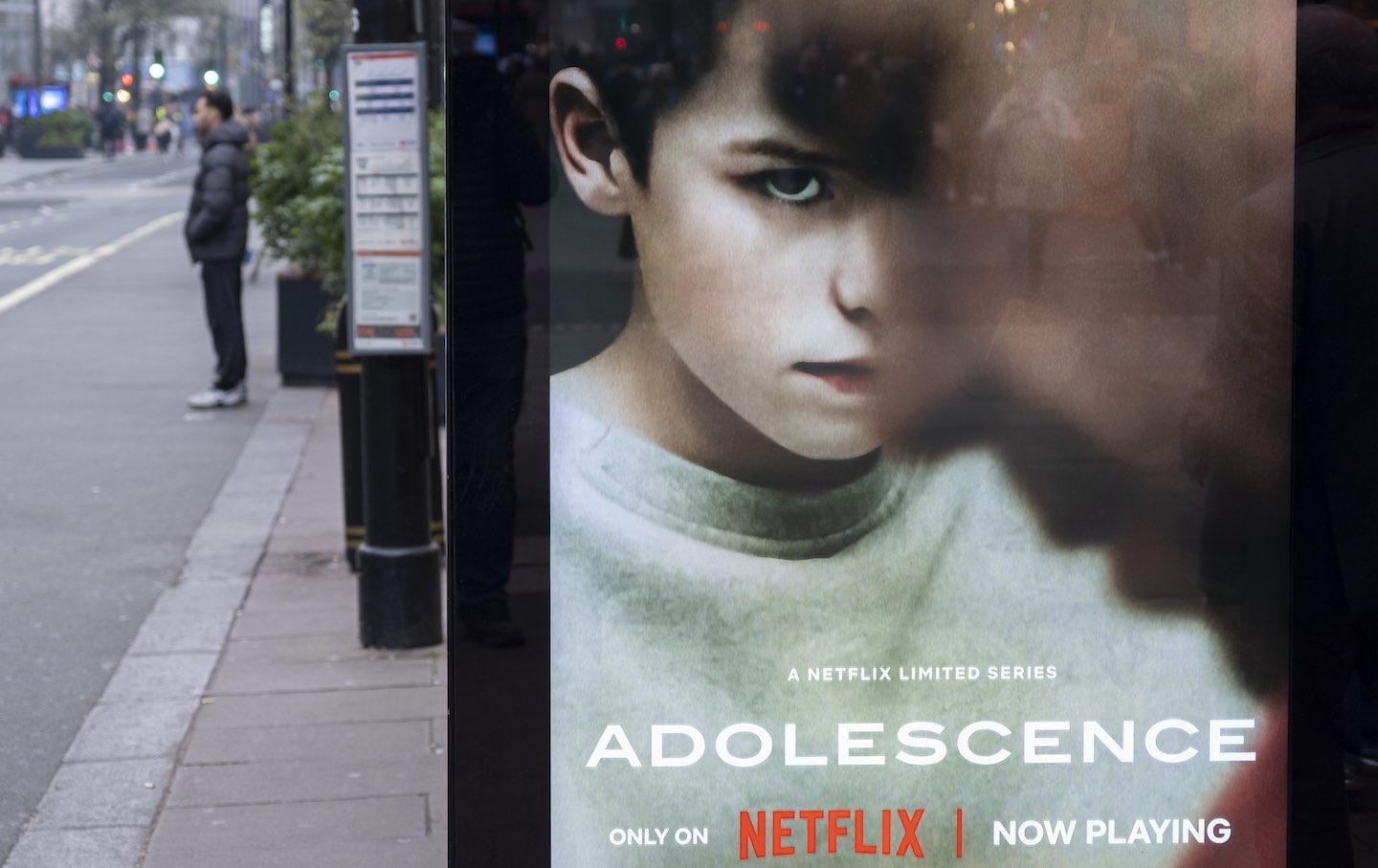
What about the boys? That’s the big question these days. They’re behind girls in school, and they’re less likely to go to college and to graduate. Too many spend all day playing video games, watching porn, getting stoned, and getting into trouble. As industrial jobs vanish, young men face a disappearing advantage in the new economy, where jobs require education and social skills. Some commentators, most famously Richard V. Reeves, the president of the American Institute for Boys and Men, have diagnosed a new “crisis” of masculinity.
All that’s been happening for decades, though—girls have done better than boys in school since at least 1914, female college enrollment has exceeded that of males since the early 1980s, and factories have been closing for decades. Misogyny is an old story, too. What’s new is its weaponization, fueled by social media, influencers like Andrew Tate, Internet “communities” of pickup artists and incels, and, of course, Donald Trump. The world’s biggest champion of what we now call toxic masculinity was especially popular with young male voters on his way to the White House. “I know a lot of parents of sweet little boys,” my daughter tells me, “and they’re just terrified.”
But the failure of boys to thrive in school doesn’t have much to do with the usual suspects, like female teachers or boys’ brains developing later than girls’, as Reeves argues in his critically acclaimed book Of Boys and Men. Reeves wants to see more men in teaching, especially in the early years—which is fine, although I balk at what amounts to a call for male affirmative action. Men are not discriminated against in teaching in the same way that women have been in the STEM professions. The obstacle, besides male avoidance of anything female-coded, is the low pay and stressful conditions. That’s not likely to change in the current climate.
Reeves also thinks that boys should start school a year later than girls. This is a terrible idea. Not only does it stereotype boys as slow and stupid, which is hardly good for their self-esteem; it means that girls will go to middle school and high school with boys who are older, bigger, and more sexually developed. Help for boys shouldn’t come at girls’ expense.
In many ways, toxic masculinity is a kind of curdled male entitlement. Boys and young men simply have not absorbed the fact that certain privileges are no longer laid out on a platter for them, as they were for their fathers and grandfathers. Girls and women expect to work, which means they can be choosier in dating and marrying. The quotas that openly favored males are gone, although a vestige of that system still survives in the worship of male high school athletes and in the advantage many colleges quietly afford male applicants. There are lots of women doing manly-men things, like excelling in math and science, joining the military, and playing sports. If they weren’t kicked to the sidelines by harassment, rape, and unintended pregnancies, who knows how much girls could accomplish?
Maybe the solution to boys falling behind is for them to act more like girls: Put down the joystick and pick up a book. Do your homework, join the Spanish club, volunteer in the community, and learn to cook (which is actually fun).
Studies show that parents still reserve some privileges for boys: bigger allowances, fewer chores, less babysitting of their younger siblings. This favoritism is poor preparation for adult life in the modern world, where you can’t count on getting a girlfriend whose idea of a fun date is watching you play Grand Theft Auto.
All these concerns come together in the much-discussed Netflix limited series Adolescence. We learn in the first episode that 13-year-old Jamie has savagely murdered Katie, a girl who rejected him with a snarky put-down. The series then follows an empathetic policeman and his no-nonsense woman partner as they build a case; a psychologist who tries to understand Jamie’s mind and motive; and, finally, his heartbroken parents and older sister as they come to grips with what Jamie did.
Unbeknownst to his family, when Jamie was quietly spending hours on his bedroom computer, he’d fallen under the sway of the manosphere and its weird blend of entitlement and self-loathing: Men deserve female subservience, but only if they are rich and aggressive “alphas” like Andrew Tate. Jamie, who has the face of an angel, cries out to his psychologist: “I’m ugly!” Teenage girls are famous for hating their bodies, but we’re not used to hearing it from boys.
Adolescence is aimed at well-meaning but clueless grown-ups, like the ones in Jamie’s life. The murder is not his parents’ fault; they’re good working-class people with a strong marriage. His father, a gruff but loving plumber, was beaten by his own father and has kept his vow never to hit his son. But did he neglect Jamie under the pressures of work? What effect did it have when he expressed disappointment that Jamie preferred drawing over sports?
It’s excruciating to watch this decent, ordinary man blame himself. How could he have known what was happening in his son’s mind? Jamie still kept a teddy bear on his bed. If Jamie were, say, 16, if he were more like the rougher boys in his school, where teachers and administrators struggle to keep a riot from breaking out on a daily basis, would Adolescence have shocked the world? Would British Prime Minister Keir Starmer be urging schools to show it during class time?
By depicting Jamie as having barely entered puberty, the series tacitly acknowledges that for older boys—to say nothing of adult men—violence against women is business as usual. Toxic masculinity is the water in which humanity has swum for thousands of years.
Now that it’s seeped down to the very youngest kids, maybe we’ll finally pay attention.
More from The Nation

The Jewish Case Against AI The Jewish Case Against AI
Haredi rabbis and the secular left agree: This technology is a threat to the entire social fabric.
The Fight for Educational Equality Is Also a Fight for a Just Supreme Court The Fight for Educational Equality Is Also a Fight for a Just Supreme Court
The court has severely weakened our ability to make an education system that fulfills the promise of Brown.
The Fall of “Scientific American” The Fall of “Scientific American”
When the beloved science publication got too political, its corporate owners stepped in. Now its future is uncertain.

The Bookstore Revolution in Taiwan’s Conservative Heartlands The Bookstore Revolution in Taiwan’s Conservative Heartlands
After Taiwan legalized same-sex marriage, gender-themed bookstores are working to build the social acceptance that the law alone couldn’t deliver.

Jalen Hurts Deserved Better. We All Do. Jalen Hurts Deserved Better. We All Do.
In a country that treats workers as expendable parts, Hurts’s playing through a blood clot is just the highest-profile example of the price workers pay in an oligarchy.

The Terrifying Future of States’ Criminalizing Pregnant People Is Already Here The Terrifying Future of States’ Criminalizing Pregnant People Is Already Here
The idea of charging people who have abortions with murder is gaining traction on the right. But a report finds that people are already being prosecuted for their pregnancy outcom...

