
Trump Is Taking a Wrecking Ball to Indigenous Education
After mass layoffs and scholarship freezes, students and tribal leaders are suing the Trump administration for violating treaty obligations.
On Valentine’s Day, Kaiya Brown was in class at her local tribal college, Southwestern Indian Polytechnic Institute in Albuquerque, New Mexico, when she learned that 20 of her school’s faculty and staff members had been laid off. They were given two hours to clear out their offices. By the time they left campus, their work had been wiped from federal servers. “When we came back after the long weekend,” Brown said, “there wasn’t a single class where someone wasn’t crying.”
Brown, a 19-year-old freshman from the Navajo Nation, picked SIPI because she wanted to be surrounded by other Native students and educators who understood her. “These aren’t just people. These are our family members,” she said. But in the aftermath of the layoffs, many basic support systems of her college disappeared: tutoring programs ended, financial aid disbursements were delayed, and students were unsure if their classes would resume. For those relying on financial aid, it wasn’t clear if they could afford their next semester of school—or even food and rent.
In the weeks that followed, Brown became the lead plaintiff in a lawsuit against the Bureau of Indian Education. The case is part of a broader legal effort led by Native students and tribal leaders represented by the Native American Rights Fund to stop the Trump administration’s sweeping federal cuts to Indigenous education. At tribal colleges across the country, students are confronting the consequences of these rollbacks: sudden staff layoffs, frozen scholarships, or the looming loss of tuition waivers.
Across the United States, 35 accredited Tribal Colleges and Universities serve more than 22,000 students across 15 states, primarily in rural and low-income areas. Most TCUs operate as two-year colleges, chartered by either federal agencies—such as the Bureau of Indian Affairs—or respective tribal governments, functioning as both educational institutions and cultural centers. Today, many TCUs rely on federal funding to provide financial aid for Native students.
Jermaine Bell, a 43-year-old enrolled member of the Wind Reservation in Wyoming, began college at the United Tribal Technical College in Bismarck, North Dakota last year. He’s a recipient of a Native American Tuition Waiver, a full-ride scholarship to earn his associate degree in Indigenous leadership. With President Trump’s slew of federal funding cuts to the agencies that support Indigenous higher education, the waiver is at risk, and Bell’s goal of becoming a tribal liaison—a Department of Interior official responsible for managing government-to-government relationships with the 574 federally recognized tribes across the United States—could become much more difficult.
Over the past 100 days in office, the Trump administration has taken a wrecking ball to Indigenous education, with tribal colleges taking the largest hits. On his first day back in office, Trump rescinded Biden’s Executive Order 14049, which staffed an Education Department office to increase funding for TCUs. Less than a month later, the administration announced layoffs of hundreds of thousands of probationary federal employees across the US—an estimated 3,500 of whom serve Indian Country. These layoffs included 950 employees in the Indian Health Service, 2,600 workers at the Department of the Interior, 118 from the Bureau of Indian Affairs, and nearly half of the Office of Tribal Justice within the Department of Justice—which resulted in a quarter of the faculty both at Haskell Indian Nations University and SIPI to be laid off.
The North Dakota Tribal College System, which encompasses five tribal colleges and 650 employees, was completing the final stages to receive a grant from the National Science Foundation in January that would have allowed the system to double its system’s office staff. That funding is on hold.
Noelle Dauphinias, a member of the Spirit Lake Reservation in North Dakota and senior majoring in early education studies at Cankdeska Cikana Community College, receives financial aid from the Tribal Colleges and Universities Head Start Partnership Program, funded by the US Department of Health and Human Services. Over the last five years, the Head Start Partnership Program has funded $8 million across 20 TCUs to increase education degrees among American Indian and Alaskan Natives. As the Trump administration suspends scholarship grants from other Native scholarship programs, Dauphinias wonders whether her scholarship program could be next.
Though she graduates this spring, Dauphinias expressed concern for underclassmen just entering the program. According to Partnership with Native Americans, just 17 percent of Native youth can continue their education beyond high school. “If that funding is not going to be there for them, what are they going to do?” Dauphinias asked. “How are they going to pay for their education?”
At Bell’s college, around 65 percent of the student body are first-generation university students and 68 percent are low-income. “I need my tribal education to continue to be this tribal political leader I wanted to be,” Bell said. “Now I have to go and figure out how to pay for school, when this tuition was so huge—that’s why I came to school.”
Federal funding for TCUs originates from trust responsibilities established by treaties that recognize Native American tribes as sovereign entities—an acknowledgment that predates the US Constitution. According to Matthew Fletcher, a member of the Grand Traverse Band of Ottawa and Chippewa Indians and a professor at the University of Michigan Law School, these responsibilities include requirements to uphold tribal sovereignty, consult with tribes on policies and projects that affect them, and respect tribes’ right to self-determination. Financial support has historically come from Congress through the 1975 Indian Self-Determination and Education Assistance Act, as well as funding by the US Department of Agriculture (as land-grant institutions), and from the US Department of Education.
Even before Trump’s return to office, ProPublica found that many TCUs already suffered due to federal underfunding. Congress provided TCUs a quarter of a billion dollars per year less than the inflation-adjusted amount they should receive for Native students. Approximately three-quarters of TCU revenue comes from federal funding sources—now threatened by the Trump administration’s recent executive orders and policies.
Popular
“swipe left below to view more authors”Swipe →There’s no donor base for these schools to tap. Tracey Bauer, executive director of the North Dakota Tribal College System, explains that many TCUs come from “very humble backgrounds” and started with classes in old trailers, abandoned buildings, and military grounds. Some tribal colleges, such as Haskell Indian Nations University, used to be Indian boarding schools—institutions created by the United States to forcibly separate Native American children from their families and assimilate them into white society, often through abusive tactics.
According to Bauer, Trump’s executive orders reversed a lot of the hard work done by tribal colleges seeking direct representation within the executive branch. “We’ve lost our political office within the White House, and so we lose the direct access that we had to the education secretary,” Bauer said. “We are also losing the opportunity, or the ability, to directly impact policies that affect tribal colleges and universities.”
Brown and the other plaintiffs, including a group of leaders from three tribal nations and five Native students, are aiming to reverse the firing of federal workers at Native schools, on the grounds that the terminations violate the government’s trust obligations to tribal nations. Lawyers from the Native American Rights Fund filed the suit against leaders from the Department of the Interior, the Bureau of Indian Affairs, and the Office of Indian Education Programs.
Beyond tribal colleges, the Trump administration has targeted diversity, equity, and inclusion initiatives in schools, based on a broad interpretation of the 2023 Students for Fair Admissions v. Harvard decision. While Fletcher emphasizes that DEI programming, legally, has nothing to do with Native American education, he cautions that Trump’s new policies could still endanger programs aimed at supporting Indigenous students.
Bauer adds that Trump’s rhetoric conflates tribal sovereignty with broader DEI efforts, endangering funding streams for Native institutions. Many higher education institutions maintain cultural centers and affinity spaces designed to serve Native students, and these programs now face increased scrutiny. At the University of Utah, for example, administrators had already closed in July 2024 the Center for Equity and Student Belonging, the central hub for Native student life, among other cultural centers, amid a conservative legislative push to abolish such programs in public higher education.
For Bell and many others, the impact of these cuts extends beyond the classroom—it threatens their futures, their communities, and the very foundations of tribal sovereignty. “[Trump] signed a piece of paper, that paper could totally eliminate my job,” said Bell. As funding hangs in the balance, Native students at tribal colleges across the country are left wondering whether they will have the support to be able to continue their education, or if the promises made to Indigenous nations will once again be broken.
While Brown’s lawsuit has garnered attention and support, the legal proceedings are ongoing, and a final decision has not yet been made. The plaintiffs hope that the court will recognize the federal government’s breach of its trust responsibilities and mandate corrective actions. However, given the complexities of federal litigation under the Trump administration, the timeline for a resolution remains uncertain. According to Jaqueline De Leon, Senior Staff Attorney of the Native American Rights Fund, since the suit’s filing, “initial rehires were made, but there have been indications future reductions in force will go forward.”
In the meantime, Brown continues her advocacy, emphasizing the importance of community resilience. “I just knew I had to do something, but nothing was working, and I was really frustrated.… this lawsuit fell into my lap just by having a quick interview Native American Rights Fund,” she said. “It was like a blessing that it came to me, and I never even expected it.”
Become a Sustaining Donor This September
Between the reemergence of right-wing red-baiting and Donald Trump’s use of the chilling National Security Presidential Memorandum–7 to criminalize left political organizing, we’re seeing McCarthyism reborn before our eyes.
This assault on democracy cannot be ignored or wished away. Resisting it requires bravery in the face of threats and repression, a steadfast commitment to the truth, and the unwavering belief that we can—and will—overcome this darkness.
We must have an independent media that sets the record straight, unearths corruption and abuses of power, and advances a politics of justice and dignity for all if we’re to win this fight.
That’s why I’m writing to you today. This September, The Nation needs to add 100 monthly donors to sustain our progressive journalism. Your contribution makes the next investigative report, the next truth-speaking column, and the next pathbreaking essay all possible.
I hope you’ll support our work with a recurring donation today. If you donate $10 or more a month, we’ll send you a brand new “Hands Off the Free Press!” sticker to recognise your commitment to our cause. Please, donate today.
Onward,
Katrina vanden Heuvel
Editor and Publisher, The Nation
More from The Nation
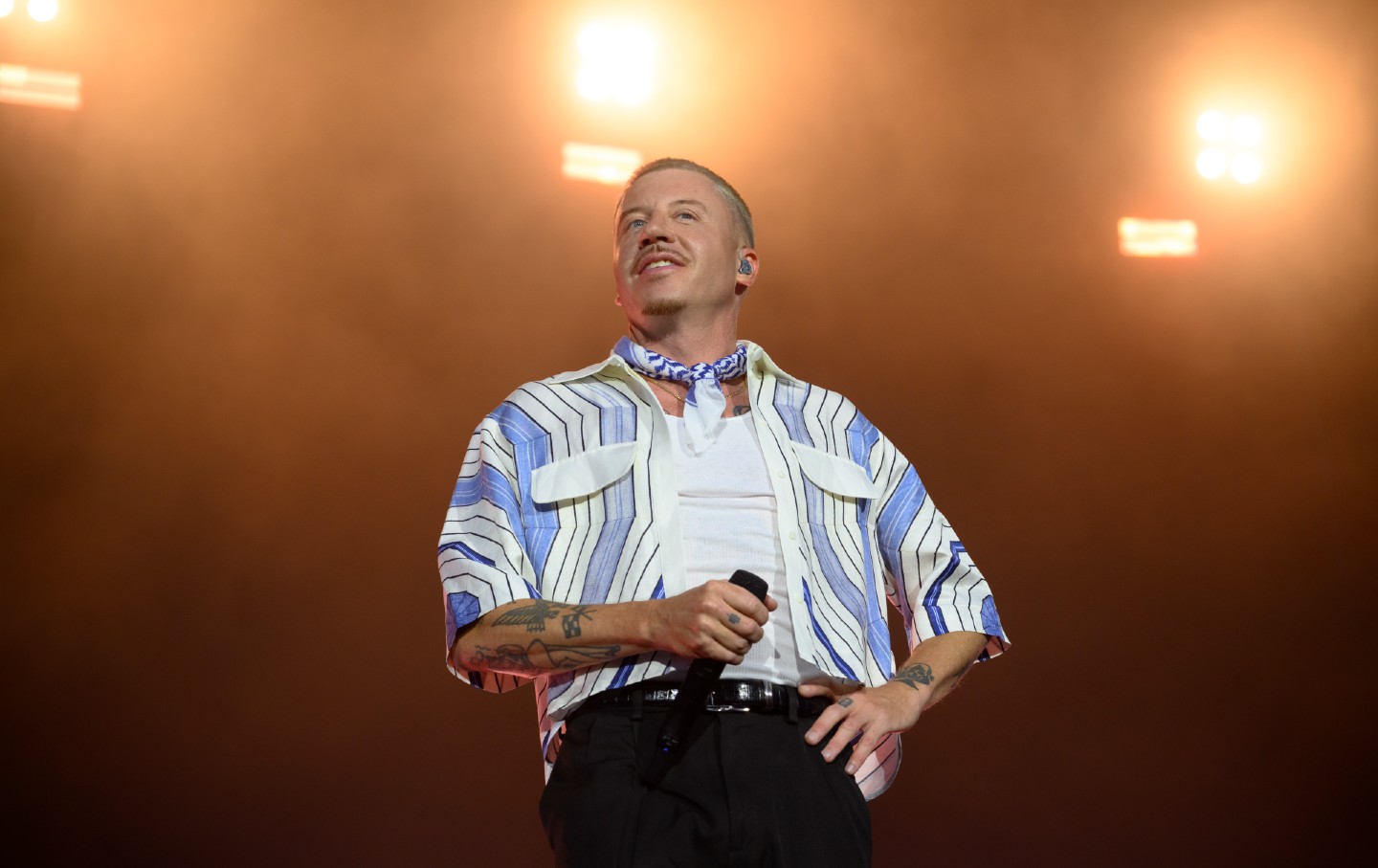
Justice for Macklemore Justice for Macklemore
The rapper has been dumped from Ed Sheeran’s tour for saying “free Palestine.” That’s a disgrace.
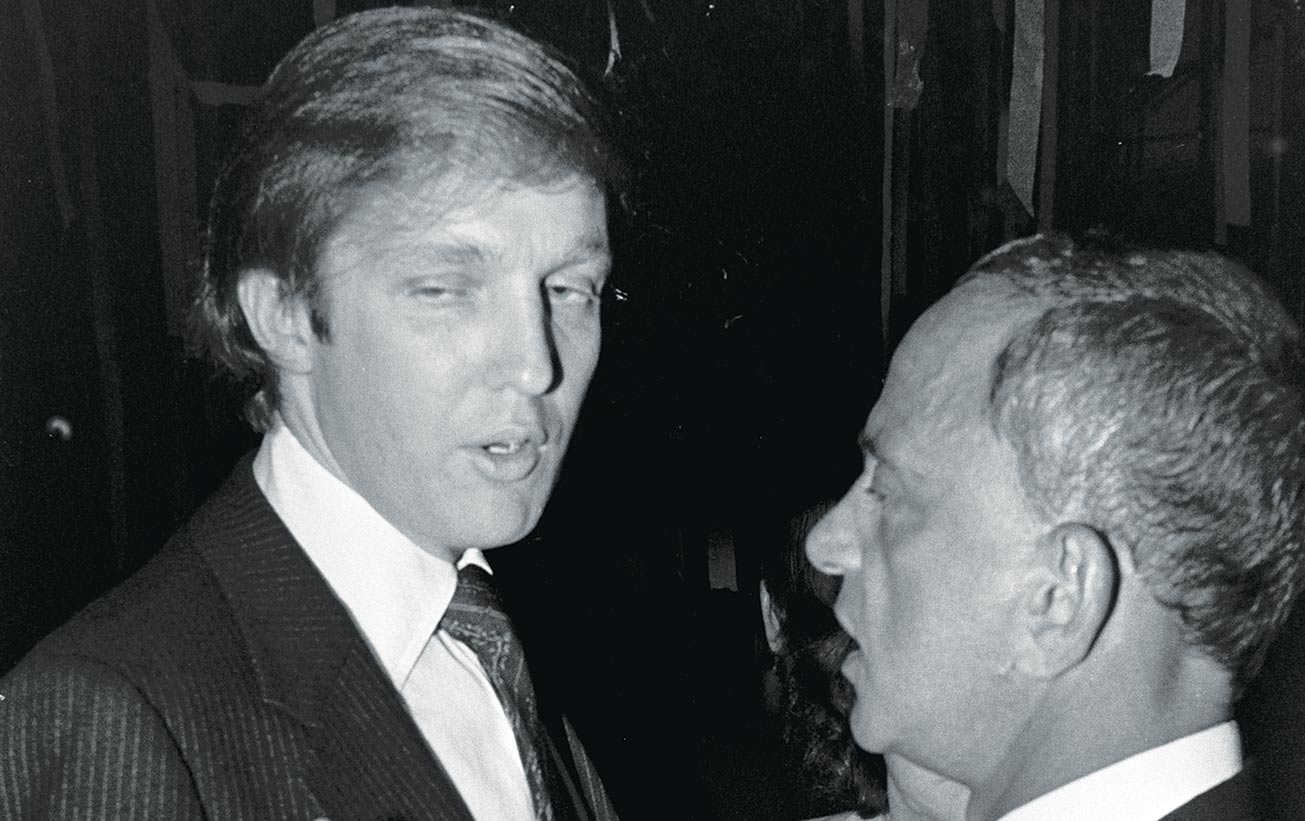
We Are Living Under Roy Cohnian Logic We Are Living Under Roy Cohnian Logic
The political fixer created a career for himself as a self-promoting, ubiquitous hustler. Like Trump, he got away with it by having the right friends.
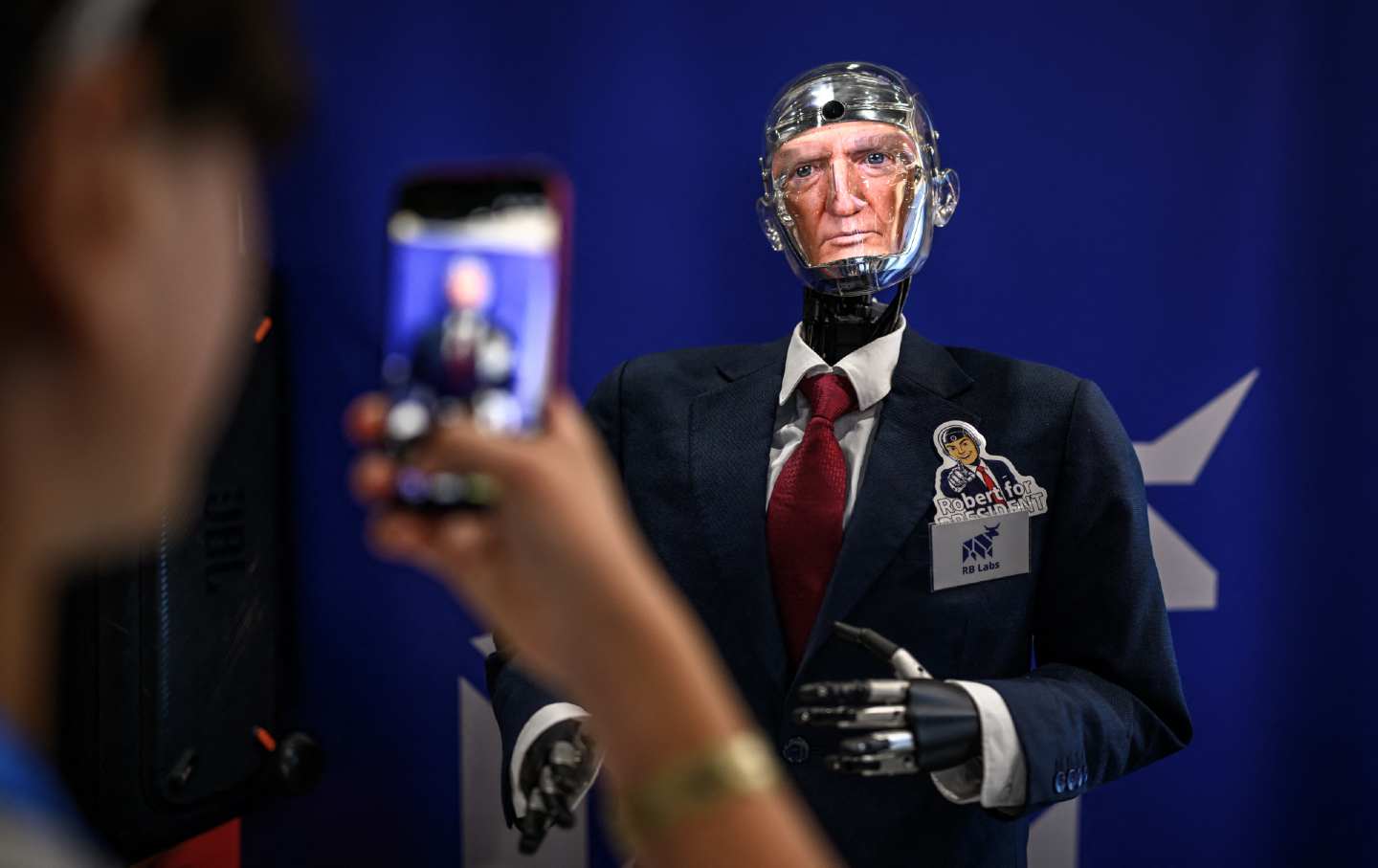
Time Has Run Out for AI Risk Deniers Time Has Run Out for AI Risk Deniers
The recent spate of reports about the technology’s destructive power underline two prime directives: Be afraid, and regulate aggressively.
Yale’s President Has Become a Shameful Collaborator With Trump Yale’s President Has Become a Shameful Collaborator With Trump
Maurie McInnis has the power to stand up to the administration. Instead, she’s caving.

The Fissures and Fractures Behind the Right’s Pink Facade The Fissures and Fractures Behind the Right’s Pink Facade
After Roe was overturned, some young women are turning more hard-line on abortion—but others are fleeing conservatism altogether.

Notes From Evictionland Notes From Evictionland
Eviction is practically baked into the way Britain manages its tenanted homes. Here’s how it played out—over and over again—for my parents.

