
Group Chat War Plans Provide a Window Into Trump’s Mafia State
American foreign policy is now all about incompetent shakedowns and cover-ups.
No reasonable person can begrudge Hillary Clinton her belated moment of triumphant vindication. In 2016, Clinton’s reputation was repeatedly dragged through the mud by the media and by Republicans over a puffed-up scandal over her use of a private e-mail server while conducting public business as secretary of state. The claim of anti-Clintonites was that this breach of security protocol rendered her unfit for the presidency—even when running against so flawed a candidate as Donald Trump.
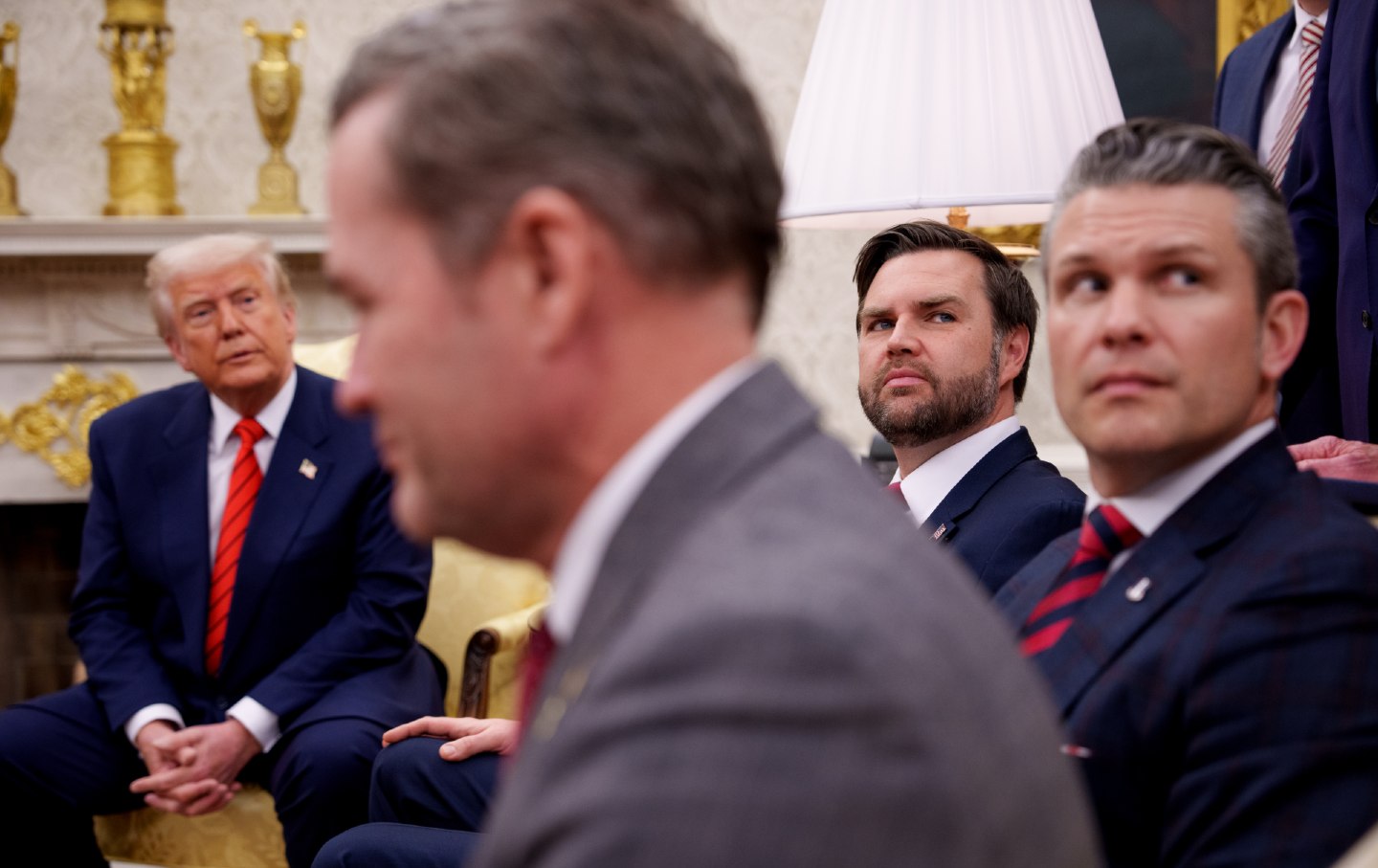
But now Trump’s inner circle has been caught in its own breach of security that is immeasurably worse than anything Clinton had ever plausibly been accused of. On Monday, Atlantic editor Jeffrey Goldberg revealed that between March 11 and March 15 he had been—likely by mistake—admitted into a group chat on Signal where high-ranking officials of the Trump administration planned a military attack on Yemen. Among the participants to the group chat were Vice President JD Vance, Secretary of Defense Pete Hegseth, national security adviser Michael Waltz, and presidential adviser Stephen Miller. In this chat they planned the war and discussed relationships with allies. It has also come to light that Director of National Intelligence Tulsi Gabbard and Secretary of State Marco Rubio were included in this thread.
Goldberg’s bombshell reporting contained numerous scandals. Wars are not meant to be planned on group chats—certainly not on chats where it was easy for a reporter to accidentally eavesdrop. Hillary Clinton responded to the news with sly aplomb, posting emojis showing startled eyes and writing, “You have got to be kidding me.”
But beyond the security breach, which certainly provides ample grounds for Democrats to attack the Trump administration, the group chat offers a remarkable window into the inner workings of the Trump administration. The security breach itself is one of the biggest intelligence fiascos in American history—but there’s a case to be made that the substance of the group chat is even worse.
Here are a few key lessons from the group chat.
Lesson one: Trump is running a mafia state.
It’s hardly an accident that Trump’s key foreign policy people were using a group chat rather than legitimate channels. Trump hates keeping records of his business and political activity because he prefers to evade legal scrutiny. As Colgate University political scientist Sam Rosenfeld notes, “The admin, following (illegally) POTUS’s lifelong code, wants no record kept.” As Goldberg observes, “Waltz set some of the messages in the Signal group to disappear after one week, and some after four. That raises questions about whether the officials may have violated federal records law: Text messages about official acts are considered records that should be preserved.” Using Signal and setting messages to disappear shows a deliberate intent to evade the legal requirements of record preservation.
Lesson two: Pete Hegseth is a bald-faced liar—and it doesn’t matter.
Even after the White House confirmed that Goldberg had indeed been on the group chat, Hegseth tried to dismiss the story as a “hoax.” In any normal administration, Hegseth would be fired on the spot. But that is unlikely under Trump, and Senate Republicans, who rallied behind Hegseth’s nomination, will almost certainly toe the party line.
Lesson three: The war on Yemen made no sense and was conducted without consulting Congress or allies.
In the deliberations, Hegseth notes, “I think messaging is going to be tough no matter what—nobody knows who the Houthis are—which is why we would need to stay focused on: 1) Biden failed & 2) Iran funded.” The reason the “messaging” was going to be tough is that the war was an exercise in pure muscle flexing. It made no strategic sense. The broad argument was that the war was necessary to unblock shipping through the Suez Canal. But the only reason the Houthi government of Yemen threatened the shipping lane was because of the Israeli assault on Gaza. The Trump administration is nominally committed to reviving the ceasefire. There’s no discussion given of consulting either Congress (which alone has the power to declare war—admittedly a part of the Constitution that hasn’t been honored in nearly a century) or the allies this action was allegedly supposed to benefit. Nor was the possibility of negotiating with Yemen ever part of the deliberation.
Lesson four: The Trump administration really hates Europe—but still wants to fight wars on its behalf.
The one voice questioning the rush to war was JD Vance, who raised the reasonable objection that fighting the war on behalf of Europe made little sense when the administration was also, in the name of an America First foreign policy, pursuing a disengagement from the Russia/Ukraine conflict. As Vance reasonably notes, “3 percent of US trade runs through the suez. 40 percent of European trade does. There is a real risk that the public doesn’t understand this or why it’s necessary.” Vance later complains, “I just hate bailing Europe out again.”
Responding to Vance’s objections, Hegseth wrote, “fully share your loathing of European free-loading. It’s PATHETIC. But Mike [Waltz] is correct, we are the only ones on the planet (on our side of the ledger) who can do this.” In other words, for all the lip service to America First, the Trump administration is still trapped in the hubristic folly of seeing the United States as an “indispensable nation” which must police the globe. America First isn’t able to move beyond the compulsive interventionism that Trump as a candidate often criticized
Lesson five: The contradictions of America First are resolved by Mafia-style shakedowns.
Popular
“swipe left below to view more authors”Swipe →Because the president’s America First foreign policy is already betraying its core principles, the Trump administration is trying to save face by attempting Mafia-style protection shakedowns. Waltz tries to assuage Vance’s concerns by writing, “Per the president’s request we are working with DOD and State to determine how to compile the cost associated and levy them on the Europeans.”
Stephen Miller shares this goal, writing that “we [will] soon make clear to Egypt and Europe what we expect in return. We also need to figure out how to enforce such a requirement. EG, if Europe doesn’t remunerate, then what? If the US successfully restores freedom of navigation at great cost there needs to be some further economic gain extracted in return.”
It’s hard not to escape the thought that this talk of remuneration is a post facto way to rationalize a war that makes little strategic sense. The goal of the war seems to have been to make a display of toughness on the international stage and achieve a victory that eluded Joe Biden. But since this war is also in tension with America First principles, the possibility of Egyptian and European repayment is raised.
Greg Brew, a senior analyst of the Eurasia Group, notes the strategic incoherence of the war—that
they aren’t actually implementing anything that would accomplish the stated goal of “opening” the Red Sea. Bombing the Houthis isn’t enough; there’s been a consensus on that for over a year.
Unless coupled with a ground offensive or a diplomatic campaign geared around a permanent ceasefire in Gaza, the US campaign will either go on indefinitely or quietly peter out as the participants admit defeat.
In sum, a bleak picture emerges of an administration flying by the seat of its pants, aware of its own policy incoherence but hoping to create a façade of strength through blustery tough-guy talk and the shakedown of allies. Trump is governing a Mafia state, but it is even more belligerently incompetent than the actual Cosa Nostra. The security breach is indeed a major scandal. But the actual contents of the group chat are even worse.
Become a Sustaining Donor This September
Between the reemergence of right-wing red-baiting and Donald Trump’s use of the chilling National Security Presidential Memorandum–7 to criminalize left political organizing, we’re seeing McCarthyism reborn before our eyes.
This assault on democracy cannot be ignored or wished away. Resisting it requires bravery in the face of threats and repression, a steadfast commitment to the truth, and the unwavering belief that we can—and will—overcome this darkness.
We must have an independent media that sets the record straight, unearths corruption and abuses of power, and advances a politics of justice and dignity for all if we’re to win this fight.
That’s why I’m writing to you today. This September, The Nation needs to add 100 monthly donors to sustain our progressive journalism. Your contribution makes the next investigative report, the next truth-speaking column, and the next pathbreaking essay all possible.
I hope you’ll support our work with a recurring donation today. If you donate $10 or more a month, we’ll send you a brand new “Hands Off the Free Press!” sticker to recognise your commitment to our cause. Please, donate today.
Onward,
Katrina vanden Heuvel
Editor and Publisher, The Nation
More from
Jeet Heer 
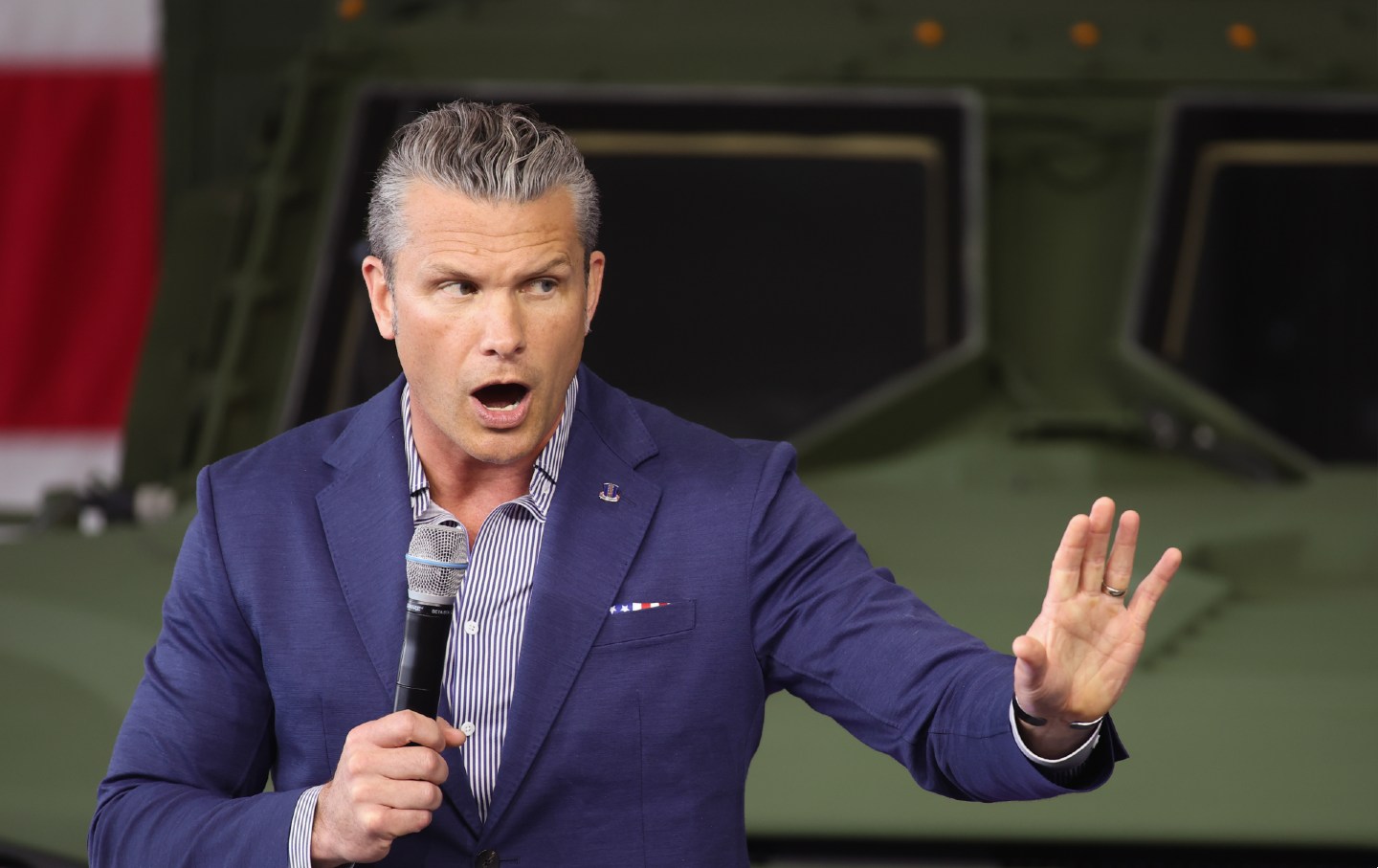
Even Republicans Are Figuring Out That Pete Hegseth Is a Disaster Even Republicans Are Figuring Out That Pete Hegseth Is a Disaster
Hegseth was always a horrible choice for defense secretary. At long last, some in the GOP are admitting it.
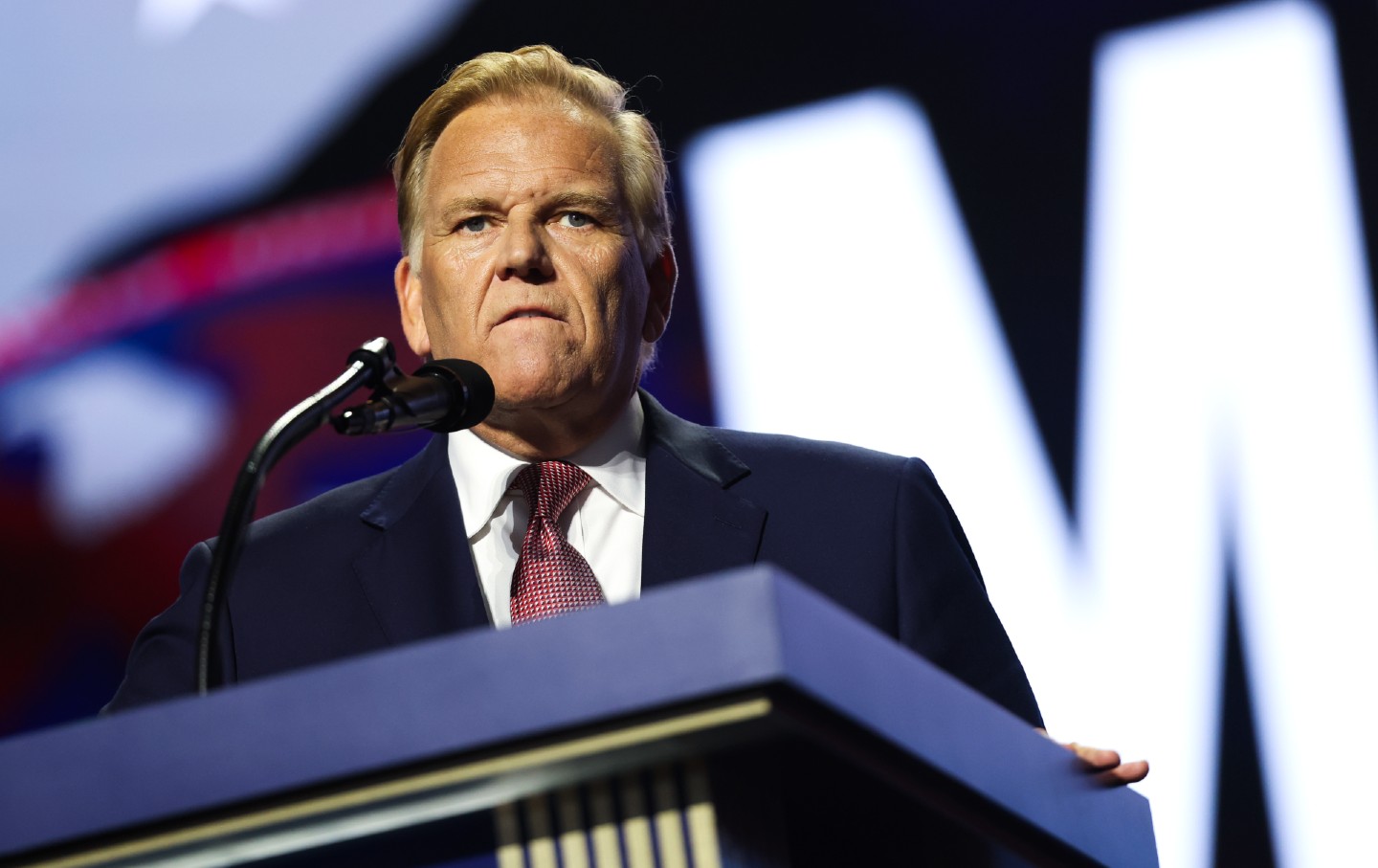
Why Aren’t We Talking About the Warmongering Lies of Mike Rogers? Why Aren’t We Talking About the Warmongering Lies of Mike Rogers?
The media’s relentless focus on Hasan Piker allows the dishonest GOP hawk (and actual Michigan Senate candidate) to evade scrutiny.

MAGA Is Exploiting the Lindsay Clancy Case to Try to End Voting for Women MAGA Is Exploiting the Lindsay Clancy Case to Try to End Voting for Women
As Trump subverts elections, his most ardent fans want to overturn the 19th Amendment.

Accountability for the Gaza Genocide Can’t Focus on Netanyahu Alone Accountability for the Gaza Genocide Can’t Focus on Netanyahu Alone
Getting rid of one bad leader won’t bring justice.
In Trump’s Mafia, Even Goons Can Do Billion-Dollar Shakedowns In Trump’s Mafia, Even Goons Can Do Billion-Dollar Shakedowns
Corey Lewandowski is a disposable underling, but he’s protected enough to scorn the law.
Maria Bartiromo Was Fired for the Wrong Reason Maria Bartiromo Was Fired for the Wrong Reason
For Fox News, blind servility to Trump is fine until it hits the bottom line.

