
Donald Trump Is Crashing the Economy, but Wall Street Is Afraid to Speak Out
Everyone knows Trump is messing up, but fear and greed prevent resistance.
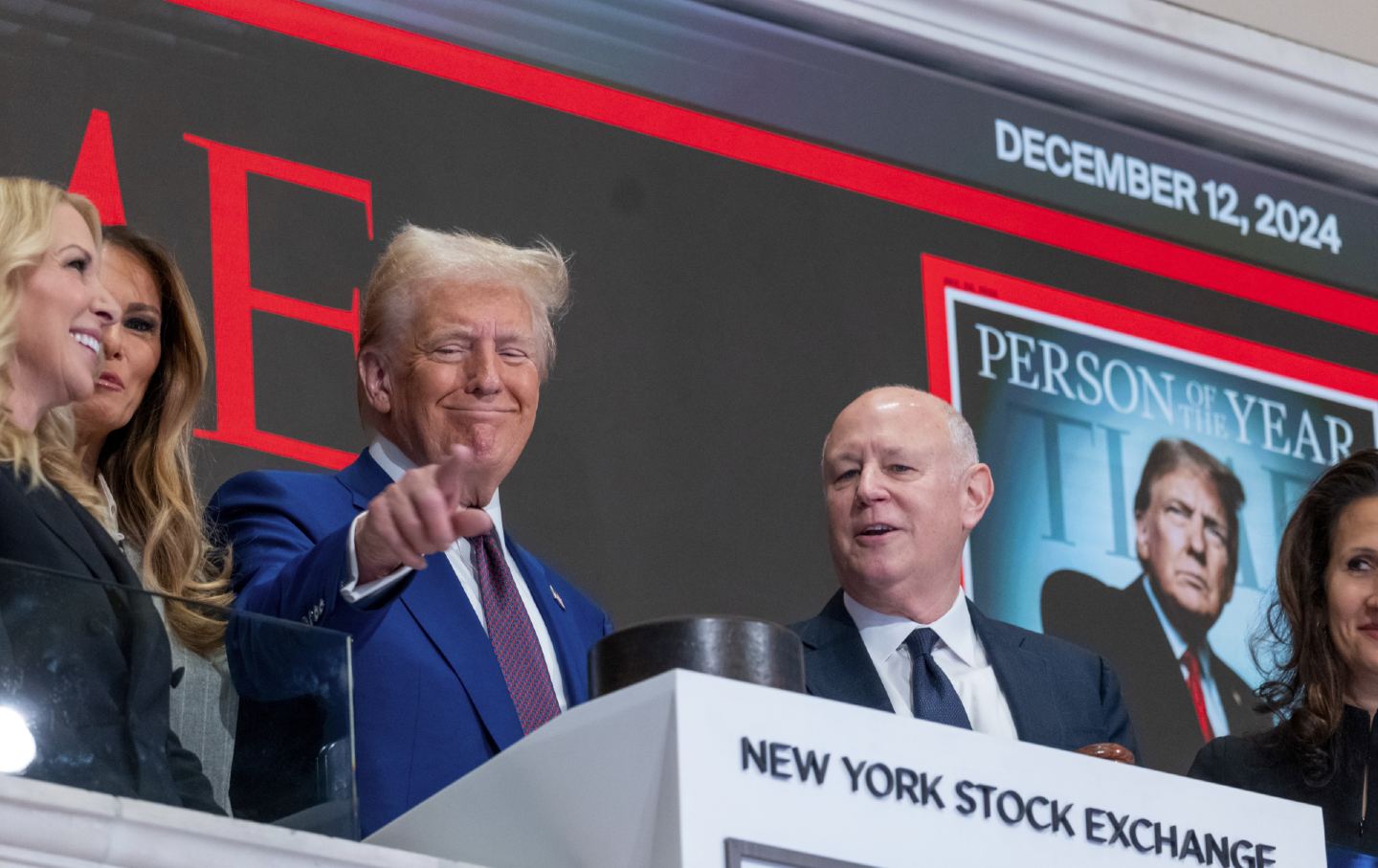
Normally, it’s a mistake to blame the fluctuations of the stock market on the actions of just one person—even if they are president of the United States. But there is nothing normal about the Trump era. The stock market is in a tizzy, and the fault is not hard to find: Donald Trump. The S&P 500 is down 10.1 percent from its peak a month ago, which means technically we’re in a “correction.” If this slide continues on its current trajectory, it won’t be long before the correction turns into an outright crash, bringing in its wake a recession.
In 1929, at the start of the stock market crash that inaugurated the Great Depression, Variety ran the famous headline: “WALL STREET LAYS AN EGG.” It’s possible now to imagine the sequel: “DONALD TRUMP LAYS AN EGG.”
This economic turmoil is due to two factors: Trump’s erratic policy shifts and Wall Street’s initial misjudgment about Trump. When Trump won his second presidential term in November, Wall Street enjoyed a strong rally because it expected Trump to govern as he did in his first term. In 2017, Trump came into office talking like a radical economic populist—but his actual performance was as a standard big-business Republican, more interested in tax cuts and deregulation than industrial policy or empowering workers. True, Trump did initiate a new trade war with China (a policy Joe Biden continued) and renegotiated NAFTA (now rebranded the United States-Mexico-Canada Agreement or USMCA).
But both changes were less revolutionary than they seemed. The move toward seeing China as an economic threat had already started under Barack Obama; and USMCA is basically a cosmetic change of NAFTA. In other words, both policies were part of a longer continuity. Beyond that, Trump often relied on standard Republican businessmen like Federal Reserve chairman Jerome Powell and Treasury Secretary Steven Mnuchin, both avatars of the stability of well-entrenched capitalism. On foreign policy, Trump’s reliance on military men like John Kelly and Mark Milley made sure he didn’t stray too far from the national security consensus either. True, Trump’s White House was a hothouse of intrigue and infighting, but in terms of policies it was much more like a conventional Republican administration than anyone had expected.
Anticipating Trump 2.0 to be a repeat of Trump 1.0, Wall Street looked forward to another round of tax cuts and deregulation, with the threat of a new trade war viewed as largely rhetorical. Unfortunately, Trump and his circle had been radicalized by being out of office. Trump seems to have decided that for his second term as president, he really was going to live up to the MAGA agenda of protectionism and foreign policy unilateralism.
Instead of Steven Mnuchin, Trump’s main economic adviser now is Elon Musk—a product not of blue-chip Wall Street but of swashbuckling Silicon Valley. Musk, now tasked with gutting the administrative state, came from a world where disrupting entrenched practices and government/business synergy are seen as the keys to wealth. Suddenly, acne-infested Sanford students—some of them literal teenagers—were in charge of slashing government agencies.
Trump’s Secretary of Commerce, Howard Lutnick, shares his boss’s passion for kicking-and-biting tariff fights. The United States suddenly found itself in a series of tussles with Canada, Mexico, China, and the European Union. These trading partners also expected a return to the transactional Trump of the first term and were startled to discover that this time he’s really committed, although erratically so, to trade wars. The pattern over the past few weeks is for Trump to raise tariffs—and then start lowering them when met with retaliation and when the stock market sinks.
As The New York Times reports, European officials were shocked when Trump turned out not to be “transactional” but simply irrational:
As a tit-for-tat trade war kicks into gear, Europe is facing a difficult reality. It is not clear to many European officials what exactly Mr. Trump wants. Tariffs are sometimes explained by administration officials as an effort to level the playing field, but they are also cited as a tool for raising money for U.S. coffers to pay for tax cuts, or floated as a way to punish the E.U. for its regulation of technology companies.
Trump’s incoherent policy, which shifts wildly from day to day, is spooking Wall Street. Another New York Times article reports that the current stock market slide is motivated by “investors’ growing pessimism about the whipsawing policy pronouncements coming from Washington over the past few weeks. On-again, off-again tariffs and mass layoffs of federal workers have fomented unease on Wall Street.”
Wall Street might be uneasy, but it is also, so far, remaining quiet. A major feature of Trump’s second term is not only a much more radical set of policies but also a pervasive fear in many institutions of offending the president, who has shown every inclination to use both his bully pulpit and the instruments of state power to punish perceived enemies.
On Wednesday, The Wall Street Journal reported, “How business leaders talk about the Trump administration in private has been markedly different than what they are game to say in public.”
The newspaper cited a recent meeting of a Yale CEO Caucus attended by such high rollers as JPMorgan Chase’s Jamie Dimon, billionaire Michael Dell, and Pfizer’s Albert Bourla. According to Jeffrey Sonnenfeld, a professor at the Yale School of Management who participated in the private meeting, “There was universal revulsion against the Trump economic policies. They’re also especially horrified about Canada.”
Popular
“swipe left below to view more authors”Swipe →Despite these private worries, these CEOs are apparently not willing to voice public rebukes of Trump. According to The Wall Street Journal, “asked how much the stock market would need to decline for them to speak out collectively, 44% said it would have to fall 20%. Another 22% said stocks would have to fall 30% before they would take a stand.”
This silence is partly due to political agreement with the rest of Trump’s economic agenda—particularly tax cuts and deregulation. It’s also due to cowardice, as “they worry public criticism will make them a target of the president’s bully pulpit.”
The self-censorship of Wall Street is of a piece with the larger failure of the American elite in the Trump era. Institution after institution—both political parties, the media, the academy—continue to surrender to Trump despite expressing private concerns about the dangers of his policy.
The only hope for resistance to Trump comes not from the elite but from the people. Voters are just as worried about Trump’s mishandling of the economy as Wall Street is. There seems to be a sea change in public opinion. Because of robust job growth in his first term, Trump has usually been rated highly as an economic manager. This is no longer the case. On Wednesday, Politico reported, “When asked about how Trump is handling the economy, 56 percent of adults said they disapprove and 44 said they approved, according to a CNN/SSRS poll released Wednesday morning.”
The public anger at Trump’s economic policy can be seen in town halls, where voters berate Republican lawmakers for complicity and Democratic lawmakers for cowardice. It can also be seen in the large crowds Senator Bernie Sanders is drawing in rallies against Trump. The open question is how long it will take for the Democratic Party as a whole to start following Sanders’s lead.
Wall Street will never be at the forefront of resisting Trump, which means the job falls to the people themselves—and any politician brave enough to take up the fight.
More from
Jeet Heer 
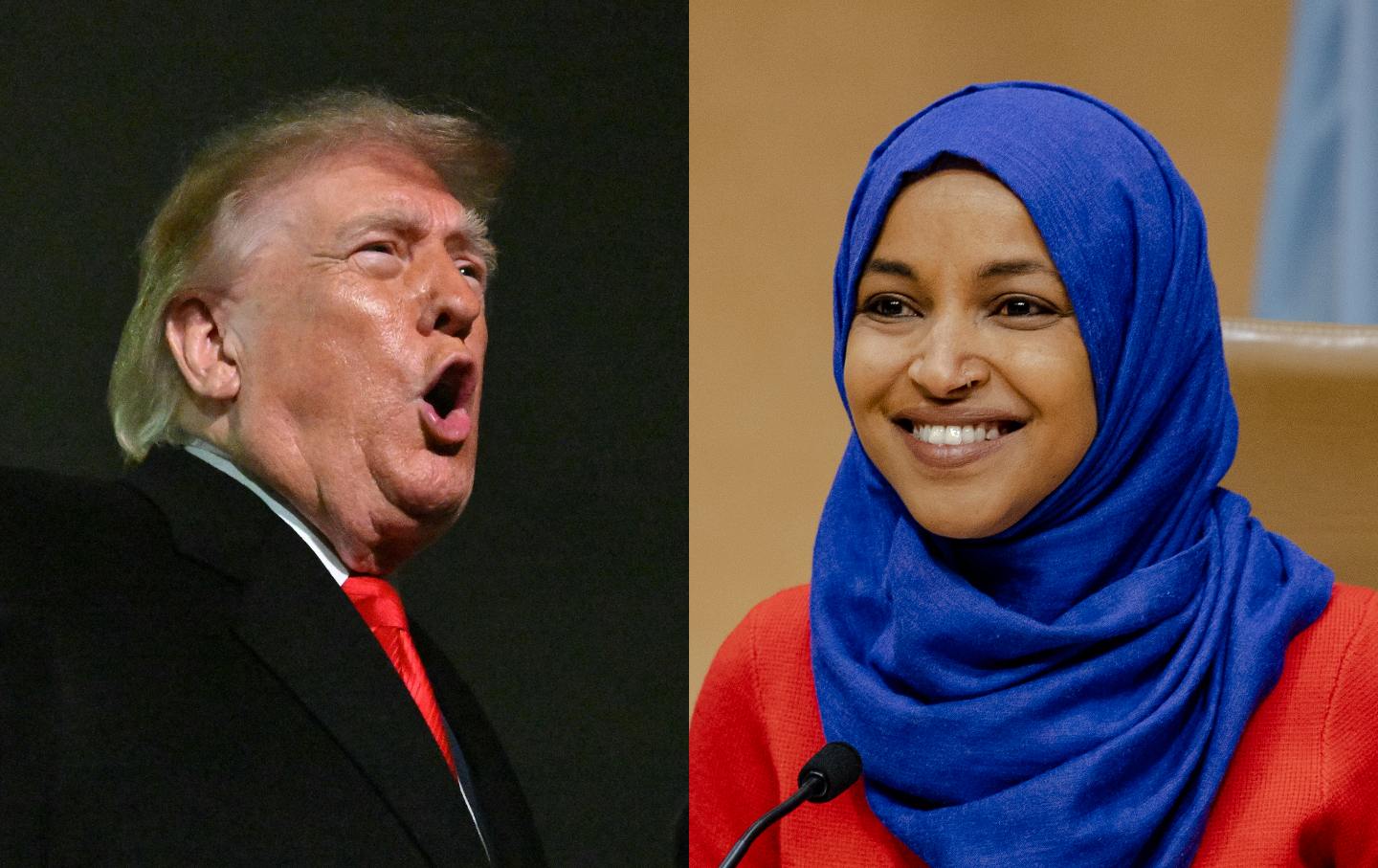
Where Is the Outrage Over Trump’s Racist Targeting of Ilhan Omar? Where Is the Outrage Over Trump’s Racist Targeting of Ilhan Omar?
The establishment press and some Democrats are strangely mute over the president’s flagrant abuse of the legal system.
The Real AI Threat Is Already Here The Real AI Threat Is Already Here
Never mind some future apocalypse—AI is being used right now to cause enormous suffering.
Elon Musk’s James Talarico Smear Blew Up In His Face Elon Musk’s James Talarico Smear Blew Up In His Face
But that doesn’t mean the danger from Musk’s lies is over.
Does America First Really Mean Israel First? Does America First Really Mean Israel First?
Mike Huckabee’s aide shows how an extremist agenda dominates Trump’s Middle East policy.
The Death Penalty Has Become a Torture Machine The Death Penalty Has Become a Torture Machine
Christa Pike's botched lethal injection proves there is no humane form of execution.
Kimberly Guilfoyle Is a Master of Mafia Diplomacy Kimberly Guilfoyle Is a Master of Mafia Diplomacy
The US Ambassador to Greece is making suspicious deals for her buddies.

