
To Defeat the Far Right, We Must Adopt an Anti-Fascist Economic Policy
Opposition to the status quo must not be monopolized by the right-wing extremist visions of parties like Alternative für Deutschland.
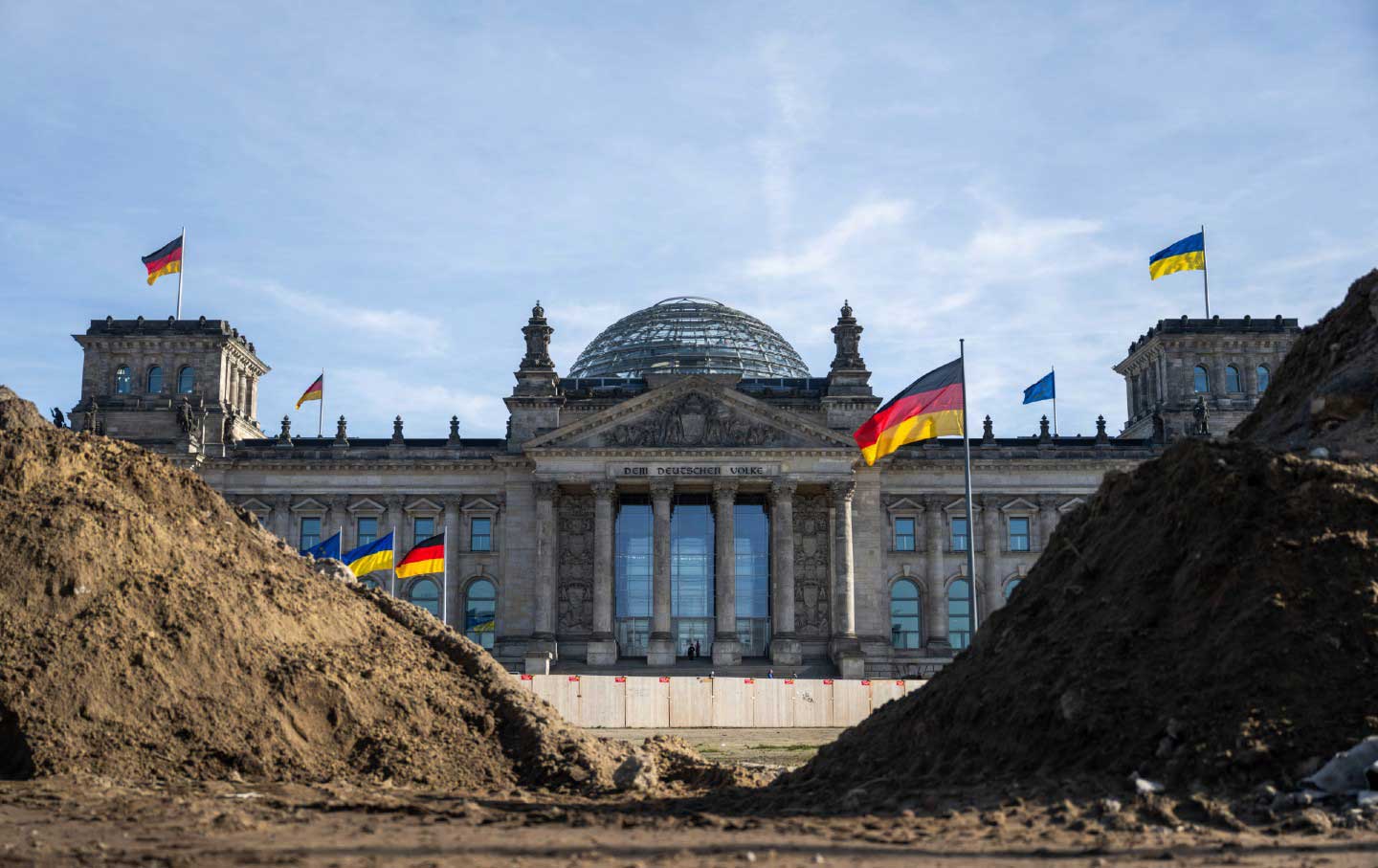
This week we saw the electoral consequences of a failed economic paradigm: The parties comprising the market fundamentalist conservatives and right-wingers achieved a landslide victory in Germany. The CDU/CSU, led by the former head of Blackrock Germany, Friedrich Merz, won 28.5 percent of the vote and the Alternative für Deutschland (AfD), the far-right party of former Goldman Sachs banker, Alice Weidel, won 20.8 percent. What had started as Germany’s “progress coalition” of social democrats, greens, and liberals failed. There were two key turning points: In 2022, the energy crisis in the wake of the Ukraine war hit the country hard, and free-market dogmatism delayed the response to price explosions. In 2023, economists who had long argued that markets were perfectly capable of handling the energy crisis and no major government measures were needed proclaimed that there was “not even a recession.” Without an emergency situation, it appeared as if there was no need to suspend the debt brake, a stringent fiscal rule that tied the government’s hands. Germany did enter a recession, and the economic crisis ultimately brought down the government.
The reasons behind this result? A loss of confidence in the government, a bitter migration debate, the loss of real wages in recent years, and an ongoing economic crisis. In particular, frustration with economic conditions strengthened the far-right AfD. Because when the economic pie starts shrinking, the struggles over how to divide it escalate.
For example, 37 percent of AfD voters and 18 percent of CDU/CSU voters assessed their own economic situation as poor. Tellingly, voters of left-wing and left-liberal parties are significantly less concerned about their economic situation. Even more serious: 85 percent of AfD voters believe that things are not fair in Germany. The overall economic situation was also considered poor by 96 percent of AfD voters and 90 percent of CDU/CSU voters. Here, too, the figures are significantly higher than for the other parties.
The AfD has managed to position itself as an alternative to the status quo for those who fear for their economic situation, even though its program amounts to a redistribution from bottom to top. The message is clear: The worse people’s economic situation and prospects, the easier it is for right-wingers to exploit their discontent for their own ends.
The current situation, however, should not come as a surprise. Elections in Europe, the United States, and in the German federal states showed this trend months ago, and polls pointed to these developments years ago. The AfD achieved its first surge to 15 percent of the vote in fall 2022 as a result of the energy price shock. The second surge to over 20 percent came in fall 2022, as the price shock deepened and the government briefly considered passing the costs of the crisis on to citizens via the gas levy.
As in the US election, the latest surveys of AfD voters also confirm the central role of inflation: Around three-quarters are worried that they will no longer be able to pay their bills due to high prices, that they will not be able to maintain their standard of living, and that they will have money worries in old age. Since Fordism—when production was increasingly broken into a series of simple, repetitive operations—capitalist societies in the Global North have been based on a fundamental social contract. People work hard and are paid enough to afford the necessities of life. When people continue to work hard, but the prices of essential goods skyrocket, workers feel betrayed. Their frustration is exacerbated when stock markets reach record highs and corporate profits skyrocket.
What is needed is anti-fascist economic policy—an economic policy that offers a solution to socioeconomic decline and can ease people’s fears about the future. We need a concrete, democratic alternative to the status quo. As first steps, this means a policy that stabilizes essential prices—from food to energy to rent—and a policy that increases wages. Not only in the short term, but also for the future. Examples from Spain and Mexico show us that not only is this essential but also feasible.
In Germany, however, the situation threatens to get worse. Under Chancellor Friedrich Merz, prices could rise even further. With extensive tax cuts planned for the richest, a higher VAT could be introduced to offset the costs. Before the election, Merz pointedly refused to rule this out. In addition, Merz is pursuing a radical emissions trading scheme that could lead to another energy price shock in the next few years.
The overall economic outlook is disastrous as well, since Merz is committed to austerity. This makes the German economy, and German industry especially, vulnerable to economic shocks, which could be triggered, for example, by an intensifying climate crisis or the tariffs announced by the Trump administration.
Although Merz benefited from the poor economic situation in this election, his neoliberal economic turnaround could lead to the implosion of the CDU in the next election. This is also the openly communicated goal of the AfD. They want to replace the CDU as the far-right people’s party, and they are betting, rightly in my opinion, that the CDU will not solve the economic crisis. I believe that neoliberal politics will lead to a further fall in living standards and fraying of the social fabric. This means that in 2029 there is a real threat that a far-right party will be a part of the government in Germany.
It is therefore even more important that civil society, trade unions, and progressives within and outside parliament stand up to market fundamentalism—at the very least, by fending off the harshest austerity policies, such as an increase in VAT, and at best, by achieving real policy victories, such as a rent freeze.
For an anti-fascist economic policy to counteract the rise of the AfD, it is also essential to present clear policy solutions that make a better future conceivable. Opposition to the status quo must not be monopolized by the right-wing extremist visions of the AfD. Progressives must address people’s existing concerns and the major challenges of our time simultaneously and comprehensively. A new climate populism must play just as much a role in this as a sustainable industrial policy, fair taxation, and an investment program for public infrastructure. The debt brake needs to be reformed, but if it is reduced to ramp up military spending while bridges, hospitals, and schools continue to crumble, it will only play into the hands of the AfD. Germany has enormous fiscal leeway, which must be used to pave the way out of the current plight.
This election result should serve as a warning, not just to Germany but to democratic societies around the world. We need to abandon market fundamentalism and muster the courage to design an economy that serves the needs of the general population—not as a side effect but as the primary goal. Democracy cannot be preserved by only discussing how to save it. It can only be secured by policies that guarantee a good life for all.
Become a Sustaining Donor This September
Between the reemergence of right-wing red-baiting and Donald Trump’s use of the chilling National Security Presidential Memorandum–7 to criminalize left political organizing, we’re seeing McCarthyism reborn before our eyes.
This assault on democracy cannot be ignored or wished away. Resisting it requires bravery in the face of threats and repression, a steadfast commitment to the truth, and the unwavering belief that we can—and will—overcome this darkness.
We must have an independent media that sets the record straight, unearths corruption and abuses of power, and advances a politics of justice and dignity for all if we’re to win this fight.
That’s why I’m writing to you today. This September, The Nation needs to add 100 monthly donors to sustain our progressive journalism. Your contribution makes the next investigative report, the next truth-speaking column, and the next pathbreaking essay all possible.
I hope you’ll support our work with a recurring donation today. If you donate $10 or more a month, we’ll send you a brand new “Hands Off the Free Press!” sticker to recognise your commitment to our cause. Please, donate today.
Onward,
Katrina vanden Heuvel
Editor and Publisher, The Nation
More from The Nation
The School Behind the Billionaires and the Billionaire Tax The School Behind the Billionaires and the Billionaire Tax
UC Berkeley will inevitably be behind the defeat or victory of Proposition 40.
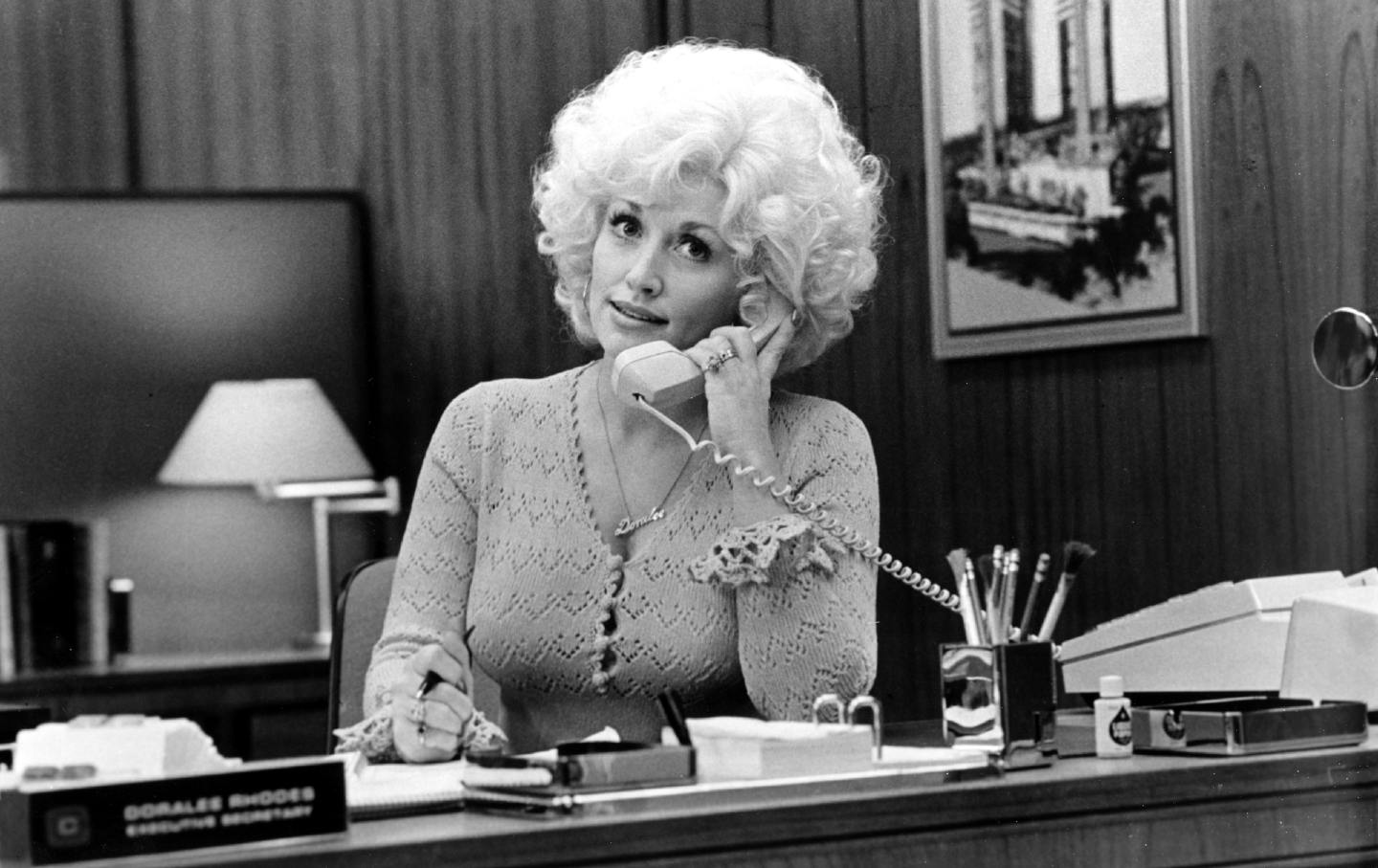
Dolly Parton Was a Proud Union Sister Dolly Parton Was a Proud Union Sister
Organized labor is celebrating the life and legacy of an artist who championed working women and carried a union card for almost 60 years.
Of Debt and Deficits and the Dollar System Of Debt and Deficits and the Dollar System
By force of preset agendas, conservatives and liberals react to debt headlines like Pavlov’s dogs.
What Happens When 8 Million People Lose Their Student Loan Repayment Plan? What Happens When 8 Million People Lose Their Student Loan Repayment Plan?
As the Biden-era SAVE plan ends, borrowers are facing unaffordable bills, lost payment records, and errors that have falsely put some into default.
David Ellison’s Delusional Stab at Self-Justification David Ellison’s Delusional Stab at Self-Justification
While the Skydance–Warner Bros. merger is in legal limbo, the CEO seeking to pull it off makes a disingenuous case for it in the court of public opinion.
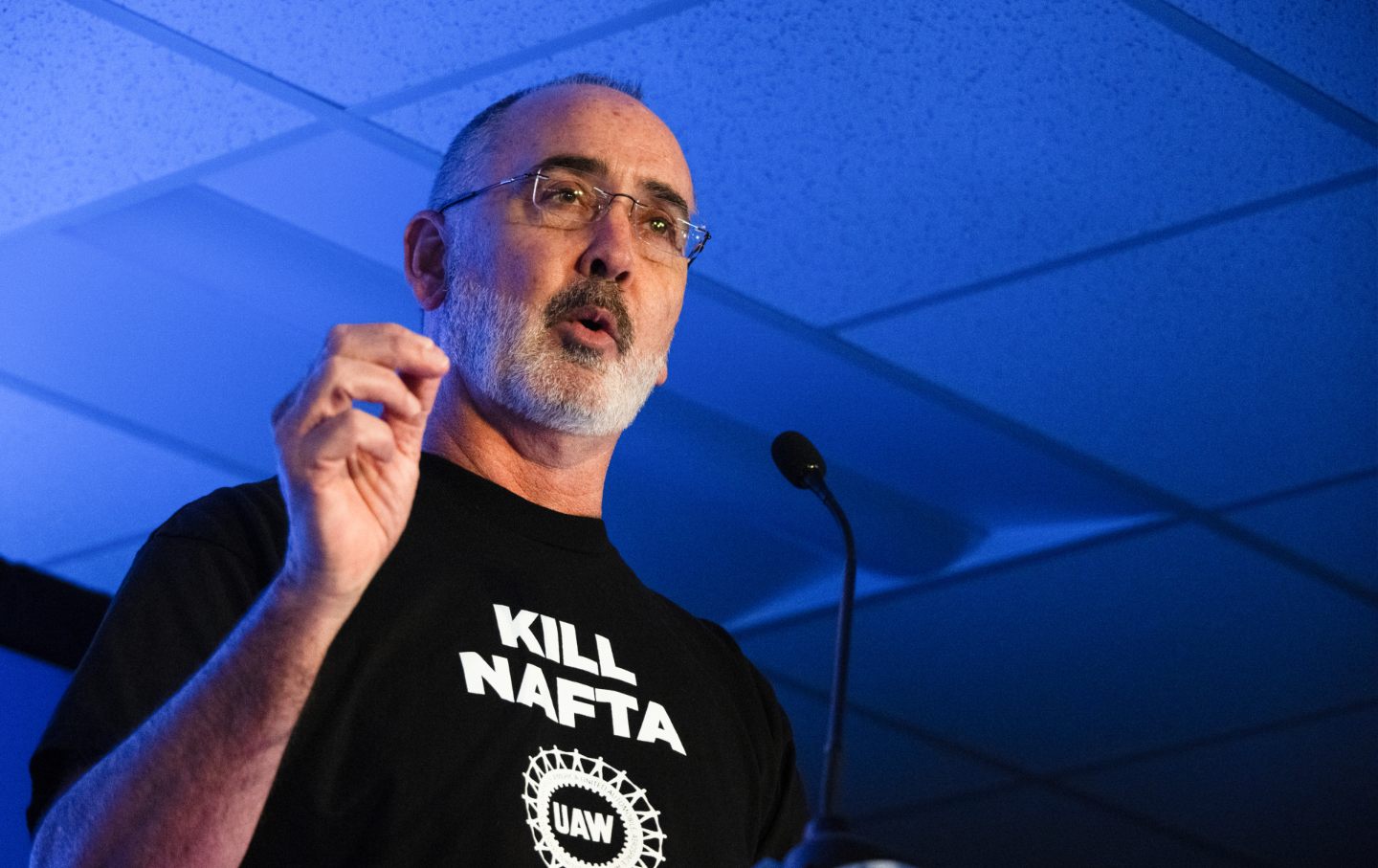
The War on the UAW The War on the UAW
The United Auto Workers called for a ceasefire in Gaza. The union’s federal monitor didn’t like it—and now he’s investigating Shawn Fain, just weeks before union elections.

