
A Ceasefire Won’t Stop the War on Palestine
The agreement may reduce the intensity of Israel’s killing spree, but it is likely to usher in a grueling new phase of ethnic cleansing, with Trump’s full support.
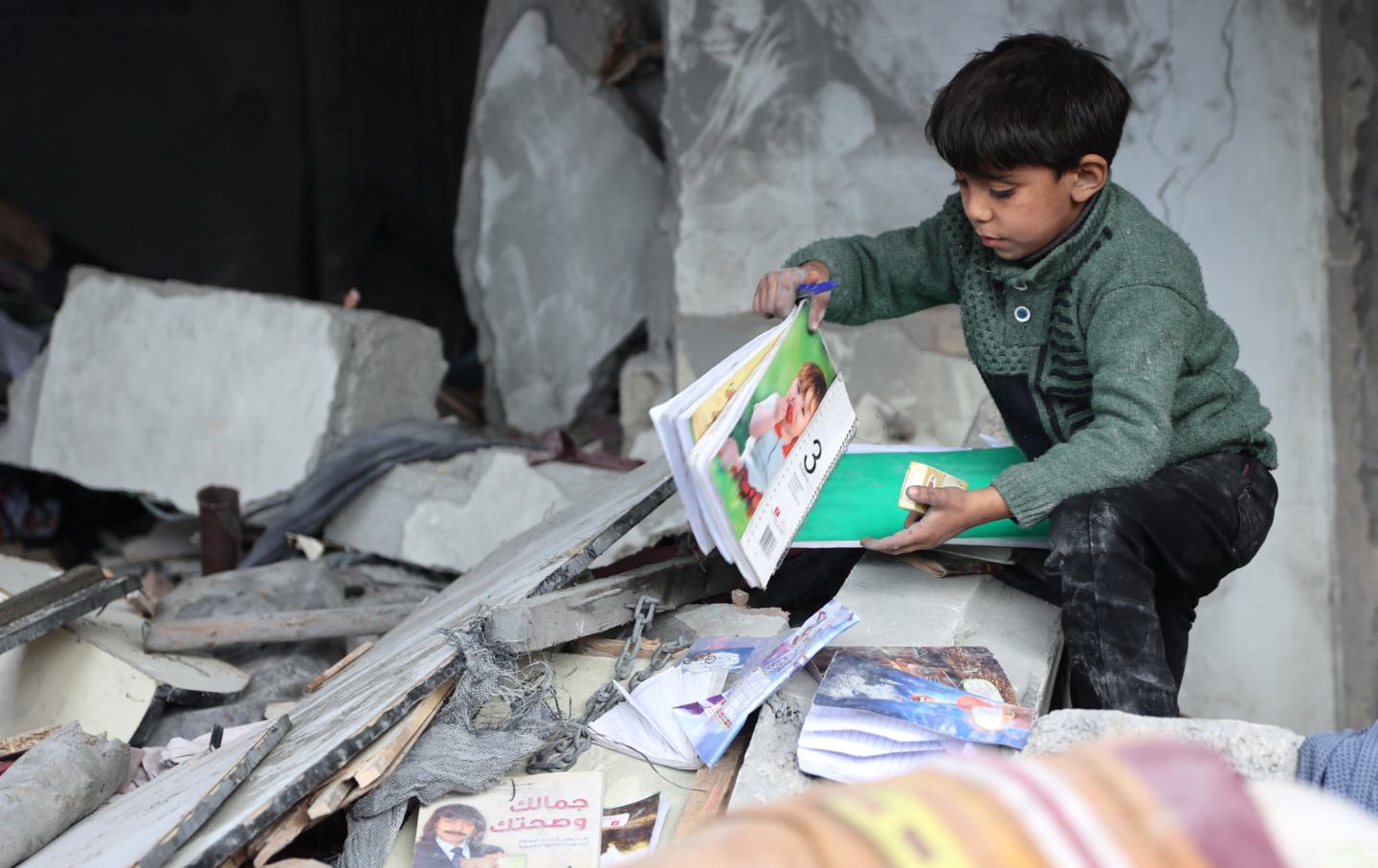
A child recovers books from the rubble of a building hit in Israeli strikes the previous night in Jabalia in the northern Gaza Strip, on January 16, 2025.
(Omar Al-Qattaa / AFP via Getty Images)Steven Witkoff, Donald Trump’s incoming Middle East envoy, reportedly didn’t bother with pleasantries when he informed the Israelis that he would be arriving to meet with Prime Minister Benjamin Netanyahu last Saturday. When told his visit coincided with Shabbat, meaning the prime minister would be unavailable until the evening, Witkoff made it clear that the Jewish holiday would not interfere with his schedule. Netanyahu, understanding the stakes, went to his office that afternoon to meet the envoy, who subsequently jetted off to Qatar to press further on a ceasefire deal for Gaza.
Little is known of the details of their conversation, but it is clear that Witkoff managed to move Netanyahu more in a single meeting than the entire Biden administration did in over 15 months. On January 15, Israel and Hamas agreed to a multiphase ceasefire deal that would see Israeli hostages exchanged for Palestinian prisoners and captives, along with an eventual full Israeli withdrawal from Gaza.
It is too early to tell if this agreement will hold. Israel’s long tradition of violating ceasefires, coupled with the demands of Israeli ministers to continue the genocide, give us reason to be skeptical. But news of the truce has brought indescribable relief to millions in Gaza who have faced a campaign of annihilation for over a year.
If the ceasefire in Gaza does hold, it will be the material result of dynamics introduced by the incoming Trump administration—a reminder of how easily Washington can influence Israel’s actions if it actually wants to. President Joe Biden, blinded by his commitment to a mythic Zionism that exists solely in his imagination, was unwilling to see how the war was not only morally grotesque in its own right but also detrimental to both American and Israeli interests in the region. In many ways, Israel’s genocide in Gaza and its campaign of regional destabilization also became the Biden administration’s own war.
Trump operates without the same ideological constraints, and he is far more concerned with what he can gain from a given relationship. Trump sought a ceasefire deal not only because it would serve as a massive PR coup—he can brag that he solved a problem Biden never could, and rightly so—but more importantly because it will allow his administration to get on with other priorities, such as brokering a normalization agreement between Israel and Saudi Arabia.
In other words, for the president-elect, a ceasefire isn’t a matter of principle or morality; it is transactional. While Biden was happy to let Israel’s genocide in Gaza impede a wide range of US and regional interests, Trump was determined to remove any obstacles standing in the way of his broader agenda.
But the president-elect and those he surrounds himself with have also made it clear that they intend to make Netanyahu’s cooperation worth the trouble. If the Israeli prime minister sees the ceasefire through even just its first stage, he will expect a return on his investment—and his price will be further mass displacement of Palestinians from both Gaza and the West Bank.
Still, we shouldn’t give Trump too much credit. Little fundamentally changed when it came to the leverage he was willing to use to influence Israel’s conduct. As far as we know, Trump never threatened to condition military aid to Israel. Nor did he indicate that he would reconsider his predecessor’s practice of ignoring international law in order to shield Israel from accountability on the world stage.
Some will argue that Trump’s threats and the collapse of several resistance fronts across the region forced Hamas to make concessions in the negotiation process. But it wasn’t Hamas that needed convincing—it had already agreed to earlier ceasefire proposals that were largely indiscernible from the current deal, going back to May 2024. In the end, it was Israel that needed the push, and Witkoff likely signaled to Netanyahu that, despite not sharing Biden’s blind fealty to Israel, Trump would actually do more to reward cooperation.
The fact that Netanyahu has so far decided to refrain from scuttling this ceasefire agreement shows that he is confident he can gain something significant in return. The Israeli media is already reporting that Trump’s ceasefire “gift bag” to Netanyahu could include a long list of treats, from lifting sanctions on Israeli NSO Group’s spyware Pegasus and on violent Israeli settlers to giving Washington’s blessing to major West Bank land theft or outright annexation, and permitting or even facilitating a direct attack on Iran.
But it’s not just about what Israel is getting in return for a ceasefire. It’s also about what it has already received.
In the eight months since Israel first rejected an almost identical deal, to which Hamas had agreed in principle, its army has slaughtered tens of thousands of Palestinians and decimated large swaths of the Gaza Strip. This was the price of Israel achieving its true objectives: not eliminating Hamas or securing the release of hostages—many of whom were killed while Israel stalled on a ceasefire—but the destruction and “thinning out” of Gaza and the reshaping of the Middle East.
The facts on the ground in Gaza today paint a picture that we cannot yet fully comprehend. Israeli forces have demolished entire neighborhoods in order to widen the buffer zone that encircles the Strip, expand the Netzarim Corridor that bisects the territory, and ultimately carve up the enclave for a future of perpetual control. In doing so, they have seized over 30 percent of Gaza’s pre-genocide territory, while rendering much of the rest of it uninhabitable.
Meanwhile, Israel has largely completed the so-called “General’s Plan”—the ethnic cleansing of the entirety of northern Gaza above Gaza City. Beit Hanoun, Beit Lahiya, and Jabalia, cities that were once collectively home to over 300,000 people, have been reduced to rubble, as part of a campaign to depopulate the area and entrench Israeli control while laying the groundwork for building Jewish settlements.
Elsewhere, Israel closed its front with Hezbollah, and the fall of Assad allowed it to seize more land in the Golan Heights and the eastern slopes of Mount Hermon/Jabal A-Shaykh. Meanwhile, in the West Bank, state-backed settler attacks on Palestinians have increased in frequency and brutality, while the Palestinian Authority serves as a full partner in the Israeli army’s intensifying crackdown on resistance in Jenin, Nablus, and Tulkarem.
Clearly, Netanyahu allowed the ceasefire agreement to move forward knowing that the stage is set for Israel to turn its attention to annexing the West Bank, confronting Iran, and solidifying its future as an embattled fortress state.
Even if the ceasefire agreement does not survive past the initial 42-day period, it will no doubt save countless lives and give Palestinians a chance to breathe, eat, grieve, and receive medical treatment. The phased approach to the agreement is supposed to make reneging difficult for Israel, but that depends on enforcement. Right now, the only thing standing in the way of the resumption of the annihilation once the ceasefire starts to take hold is an international community that has abandoned Palestinians for more than a year.
Popular
“swipe left below to view more authors”Swipe →Key members of Netanyahu’s far-right coalition have already warned that they will not accept anything less than a continuation of Israel’s assault on Gaza after the first phase of the agreement is completed, even at the expense of the remaining hostages. And after taking credit for achieving the ceasefire in the first place, there is no indication that Trump will hold Israel accountable or pressure Netanyahu to follow through with the second and third phases of the agreement.
While the ceasefire may halt the immediate bloodshed, it also cements a new reality: Gaza as a fragmented, uninhabitable prison. The vast majority of Gaza’s population has been forced into highly securitized and surveilable concentration camps in the south and center of the Strip, where their survival is determined by Israel’s whim.
Genocide is not carried out with bombs and bullets alone, and it does not end when the guns fall silent. Disease, malnutrition, and trauma—untreated by a healthcare system turned to rubble—will continue to claim lives for years to come, while making the land livable again after the devastation and toxification will take decades. And Israel is not finished: It has created the conditions for the complete and permanent ethnic cleansing of Gaza, guided by the century-old Zionist ethos of “maximum land, minimum Arabs.”
This ceasefire will reduce the intensity of Israel’s killing spree, but it is likely to usher in a grueling new phase of this ongoing genocide that we have yet to fully grasp—one that is fully supported by the incoming Trump administration. The ethnic cleansing of Gaza might not be carried out in one go, but rather in a piecemeal process that takes shape as we take stock of the extent of Israel’s systemic destruction of all things that sustain life in the Strip.
Regardless of what the future has in store, we should hold on to the words of the late Refaat Alareer: “As Palestinians, no matter what comes of this, we haven’t failed. We did our best. And we didn’t lose our humanity.… We didn’t submit to their barbarity.”
More from The Nation
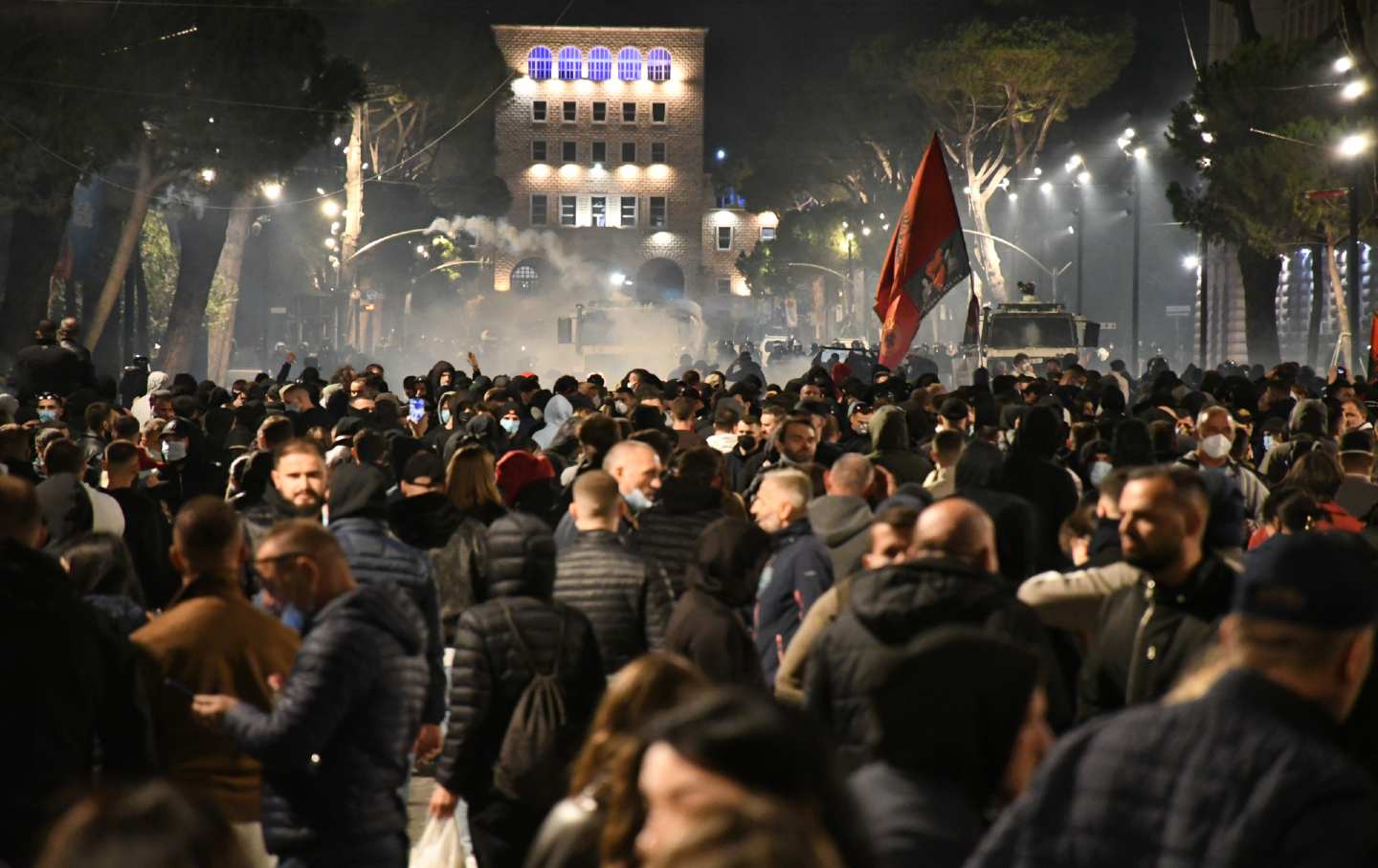
Albanian Student Strikes Spur a Political Crisis Albanian Student Strikes Spur a Political Crisis
A new round of protests against the ruling party’s corruption has Prime Minister Edi Rama giving cops bonuses to crack down on dissent.
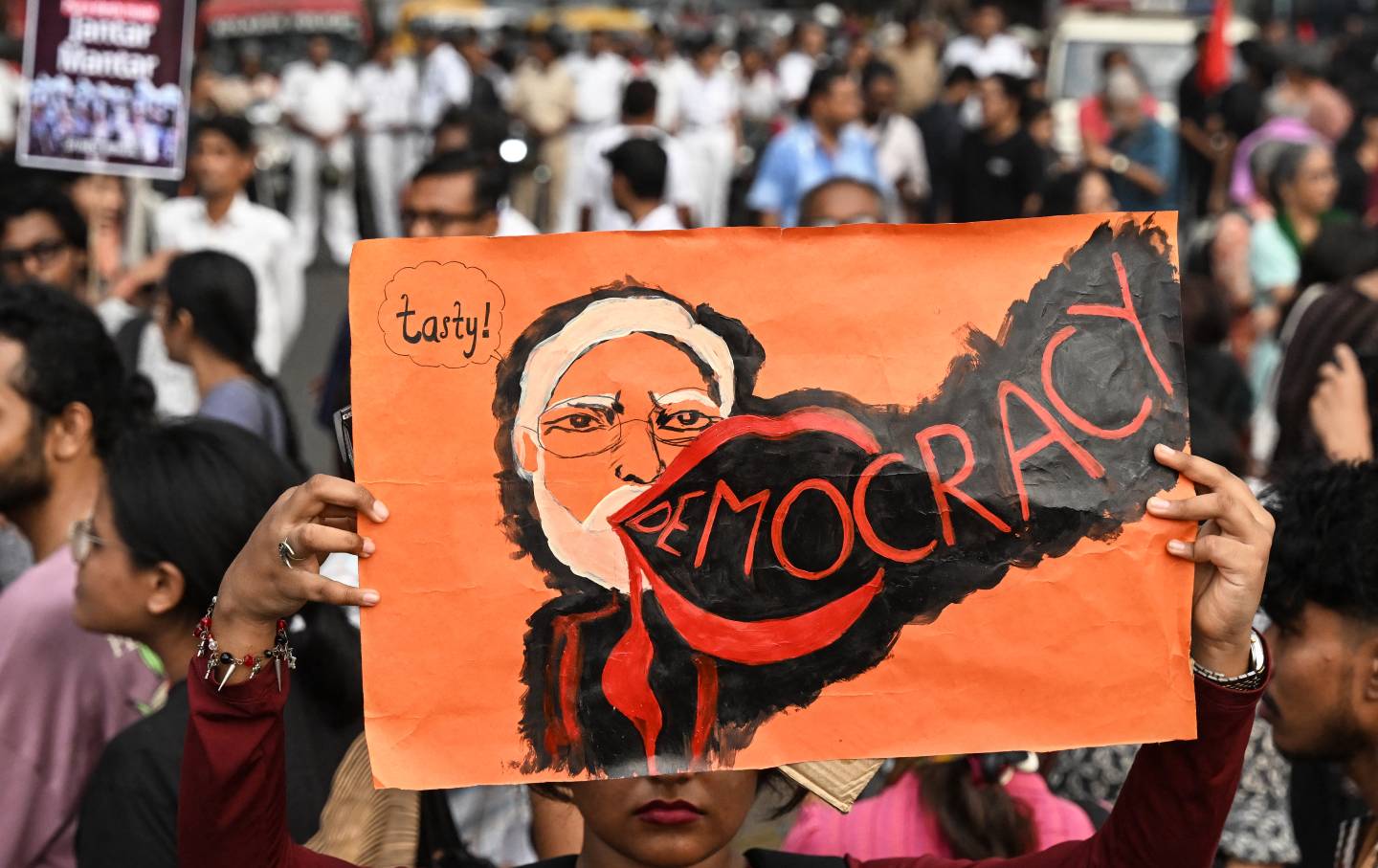
Inside India’s Gen Z Cockroach Janta Movement Inside India’s Gen Z Cockroach Janta Movement
Young Indians are challenging the purge of voter rolls by Modi’s right-wing government. Shrishti Khanna, who was detained by Delhi police while covering the protests, explains.

The Clarion Call of “NAZA” The Clarion Call of “NAZA”
Yuval Abraham and Rachel Szor’s new film not only documents the horrors of the present but give us a glimpse of a possible future too.
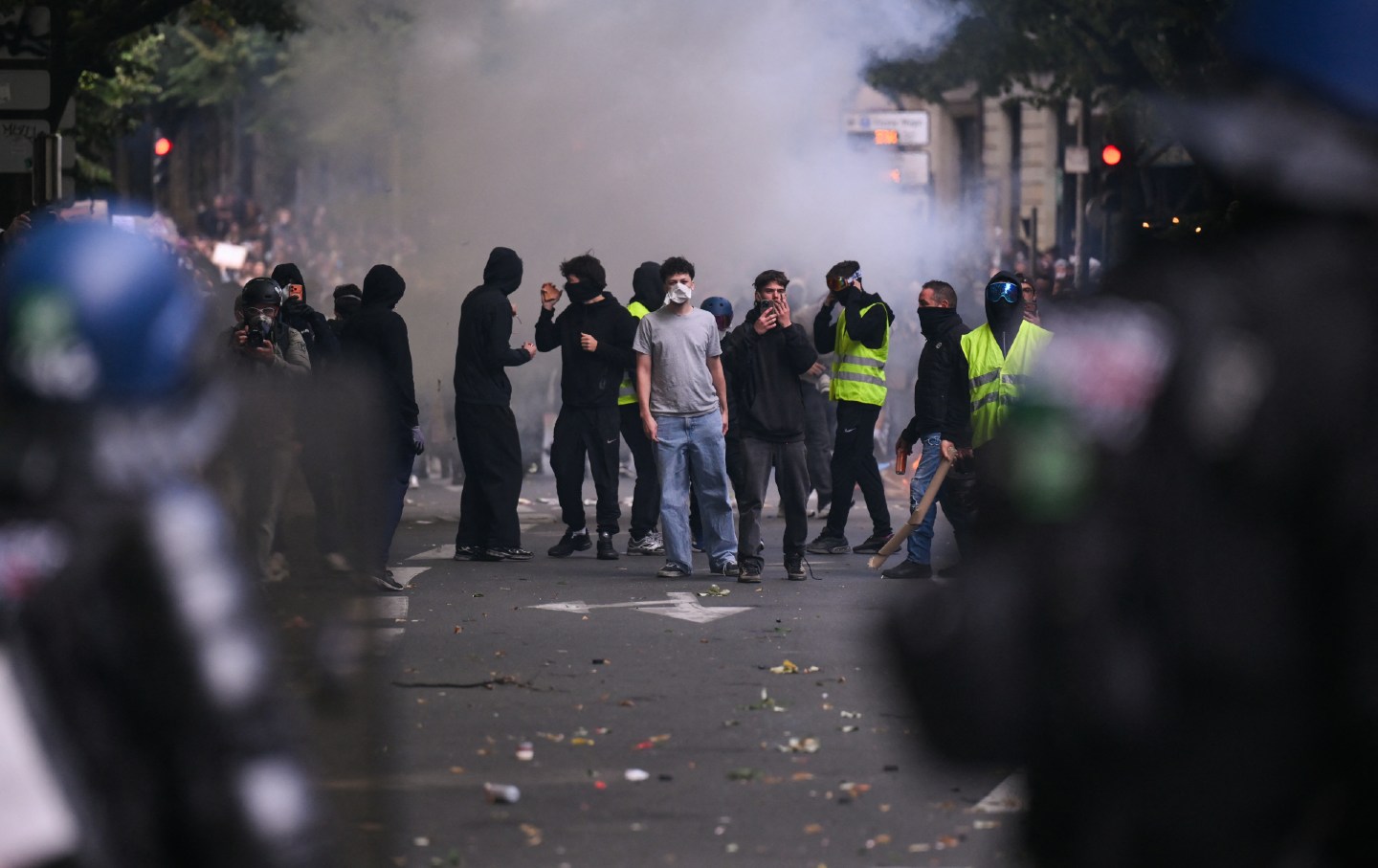
The Specter of Lepenism Looms Over France’s Social Crisis The Specter of Lepenism Looms Over France’s Social Crisis
Joining forces with the “yellow vests,” youth demonstrators are raising the alarm in a country falling to the far right.
Progressives Are Backing Puerto Rican Independence. It’s About Time. Progressives Are Backing Puerto Rican Independence. It’s About Time.
More and more leftists are concluding that statehood for the island is not enough.
The Saudi Phase of the Iran War Signals More Chaos to Come The Saudi Phase of the Iran War Signals More Chaos to Come
The conflict that Donald Trump has repeatedly proclaimed an unequivocal American victory keeps spiraling out of control.

