A Listener’s Guide to Jazz From 1964–1972
A selection of the best recorded examples of the otherwise mostly undocumented music heard in jazz clubs like Slugs’.
Some of the most fearless, interactive, and creative jazz of the 1960s and ’70s retained two elements generally discarded by the ascendant movements of free jazz and fusion, namely conventional song forms and the swing beat. Forces of Nature documents exactly this idiom. This guide to additional listening is far from complete.
Feature:
The immediate predecessors were the second Miles Davis Quintet and the John Coltrane Quartet.
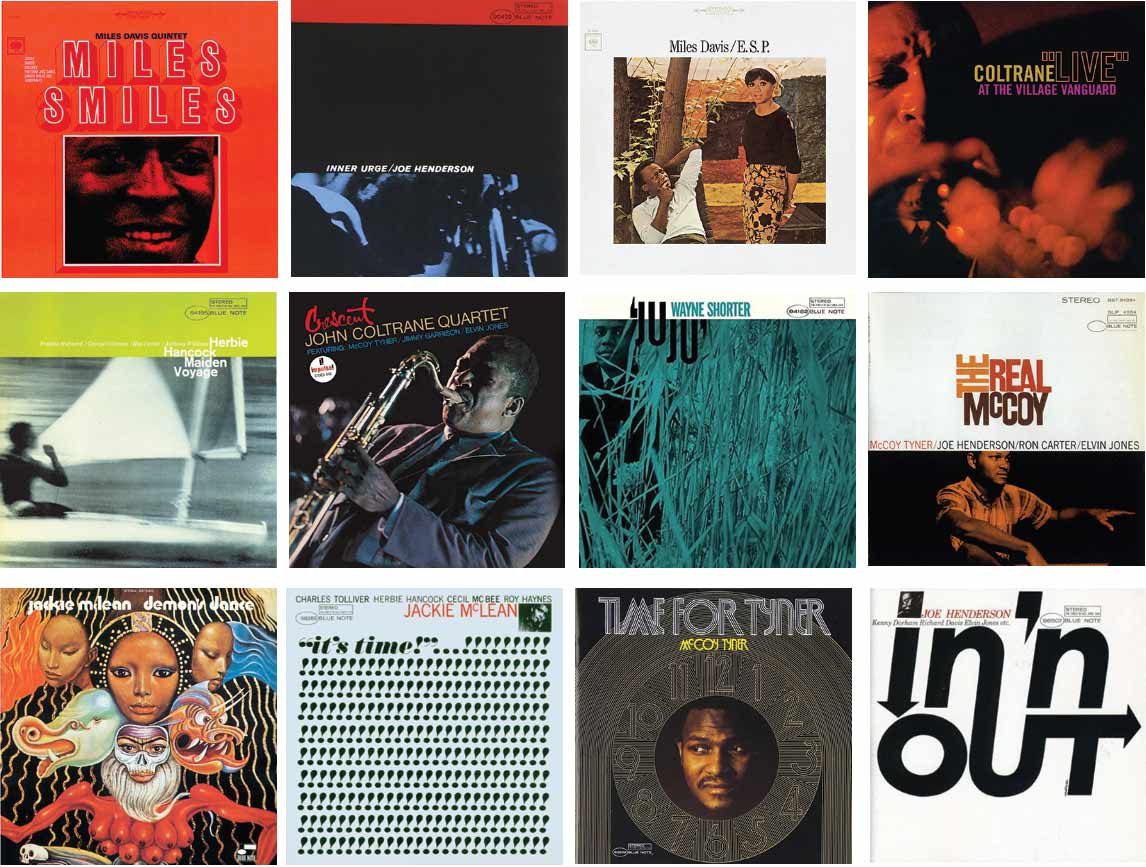
Miles Davis: My Funny Valentine; E.S.P.; Miles Smiles
John Coltrane: My Favorite Things; “Live” at the Village Vanguard; Crescent
However, this particular idiom, with its emphasis on tight unison melodies, complex modal harmony, and a strong intellectual tilt, was defined less by Davis or Coltrane than by their sidemen, who produced many of the classic studio albums found in any serious jazz collection.
Herbie Hancock: Maiden Voyage; Empyrean Isles
Wayne Shorter: JuJu; Speak No Evil
McCoy Tyner: The Real McCoy; Time for Tyner
Jackie McLean and Lee Morgan were both established masters of late-’50s hard bop but embraced the new idiom enthusiastically.
Jackie McLean: It’s Time; Demon’s Dance
Lee Morgan: Search for the New Land; The Procrastinator
Joe Henderson and Freddie Hubbard were the first wave of post-Trane, post-Miles avatars.
Joe Henderson: Inner Urge; In ‘n Out
Freddie Hubbard: Hub-Tones; Breaking Point
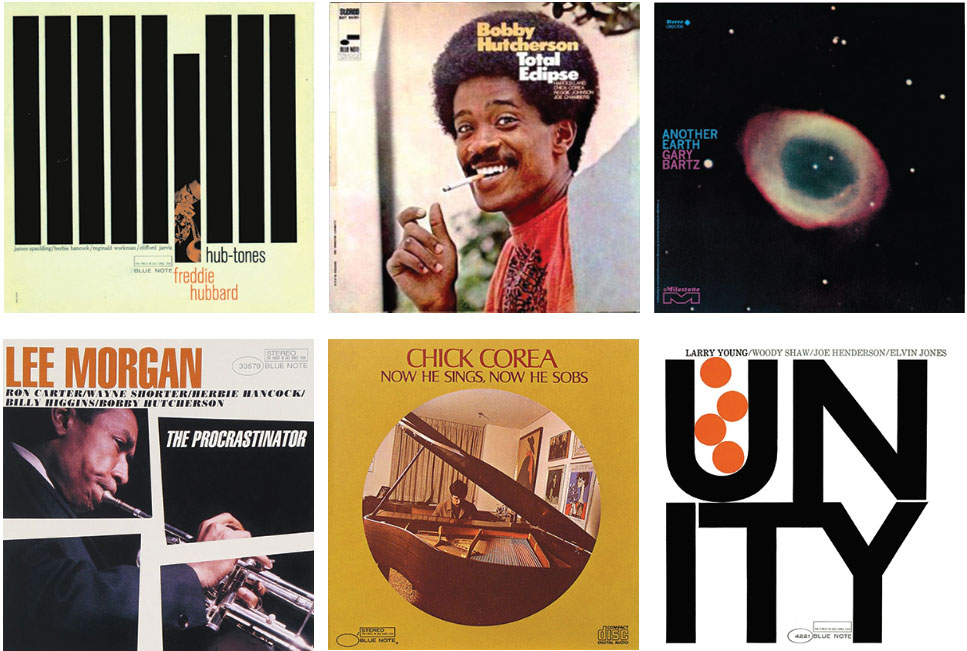
Just behind them were two kids from Newark, New Jersey: organist Larry Young and trumpeter Woody Shaw. Their album Unity, with Joe Henderson and Elvin Jones, is ground zero for the idiom in the studio.
Larry Young: Unity
Woody Shaw: In the Beginning
Chick Corea and the vibraphonist Bobby Hutcherson shared a kind of quicksilver genius and spoke the idiom as naturally as breathing.
Bobby Hutcherson: Total Eclipse
Chick Corea: Now He Sings, Now He Sobs
After 1967, studio sessions became drastically less numerous. Between the deaths of Coltrane and Morgan, only bits and pieces of what was happening made it onto professionally engineered tape. In the summer of 1968, the fresh new team of Gary Bartz and Charles Tolliver was heard on three lesser-known but marvelous LPs.
Charles Tolliver: Paper Man
Gary Bartz: Another Earth
Max Roach: Members Don’t Git Weary
As great as all these studio albums are, the live records have even more heat and intensity, including The Night of the Cookers, with Freddie Hubbard and Lee Morgan, and Morgan’s own Live at the Lighthouse. A set of 1967 Village Vanguard Live Sessions starring a rotating cast of characters—including Dizzy Gillespie, Joe Farrell, Chick Corea, Richard Davis, and Elvin Jones—is full of burning lines, mysterious harmonies, and relentless swing. A sampling of the Elvin Jones Trio with George Coleman from a year later is on Enja as Live at the Village Vanguard; good luck finding the complete gig, Skyscrapers Vol. 1–4, on Honey Dew.
Popular
“swipe left below to view more authors”Swipe →The most tantalizing snapshots of this idiom are bootlegs that have circulated among collectors for decades. Some of the very best recorded moments of McCoy Tyner (in a trio with Scotty Holt and Jack DeJohnette in Boston) and Chick Corea (in the Roy Haynes Quartet at Slugs’) still lack an official release.
At least we now have Forces of Nature, the finest of several terrific recent archival releases that help fill in the picture. Elvin Jones’s Revival: Live at Pookie’s Pub features Joe Farrell preaching at length in 1967; drummer Roy Brooks’s Understanding from 1970 features some remarkable Woody Shaw; while George Coleman’s In Baltimore from 1971 ranks among the fastest and toughest tenor around.
The Brooks and Coleman releases were recorded at the Famous Ballroom, where the Left Bank Jazz Society of Baltimore curated a program that functioned as a kind of Slugs’ South. Jackie McLean with LaMont Johnson (1966) and Joe Henderson with Wynton Kelly (1968) each have two volumes from Baltimore.
Charles Tolliver and Stanley Cowell took matters into their own hands with the record label Strata-East. Among their initial releases were two volumes of Live at Slugs’ with Cecil McBee and Jimmy Hopps, recorded in 1970. This is the best music recorded at Slugs’ that came out in a reasonably timely fashion. Considerably more obscure is a set by Art Blakey’s Jazz Messengers in 1968 with a relatively unheralded late lineup, only occasionally available on budget issues under various names over the years. It may not eclipse past Blakey records featuring the likes of Morgan or Shorter, but it nonetheless gives a sense of what was happening at this storied but sadly underdocumented moment.
Become a Sustaining Donor This September
Between the reemergence of right-wing red-baiting and Donald Trump’s use of the chilling National Security Presidential Memorandum–7 to criminalize left political organizing, we’re seeing McCarthyism reborn before our eyes.
This assault on democracy cannot be ignored or wished away. Resisting it requires bravery in the face of threats and repression, a steadfast commitment to the truth, and the unwavering belief that we can—and will—overcome this darkness.
We must have an independent media that sets the record straight, unearths corruption and abuses of power, and advances a politics of justice and dignity for all if we’re to win this fight.
That’s why I’m writing to you today. This September, The Nation needs to add 100 monthly donors to sustain our progressive journalism. Your contribution makes the next investigative report, the next truth-speaking column, and the next pathbreaking essay all possible.
I hope you’ll support our work with a recurring donation today. If you donate $10 or more a month, we’ll send you a brand new “Hands Off the Free Press!” sticker to recognise your commitment to our cause. Please, donate today.
Onward,
Katrina vanden Heuvel
Editor and Publisher, The Nation