Trump and Musk’s Cruelty Put Scrooge and Marley to Shame
The president-elect and his un-elected mega-billionaire buddy have gone full Dickensian in their attempts to make greed great again.
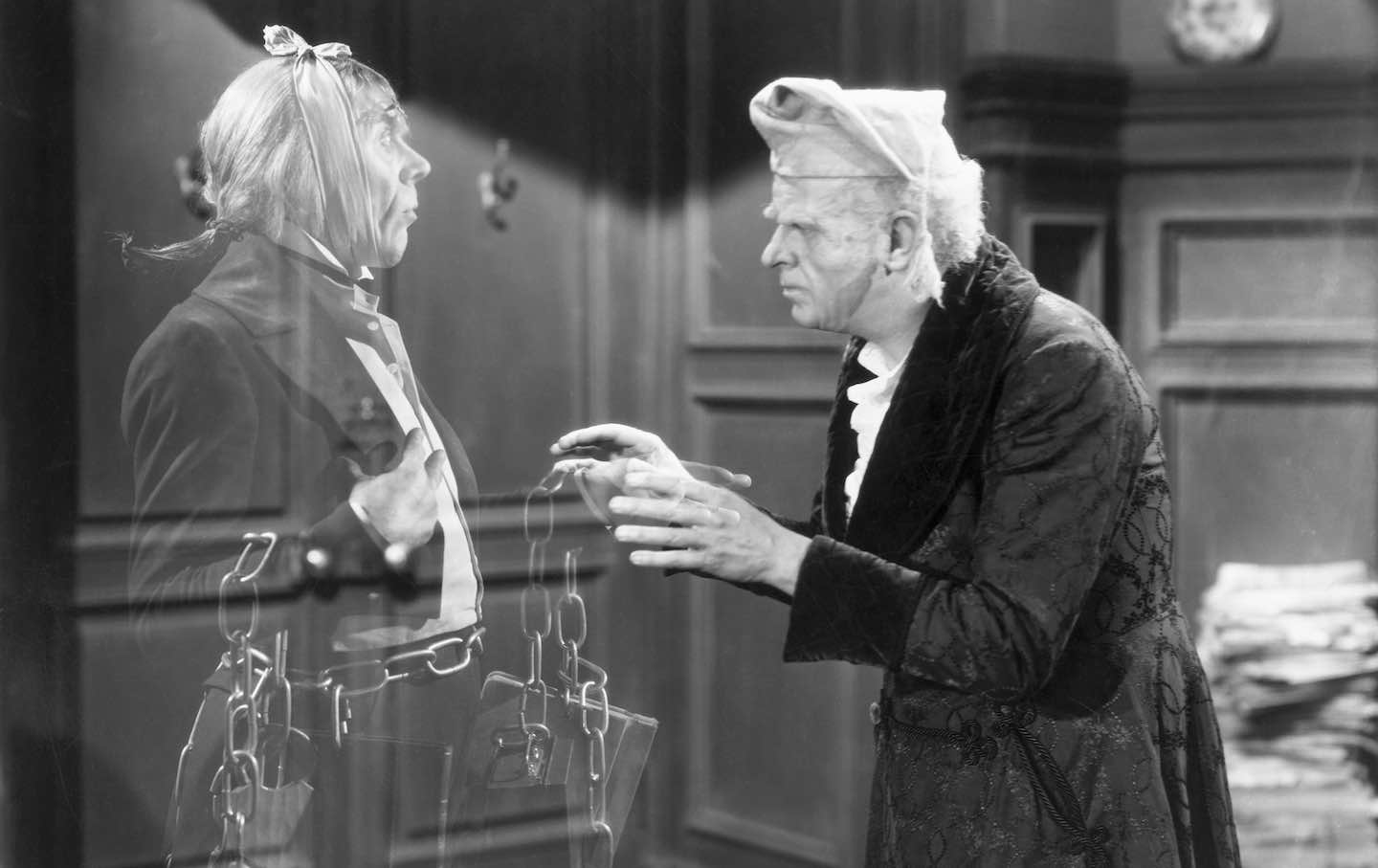
Reginald Owen, playing Scrooge, speaks with his dead business partner Marley, played by Leo G. Carroll, during the 1938 MGM production of A Christmas Carol.
Charles Dickens, in the most famous of his 19th-century morality tales, introduced us to the “squeezing, wrenching, grasping, scraping, clutching, covetous, old sinner” Ebenezer Scrooge. Today, Scrooge’s name has become synonymous with the sort of vengeful and destructive greed that is practiced by our grasping billionaire class.
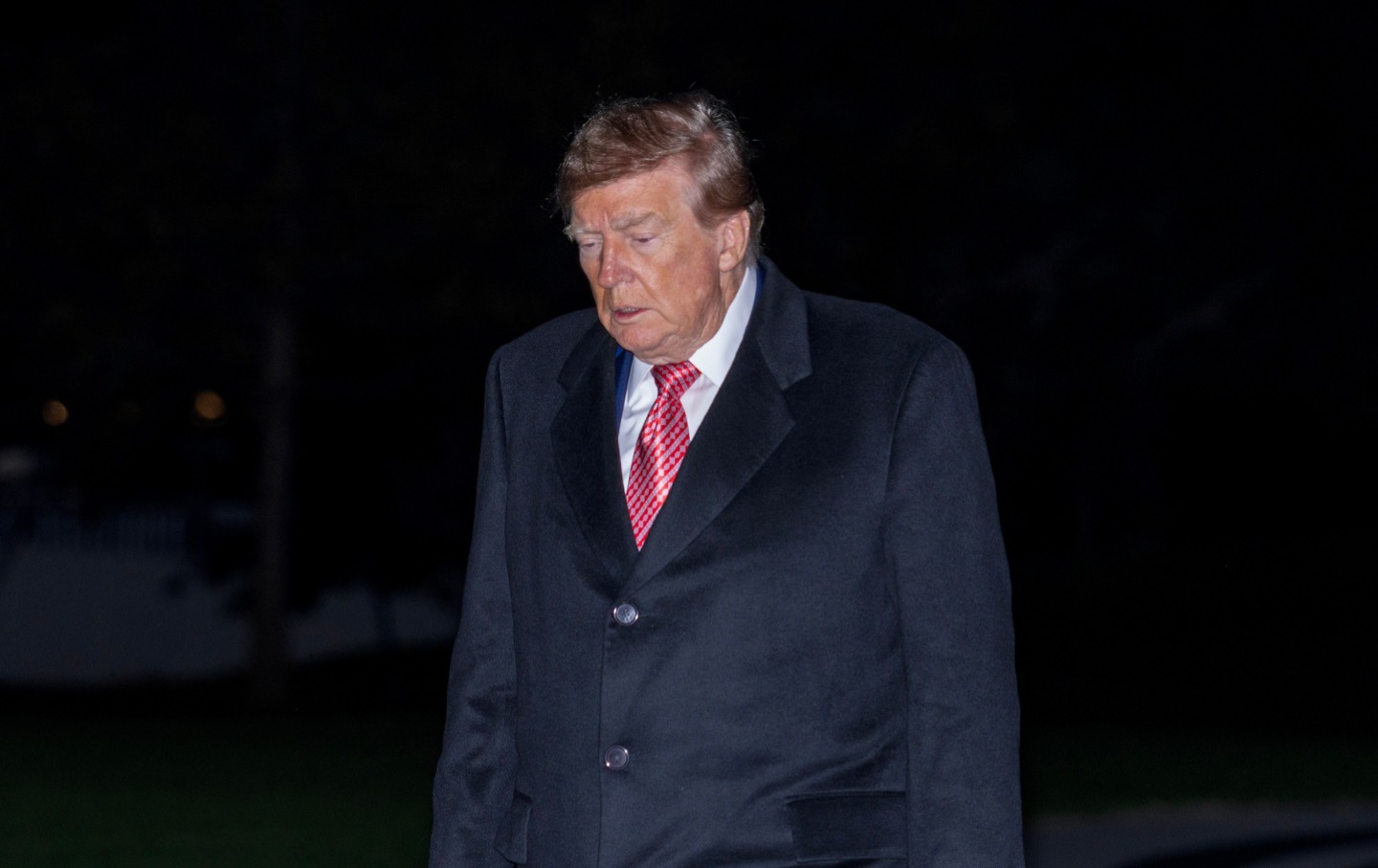
No serious reader of A Christmas Carol could doubt that, were the author of so many of literature’s greatest paeans to social conscience still at it, Dickens would be calling out the old sinners of the incoming Trump administration. He would take particular issue with the president-elect and his meddling associate, Elon Musk, who have formed a modern-day variation on the partnership of Scrooge and Jacob Marley, who—before the late Mr. Marley’s heavily burdened and earnestly repentant transit through the afterlife—were partners in greed.
While Trump was narrowly empowered by the voters in November, Musk holds no elected position. Even if he enjoyed the relative legitimacy of a cabinet post, however, that wouldn’t justify the slash-and-burn chicanery of his Department of Government Efficiency. Or of Trump’s deference to Musk’s shadow government. Neither of these misanthropes has the popular mandate that they now claim for assaulting the interests of the poor, the vulnerable, the ailing, and the elderly.
As this year’s Christmastide approached, however, Trump and Musk combined forces to tank a budget resolution that, among its many noble initiatives, contained funding to fight childhood cancer, with the duo arguing that the resolution contained “unnecessary spending.” That more-Scrooge-than-Scrooge intervention stirred a firestorm over the callous cruelty of the men who, because of the un-elected mega-billionaire’s mounting influence, are now referred to as “President Musk” and “Vice President Trump.”
The attempted abandonment by Musk and Trump of the Gabriella Miller Kids First Research Act 2.0 was quickly reversed by a bipartisan coalition in the Senate. But the continuing-resolution fiasco was not the only Dickensian measure promulgated by Musk and his Department of Government Efficiency sidekick, Vivek Ramaswamy. These privileged charlatans are now, with encouragement from a growing number of Republicans in Congress, openly entertaining the prospect of making “entitlement cuts” that could shred the social safety net and, many fear, clear the way for the Republican right to realize its historic goal of privatizing Social Security, Medicare, and Medicaid.
The headlines tell the story of how the proponents of a promise to “make America great again” have defined “again” as sometime in the winter of 1843. As a Rolling Stone headline announces, “Elon Musk Wants to Pay for His Tax Cuts With Your Social Security and Medicare.”
That is a fully Dickensian equation, of the sort that the author anticipated in the opening stave of A Christmas Carol.
Remember when Scrooge was approached by the gentlemen who appealed to his “liberality” in order “to make some slight provision for the poor and destitute, who suffer greatly at the present time”?
Scrooge was informed by the gregarious do-gooder that “a few of us are endeavoring to raise a fund to buy the Poor some meat and drink and means of warmth. We choose this time, because it is a time, of all others, when want is keenly felt, and abundance rejoices. What shall I put you down for?”
“Nothing!” Scrooge replied. He explained, “I don’t make merry myself at Christmas and I can’t afford to make idle people merry.” Informed that he might ease the burdens of the poor, he retorted, “It’s not my business.”
So Dickens began A Christmas Carol, a book that echoed the radical tenor of a time when the world was coming to recognize the truth that poverty and desolation need not be accepted by civil society—or civilized people. Dickens had Scrooge speak the language of the corrupt men of commerce and politics who opposed the revolutionary movements that were sweeping Europe as the author composed his ghost tale.
Dickens imagined that spirited prodding from the ghosts of Christmas past, present, and future would change Scrooge. After an unsettling Christmas Eve, during which he was admonished by the dead and repentant Marley, the businessman hastened into the streets of London and came upon one of the gentlemen. Scrooge announced his desire to give liberally to the current collection and to provide that “a great many back-payments are included in it, I assure you.”
The poor were suddenly the miser’s business. So it was that Scrooge became “as good a friend, as good a master, and as good a man, as the good old city knew, or any other good old city, town, or borough, in the good old world.”
Scrooge changed. But there are no signs, as yet, that the Scrooges of today are “glowing with the good intentions” that made a better man of Dickens’s old sinner. Indeed, there is every evidence to suggest that the cruelty of Trump and Musk could put Ebenezer Scrooge and Jacob Marley to shame. We can only hope that the ghosts of conscience are on their way—along with the day when we will, all of us, keep Christmas well.