Trump Does Not Have a Mandate
He didn’t win a majority of the popular vote, and the idea that America has gone full MAGA is outlandish.
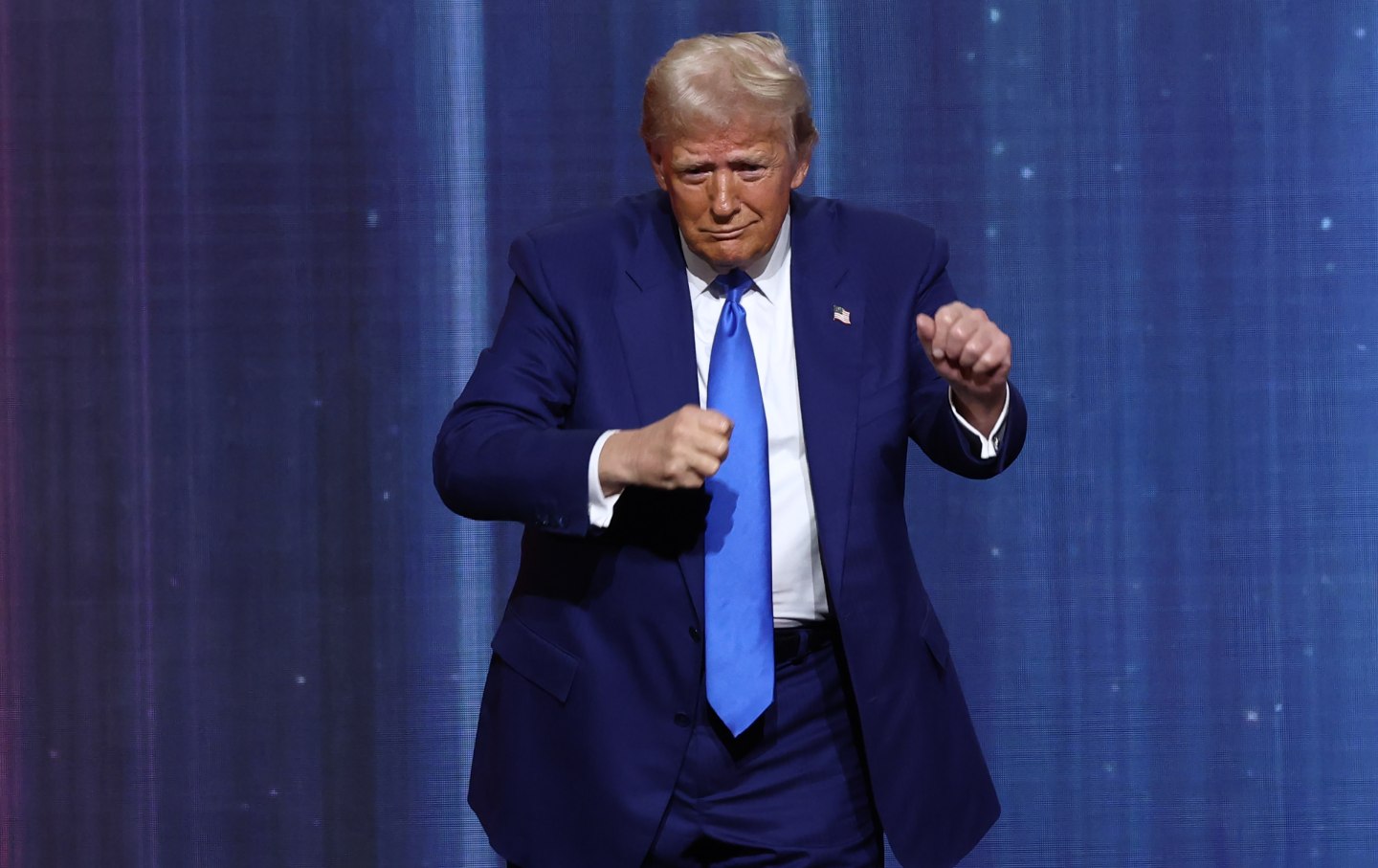
The big lie Donald Trump told after the 2024 election was that he’d won a “powerful mandate” from the American people. He hadn’t, and neither had his MAGA movement. The United States is, undoubtedly, a divided nation. But a majority of Americans who cast ballots in the 2024 presidential election actually agreed on one thing: They did not want Trump as their president. With almost all of the votes tabulated, we now know that around 50.2 percent were cast for someone other than Trump. That’s a small anti-Trump majority, but it’s enough to vex the incoming president, who has been at great pains since election night to foster the fantasy that he has achieved “a political victory that our country has never seen before, nothing like this.” His right-wing allies have been equally outlandish in their assertions that America has gone full MAGA.
Why are the Republicans so desperate to claim they secured a “landslide” when the results reveal that this was one of the closest presidential elections of the post–World War II era? Because they know something that Democrats sometimes forget: Politics is about perceptions, and a president who is perceived as enjoying the overwhelming support of the voters is far better positioned to change not just the policies but the trajectory of our politics. That’s what happened with Franklin Roosevelt in the 1930s and ’40s and with Ronald Reagan in the ’80s.
FDR and Reagan had the numbers that were required to claim a mandate. Trump doesn’t. That’s why it is important, as he prepares to reoccupy the Oval Office, for progressives to unspin the narrative of the election that put him there. Yes, Trump beat Kamala Harris. But not by much. And the narrowness of the GOP advantage provides an opening for Democrats—along with a dwindling but potentially decisive cadre of rational Republicans—to block the worst appointments and most dangerous policies of a president who gained only a plurality of the popular vote.
Let’s crunch some numbers, shall we?
Trump’s margin was historically narrow. The president-elect’s 1.5-point advantage over Harris was, as a postelection analysis by the Council on Foreign Relations notes, “the fifth smallest of the thirty-two presidential races held since 1900.” Trump won 4 million fewer ballots than Joe Biden did in 2020. In 2024, if roughly 120,000 voters had switched their preferences in Wisconsin, Michigan, and Pennsylvania, Harris would have won the Electoral College and the presidency.
Voters rejected a rubber-stamp Senate. Republicans retook the Senate with a 53–47 majority, but that was largely due to the small-state advantage that usually favors their party. Nationally, 1.4 million more voters cast ballots for Democratic Senate candidates than for Republicans. In the key swing states, Democratic candidates won all but one of their races, even as Harris lost every battleground race. That reality will weigh on the minds of the 20 Republicans who are up for reelection in 2026.
The House is extra close. Democrats started the 118th Congress with 213 seats; they will start the 119th Congress with 215 seats. If it hadn’t been for the extreme partisan gerrymandering in North Carolina, they would probably have retaken control. “The only mandate that exists is for Congress to work together,” says House Democratic minority leader Hakeem Jeffries. But if the past two years are any indication, Republicans in the House may not even be able to work with one another. Special elections—some of them brought on by Trump pulling House members into his cabinet—could reduce the GOP’s narrow 220–215 advantage, perhaps even handing Democrats the chamber.
“There is no mandate to jam far-right policies down the throats of the American people,” Jeffries says. He’s right. Polls—along with referendum results from “red” states such as Missouri and Alaska—show that voters favor wage hikes and the populist economic agenda advanced by progressives like Bernie Sanders. As former labor secretary Robert Reich put it, the real charge from voters is for “a battle against the wealthy forces who have rigged the economy in their favor.” That’s the mandate that Democrats should champion.