Books & the Arts / November 27, 2024

Rain and Mountains

Pages from a novelist’s notebook.

Rain and Mountains

Pages from a novelist’s notebook.

Orhan Pamuk

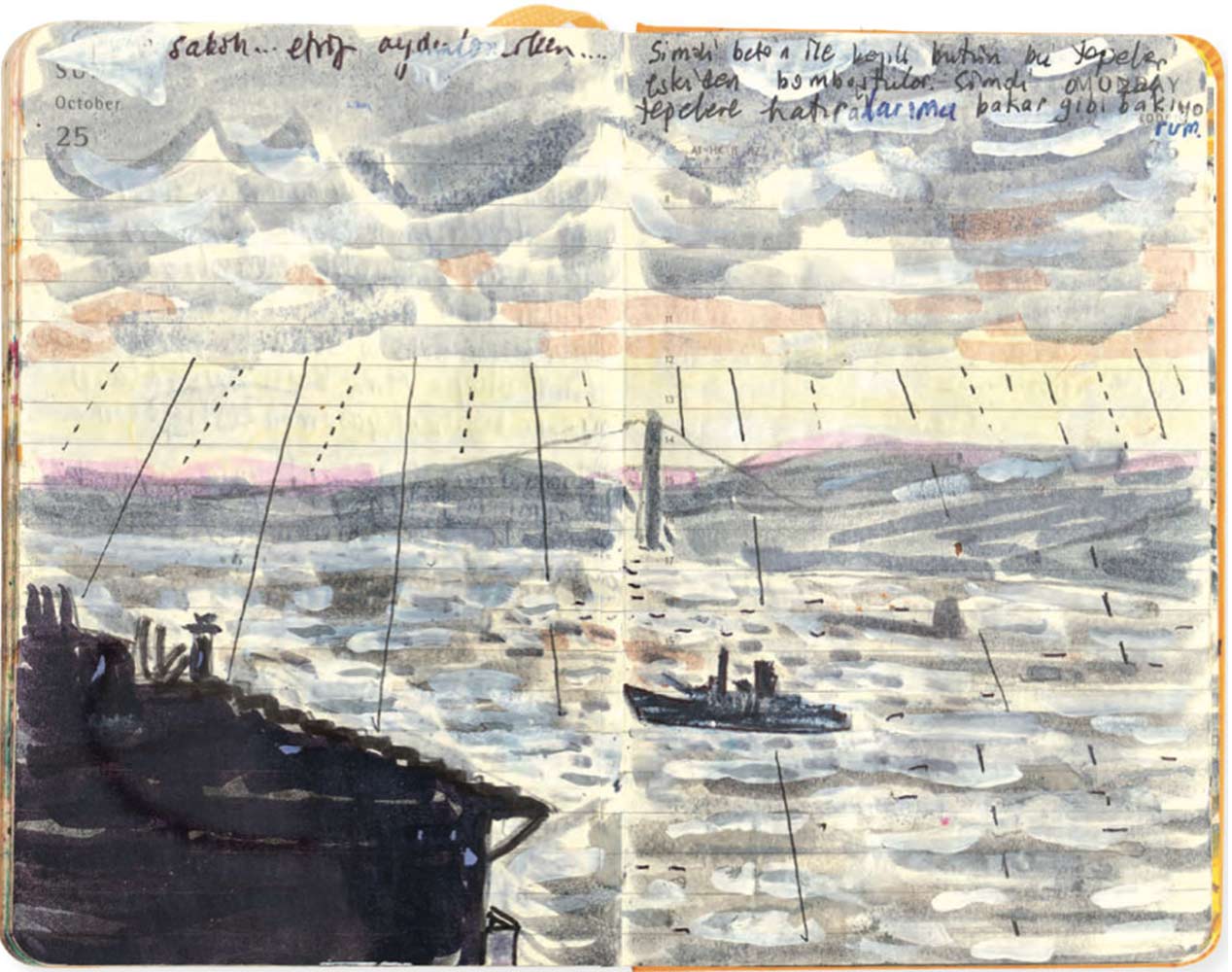
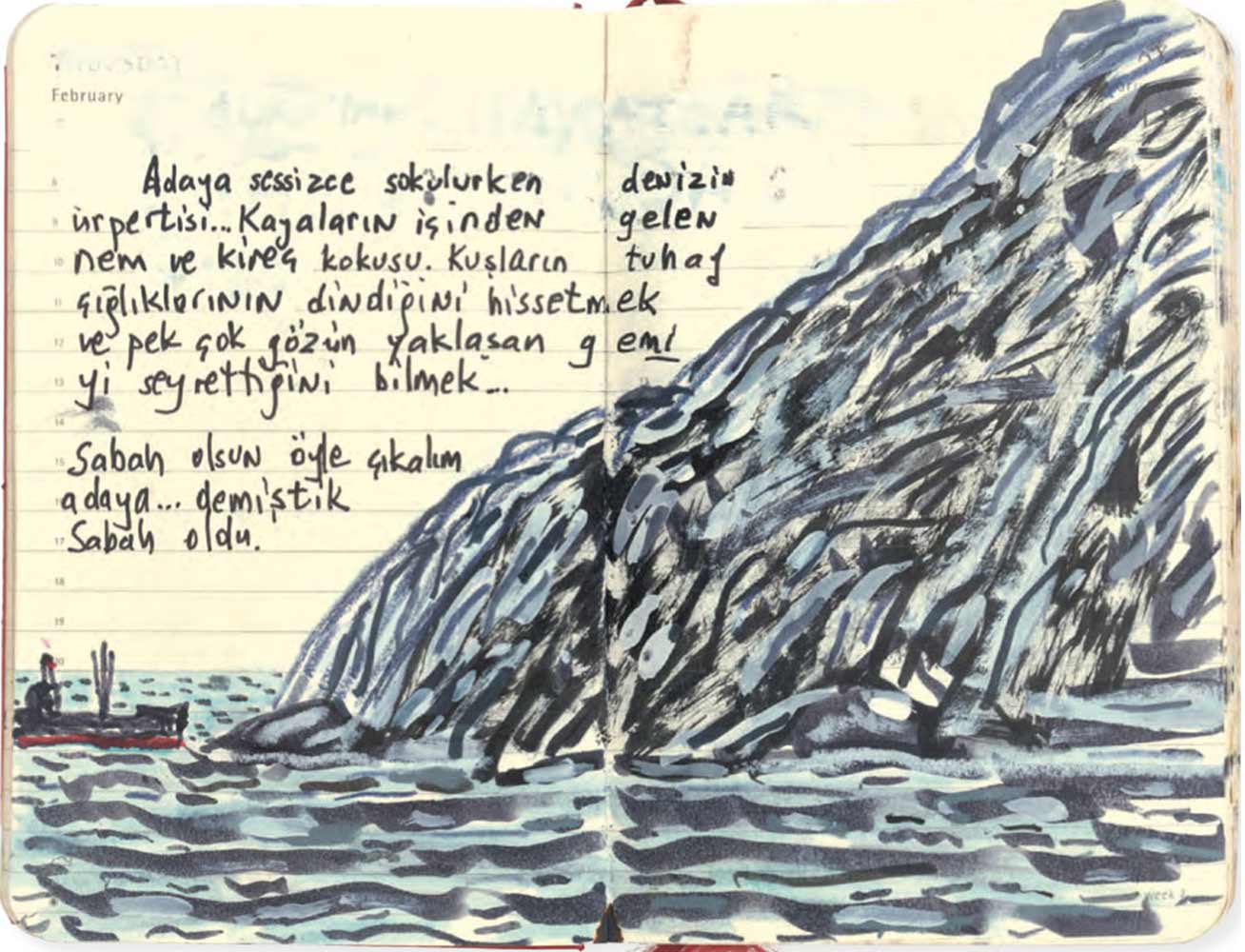
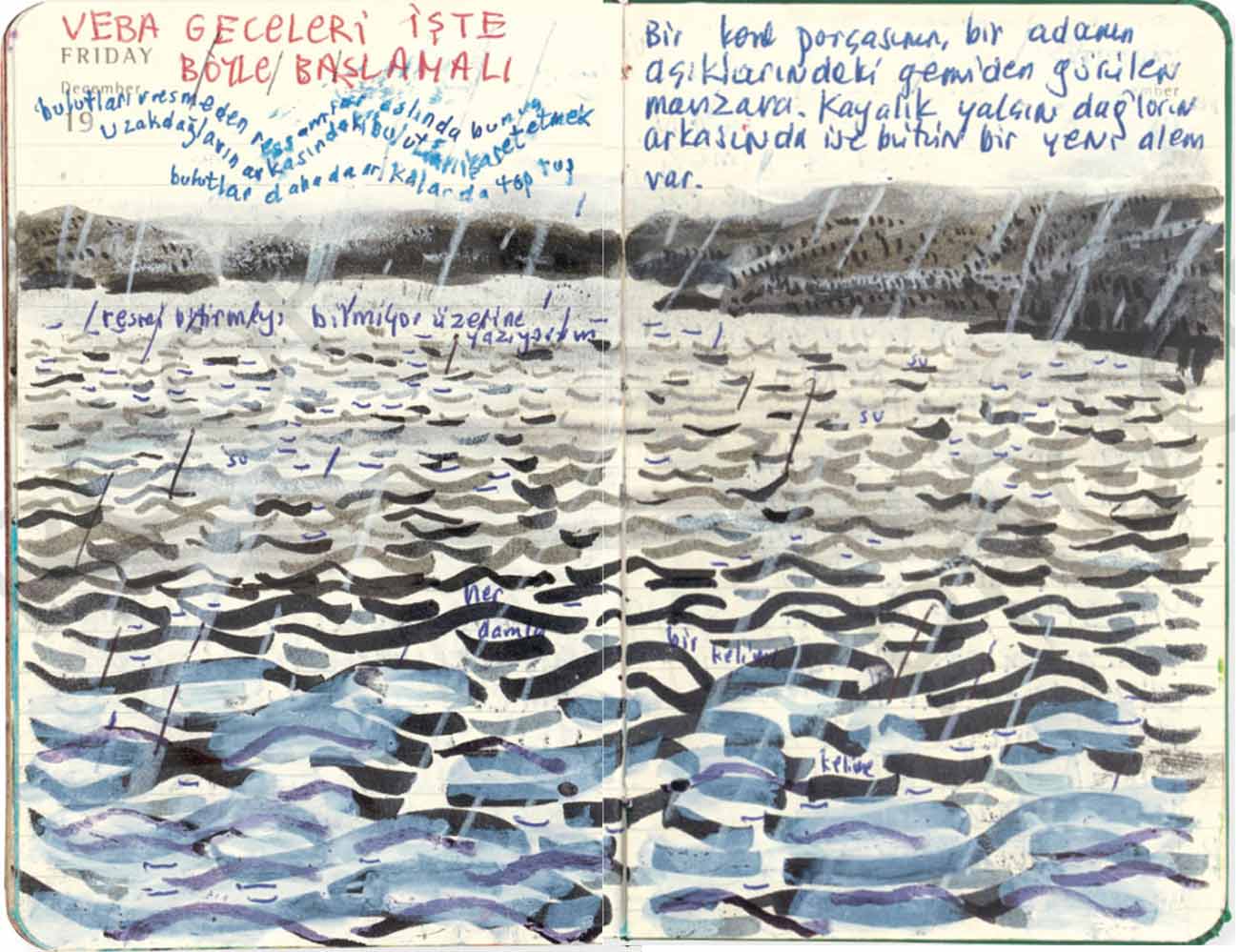
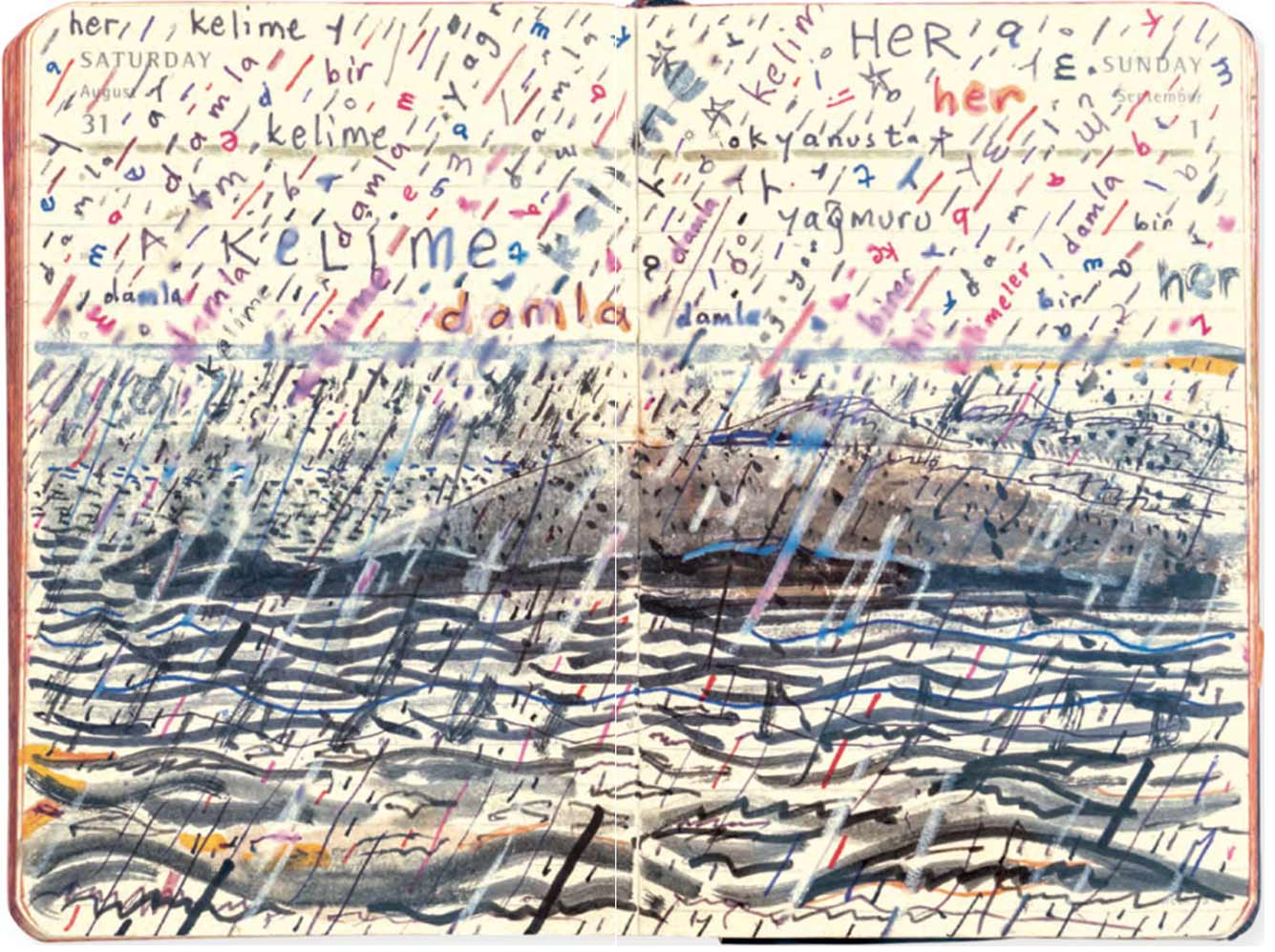
After spending his adolescent years imagining he would become a painter, Orhan Pamuk had a change of heart. “At 22, I killed the painter inside of me,” he recounts, “and began writing novels.” Since then he has gone on to write many novels, including The White Castle, My Name Is Red, Snow, and Nights of Plague, and win the Nobel Prize in Literature. Yet his love of visual art, and in particular landscapes, remained, and in 2008 he “walked into a stationery shop, bought two big bags of pencils, paints, and brushes, and began joyfully and timidly filling little sketchbooks with drawings and colors. The painter inside of me hadn’t died after all.” The following are from these sketchbooks, excerpted from Memories of Distant Mountains: Illustrated Notebooks 2009–2022.

Excerpted with permission from Alfred A. Knopf. ©2024 Orhan Pamuk.
Orhan Pamuk

Orhan Pamuk is the author, most recently, of Istanbul and Snow. He was
awarded the 2005 Prix Medicis and won the International IMPAC Award in
2003 for My Name Is Red.

More from The Nation

View of apartment buildings in Manhattan

Bad Mothers and Monstrous Children Bad Mothers and Monstrous Children

Jordy Rosenberg’s “Night Night Fawn” offers a multigenerational tale of Marxists, Zionists, and estrangement.

Books & the Arts / Emmet Fraizer

The New York premiere of “Girls,” 2012.

Growing Up With “Girls” Growing Up With “Girls”

Lena Dunham and her generation enter midlife

Books & the Arts / Grace Byron

A still from “I Love Boosters.”

Boots Riley’s Communist Heist Film Boots Riley’s Communist Heist Film

Yes, it even has Marxist teleporters.

Books & the Arts / Jorge Cotte

The Obama Presidential Center.

The Nostalgic Architecture of the Obama Presidential Center The Nostalgic Architecture of the Obama Presidential Center

Where hope even has a gift shop.

Books & the Arts / Kate Wagner

John Edgar Wideman’s American Vernacular

John Edgar Wideman’s American Vernacular John Edgar Wideman’s American Vernacular

The master novelist offers a view of a United States defined by its cultures of improvisation.

Books & the Arts / Walton Muyumba