
The One Guaranteed Winner in 2024: American Empire
Democrat or Republican, the next presidency will still mean death for others in faraway places.

The genocide in Palestine began a year ago. It’s an astonishing fact that some may want to avoid, but it’s true. And there is no end in sight.
Now, as November draws nearer, those of us who regard genocide as the issue—the only issue—on the ballot are faced with a choice. It is not so much a false choice as it is an unpalatable one: Democrat or Republican, carrion or charnel, each a special flavor of death.
Mass murder—mechanized, joyful, frenzied, lusty and hot with corruption—resists easy description. We are left to tally the losses, to describe an outline through the tangents that touch its surface. The number of human beings exterminated. Hospitals and schools destroyed and lives truncated. The emergence of polio and syphilis. The corrosion of human flesh. An obscenity that touches everything and cripples the spirit. The extent of the horror is unknown, and probably unknowable. Our nightmares shrink before reality.
It’s easier to engage with matters for the living. In America, we fight for life. That’s what we’re told. We fight for the poor, for a fair shake. And in the eaves, sometimes in the background but never center stage, hangs a genocide. The Palestinians, a zombie, buried alive for the greater good, await their turn to speak.
It would be incorrect, and imprecise, to describe the Democrats and Republicans as being more or less identical. The Republican leadership and their media personalities seem hateful. They come close to using the N-word on television—a thrilling slip, red meat for the base. Their lies appear designed to provoke the lynching of Black people and their white supremacy appears rooted sometimes in grievance, other times in a genuine belief in white destiny, a manifest clause in their Bibleverse. Economic descriptions of their voters’ worldviews may be creditable, but they also give them too much credit.
Absent a coherent, unifying ideology, like hate, Democrats are the party of everything else. It’s the party where the billionaire environmental activist goes, the laborer fighting for a fair wage, the mendicant with a PhD in adjunct studies—and of course, it’s where masses of Black and brown people squat at the margins.
The Democratic leadership seems interested mostly in self-enrichment, prestige—a liberal religion in America—and the performance of politics. Democrats are mired in short-termism, the individual win, and gathering peanuts while jostling with the enemy at the polls. Still, it’s enough for the occasional policy victory—the mad alignment of self-interest, special interests, and grassroots organization produce things like Obamacare from time to time.
And yet, the question remains: How has the Democratic Party, the party whose primary orientation seems to be “coalition,” the one with all those minorities, presided over the total destruction of Gaza? Over Israeli terror attacks in Lebanon?
As Americans, with our focus on celebrity and heroes and villains, money and the spectacle of a big church, it’s tempting to lend a personalized analysis to atrocity: Biden is a Zionist; Alexandria Ocasio-Cortez is faithless.
And personalities are important to the story of an election year and a genocide year. Or a genocide year and an election year, depending on your view. It’s doubtful that the ugly achievements of the Democrats over the course of the past year would be what they are if Biden wasn’t invested, ardently, fervently, with total faith and commitment, in Jewish supremacy in Palestine. That the president values Jewish-Israeli life more than the lives of Palestinians and Lebanese people, or even of Americans, is evident. But Biden’s Zionism is insufficient to the task of explaining this country’s active participation in the effort to exterminate Palestinian life in the Gaza Strip.
For most Americans, the idea of empire is a baroque one. It belongs to Louis XIV and Leopold II and the history books. Yet empire exists today. Consider the fact that a vote in November for bodily autonomy or climate justice or a moderately less extractive capitalism—in other words, a vote for the Democrats—still means death for others in faraway places. The subjects of empire in Palestine and Lebanon, Ukraine or Sudan or elsewhere don’t get a vote, but they’re forced to live and die, more often to die, with savage regularity, on behalf of the American empire. Their deaths are monotone, a leaden beat in the distance. The question is why.
The scholar Aziz Rana describes empire as having three primary attributes. It organizes “the world around ethno-racial hierarchy…[where] racial background ends up shaping the terms…[of] rights and opportunities.” It’s a “world system structured on economic extraction,” which ultimately produces the third attribute, “really intense conflicts among the imperial rivals.”
The traditional organization of empire has yielded to a more flexible, resilient neoliberal reality in which resource denudation is coupled with globalized privatization of industry—one legacy of the anti-colonial struggles of the last century. In Rana’s telling, colonialism pulls resources out of places, and then charges newly independent countries—whose very organization is molded by their former colonizers—high interest rates to borrow money to develop the countries that the colonizers plundered. The result is an empire that earns its profits in sovereign debt—often the only means available to low-income countries seeking to escape the poverty trap—and a military complex which seeks its rents through war.
The whole analysis is only applicable in parts to Palestine and the broader regional war currently underway. Is Iran, for instance, really an equal rival of the United States? Or is it enough for Iranian policy to threaten American hegemony in the region, as it plainly does?
Whatever the case, since the genocide in Gaza began, the US has spent nearly $18 billion on military support to Israel. Much of that money remains in the United States; it’s used to purchase war machines from American companies—a jobs program for ghouls. In the year since the genocide commenced, Raytheon Technologies’ stock price has skyrocketed for shareholders. The 2024 proxy statement of the second-largest arms dealer in the country reads in part, “with an elevated global threat environment, the demand for our commercial aerospace and defense products is strong.”
The story of the genocide in Palestine is far from being wholly written. Empire, congressional appropriations and pork, the profit motive embedded within our capitalist system and billion-dollar companies, Joe Biden’s cruelty and Zionism, and the Israel lobby all play a role. But we are far from a complete understanding—too many facts remain unknown. Now, as Israel attacks Lebanon, and as Iran responds to Israel’s insistent provocations, the story is only getting tougher to tell.
Popular
“swipe left below to view more authors”Swipe →In his short story Death and Suffrage, Dale Bailey imagines a world in which the dead—those who were unjustly killed, but everyone else too—come back to vote. The Supreme Court ultimately decides that voting is a right reserved for the living—a neat allegory for life in the center of empire, one in which the votes, the needs, of the countless dead in far-off places do not matter.
As the story ends, the narrator observes, “[The dead] demand nothing of us, after all. They seek no end we can perceive or understand…. And so we go on, mere lodgers in a world of unpeopled graves, subject ever to the remorseless scrutiny of the dead.”
I cannot fault those who would vote for a better life here—in the center of empire—through a vote for the Democrats. But I cannot join them either. The genocide looms large in my life. Every moment carries with it the relentless scrutiny of the dead.
More from The Nation


Can James Carville Please Just Be Quietly Wrong Somewhere Else? Can James Carville Please Just Be Quietly Wrong Somewhere Else?
The omnipresent consultant-cum-tantrum-thrower has long outlived whatever relevance he once had, but cable producers, podcast hosts, and Democratic campaigns haven’t got the memo....
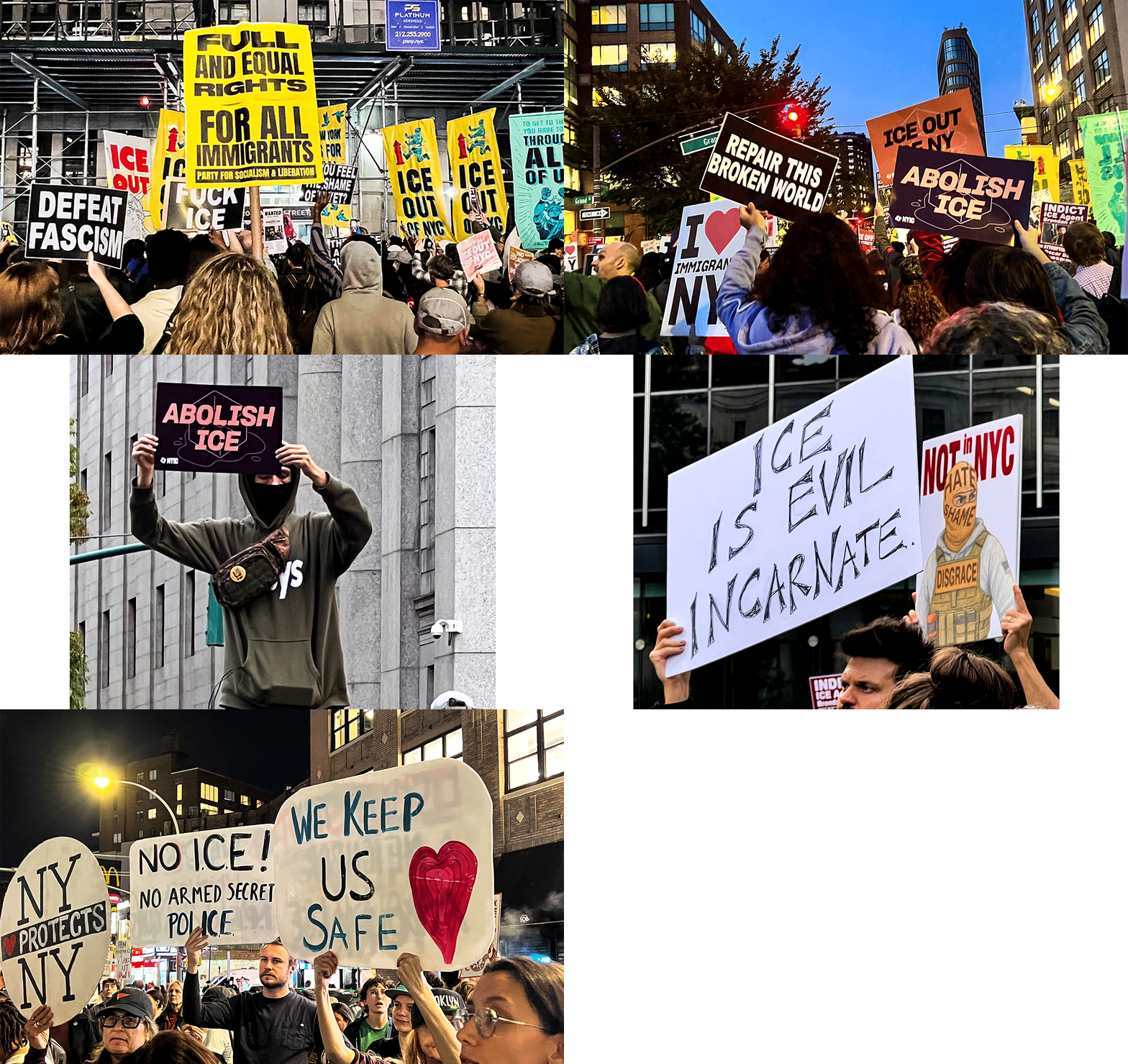
Abolish ICE Abolish ICE
Demonstrators take to the streets in protest against an ICE shooting in New York City. Foley Square, October 2026.
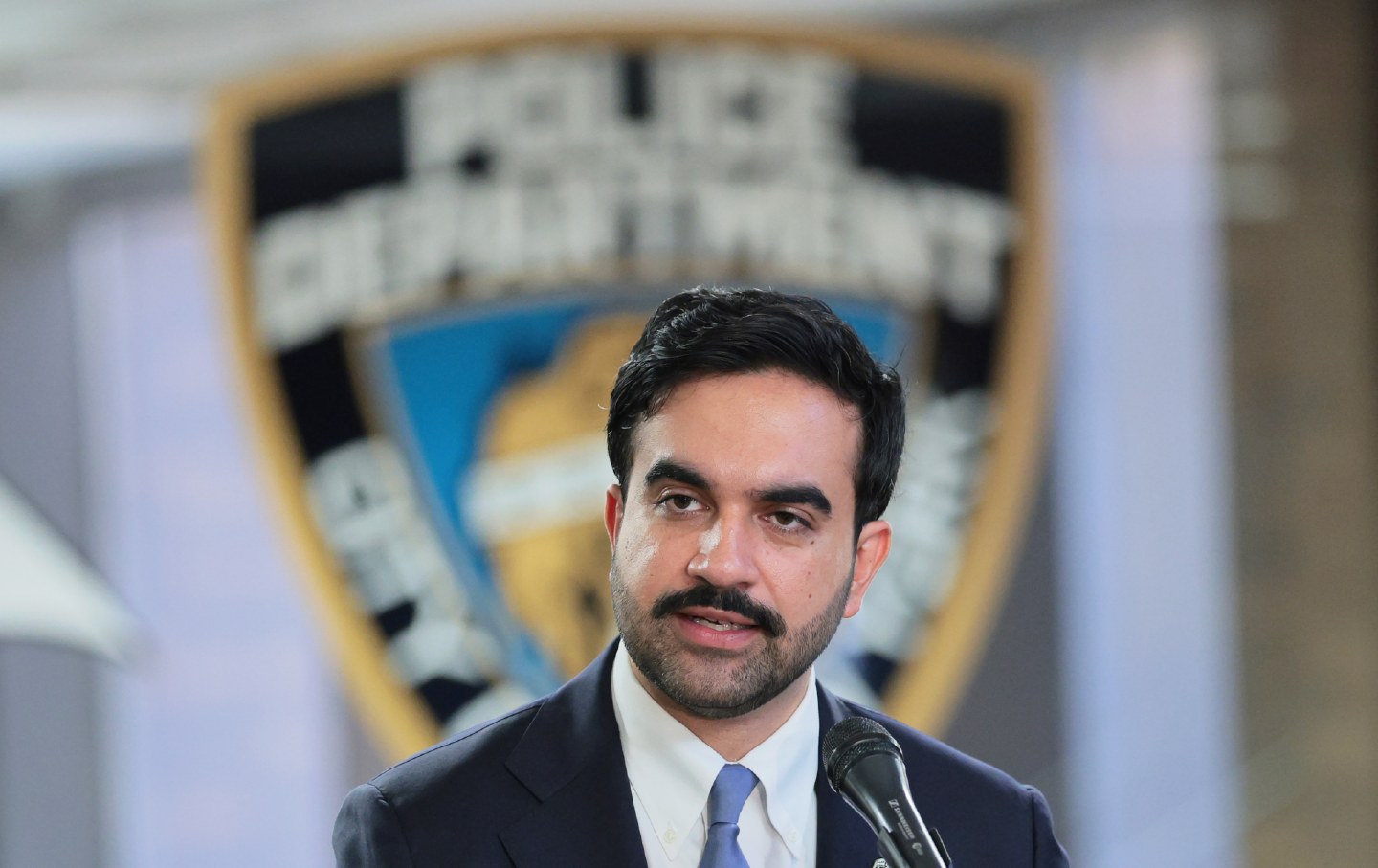
Mamdani Is Facing Heat Over the NYPD. Here’s What He Should Do. Mamdani Is Facing Heat Over the NYPD. Here’s What He Should Do.
The mayor is being given a series of false choices over his public-safety agenda. But there is another way forward.
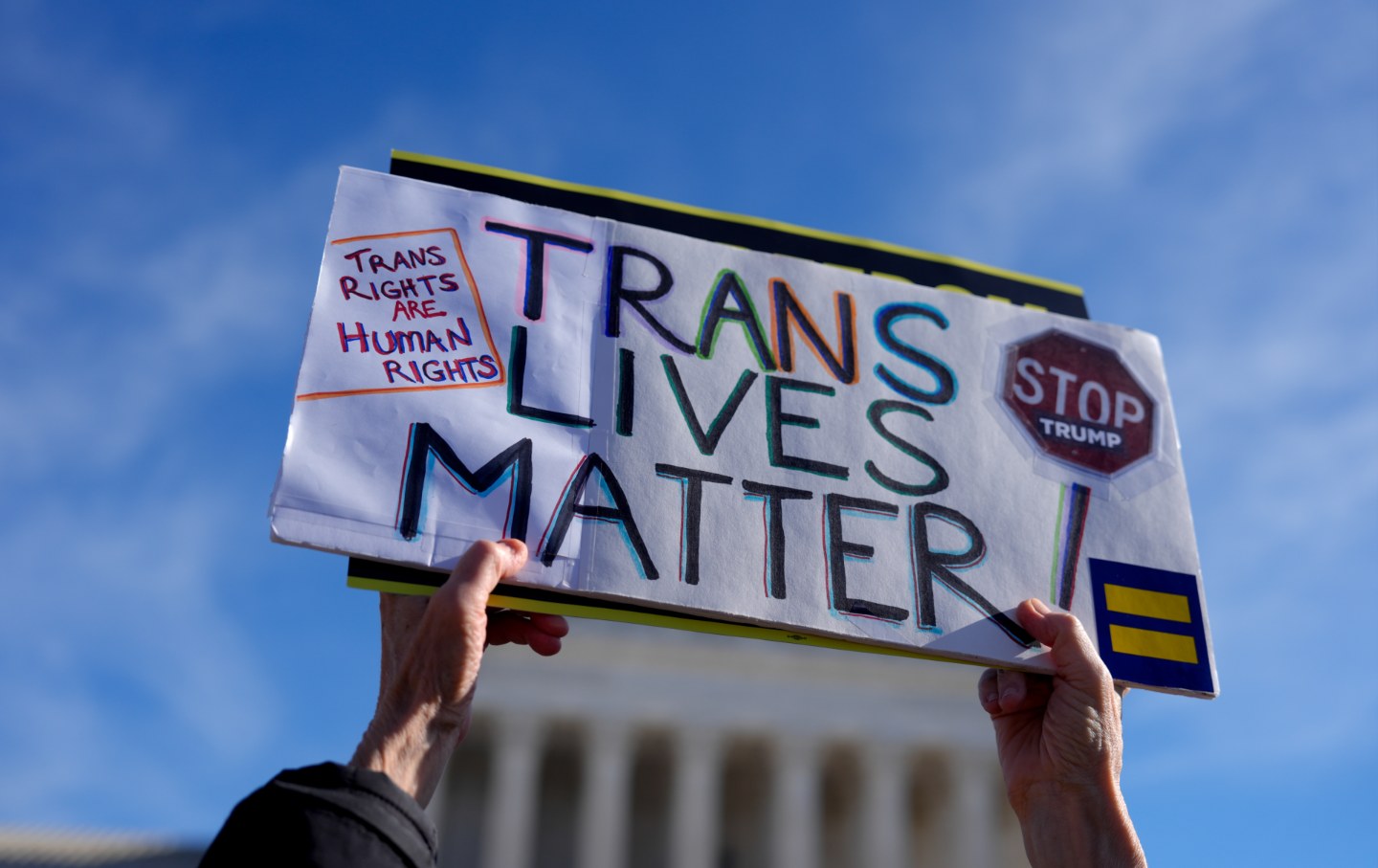
Why Calling Anti-Trans Hate a “Distraction” Is So Troubling Why Calling Anti-Trans Hate a “Distraction” Is So Troubling
It’s a familiar line in the midterms: Anti-trans attacks are a “distraction” from “kitchen-table” issues. That sends a chilling message about whose rights are worth fighting for.
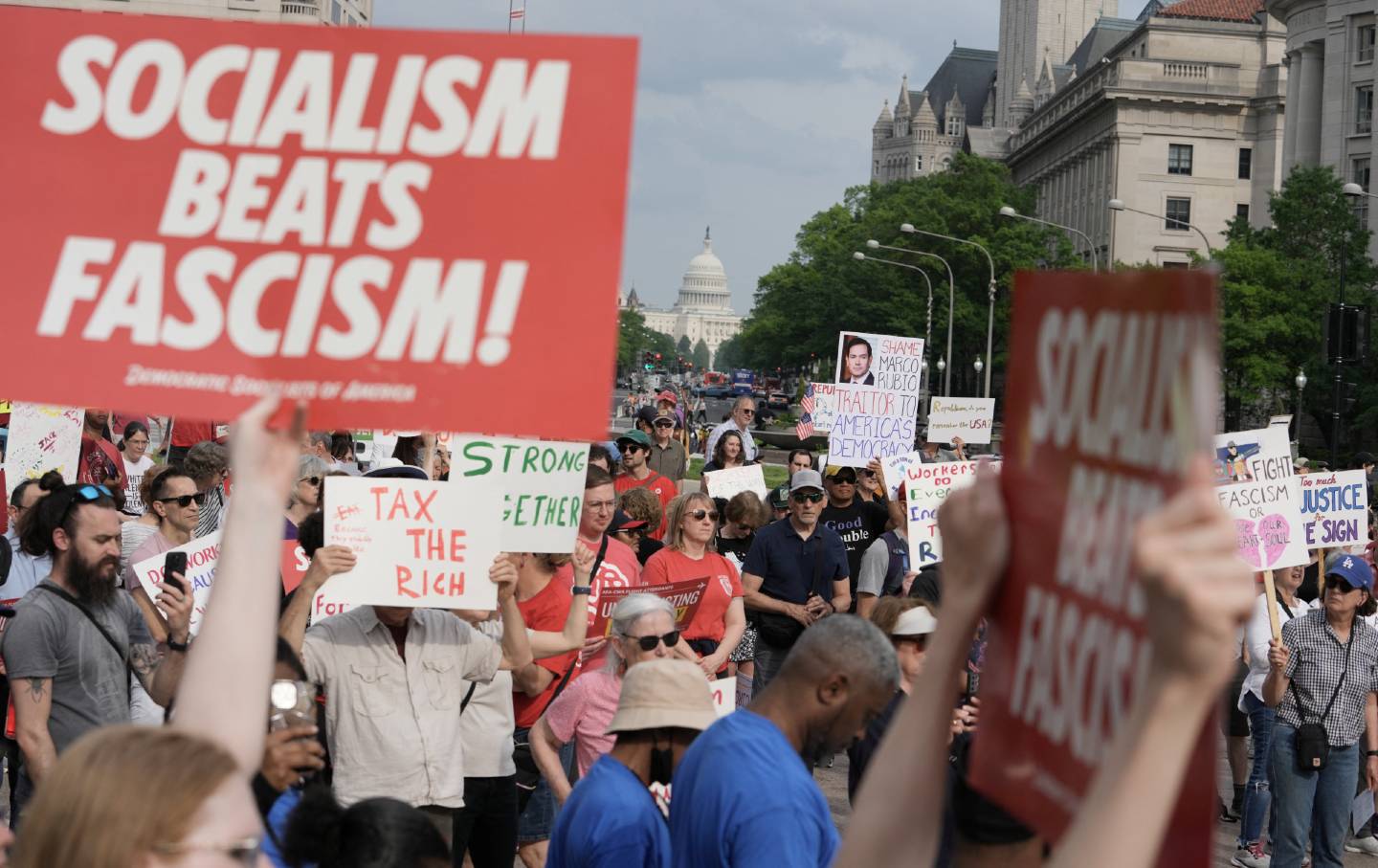
So What Is Socialism, Anyway? So What Is Socialism, Anyway?
In a world dominated by neoliberal market fundamentalism, “socialism” is what will make a more moderate, regulated form of capitalism work for most people.

