
The Maduro Government Is Probably Stealing the Election in Venezuela
But maintaining economic warfare by the US—including sanctions—only hurts the Venezuelan people.
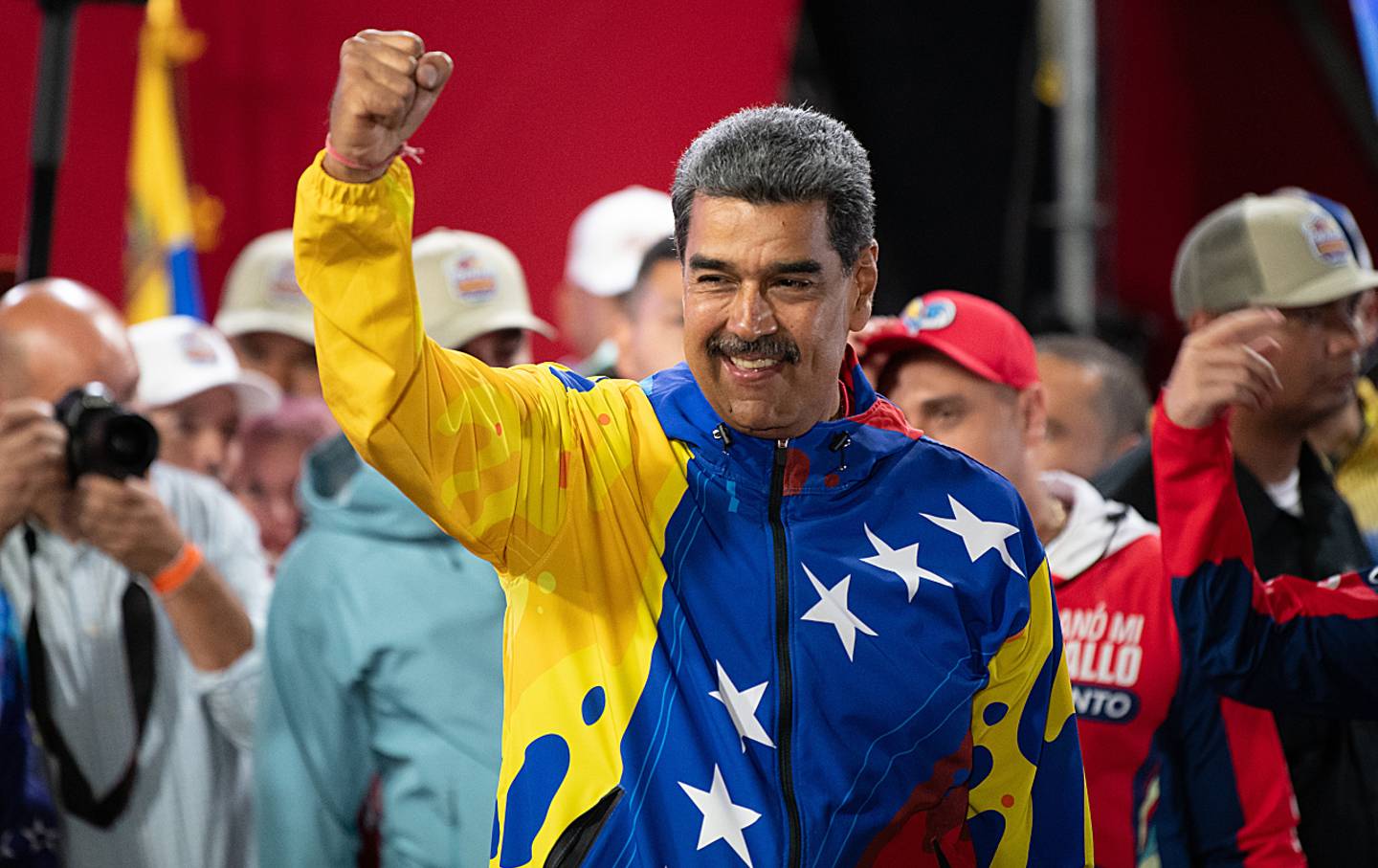
Even though the Nicolás Maduro government in Venezuela is almost certainly stealing Sunday’s election, the Biden-Harris administration should still end the harsh US economic warfare against the country.
Here are three reasons:
- After Donald Trump imposed total US sanctions in 2017, a humanitarian disaster soon followed. Mark Weisbrot, a respected economist at the Center for Economic and Policy Research, explains that curtailing Venezuela’s oil exports, and blocking its access to international finance, contributed to an economic collapse that was worse than the Great Depression in the United States. Weisbrot contends that the sanctions helped cause “tens of thousands of additional deaths.”
- Also, maintaining the economic blockade will continue to force millions of desperate Venezuelans into exile. So far, the exodus amounts to nearly 8 million people—of whom several hundred thousand have already showed up at our southern border. This is already by far the worst such upheaval in Latin American history.
- What’s more, the sanctions did not promote democracy. As Jesus “Chuo” Torrealba, a leading opposition figure inside Venezuela, told me in 2022, “The Trump administration believed that if you make people suffer, if you impose the politics of pain, that you will promote a general insurrection. That has not happened. Hungry people do not revolt.”
The Trump policy was not only cruel but also arguably cynical. TheWashington Post just reported that Trump officials knew that imposing total sanctions would force a big jump in the number of Venezuelan refugees. But “chaos at the border” helps the MAGA movement politically, as we’ve just seen with Trump’s sabotage of a bipartisan compromise in Congress that would have made asylum requests at the border more difficult.
Meanwhile, there is clear evidence that Maduro is not playing fair. From the start, the regime tried to stymie the opposition—by disqualifying its original candidate and arresting and harassing campaign workers. Maduro had already sharply restricted the number of outside election monitors, and on the election’s eve the government blocked a planeload of former Latin American leaders from landing to observe the vote. Some leftist presidents in the region have already issued warnings, including Lula da Silva of Brazil and Gustavo Petro from neighboring Colombia.
In the hours just after the government-controlled election authority released questionable results showing that Maduro won, 51 percent to 44 percent, Chile’s leftist leader, Gabriel Boric, tweeted: “The Maduro regime must understand that the results it published are hard to believe. The international community and the Venezuelan people—including millions in exile—demand full transparency.”
The Maduro government also made no effort to allow the Venezuelans in exile—a quarter of the country’s population—to vote.
The Venezuelan election took place amid an ongoing economic catastrophe, a disaster whose scale is not fully grasped outside the country. The Trump sanctions blocked most of the country’s oil exports, and cut it off from international finance. The United States supposedly made exceptions for the import of food and medicines, but global companies steered clear, afraid to run afoul of the American boycott. Mark Weisbrot has the details; he told me that after Trump’s 2017 decree, Venezuela’s economy collapsed by nearly 38 percent, a worse drop than the 29 percent contraction that the US experienced in 1929–33, the first years of the Great Depression. Venezuelan imports dropped by 91 percent, and food imports by 78 percent. The UN’s Food and Agriculture Organization reported that undernourishment rose to 27 percent; it had been under 3 percent a decade earlier. Infant mortality jumped to 21 per 1,000 live births, the second highest in Latin America. Some 82 percent of the population ended up in poverty.
Meanwhile, the global price of oil, Venezuela’s main export, rose, but the country was not able to take advantage.
Calculating additional deaths is necessarily inexact, but Weisbrot used various statistics to estimate that “the number of Venezuelans who have died as a result of the sanctions over just the past six years is at the very least in the tens of thousands, and likely higher.”
In short, Venezuelans are not fleeing their country because they want to change careers and earn more money in other countries. They join the exodus because they are hungry and afraid of getting ill.
The Biden-Harris administration did ease the sanctions somewhat. But Weisbrot says the pressure remains “substantial and damaging.”
There is also the argument that the US sanctions violate the human rights of the Venezuelan people. In May 2021, Representative Jim McGovern, Democrat of Massachusetts, wrote an eloquent letter to President Biden to demand that the economic warfare end:
Economic pain is the means by which the sanctions are supposed to work. But is it not Venezuelan officials who suffer the costs. It is the Venezuelan people.… For people in Venezuela the ongoing crisis is a life and death matter.… I have never believed that sanctions should be used to punish whole populations for the actions of their leaders.
Besides ending the economic sanctions, the United States should just sit back, and say little or nothing. Decades of brutal US interventions in Latin America have destroyed our government’s credibility. Instead, America should concentrate on humanely treating the Venezuelan migrants whom our harsh policy helped create when they reach our southern border. Let Latin Americans, both leaders and ordinary people, continue responding to the crisis. And, for once, let Venezuelans themselves make their own history.
Popular
“swipe left below to view more authors”Swipe →Become a Sustaining Donor This September
Between the reemergence of right-wing red-baiting and Donald Trump’s use of the chilling National Security Presidential Memorandum–7 to criminalize left political organizing, we’re seeing McCarthyism reborn before our eyes.
This assault on democracy cannot be ignored or wished away. Resisting it requires bravery in the face of threats and repression, a steadfast commitment to the truth, and the unwavering belief that we can—and will—overcome this darkness.
We must have an independent media that sets the record straight, unearths corruption and abuses of power, and advances a politics of justice and dignity for all if we’re to win this fight.
That’s why I’m writing to you today. This September, The Nation needs to add 100 monthly donors to sustain our progressive journalism. Your contribution makes the next investigative report, the next truth-speaking column, and the next pathbreaking essay all possible.
I hope you’ll support our work with a recurring donation today. If you donate $10 or more a month, we’ll send you a brand new “Hands Off the Free Press!” sticker to recognise your commitment to our cause. Please, donate today.
Onward,
Katrina vanden Heuvel
Editor and Publisher, The Nation
More from The Nation
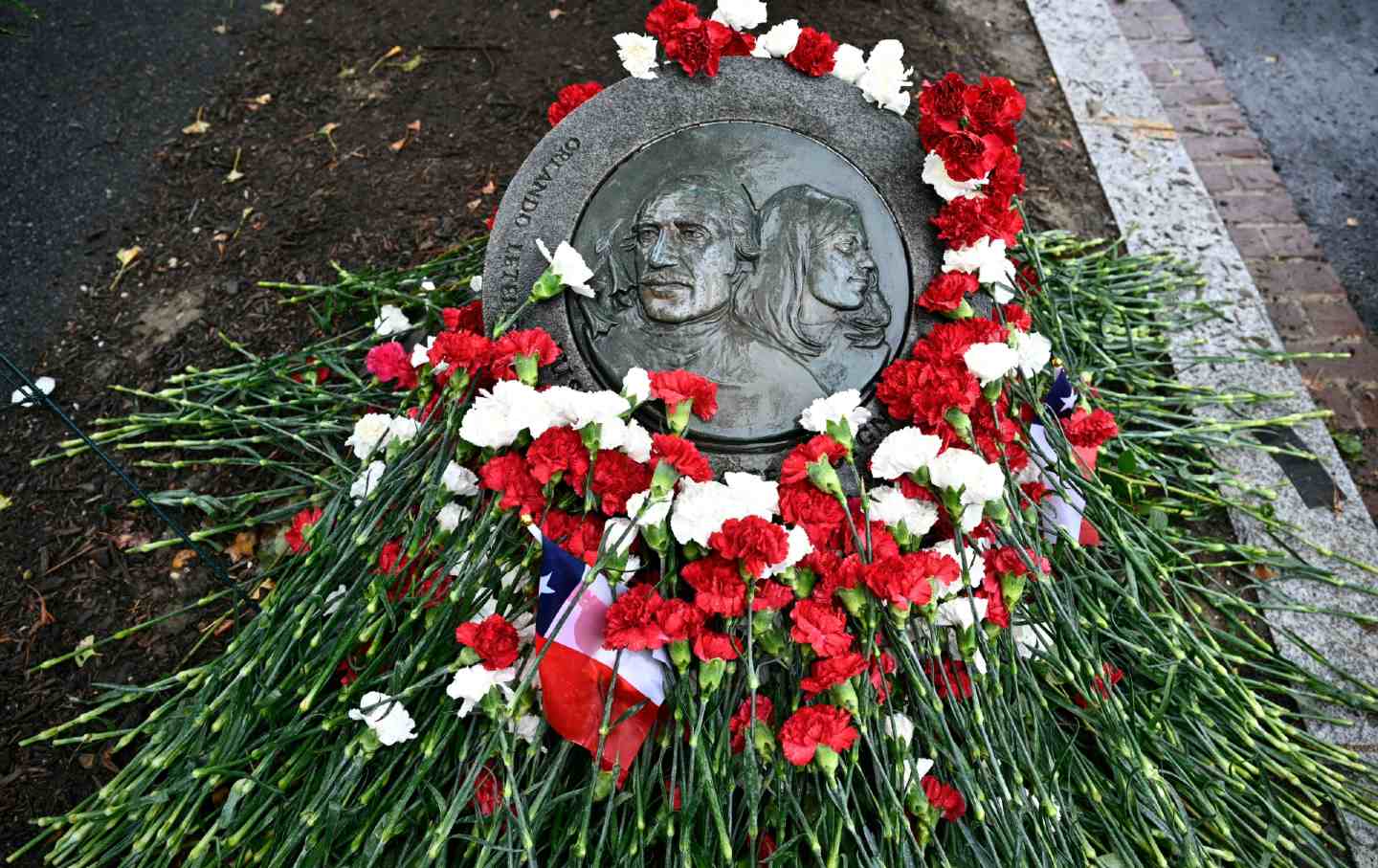
Pinochet: The Verdict of History in the Letelier-Moffitt Case Pinochet: The Verdict of History in the Letelier-Moffitt Case
An act of international terrorism on the streets of Washington, DC, still reverberates 50 years later.
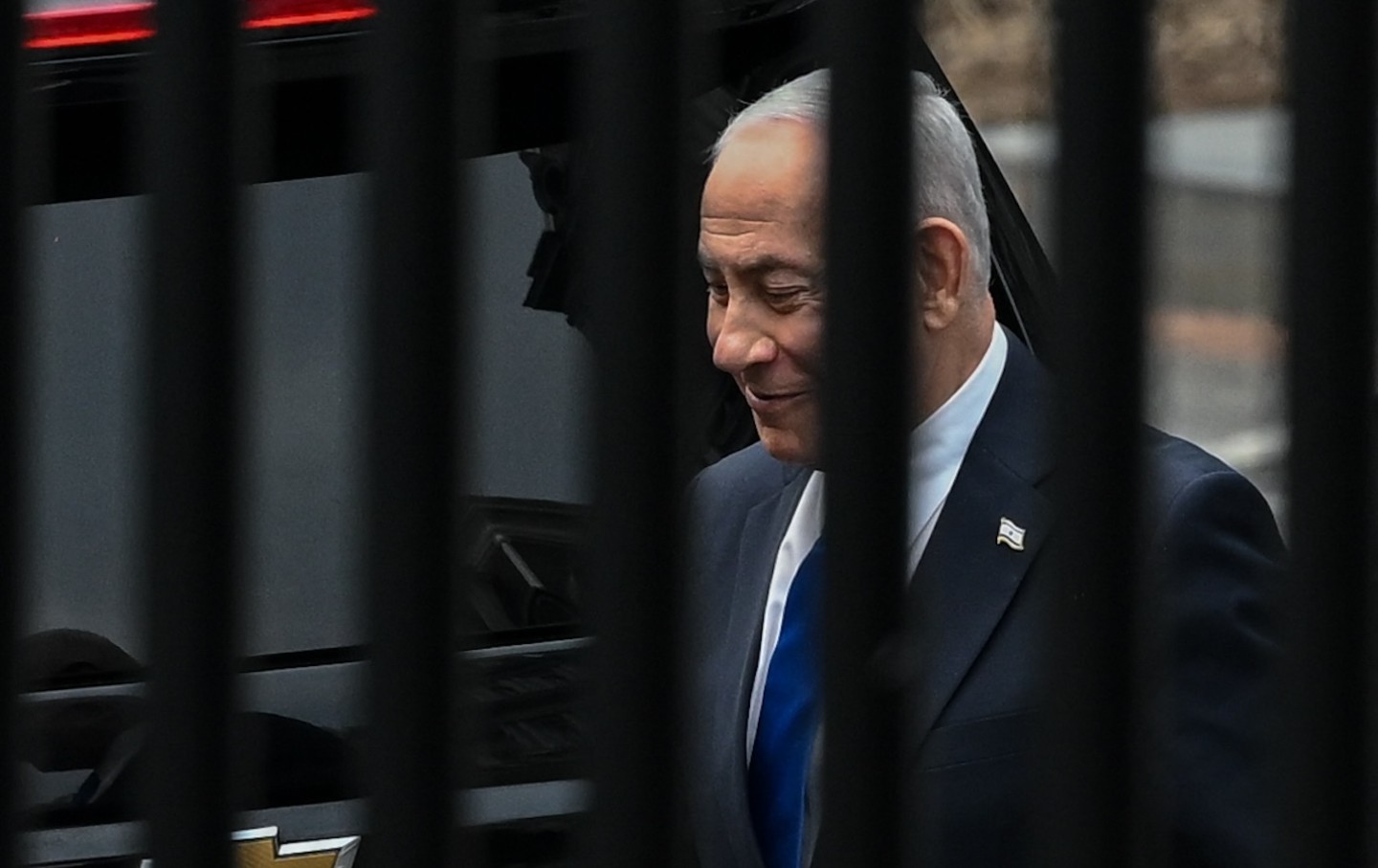
How to Arrest Benjamin Netanyahu How to Arrest Benjamin Netanyahu
Make no mistake: The United States can seize Netanyahu for crimes under US law and prosecute him in US courts when he is in New York City this week.
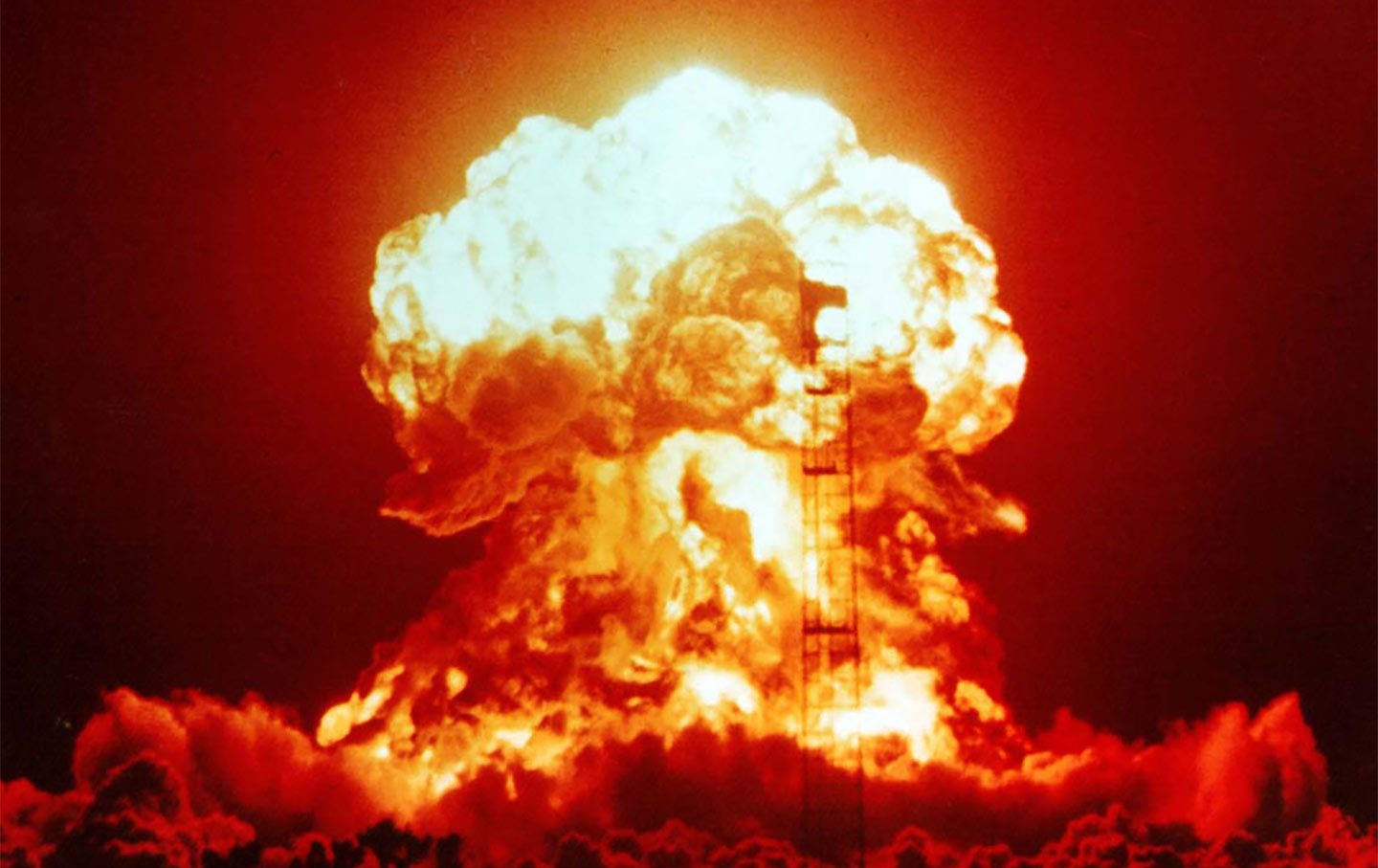
In the Age of AI, Nuclear Weapons Abolition Is a Renewed Imperative In the Age of AI, Nuclear Weapons Abolition Is a Renewed Imperative
As long as we have nuclear weapons, the job of ending humanity will continue to be as easy as the push of a button—or an AI agent hacking into a nuclear command-and-control system...
These Students Are Shaping UN Human Rights Policy These Students Are Shaping UN Human Rights Policy
Princeton undergraduates are helping the organization develop standards for post-mortem digital privacy and death in custody.
The Peril of Trump’s Final Act: Would He Use a Tactical Nuclear Weapon in Iran? The Peril of Trump’s Final Act: Would He Use a Tactical Nuclear Weapon in Iran?
Trump is trapped in a war that has already been lost, a reality that he will never allow himself to admit.
A Spreading War Rattles Global Energy Markets A Spreading War Rattles Global Energy Markets
Analysts say the consequences for energy prices and the world economy may be more serious in this later phase of a war that many had expected to be largely over by now.

