
Will Philip Gordon Be President Harris’s National Security Adviser?
The prospects for foreign policy in a Harris administration.
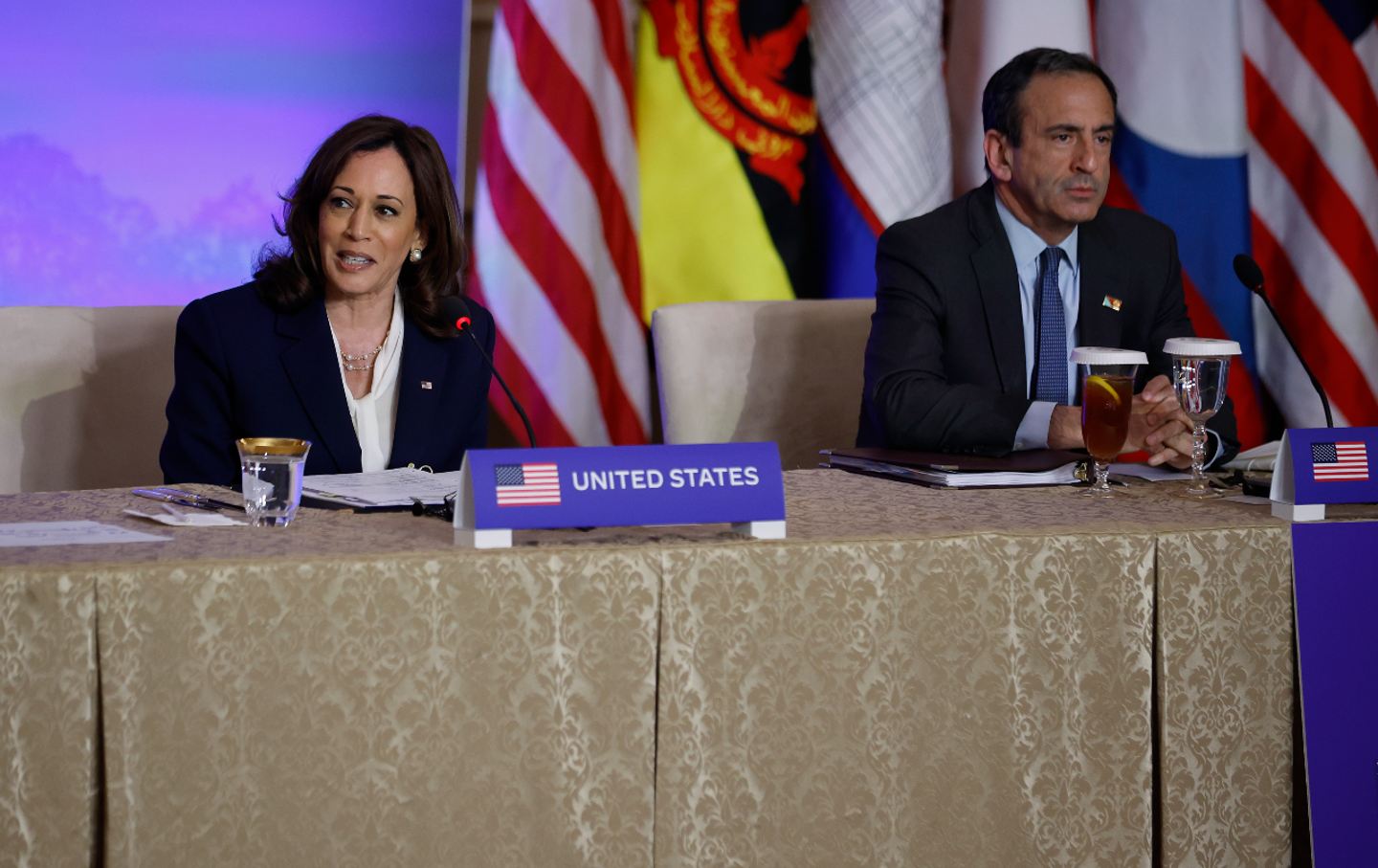
What might President Kamala Harris’s foreign policy look like?
Speculation has understandably gone into overdrive in the days since President Joe Biden abandoned his reelection bid.
As is often the case in life, people see what they want to see: Some believe Harris could break with past practice, particularly with regard to the disastrous, immoral US policy toward Palestine. Others look at her record and see a standard liberal interventionist, one that will likely continue the policies she will inherit from Biden.
There are contradictory indicators, to be sure.
As a senator, Harris displayed sensible instincts by opposing Trump’s withdrawal from both the landmark nuclear agreement with Iran and the INF treaty with Russia. On the other hand, Harris has spoken of America’s “unbreakable bond” with Israel, mocked diplomatic engagement with Syria, and has emerged as a proponent of American war aims in Ukraine.
At this point in her candidacy, it feels a little like the early stages of the Obama campaign circa 2007: Much hope has been invested, but what exactly the return will be remains an open question.
Since the beginning of the administration, Harris has surrounded herself with a team of experienced foreign policy hands, including, prominently, former Obama White House and State Department official Philip Gordon, who currently serves as Harris’s national security adviser. Gordon is one of only a small group of national security officials, including national security adviser Jake Sullivan and deputy national security adviser Jon Finer, to take part in the president’s daily intelligence briefing.
Gordon has long been a highly regarded member of the foreign policy establishment. He holds a PhD from the Johns Hopkins University School of Advanced International Studies and was one of the main proponents of President Obama’s policy of constructive engagement with Iran—a policy that ultimately bore fruit in the form of the landmark JCPOA agreement. Another of those proponents, Ivo Daalder, who went on to become US permanent representative to NATO under Obama and now serves as CEO of the Chicago Council on Global Affairs, described Gordon to me as “totally prepared, a true expert on European and Middle East policy, and, importantly, Phil has been by the vice president’s side from the beginning.” Gordon was an early opponent of George W. Bush’s Iraq War and played a key role in carrying out Obama’s well-timed but ultimately ill-fated “reset” policy with Russian president Dmitry Medvedev. Gordon is also the author of the well-received Losing the Long Game, which cast a critical eye on recent American efforts to transform the Middle East by force.
Gordon, Daalder and others, including the current deputy secretary of state, Kurt Campbell, have long been part of a core group of Democratic foreign policy experts—one that inspired some of President Obama’s more successful foreign policy initiatives. According to the noted foreign affairs journalist and author James Mann they “represented the generation of Democrats who learned how to run foreign policy during the 1990s. They were eager to show that the Democrats were not a bunch of pacifists, that they understood national security issues and were willing to use American force where necessary.”
For a card-carrying member of the Washington establishment (he has, after all, worked at both Brookings and the Council on Foreign Relations), Gordon has displayed that rarest of traits, an ability to grow. According to Dr. Trita Parsi, executive vice president of the Quincy Institute for Responsible Statecraft, “Phil left the Obama administration with a much clearer understanding of the limits of American power and the need for a much more humble foreign policy than most of those in Biden’s inner circle. It’s difficult for me to envision how the last nine months may have rebooted his confidence in America’s ability to shape outcomes in the Middle East.”
“Perhaps more important,” says Parsi, “is the question of whether Phil shares the Biden team’s obsession with extending Trump’s Abraham Accords to Israel and Saudi and offering the Saudis both a war obligation and the nuclear fuel cycle.”
According to Parsi, if a Harris administration continues down that same path, “it will likely repeat Biden’s many failures and missteps in the Middle East.”
On NATO and Russia policy, Gordon’s positions place him in the mainstream of the Democratic party. On January 2018, he coauthored a CFR report with the hawkish Republican Robert Blackwill that called for Washington “to impose real costs on Moscow, while also enhancing defenses against future attacks and bolstering its military commitment to European allies most threatened by Moscow’s aggressive posture.” They continued, “If this package of measures sounds like a prescription for a new Cold War with Russia, it is.”
So as with his boss, there are mixed signals. While someone of Gordon’s experience and stature would be a marked improvement over the current national security adviser, there is little reason to expect that his appointment would signal that real change is on the horizon.
Popular
“swipe left below to view more authors”Swipe →More from The Nation
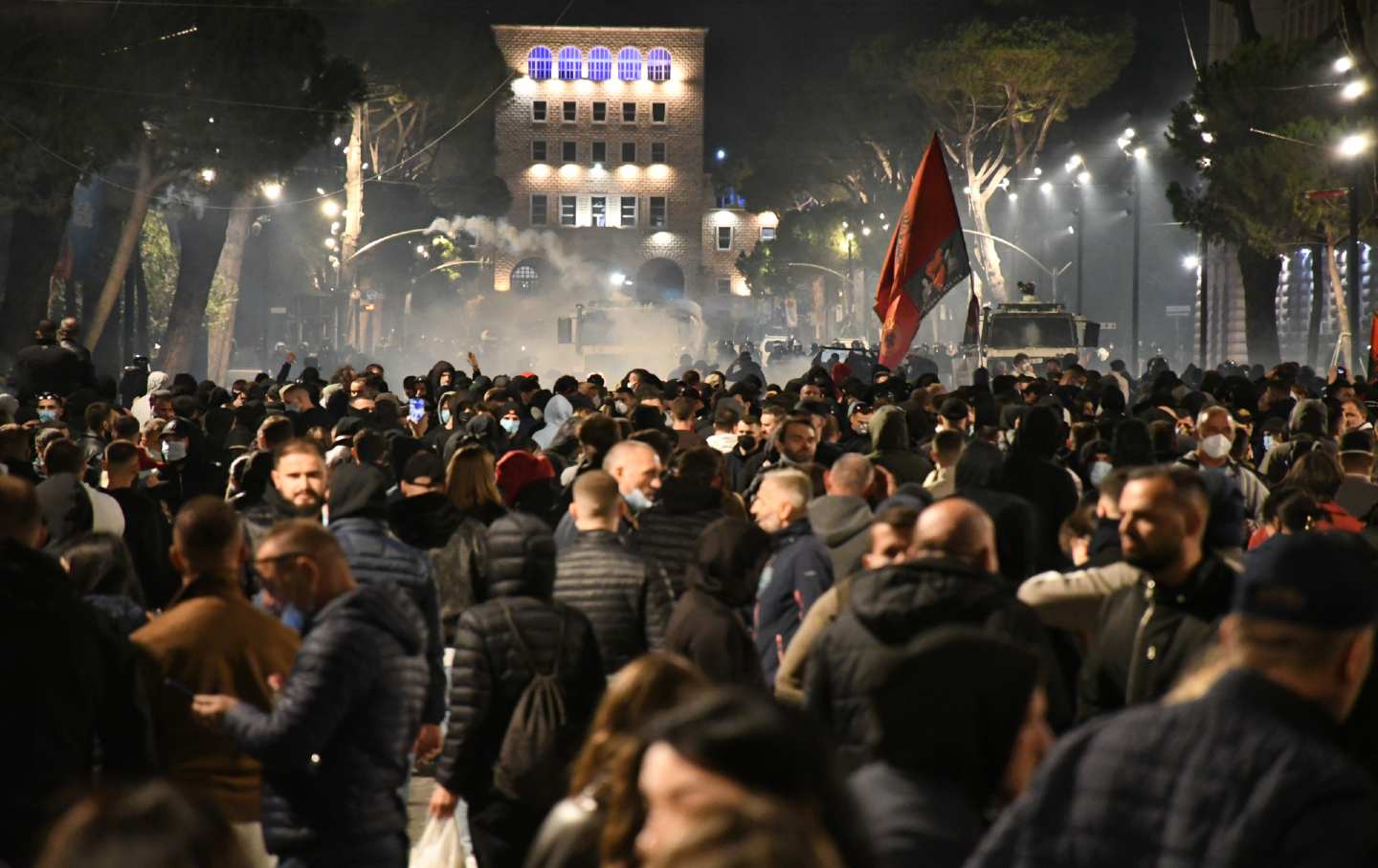
Albanian Student Strikes Spur a Political Crisis Albanian Student Strikes Spur a Political Crisis
A new round of protests against the ruling party’s corruption has Prime Minister Edi Rama giving cops bonuses to crack down on dissent.
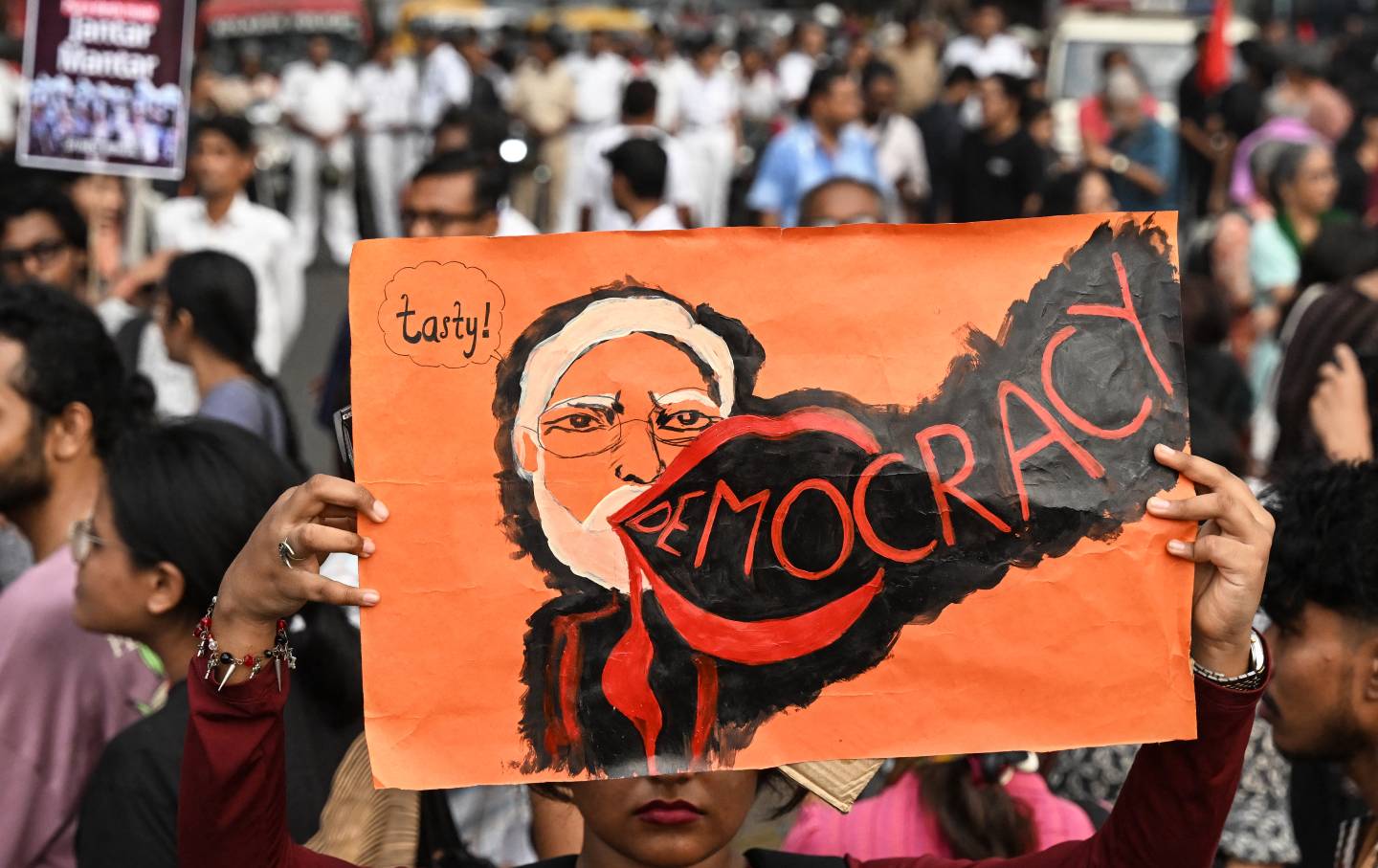
Inside India’s Gen Z Cockroach Janta Movement Inside India’s Gen Z Cockroach Janta Movement
Young Indians are challenging the purge of voter rolls by Modi’s right-wing government. Shrishti Khanna, who was detained by Delhi police while covering the protests, explains.

The Clarion Call of “NAZA” The Clarion Call of “NAZA”
Yuval Abraham and Rachel Szor’s new film not only documents the horrors of the present but give us a glimpse of a possible future too.
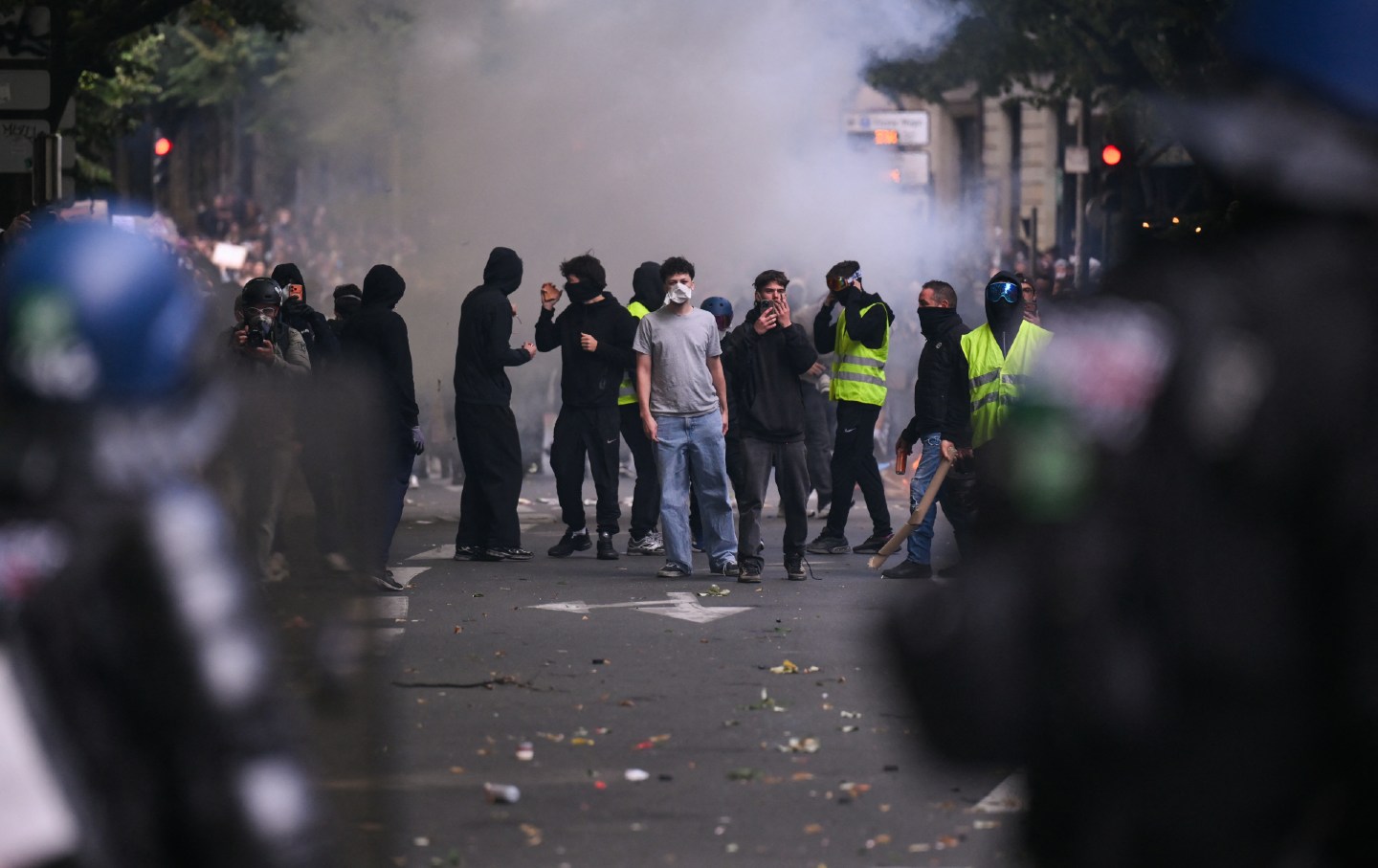
The Specter of Lepenism Looms Over France’s Social Crisis The Specter of Lepenism Looms Over France’s Social Crisis
Joining forces with the “yellow vests,” youth demonstrators are raising the alarm in a country falling to the far right.
Progressives Are Backing Puerto Rican Independence. It’s About Time. Progressives Are Backing Puerto Rican Independence. It’s About Time.
More and more leftists are concluding that statehood for the island is not enough.
The Saudi Phase of the Iran War Signals More Chaos to Come The Saudi Phase of the Iran War Signals More Chaos to Come
The conflict that Donald Trump has repeatedly proclaimed an unequivocal American victory keeps spiraling out of control.

