Wayne Smith Devoted His Career to Dialogue and Diplomacy
The former Foreign Service officer liked to say “Cuba seems to have the same effect on American administrations as the full moon has on werewolves.”
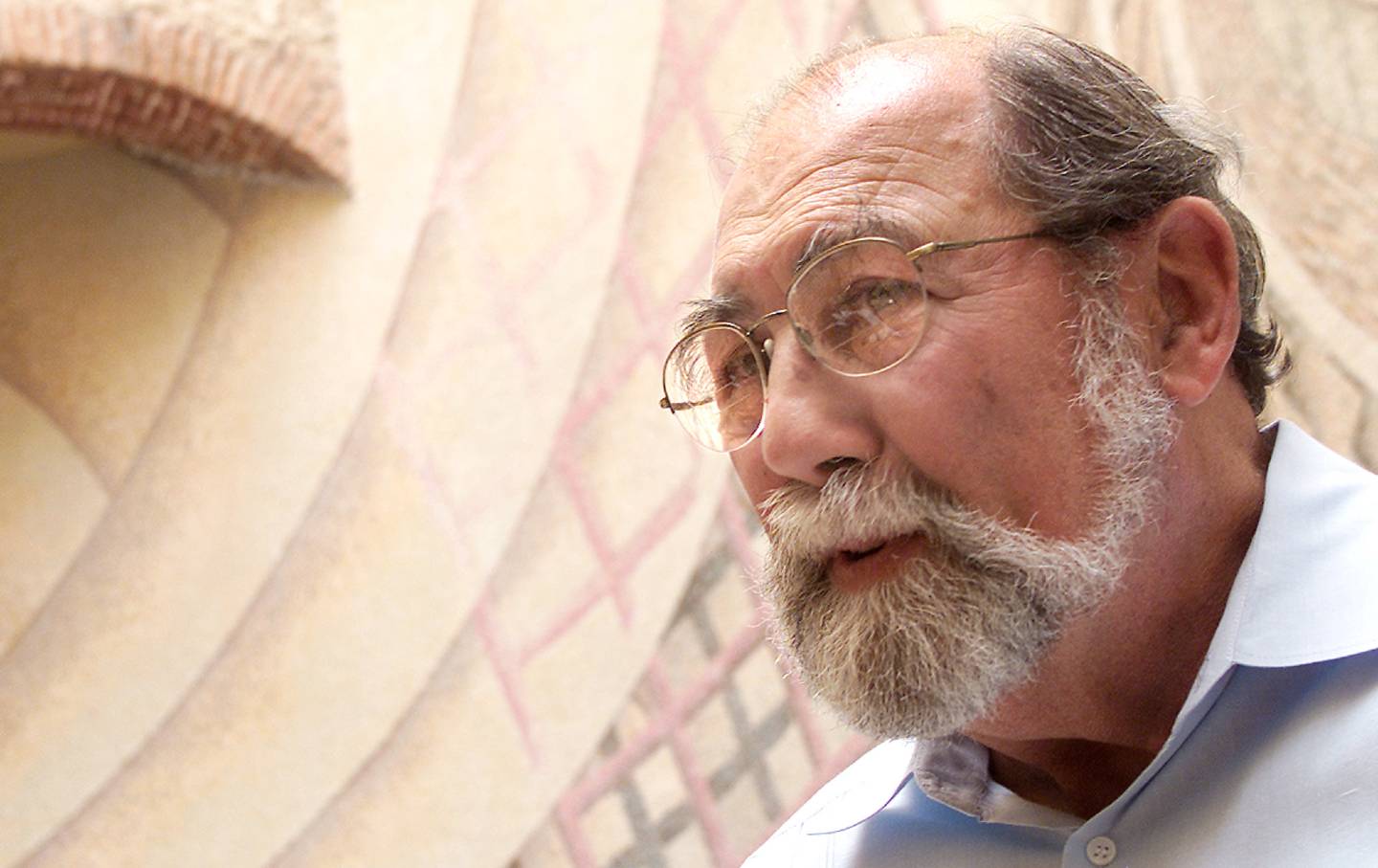
“Cuba,” as former Foreign Service officer Wayne S. Smith was fond of observing, “seems to have the same effect on American administrations as the full moon has on werewolves.” Smith devoted his career—in and out of government—to advancing the cause of dialogue, diplomacy, and normal relations between Washington and Havana. He lived to see his tireless efforts come to fruition when President Barack Obama began normalizing relations in 2014, only to have President Donald Trump reverse course, returning to the failed policy of hostility and regime change.
At the time of Smith’s death at age 91 on June 28, 2024, the cause he championed— rapprochement between Washington and Havana—remains as critical, and as elusive, as ever.
As a young diplomat, Wayne Smith was posted to Havana just months before the triumph of Fidel Castro’s revolution in 1959. When the Eisenhower administration broke relations in January 1961, he was one of the last US officials to leave, carrying with him the American flag that had flown over the Embassy. Eighteen years later, he returned as “principal officer” of the reopened US “Interests Section”—part of the Carter administration’s incremental and halting efforts to improve relations.
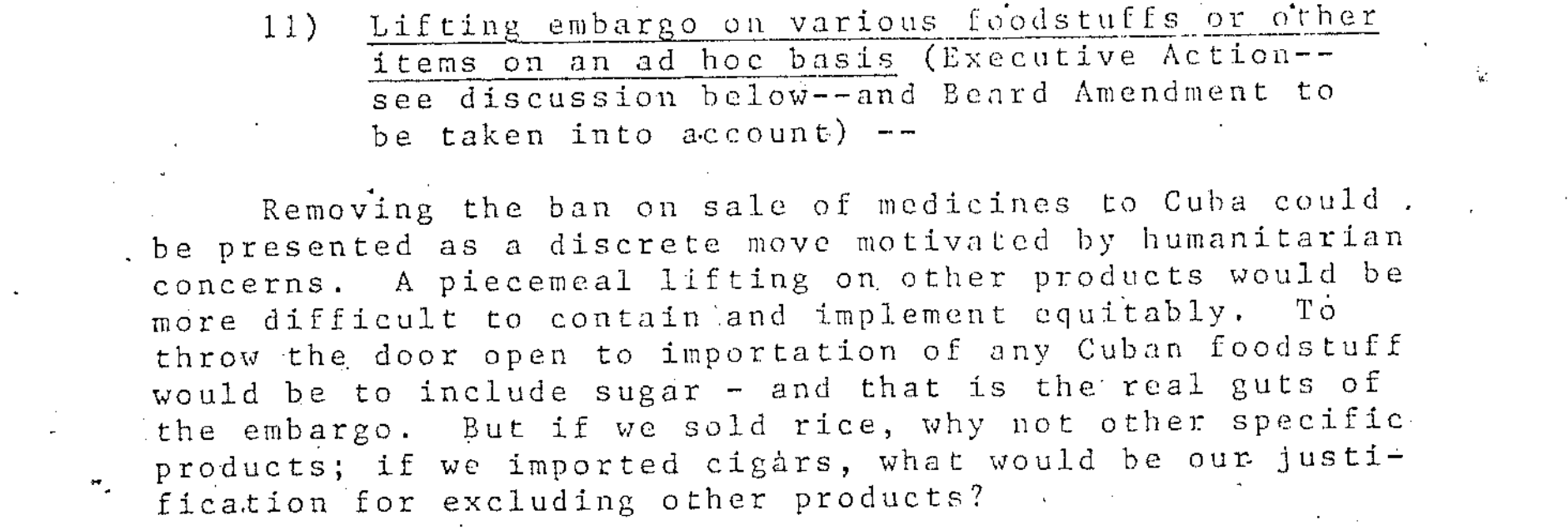
In a comprehensive, and witty, options memorandum, “Possible Steps to Improve Relations with Cuba,” he recommended a wide range of economic, cultural, military, and diplomatic steps to move US policy toward normal relations. He proposed lifting the embargo on food and medicine, calling it “unconscionable.” He advocated opening the door to selected Cuban exports, including Cuba’s renowned tobacco products (of which Smith was a connoisseur). He suggested an exhibition baseball game in Havana. Given Cubans’ fanatical love of the sport, he argued, baseball diplomacy would “emphasize the affinities between our two countries.” The Soviet Union, he noted, “does not play baseball.”
Smith was also one of the first officials to identify advantages for US security interests in counternarcotics collaboration with Cuba. “This strikes me as an initiative to which only the Mafia could object strongly,” he wrote.
When officials in the Reagan administration misrepresented Cuba’s willingness to negotiate over Central America and threatened Castro with military force, Smith advised them that threats would get them nowhere. “The Cubans have seen it all before,” he cabled Washington, “and are no more likely to respond now than previously.” Smith was so disgusted with the mendacity of his own government that he turned down an ambassadorial appointment on principle and resigned from the Foreign Service.
Leaving government liberated Smith to publicly advocate for a more rational US policy, which he did for more than 30 years, writing countless opinion articles, reports, and policy proposals. (He also wrote about Cuba for The Nation.) Smith traveled to Cuba frequently for meetings and conferences. For him, freedom to travel to Cuba was a constitutional right. In December 1994, he organized a delegation of academics to visit Cuba without the requisite US license with the intention of being fined so they could challenge the restrictions in court. Ten years later, Smith created and chaired the Emergency Coalition to Defend Educational Travel (ECDET), which filed a lawsuit challenging George W. Bush’s new restrictions on academic study abroad programs in Cuba. The suit was dismissed on national security grounds.
Wayne Smith’s penultimate visit to Cuba remains his most poignant. As part of Barack Obama’s and Raúl Castro’s December 17, 2014, agreement to normalize bilateral ties, formal diplomatic relations were restored in the summer of 2015. Accompanied by his daughter, Melinda, Smith attended the ceremony to officially reopen the US Embassy—the same building that he had closed as a young attaché in January 1961. Walking with her father to the Embassy, Melinda Smith recalls all the Cubans in the streets reaching out to shake his hand, yelling out to him, “Gracias, Smith. Gracias, gracias!” The raising of the American flag to re-inaugurate the Embassy represented “the pinnacle of his life’s work and he cried when it went up the pole,” Melinda remembered. “But the people’s recognition and gratitude for that work and personal sacrifice was what he most cherished and kept with him until the day he died.”
Wayne Smith was prescient about what measures could begin to improve US-Cuban relations, and many of his recommendations were eventually adopted. Exhibition baseball games were played during both the Clinton and Obama administrations. US Coast Guard counternarcotics cooperation with Cuba began during the Clinton administration and has been so successful that every president since has kept it in place. Food and medicine exports to Cuba were legalized (albeit with limits) in the 1992 Cuban Democracy Act and 2000 Trade Sanctions Reform Act. Even Cuban cigars could appear in the United States if they are produced by private farmers. Yet what Henry Kissinger called the “perpetual hostility” between Washington and Havana remains in place.
Even though President Joe Biden has reversed some of the draconian economic sanctions imposed by President Trump, he has left others in place, contributing to Cuba’s current economic and humanitarian crisis—a crisis that has prompted almost a million Cubans to leave their homeland in the largest exodus since 1959.
The fundamental failure of Biden’s Cuba policy is the failure to keep his 2020 campaign promise to return to President Obama’s policy of normalization. Instead, his policy has remained anchored in the traditional framework of hostility and regime change he inherited from Trump. The result is a dysfunctional hybrid policy that purports to be “tough on the regime but soft on the people,” as Brian Nichols, assistant secretary of state for Western Hemisphere affairs, put it—as if it were possible to cripple the Cuban economy with sanctions without immiserating the Cuban people.
The reasons Wayne Smith so often articulated in favor of normal relations still pertain. The policy of hostility and sanctions has failed, producing no improvement in human rights or democracy despite more than 60 years in force. If anything, Washington’s pursuit of regime change fosters a siege mentality among Cuban leaders, making them even less tolerant of domestic opponents.
By throttling the Cuban economy, sanctions reduce the standard of living on the island, prompting people to leave, thereby aggravating US migration problems. A policy of hostility limits Washington’s ability to cooperate with Cuba on issues of mutual interest like transnational crime, environmental protection, climate change, and public health. The embargo’s limits on travel arguably violate the constitutional right of US citizens to travel and constrict cultural exchanges. The embargo’s limits on commerce deprive US businesses of opportunities for trade and investment. Finally, US hostility encourages Cuba to turn to Washington’s global rivals, Russia and China, for assistance and security—even though they don’t play baseball.
Popular
“swipe left below to view more authors”Swipe →It is a policy, as Wayne was fond of saying, that has “reached new heights of absurdity.”
He titled his memoir, The Closest of Enemies, neatly capturing the inherent irrationality of perpetual hostility between two neighbors so closely linked by history and culture. Next January, a new US president will have the opportunity to reimagine and reshape US relations with Cuba in ways that better serve the interests of both the United States and the Cuban people. That new president, whoever he or she may be, should pay heed to Wayne Smith’s legacy, and his sage advice about how to rebuild the bridges between the United States and Cuba—bridges that were burned in haste so many years ago.
Become a Sustaining Donor This September
Between the reemergence of right-wing red-baiting and Donald Trump’s use of the chilling National Security Presidential Memorandum–7 to criminalize left political organizing, we’re seeing McCarthyism reborn before our eyes.
This assault on democracy cannot be ignored or wished away. Resisting it requires bravery in the face of threats and repression, a steadfast commitment to the truth, and the unwavering belief that we can—and will—overcome this darkness.
We must have an independent media that sets the record straight, unearths corruption and abuses of power, and advances a politics of justice and dignity for all if we’re to win this fight.
That’s why I’m writing to you today. This September, The Nation needs to add 100 monthly donors to sustain our progressive journalism. Your contribution makes the next investigative report, the next truth-speaking column, and the next pathbreaking essay all possible.
I hope you’ll support our work with a recurring donation today. If you donate $10 or more a month, we’ll send you a brand new “Hands Off the Free Press!” sticker to recognise your commitment to our cause. Please, donate today.
Onward,
Katrina vanden Heuvel
Editor and Publisher, The Nation
More from The Nation

Accountability for the Gaza Genocide Can’t Focus on Netanyahu Alone Accountability for the Gaza Genocide Can’t Focus on Netanyahu Alone
Getting rid of one bad leader won’t bring justice.

How the AfD Benefits Politically From the Ukraine War’s Backlash How the AfD Benefits Politically From the Ukraine War’s Backlash
No election result is monocausal, and there are clearly many factors that have converged to make the AfD Germany’s most popular party.
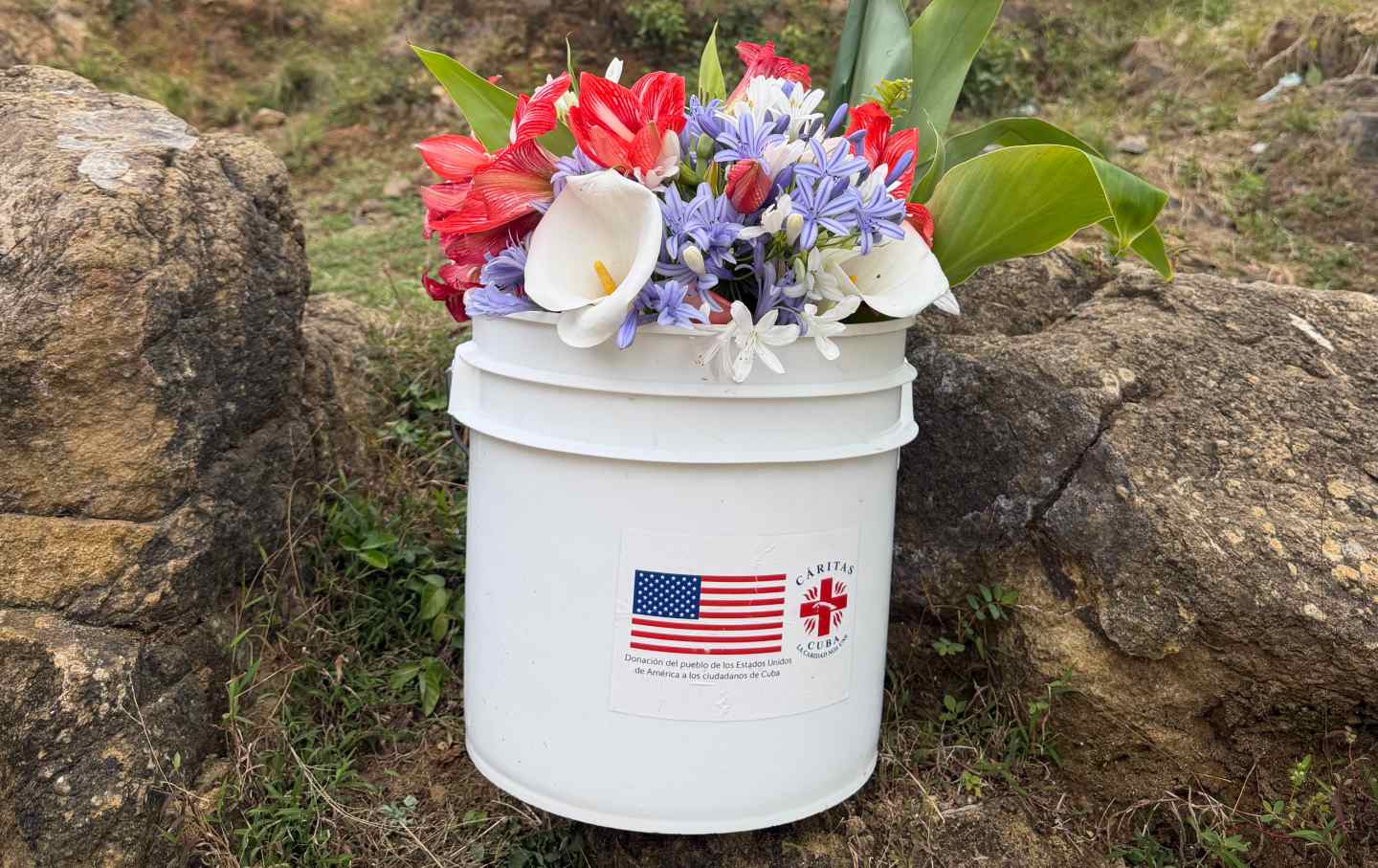
Cuba: The “Pandora’s Box” of US Humanitarian Assistance Cuba: The “Pandora’s Box” of US Humanitarian Assistance
As the US strangles Cuba economically, Marco Rubio is running a $100 million “hearts and minds” program on the island.
The Palestine of Soraya Antonius and Annemarie Jacir The Palestine of Soraya Antonius and Annemarie Jacir
In The Lord and in Palestine ’36, the story of Mandatory Palestine comes into focus.
Let Them Eat Spreadsheets Let Them Eat Spreadsheets
How the EU is contributing to the rise of Europe’s far right.