What Is at Stake as the European Union Swings Right?
The right’s normalization moves ahead.
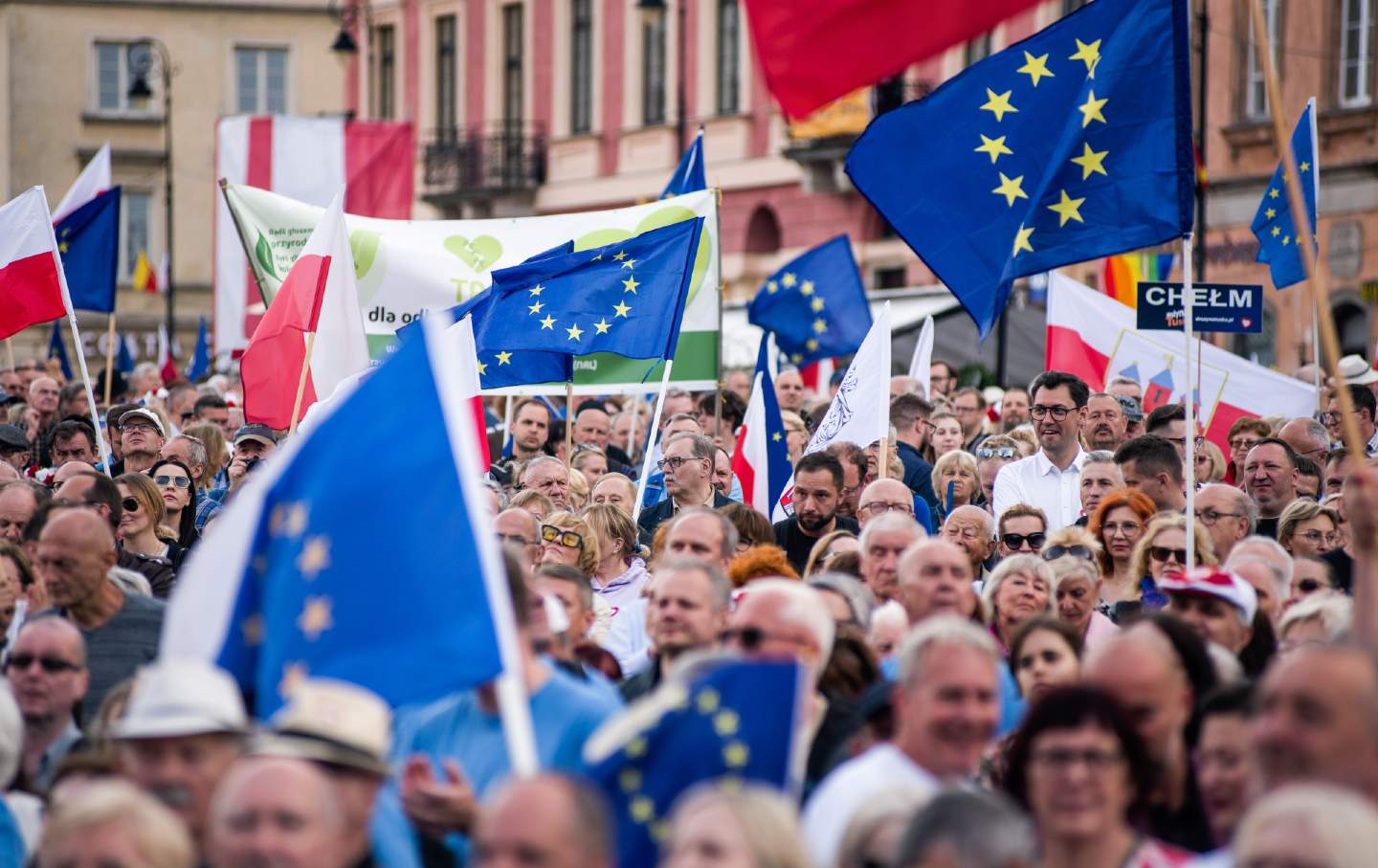
Opinion polls for the forthcoming elections to the European Parliament, to be held on June 6–9, forecast the success of mainstream right-wing and far-right parties, and the defeat of liberal and leftist forces. What might be the impact of this surge of far-right representatives at the European Union level? Much will depend on the looming collaboration of the right-wing center with the far right and the success—or not—of a “Union of Rights” that would influence EU policies.
Two conclusions can already be drawn. First, there has been a strategic shift in the Western European right’s policies from exit to takeover: Brexit-inspired strategies have been replaced by a collective determination to gain control of the EU and shape the European construction from the inside. Second, a new space has been opening in which the far right and mainstream conservatives are ready to collaborate, confirming the ideological continuum between them and the success of the far-right normalization strategy.
The topography of the right in the European Parliament is defined by three blocs: The center-right block is represented by the European People’s Party (EPP) and EU Commission President Ursula von der Leyen, while the far right is divided between the European Conservatives and Reformists (ECR) and Identity and Democracy (I&D). Among the last two, divisions are multiple, along ideological, strategic and personal lines.
Ideologically, there is a gradation in the normalization process: Some are very advanced in normalizing themselves, such as Marine Le Pen’s National Rally in France or Giorgia Meloni’s Brothers of Italy; other less so, like the Freedom Party of Austria (FPÖ) or Vox in Spain; while the Alternative for Deutschland (AfD) seems to have chosen an opposing strategy of radicalization. This has created some backlash: AfD leader Maximalian Krah’s recent comments excusing the SS not only forced him to resign from the AfD leadership but also led to AfD’s being excluded from I&D.
But there are other lines of division, for instance between those more populist who have toned down traditional polarizing topics (think the Swedish Democrats or the French National Rally) and those who have been focusing on issues of moral conservatism such as abortion and who continue the tradition of seeing the left as the main enemy (think Meloni). A third line of division can be found between those who advocate for neoliberal policies—defending small private entrepreneurs and the self-employed (think Geert Wilders)—and those who stress the protection of the welfare state in order to capture some of the leftist vote (think again Le Pen).
Last but not least, there are also strong geopolitical divisions between pro-Russian voices (AfD in Germany, FPÖ in Austria, Matteo Salvini’s Lega in Italy, and—before Russia’s invasion of Ukraine—the French National Rally) and those with a pro-US and pro-NATO stance, today’s strong supporters of Ukraine, such as Brothers of Italy, Vox in Spain, the PiS in Poland, etc.
Two countries have paradoxical combinations of both: Italy is the only European country whose government includes both a virulently pro-Putin far right (Salvini) and a pro-Ukraine one (Meloni). Hungary is another ambivalent case, with Victor Orbán having a relatively pro-Russian position on the international scene but an intellectual milieu of think tanks entirely inspired by and turned toward the US far right.
That fragmented landscape does not mean far-right forces cannot cooperate. They are likely to remain divided in several groups in the EU Parliament, but they all recently met at a Madrid meeting organized by Vox to showcase their unity—and their transatlantic links, with several Trumpist representatives and Argentinian President Javier Milei in attendance. In fact, much will depend on how the mainstream EPP attempts to build alliances with some of the far right. Indeed, Ursula von der Leyen has openly declared her readiness to work with ECR and has shown signs of (mutual) empathy with Meloni.
Two political alliances might thus emerge: either a “Union of Rights” combining EPP and ECR, led by the couple von der Leyen–Meloni, that would normalize and legitimate the far right in EU institutions, or a union of the far rights, made of recomposed ECR and I&D deputies, led by the couple Meloni–Le Pen, which could become the second parliamentary group and would oppose the political center made of EPP and the Renew group (with French President Emmanuel Macron’s MEPs).
Whatever the parliamentary group’s configuration, the far right will be able to shape many of the decisions taken at the EU level by voting together on issues that matter to it. It will, for instance, attempt to tighten the new Pact on Migration and Asylum to make it even stricter, as it sees immigration as a core issue for Europe’s future. It will hope to stop the Green Deal, which has already been put on hold by the EPP. It will likely hold up the financial and military assistance to Ukraine and oppose the enlargement of the EU bloc to Kyiv—a strategy to be adjusted to the US one, depending on who, Donald Trump or Joe Biden, is elected in November.
But the EU parliamentary elections should not be the tree hiding the forest: The far right will also impact the European scene at the national level. As of July 1, Orbán will be holding the rotating presidency of the EU Council for the rest of the year; Meloni doesn’t hide her European ambitions, and Slovakia has recently elected both a prime minister and a president from the far right.
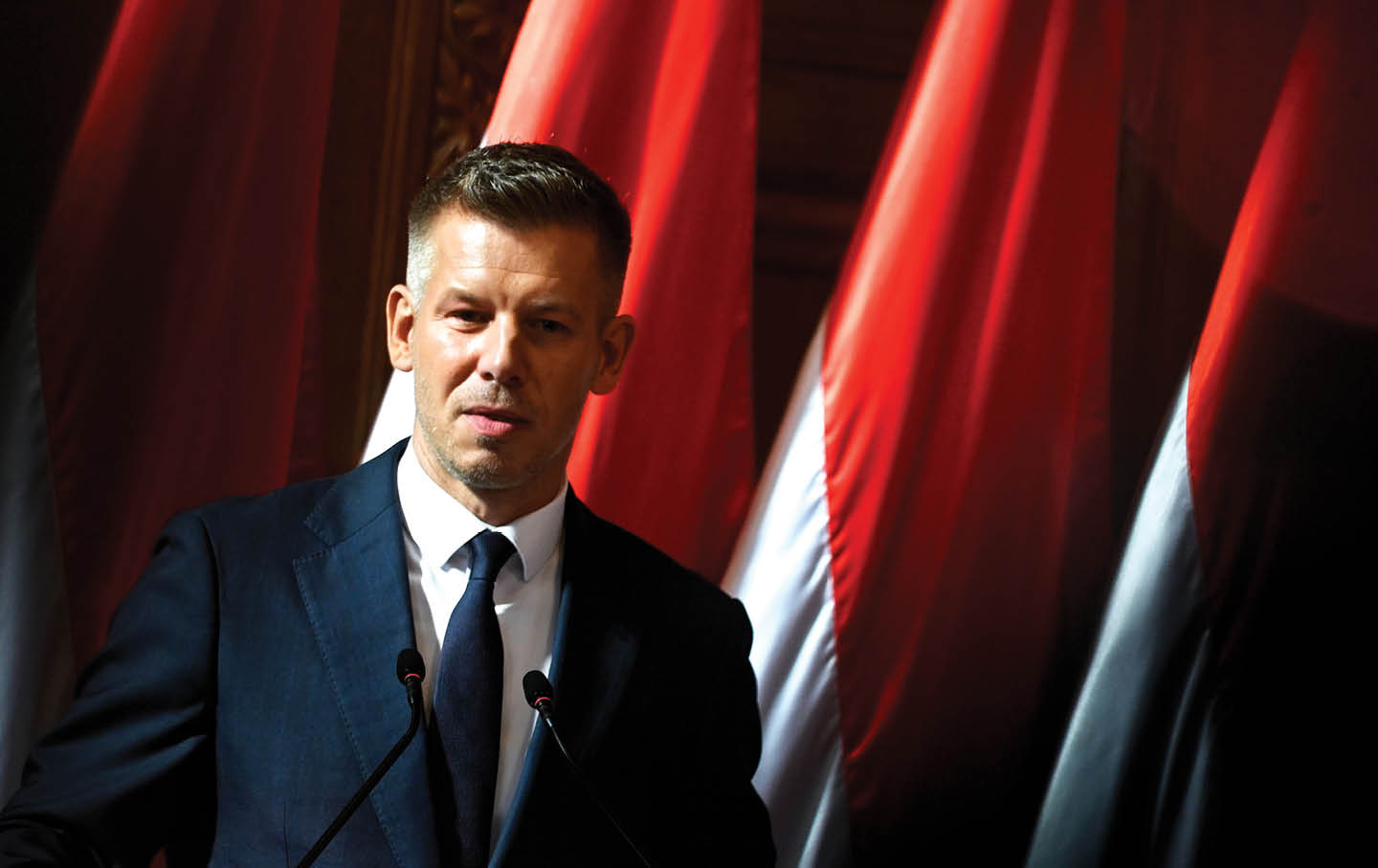
Moreover, many far-right figures are well positioned to take a leadership role in their countries: Geert Wilders could become prime minister and make the Netherlands a new radical Euroskeptic leader; in Austria Herbert Kickl, the FPÖ leader, dreams of becoming the next chancellor—a position that would consolidate the existing coalition between Orbán’s Hungary, Slovakia of Robert Fico, who recently survived an assassination attempt, and the AfD in Germany—resuscitating the former Habsburg empire through a pro-Russian far-right alignment.
Popular
“swipe left below to view more authors”Swipe →While the far right moves forward, the left has so far failed to reinvent itself. It will need to develop a program and priorities that speak to the constituencies it has lost. This means a new grand narrative that reintegrates the class aspect, which has been lost to identity politics, and combines in an attractive manner social justice and environmental transformation. Sarah Wagenknecht, who left Die Linke to create a new political party, Reason and Justice—combining traditional progressive demands and a more balanced immigration stance—is an example of this search for reinvention.
But there will need to be much more conceptual, political, and communications efforts to reinvent a credible left project. Until then, we will have to live in a much more rightward European construction.
More from The Nation
The Specter of Lepenism Looms Over France’s Social Crisis The Specter of Lepenism Looms Over France’s Social Crisis
Joining forces with the “yellow vests,” youth demonstrators are raising the alarm in a country falling to the far right.

Progressives Are Backing Puerto Rican Independence. It’s About Time. Progressives Are Backing Puerto Rican Independence. It’s About Time.
More and more leftists are concluding that statehood for the island is not enough.
The Saudi Phase of the Iran War Signals More Chaos to Come The Saudi Phase of the Iran War Signals More Chaos to Come
The conflict that Donald Trump has repeatedly proclaimed an unequivocal American victory keeps spiraling out of control.
Andy Burnham’s Speech to the Labour Party Conference Could Be the Start of a Positive Social-Democratic Politics Andy Burnham’s Speech to the Labour Party Conference Could Be the Start of a Positive Social-Democratic Politics
But the autumn budget to be released at the end of October will offer needed details.
Why Navi Pillay’s Receiving the Nobel Peace Prize Is So Important Why Navi Pillay’s Receiving the Nobel Peace Prize Is So Important
She believes that human rights and international law are universal principles that must be enforced regardless of violator’s ideology, ethnicity, or geostrategic alignment.