Genocide in Real Time
As an American, I share the deep sorrow over my country’s complicity in this horrific crime against humanity.
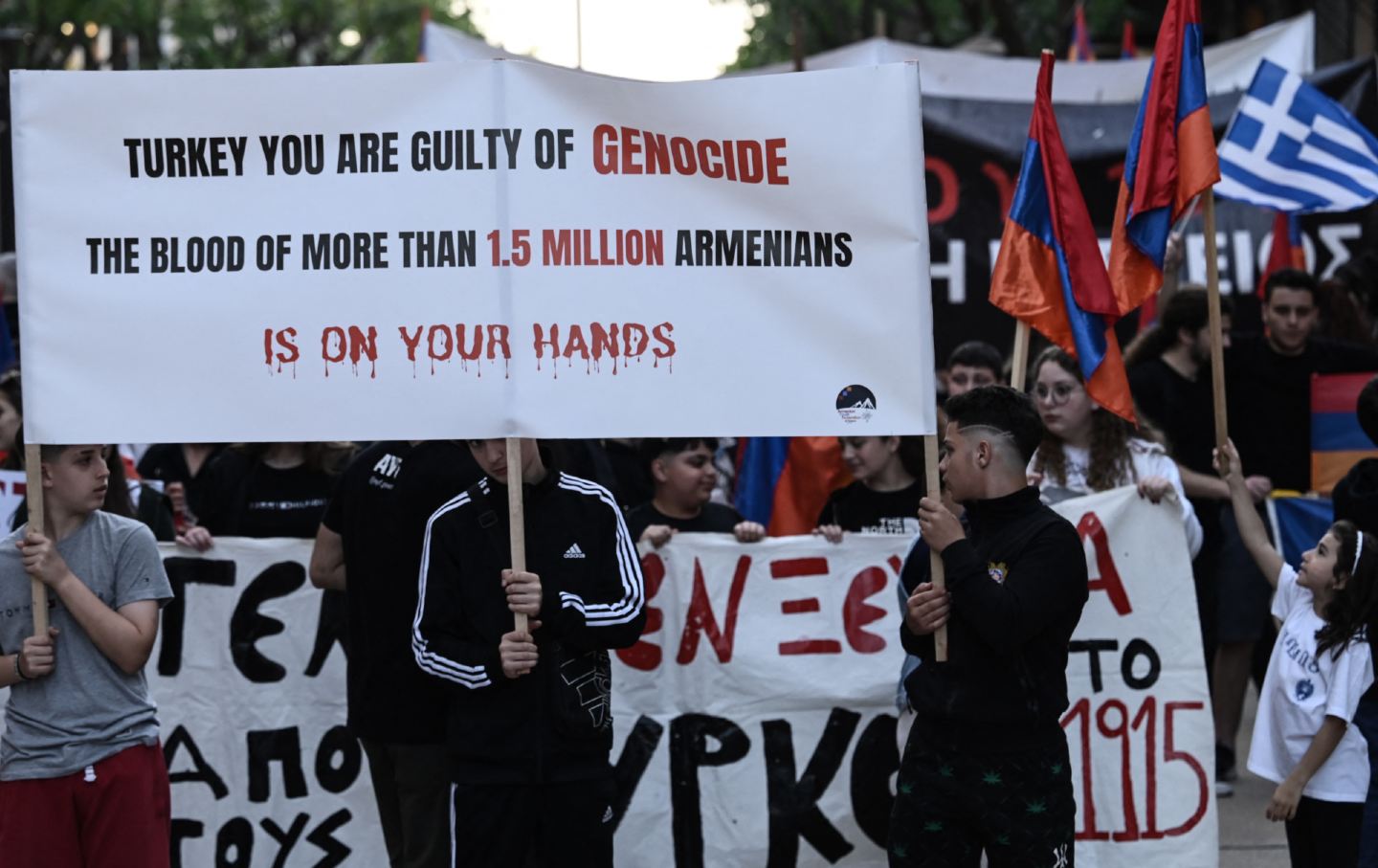
Every April 24, Armenians around the world commemorate the most devastating event in their millennial-long history: the genocide of 1915 by the Ottoman Turks. In the first year of World War I, the Young Turk government, led by the imperial Minister of the Interior and Grand Vizier Talat Pasha, decided to massacre, forcibly convert to Islam, and deport into the Syrian desert hundreds of thousands of their Armenian and Assyrian subjects. The perpetrators claimed that those Christian peoples were subversives who planned to create their own independent state in Anatolia and were secretly, treacherously sympathetic to the Ottomans’ principal enemy, czarist Russia. By the end of the war, 90 percent of the Armenians in Turkey were gone. Estimates of those murdered in the genocide range from 800,000 to well over a million. Turkish governments for the last century have claimed that there was no genocide and that the Armenians were responsible for their own destruction. Two years ago, under President Joe Biden, after repeatedly refusing to recognize that genocide had taken place, the United States finally officially accepted that indeed the events of 1915 constituted genocide.
Often called “the crime of crimes,” genocide has a transcendent power in international law and popular discourse, which resonates from the Holocaust, the most murderous case of annihilation of a people. Currently, debates rage over the Israeli war against Palestinians in Gaza. The International Court of Justice in The Hague currently is deliberating South Africa’s case for calling the war a genocide, and the ICJ has required Israel to “take all measures within its power to prevent and punish the direct and public incitement to commit genocide in relation to members of the Palestinian group in the Gaza Strip.” Israel has not yet complied with that order. Amnesty International has noted that “Israel’s blockade is a form of collective punishment and is a war crime. It is one of the key ways in which Israel maintains its system of apartheid against Palestinians, which is a crime against humanity.”
As a scholar of genocide and author of a book on the Armenian Genocide, “They Can Live in the Desert but Nowhere Else”: A History of the Armenian Genocide (Princeton University Press, 2015), I have pondered the fraught definition of genocide as set out in the United Nations Convention on Genocide. In my own work, and in accordance with the UN definition, I consider genocide to be the deliberate crime “committed with the intent to destroy a national, ethnical, racial or religious group, in whole or in part, as such.” Genocide is not simply the killing of people—or eliminating political groups, or so called “cultural genocide”—but the mass killing of a people. I have opposed the excessive use of the term to describe any instance of mass killing. Genocide is ethnocide, as its various components cobbled together by the Polish Jewish jurist Raphael Lemkin—the Greek word genos (race or tribe) and the Latin cide (killing)—indicate. In German it is called Völkermord, the murder of a people, and in Turkish soykırım or Armenian tseghaspanutiun (killing of an ethnicity or, in an older understanding, “race”). Therefore, all genocide is gendered genocide, motivated by making impossible the reproduction of the ethnic or national group. Perhaps the clearest sign of genocide is the wanton killing of women and children.
In 1915, in a revealing statement to Henry Morgenthau, who was the American ambassador to the Porte, Talat Pasha casually explained why his forces murdered children: “Those who are innocent today might be guilty tomorrow.” At another of their meetings, Talat told Morgenthau, “No Armenian…can be our friend after what we have done to them.” As they commit ethnocide, the aim of the genocidaires is—in the term used by Australian genocide scholar Dirk Moses—permanent security. The victims are seen as an existential threat to the desired future of the perpetrators of genocide.
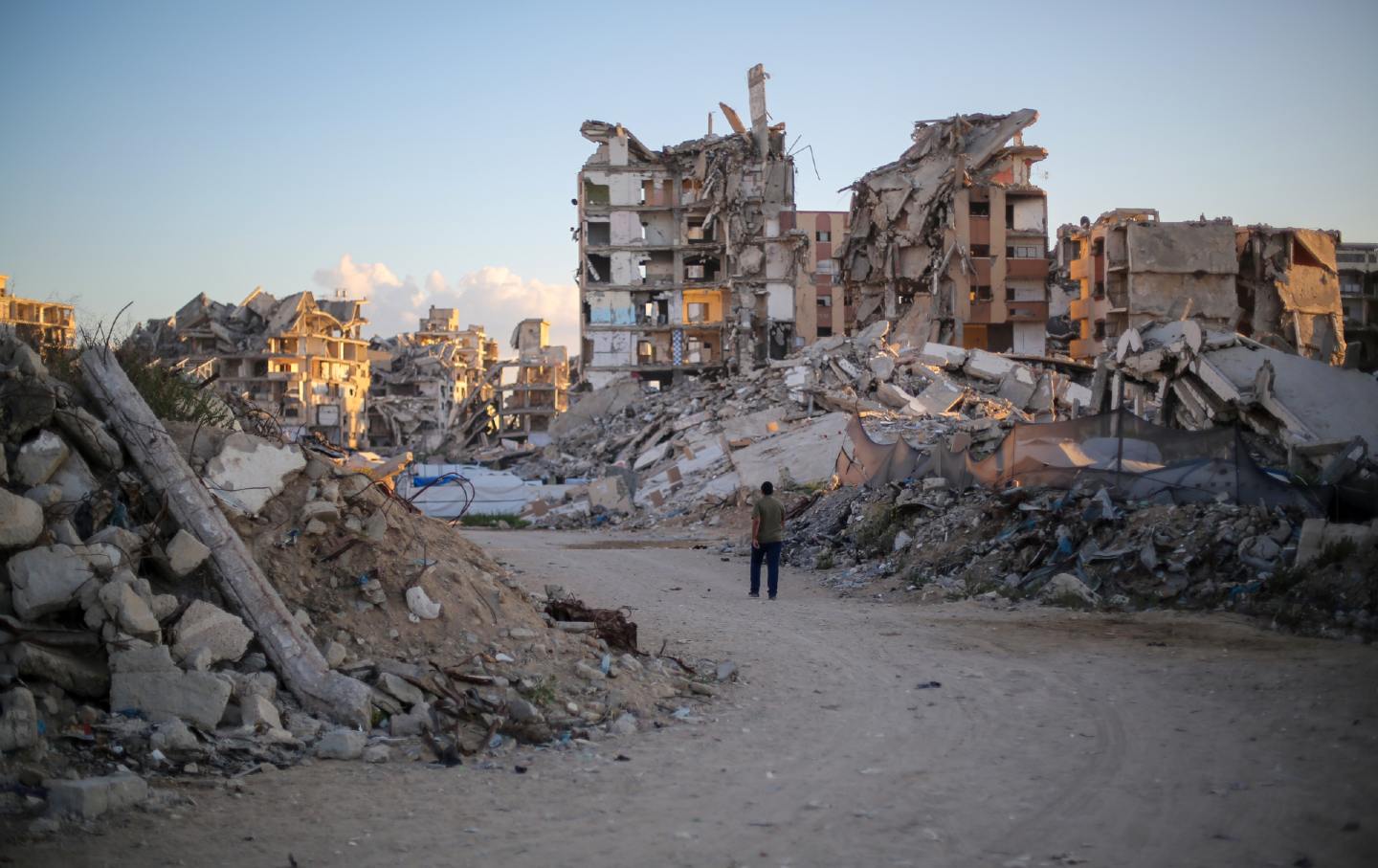
In the seven months since the October 7, 2023, Hamas incursion into Israel that led to 1,200 deaths, at least 34,000 Gaza Palestinians have died from the aerial bombing and ground assaults by Israeli forces, 14,000 of whom are children. Women and children make up more than two-thirds of those killed.
The weapons and planes used in the massive bloodletting have been supplied to Israel by the United States. After October 7, the US sent to Israel sent some 3,000 bombs, each weighing 2,000 pounds, weapons that destroy whole apartment blocks and entire neighborhoods. At the end of March 2024, as reported in The Washington Post, Biden
quietly authorized the transfer of billions of dollars in bombs and fighter jets to Israel despite Washington’s concerns about an anticipated military offensive in southern Gaza that could threaten the lives of hundreds of thousands of Palestinian civilians. The new arms packages include more than 1,800 MK84 2,000-pound bombs and 500 MK82 500-pound bombs, according to Pentagon and State Department officials familiar with the matter. The 2,000-pound bombs have been linked to previous mass-casualty events throughout Israel’s military campaign in Gaza.
Recently, after much delay, Congress authorized an additional $26 billion in weapons to Israel.
Not surprisingly, young people, along with progressive Democrats in Congress appalled by the massive destruction of Gaza, have rallied to the cause of the Palestinians. Increasing numbers of observers believe the Gaza killings constitute genocide. As someone whose own people suffered a genocide just over 100 years ago, and having spent a quarter-century researching those events and thinking about genocide, it is evident to me that the Israeli assault on Gaza—along with the permissiveness that the Netanyahu government allows for Jewish settlers in the West Bank, aided by the Israeli army and police to carry out violence and dispossessions against Palestinians—is genocidal and should be recognized as such. Sadly, some noted scholars of genocide have hesitated to call the Israeli actions genocidal and have used technicalities that in their resistance amount to denialism.
The world is watching a genocide taking place in real time. As an Armenian, I have shared part of the century of Turkish denial. As an American, I share the deep sorrow that comes from knowing that the country in which I was born and have lived is complicit in this horrific crime against humanity, which must unambiguously be condemned as genocide.