
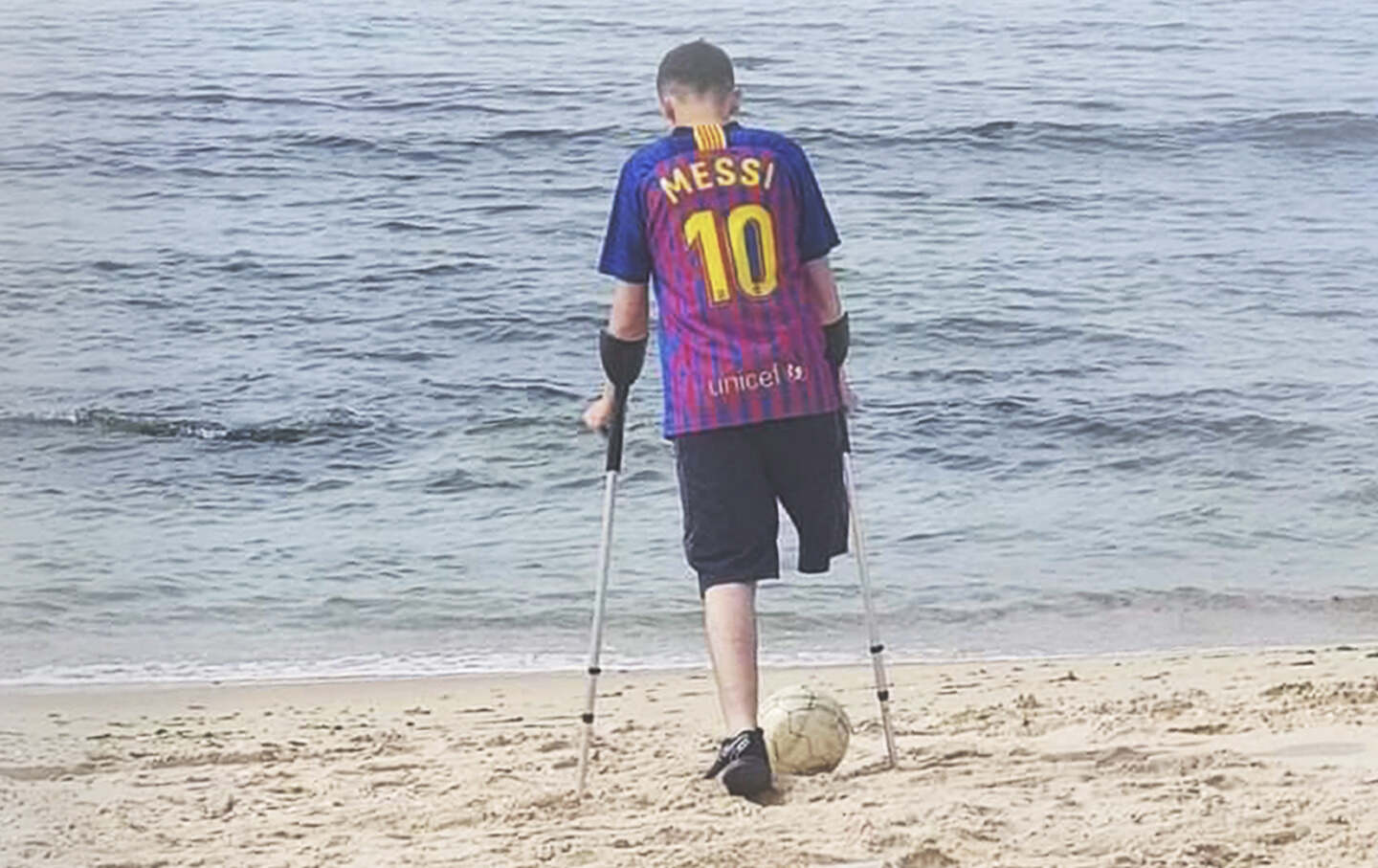
Severed: The Story of a Boy From Gaza
“Severed”: The Story of a Teen From Gaza
At 18, Mohamad Saleh has survived five wars and lost his home, his family members, his leg. This new film, produced with The Nation, follows him as he tries to piece together his shattered life.
The Nation is proud to present Severed, a new film produced by Donkeysaddle Projects, +972, and The Nation, in partnership with Just Vision.
Severed tells the story of Mohamad Saleh, an 18-year-old from Gaza who has lived through five major assaults on the Gaza Strip. In those attacks, he lost his home, family members, his best friends, and, at the age of 12, his leg. Now living in exile in Egypt, Mohamad struggles to piece together the shattered fragments of his life. Through his eyes, we see the pain and trauma endured by thousands in Gaza, alongside their remarkable strength, resilience, and determination to live.
Below, the film’s director, Jen Marlowe, writes about her friendship with Mohamad, the harrowing months he spent in Gaza with his family after October 7, his narrow escape to Cairo, and the story behind the making of the film.
Islept fitfully every night in the weeks after October 7, jerking alert at each WhatsApp notification. In the pre-dawn hours, I messaged my friends in Gaza: “Are you still safe?” I knew, of course, they were not. What I was really asking was: are you still alive?
It was one such morning when I realized that my then-17-year-old friend, Mohamad Saleh, hadn’t responded for several days—an eternity under bombardment.
I checked Mohamad’s Facebook page. He had last posted three days prior, on October 11. “My sister Maisa Saleh 28 years, My niece Habiba Sawalha 16 years, Kareem Al-Sawalha 10 years, my niece Sham Sawalha, 9 months. We belong to Allah and to Him we shall return.” There was a photo of his mother, Noha, known as Um Jihad, crying over a blood-stained, shrouded corpse. My heart shattered.
I first met Mohamad in March 2019, when I filmed him for a video and accompanying article about the Israeli army’s practice of denying children permission to leave the Gaza Strip for medical treatment. Mohamad was a sweet, shy, 12-year-old with a beautiful smile—and he had been shot by an Israeli sniper above his knee when he took part in the Great Return March in October 2018. The bullet severed his main nerve and no hospital in Gaza could perform the complicated nerve transplant surgery he needed; even so, the Israeli military kept refusing him a permit to travel to Jerusalem with his mother for the surgery.
I enlisted the involvement of Physicians for Human Rights Israel, and they filed a legal complaint on Mohamad’s behalf. The day before the court hearing, the Israeli military gave Mohamad and his mother a permit, allowing them to leave Gaza the following morning to go to Makassed Hospital for treatment.
Nerve transplant surgery is extremely time-sensitive. The chances of success diminish as time passes, yet Mohamad wasn’t granted permission to leave Gaza until six months after he was shot. In the end, the transplant failed.
I remained in contact with Mohamad as he underwent a second (also unsuccessful) attempt to transplant a nerve and endured painful physiotherapy. I raised money for Mohamad’s medical care, and my colleague in Gaza, Fadi Abushammala, brought him high-protein food every week to support tissue repair. None of this was enough to save Mohamad’s leg, which was amputated on Oct. 11, 2021.
I hoped that the worst of Mohamad’s suffering was behind him—that he would heal from the amputation, get a prosthesis, and lead a relatively normal life. I had no idea that children, whose bones are still growing, require follow-up amputation surgeries, nor did I grasp how complex his injury was. Mohamad had another amputation surgery in July 2022, and then another on September 6, 2023. There were complications; Mohamad was in the hospital for 17 days.
Then came Hamas’s October 7 attack on southern Israel, followed by Israel’s massive bombardment of the Gaza Strip.
“The house next to us was bombed,” Mohamad wrote to me on October 7 from his home in Jabalia in the northern Gaza Strip. His wound had not yet healed from his most recent surgery.
On October 10, he wrote, “The situation is very difficult, bombing everywhere.”
And then for days, silence, leading me to his Facebook page.
When Mohamad finally messaged me again on October 16, he told me that he and his parents had evacuated their home (which the Israeli army subsequently bombed) on October 10 and took shelter in the Halima Al-Sadia school in Jabalia. By then, Israel had warned the entire north of the Gaza Strip to evacuate to the southern half, but when I asked Mohamad if they could get to the south, he responded, “No transportation, no water, no food. We are slowly dying, my family and I.”
A few minutes later, he wrote, “If something happens to me, know that I love you very much and that you are like my sister…. I do not know if I will survive the bombing.” An hour later: “I love you so much, see you safe and sound.”
Google Translate is an imperfect tool. I couldn’t know if my messages back to him conveyed how deeply I was grieving the loss of his sister and nieces. That I was sending him and his family strength and fortitude to get through this nightmare. And that, somehow, someday, I would see him again. Safe and sound.
During the next horrific months, I held onto the hope that my young friend would survive and that we would see each other again. I clung onto it as Mohamad intermittently reached out to me via WhatsApp, letting me know of one displacement after another. I grasped for it after he texted me about eating rotten food crawling with worms, and when he sent me photos of his 10-year-old niece on December 3, her head wrapped in a bandage. The force of a nearby explosion had shattered a window above her while she was sleeping; “Her ear was (almost) cut off and it was attached with 38 stitches,” he wrote.
But when Mohamad began to describe excruciating agony from his amputated limb, with Gaza’s overwhelmed healthcare system in a state of collapse, Fadi and I decided to do more than hope. Until January 2024, it had been nearly impossible for most Palestinians to leave Gaza. But late that month, an Egyptian company called Ya Hala began arranging exit travel from Gaza into Egypt. Each trip cost $5,000 per adult, to be paid in U.S. dollars, cash. It took weeks, and sometimes longer, between paying Ya Hala and being allowed to leave the Strip.
On April 7, we asked Mohamad if we should try to evacuate him and his mother so that he could get medical treatment in Egypt. “Register us to travel,” Mohamad wrote back. “God willing, I will have the surgery and see the doctors.”
By this point, the clock was ticking on an impending Israeli invasion of Rafah. Every moment mattered. But getting US dollars into Cairo, and completing the registration process with the company was no small feat. It wasn’t until April 14 that we finally managed to register Mohamad and his mother with Ya Hala, after which began a period of anxious suspense as we waited for their names to be published on the company’s daily “crossing lists.” Would their names be randomly flagged by Israeli or Egyptian security, which meant they wouldn’t be allowed to leave? Would the Israeli army invade Rafah and close the border before they could cross?
Then, in the early hours of May 4, 2024, Mohamad and his mother’s names finally appeared on Ya Hala’s list. They grabbed their few belongings and headed south to Rafah. Fadi and I waited for hours as Mohamad updated us: arriving at the Palestinian side of the crossing, getting their temporary passports, crossing into Egypt, clearing Egyptian security, boarding the Ya Hala bus for the long trip to Cairo, and arriving at their destination. The journey took them over 20 hours.
Not long after he arrived, Mohamad gave Fadi and me a video tour of the Cairo apartment that our colleague had rented for them. He told us that he had sat in the shower for over an hour that morning as water ran over him. He showed us his dresser drawer, stuffed with small bags of chips he had purchased from the market across the street, “in case war comes here,” he said.
As he spoke, we could hear Um Jihad crying in the background. Mohamad’s 12-year-old sister Dunya was still in Gaza with Mohamad’s father, she told us. Fadi and I were aghast: in all the times we had been to Mohamad’s home, we had both thought that Mohamad was the youngest of his siblings, and Dunya was one of Mohamad’s many nieces and nephews. Had we realized, of course we would have raised the extra money so that she could evacuate Gaza with her mother and brother. We reassured Um Jihad that we would register Dunya with Ya Hala as soon as possible.
On May 7, three days after Mohamed and Um Jihad had left Gaza, the Israeli military invaded Rafah and immediately closed the border crossing. Dunya was trapped. It was awful to contemplate, as was another possibility that dawned on me: Had Fadi and I known about Dunya, it may have taken us another day or two to raise the extra money for her evacuation. They might all have been stuck in Gaza.
On May 16, Fadi and I arrived in Cairo. That night, I took Mohamad to a doctor to address his wracking nerve pain, scheduling surgery for the following week. After the appointment, over dinner, a darkness clouded Mohamad’s face. Fragments of the past seven months came tumbling out of him…
Digging his sister Maisa and her children from the rubble of their bombed home… Rescue workers tossing Maisa’s baby, Sham, onto a heap of debris, thinking that Sham’s corpse was a doll…
Bombing from planes and shelling from tanks on the way back to Halima School from a flour distribution site, body parts scattered across the ground. Trying desperately to salvage what little flour wasn’t soaked in blood.
Israeli soldiers taunting him after an attempt to return to the north of Gaza on February 27, calling him “Cripple,” and shooting underneath his stump, where his leg used to be…
Watching an Israeli drone shoot a 10-year-old boy in his neck as he made tea on a small fire outside the Palestinian Technical College in Deir Al Balah. “It was the first time I witnessed a child whose soul came out in front of me, and I couldn’t do anything.”
More than once, Mohamad felt that death would be a relief. But his family depended on him to find food. When pain or frustration overwhelmed him, he’d remember those he saw with multiple amputations, or who had lost their entire family. “I would think, at least I am better off than them,” he said. “I still have my mom and dad and sister with me.”
Popular
“swipe left below to view more authors”Swipe →Mohamad’s surgery went smoothly, and he was released from the hospital the following day. Recovering in his apartment in Cairo on May 24, just three weeks after having evacuated Gaza, Mohamad started scrolling on his phone. That’s how he learned that his cousin and closest friend, Mohammed Nafe, had been crushed under three floors of rubble when an Israeli warplane bombed his building in Jabalia. “How is that possible?” Mohamad said to me, still in shock. “I had just spoken to him three days ago.” It took me a moment to process my own shock at the news. I remembered meeting Mohammed Nafe on a video call, as he sat by Mohamad’s hospital bedside following his July 2022 amputation surgery.
The day after Mohammed Nafe was killed, journalist Mohammed Mhawish and I began filming with Mohamad at his new home in Cairo. I had not intended to make a follow-up film about Mohamad, but I thought that poignant details of his story might reach people who were tuning out images of mass death and destruction. I also hoped that working together on the film would offer Mohamad a chance to channel some of his pain into a larger purpose. He agreed immediately when I suggested the idea.
As weeks in Egypt turned into months, and months became a year, some parts of Mohamad’s life have stabilized. He has access to fresh food and water. He is preparing for his 12th-grade matriculation exams, which were disrupted after October 7. He and Um Jihad have created a community with other displaced Palestinians in Cairo.
But Mohamad’s nerve pain returned, requiring another surgery in November 2024. The pain returned again in early April, more severe than ever. Mohamad will need surgery again; he wants to delay it until after his matriculation exams.
Months of deprivation and war have had other lasting impacts. Warts appeared on Mohamad’s hands from a virus likely caused by a weakened immune system. Mohamad has difficulty sleeping at night; nightmares haunt him, and he struggles with depression. His father, Dunya, and his adult sisters returned north to Jabalia in January 2025 during the short-lived ceasefire; he worries about them constantly, especially as Jabalia is once again under bombardment. And the loss of so many loved ones, most especially Mohammed Nefe, is always on his mind.
Rafah crossing remains closed as of this writing. Mohamad’s older sister Alia had a baby girl on March 22, naming her Maisa after their sister. Um Jihad believes it would have been better for their family to have stayed together, even if facing death. Much as he misses his family and loves his homeland, however, Mohamad can’t fathom going back to a place so utterly devastated, and where he so narrowly escaped death multiple times.
Still, a part of him will always be in Gaza. Like so many Palestinians living in exile, Mohamad said, “We’re in-between.”
Become a Sustaining Donor This September
Between the reemergence of right-wing red-baiting and Donald Trump’s use of the chilling National Security Presidential Memorandum–7 to criminalize left political organizing, we’re seeing McCarthyism reborn before our eyes.
This assault on democracy cannot be ignored or wished away. Resisting it requires bravery in the face of threats and repression, a steadfast commitment to the truth, and the unwavering belief that we can—and will—overcome this darkness.
We must have an independent media that sets the record straight, unearths corruption and abuses of power, and advances a politics of justice and dignity for all if we’re to win this fight.
That’s why I’m writing to you today. This September, The Nation needs to add 100 monthly donors to sustain our progressive journalism. Your contribution makes the next investigative report, the next truth-speaking column, and the next pathbreaking essay all possible.
I hope you’ll support our work with a recurring donation today. If you donate $10 or more a month, we’ll send you a brand new “Hands Off the Free Press!” sticker to recognise your commitment to our cause. Please, donate today.
Onward,
Katrina vanden Heuvel
Editor and Publisher, The Nation
More from The Nation
Israel’s Election Can’t Fix What Netanyahu Broke Israel’s Election Can’t Fix What Netanyahu Broke
The fundamental problem is not the name of the prime minister, but rather the actions of the Israeli government and the urgent issues that need to be addressed.
The AfD’s Rise Isn’t Just About East Germany The AfD’s Rise Isn’t Just About East Germany
The Alternative für Deutschland has a stable national poll lead, including in the former West Germany. Its rise owes to much more than Eastern grievances.
Chinese Development Is the Betrayal Washington Cannot Forgive Chinese Development Is the Betrayal Washington Cannot Forgive
The prospects for Xi Jinping’s visit are dim because American leaders are blaming China for the failures of globalization.
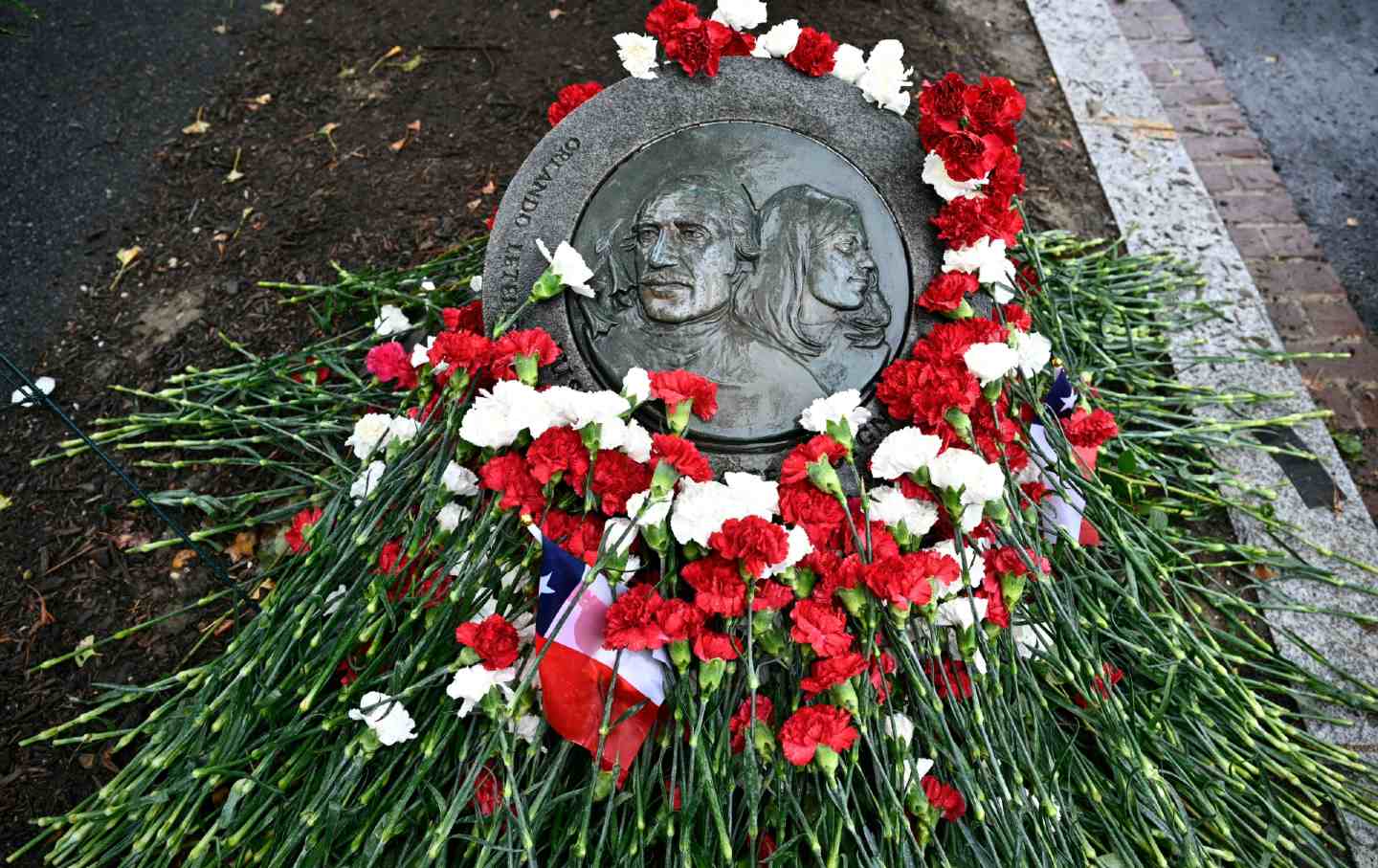
Pinochet: The Verdict of History in the Letelier-Moffitt Case Pinochet: The Verdict of History in the Letelier-Moffitt Case
An act of international terrorism on the streets of Washington, DC, still reverberates 50 years later.
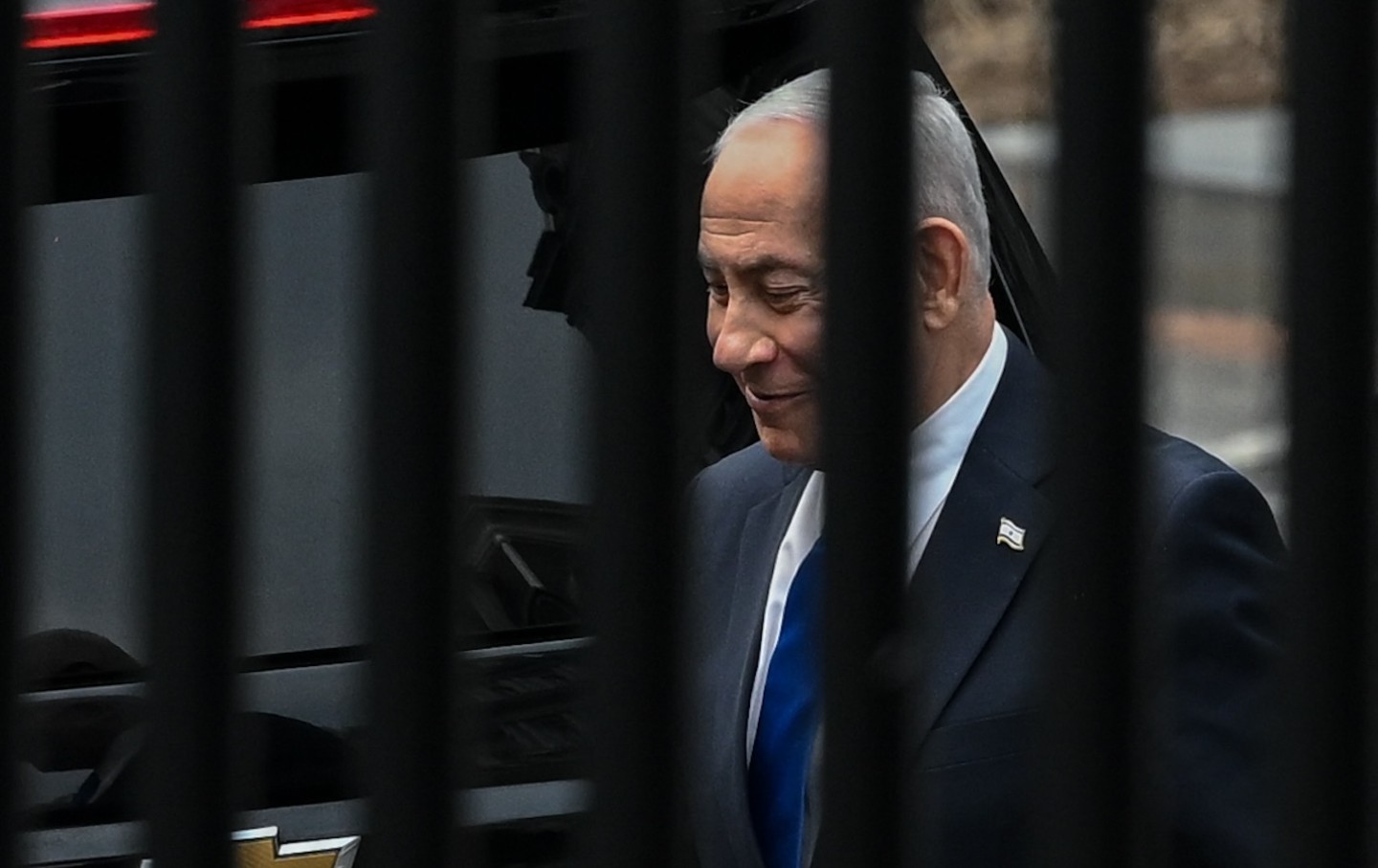
How to Arrest Benjamin Netanyahu How to Arrest Benjamin Netanyahu
Make no mistake: The United States can seize Netanyahu for crimes under US law and prosecute him in US courts when he is in New York City this week.
In the Age of AI, Nuclear Weapons Abolition Is a Renewed Imperative In the Age of AI, Nuclear Weapons Abolition Is a Renewed Imperative
As long as we have nuclear weapons, the job of ending humanity will continue to be as easy as the push of a button—or an AI agent hacking into a nuclear command-and-control system...

