Six Months After Payments Resumed, Student Loan Borrowers Are Still Struggling
A new report from the Student Debt Crisis Center found that over one-third of student loan borrowers are forced to reduce spending on necessities like food, rent, and healthcare.
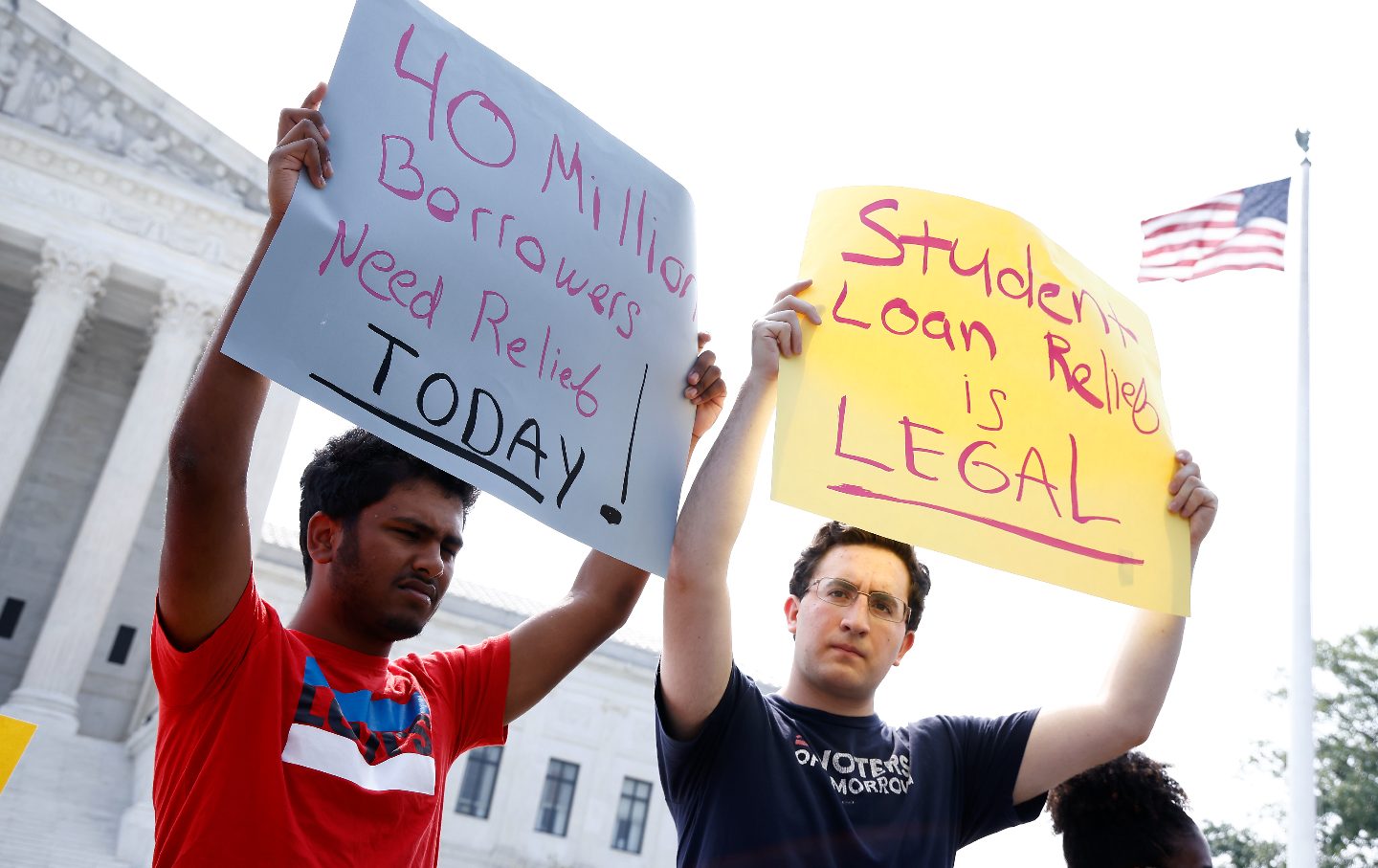
From reorganizing their personal finances to trying to contact their loan servicers to enrolling in the best repayment plan, the end of the federal student loan payment pause in October 2023 gave borrowers plenty of issues to untangle.
In a new report, The Realities of Return to Repayment, the Student Debt Crisis Center (SDCC) found that over one-third of borrowers reduced spending on necessities like food, rent, and healthcare after student loan payments resumed.
While opponents of student debt cancellation argue that borrowers don’t want to repay their loans, SDCC’s report found that less than three percent of borrowers claimed to be intentionally skipping their student loan payments. Around half of borrowers made their payments once the payment pause expired and about half did not. Most borrowers who missed their payments were simply unable to afford them or had their loans placed into involuntary administrative forbearance.
Aside from the personal financial hurdles that borrowers face, student loan servicers are not doing their jobs and making it difficult for borrowers to understand where their loans currently stand. Citing billing errors, statement issues, and a lack of communication, a quarter of borrowers have said that they do not trust the information they receive from their servicers, and only one in three borrowers say their issues were resolved when contacting them for help. Borrowers are also reportedly facing extremely high wait times—often over an hour—to simply discuss their situations with servicers, and around 75 percent of borrowers say they are not confident that the information they received was accurate and complete.
It is clear that borrowers are trying to understand their loan situations, but are simply not getting the resources they need to responsibly manage their loans. While the Supreme Court shot down President Biden’s Student Debt Cancellation Plan in June 2023, the administration is still working to achieve some type of broad-based student debt cancellation. Yet about 41 percent feel the administration is doing nothing to pursue debt cancellation, and of these, nearly half say they have not received communications from the Department of Education (ED) regarding repayment plans. President Biden is getting his messaging through to many borrowers, but the administration clearly must work harder to ensure that everyone understands the student debt landscape and how they can benefit from their work.
Right now, the administration is fighting for cancellation using the Higher Education Act (HEA) and the negotiated rulemaking process, which has been underway for several months. It has recently been extended to include a fourth round of negotiations, made possible by borrowers and advocates whose letters and stories pushed the Department of Education to open an extra negotiation session to define financial hardship. This clarification will ideally help more borrowers when the rule-making process is over and the parameters of student debt cancellation are decided.
Many borrowers have also begun receiving student loan forgiveness through the Income-Driven Repayment (IDR) and Public Service Loan Forgiveness (PSLF) Account Adjustments. These plans have made requirements for receiving forgiveness through repayment more flexible. The SDCC has reported that of the borrowers who have received forgiveness, 40 percent benefitted from the IDR Account Adjustment and 27 percent benefitted from PSLF. So far, we have seen around $138 billion in forgiveness given to borrowers across the country—an enormous burden lifted from the shoulders of hard-working Americans.
Finally, the Department of Education, along with organizations like SDCC, has been encouraging low-balance and low-income borrowers to apply for the Saving on a Valuable Education (SAVE) plan through an initiative called the Save On Student Debt Campaign. While the SAVE pla has the most generous options for a majority of borrowers when it comes to repayment amounts and accruing interest, SDCC reported that only one in three borrowers have received information regarding the SAVE plan, and that about a quarter of borrowers are enrolled in the plan—numbers that are on par with national data.
Under the SAVE plan, over 150,000 borrowers will also be able to receive forgiveness sooner than expected due to the administration’s decision to start processing this month, instead of July as originally scheduled.
While we have seen huge wins for borrowers, these strides are still just steps in the right direction. It is essential that we continue to fight for broad-based student debt cancellation, servicer accountability, and transparency throughout the student loan system. Student debt is a crisis, and millions of Americans are impacted every day. Until the higher education system provides equitable, accessible, and debt-free education, the fight on behalf of student loan borrowers is not over.