
Is 2024 Democracy’s “Super Bowl”?
Two billion people—half the world’s population—will participate in more than 75 elections this year.
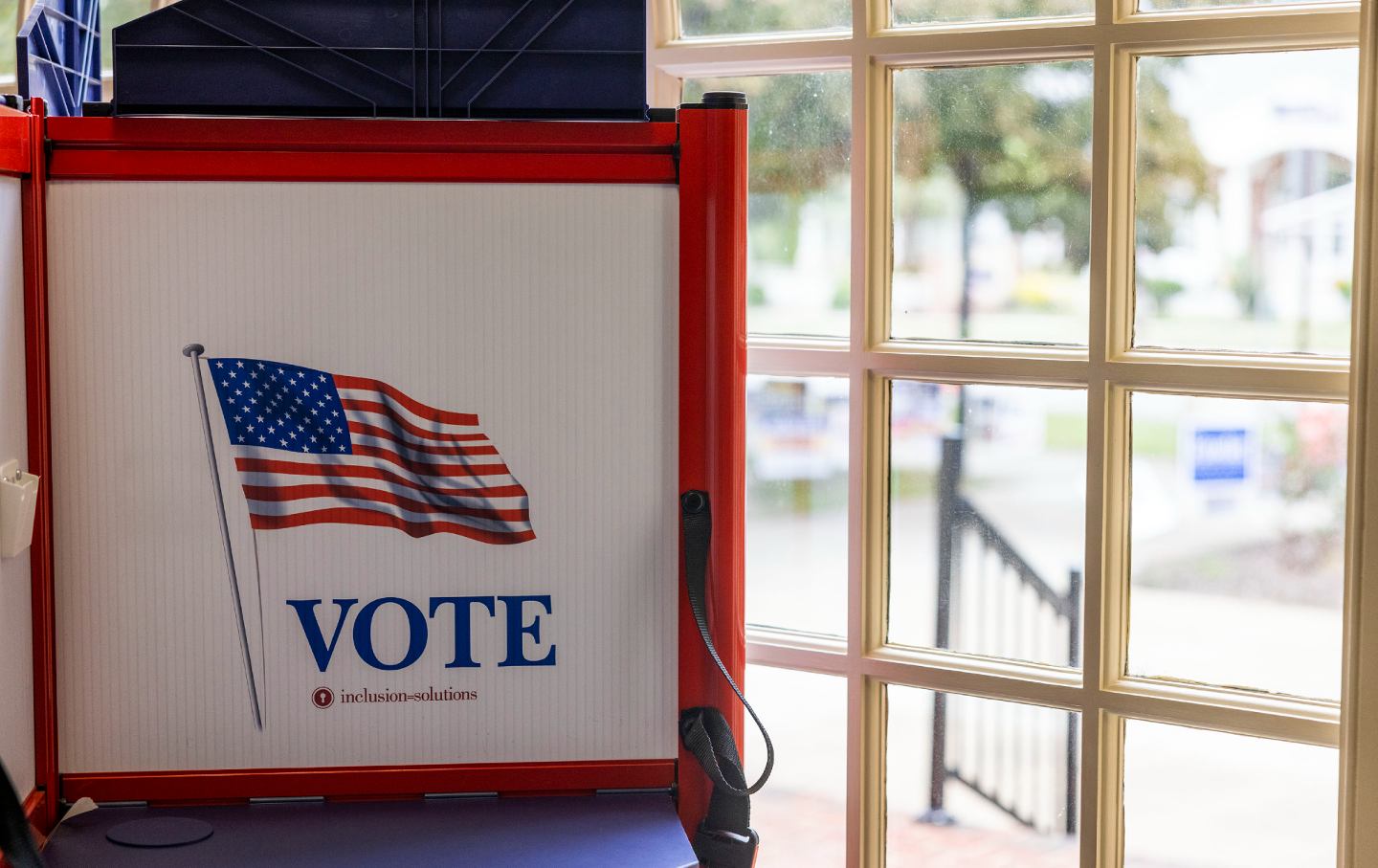
This is a banner year for elections. In 2024, an astonishing 2 billion people—half of the world’s adult population—will be participate in more than 75 national elections this year. Some have even called it democracy’s “Super Bowl.”
On its face, this may seem like democracy’s golden year, but illiberal candidates are likely to win in many countries. Worse still, many eligible voters take a dim view of democracy itself. More than half of Americans can’t or won’t identify a single strength of our political system. And around the world, only 57 percent of younger adults feel that democracy is preferable to other forms of government.
Increasingly, people view democracy in the same way Americans view their likely presidential nominees: not as stalwart and time-tested, but brittle and outdated.
This is a precarious time for a year as pivotal as 2024. Taiwan’s recent presidential race will impact the risk of wider conflict with China. Indonesia’s February elections may reveal cracks in its capacity to transfer power. India’s elections—the world’s biggest—could propel it further down a path of Hindu strong-arm nationalism. South Africa will decide whether it ousts the party of Nelson Mandela three decades after the end of apartheid. Pakistan faces its first general election since its prime minister was removed and arrested, and Sri Lanka its first since its government collapsed.
Of course, democratic elections don’t necessarily mean democratic outcomes. Electing illiberal leaders by democratic means is not a new phenomenon, but we are witnessing the rise of more candidates willing to play fast and loose. Russia and North Korea will both hold elections this year, but the outcome will not bring an upset. Ukraine election due to martial law, a sobering reminder that the cadences of democracy can too easily become casualties of war. Twenty twenty-four’s elections will be held as conflicts rage, climate disasters accelerate, and strongmen surge to take advantage of the chaos.
So it’s no surprise that this year, the word “democracy” is being uttered like a prayer—and more precisely, a Hail Mary. President Joe Biden has called Donald Trump a “threat to democracy” and cast himself as its last, best hope. (Trump, who has threatened to lock up his opponents if reelected, called Biden the “true destroyer of democracy.”) Around the world, 2024 has already been dubbed the year that democracy itself is on the ballot.
One problem is that democracy means different things to different people. For some, it’s about voting rights; for others, an independent media or judiciary. And often, it doesn’t poll well. In countries with advanced economies, the number of people satisfied with the state of their democracy barely hovers over 50 percent. In the United States, it’s now closer to 25 percent—a record low. In South Africa, seven in 10 citizens say they’d give up democracy for a leader who could create jobs and reduce crime.
These frustrations have obvious roots. Go to the grocery store and you’ll see prices higher than last month’s. Visit the pharmacy and you’ll notice the global drug shortage. Read the news and you’ll see ongoing failure to end the carnage of two major wars—all in the shadow of newer threats like climate change and challenges like AI.
Democracy’s bad polling betrays an underlying problem: Voting is often an investment of time and trust, and people aren’t seeing the returns.
Politicians would be wise to update their playbooks accordingly. Yes, democracy is full of history and possibility. And yes, it’s on the ballot in 2024. But those arguments can’t stand alone.
Democracy is also about electing leaders or parties that make clear the tangible, near-term benefits that participation could bring to people’s lives: increasing the minimum wage, capping the price of insulin, and forgiving student debt, to name just a few. Taiwan’s candidates took this approach: Despite the election’s seismic implications for sovereignty and security, campaigns focused on “ kitchen-table issues” like slowing wage growth and surging housing prices.
For every far-right fearmonger or wannabe demagogue, there is a pragmatic politician laser-focused on delivering tangible positive outcomes. Take Claudia Sheinbaum, the front-runner in the Mexican presidential race. She’s the former mayor of Mexico City and a scientist who served on the UN’s Intergovernmental Panel on Climate Change. In her campaign, Sheinbaum has focused on environmental issues with the most pronounced effects on people’s lives, such as decontaminating bodies of water and accelerating Mexico’s transition to renewable energy.
Or take Brazilian president Lula: A year after the country’s own insurrection, he argues that “government that improves lives is the best answer we have to extremists who attack democracy.” Ahead of Brazil’s municipal elections this year, Lula is defending democracy by building workers’ rights programs, anti-poverty policies, and protections against deforestation—things that help people in ways they can see.
Though 2024 could be the most consequential election year of our lifetimes, citizens may not feel a sense of reverence for the system as they cast their vote. Leaders everywhere must demonstrate why voting matters—not only in the sweep of history, but also in the everyday sweep of people’s lives.
Become a Sustaining Donor This September
Between the reemergence of right-wing red-baiting and Donald Trump’s use of the chilling National Security Presidential Memorandum–7 to criminalize left political organizing, we’re seeing McCarthyism reborn before our eyes.
This assault on democracy cannot be ignored or wished away. Resisting it requires bravery in the face of threats and repression, a steadfast commitment to the truth, and the unwavering belief that we can—and will—overcome this darkness.
We must have an independent media that sets the record straight, unearths corruption and abuses of power, and advances a politics of justice and dignity for all if we’re to win this fight.
That’s why I’m writing to you today. This September, The Nation needs to add 100 monthly donors to sustain our progressive journalism. Your contribution makes the next investigative report, the next truth-speaking column, and the next pathbreaking essay all possible.
I hope you’ll support our work with a recurring donation today. If you donate $10 or more a month, we’ll send you a brand new “Hands Off the Free Press!” sticker to recognise your commitment to our cause. Please, donate today.
Onward,
Katrina vanden Heuvel
Editor and Publisher, The Nation
More from The Nation
The Promises and Compromises of the University of California The Promises and Compromises of the University of California
I grew up in a neighborhood manufactured by the University of California, Irvine. It felt like a utopia for academics—until the university forsook its mission of serving the publi...
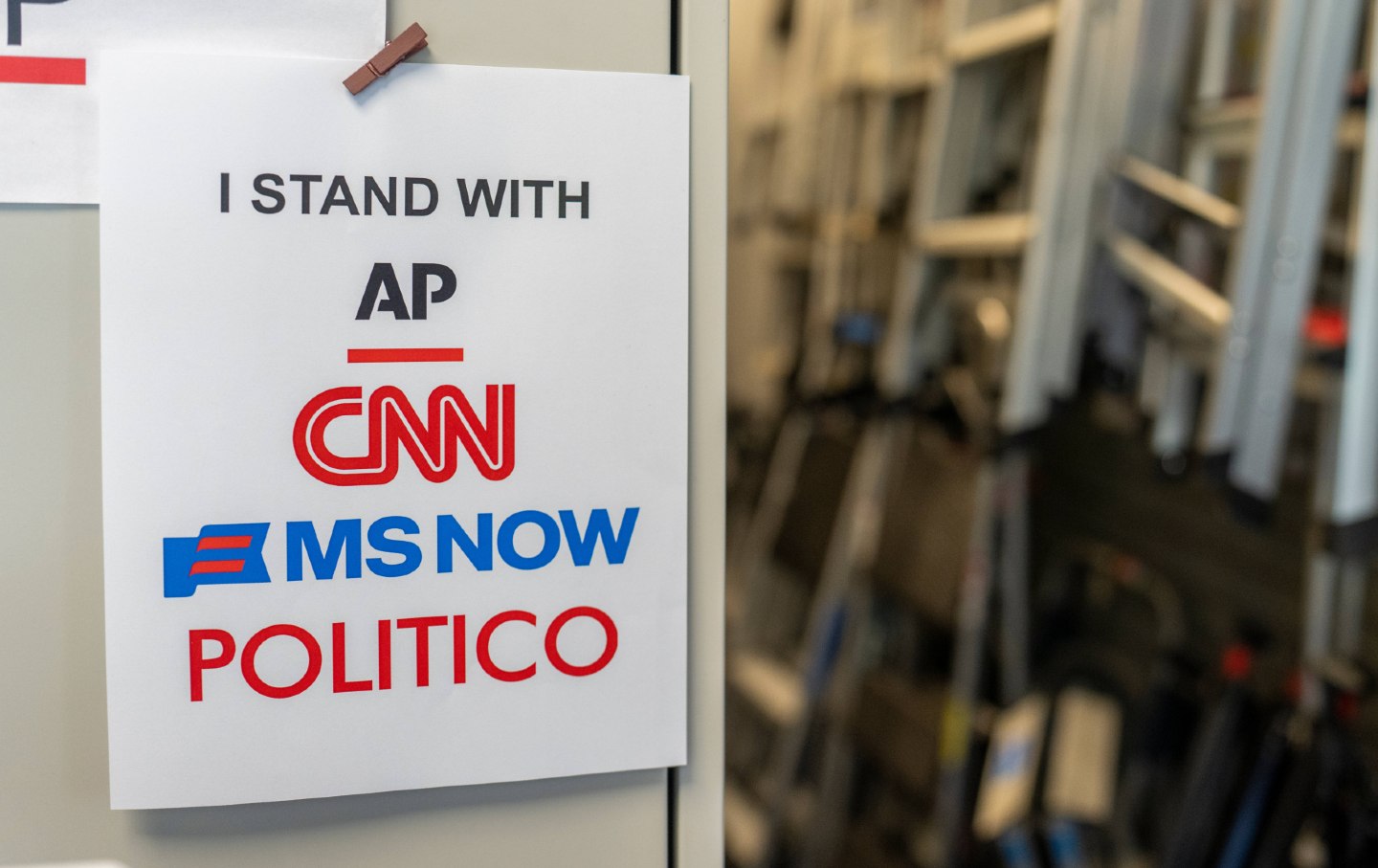
The First Amendment Lives for Another News Cycle—Maybe The First Amendment Lives for Another News Cycle—Maybe
In this week’s Elie v. U.S., our justice correspondent parses Trump’s attacks on CNN, MS NOW, and Politico. Plus: it’s time to impeach the judges!
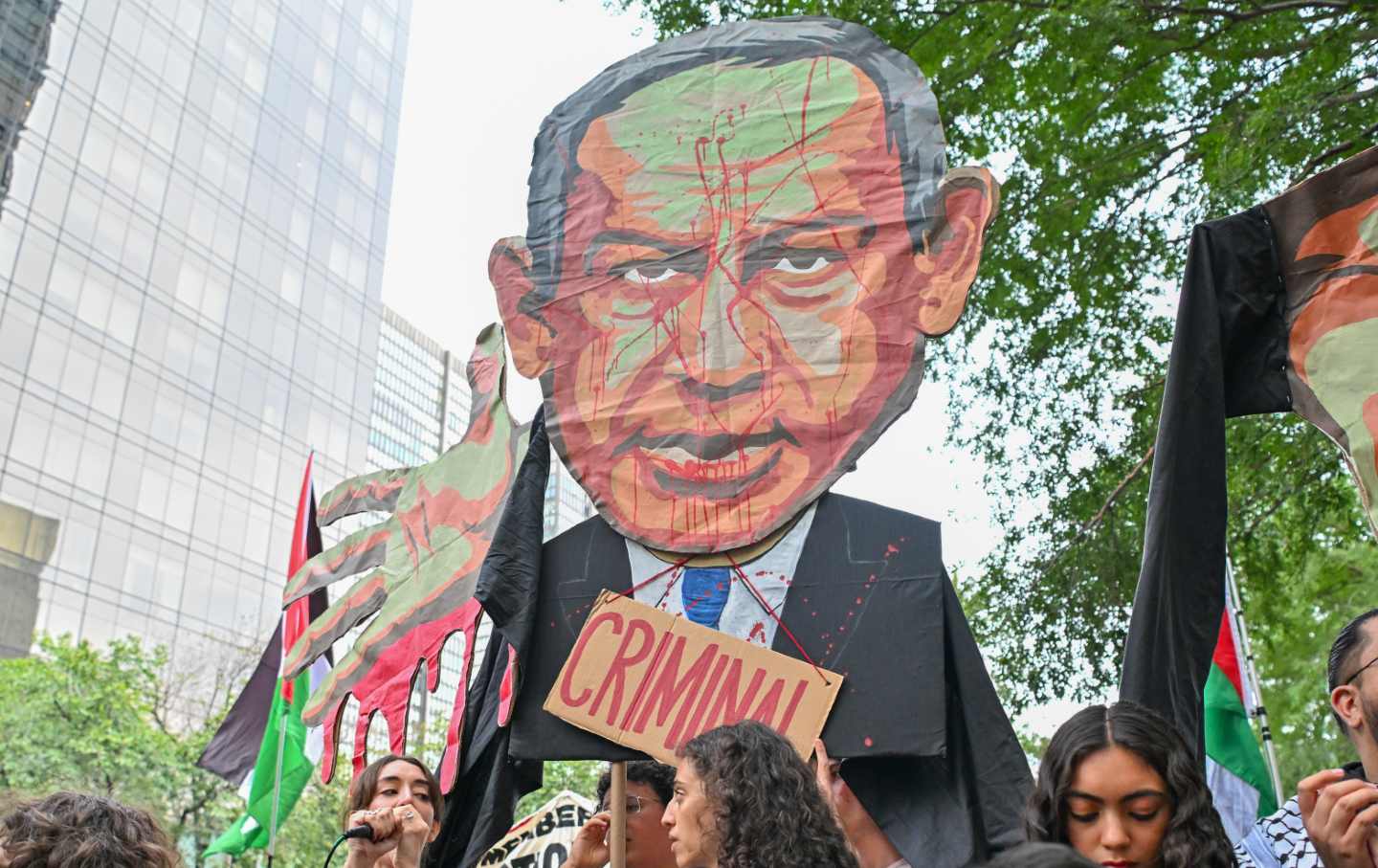
Netanyahu Came to New York. New Yorkers Were Ready for Him. Netanyahu Came to New York. New Yorkers Were Ready for Him.
Scenes from the defiant protest against the genocidal leader’s UN speech.
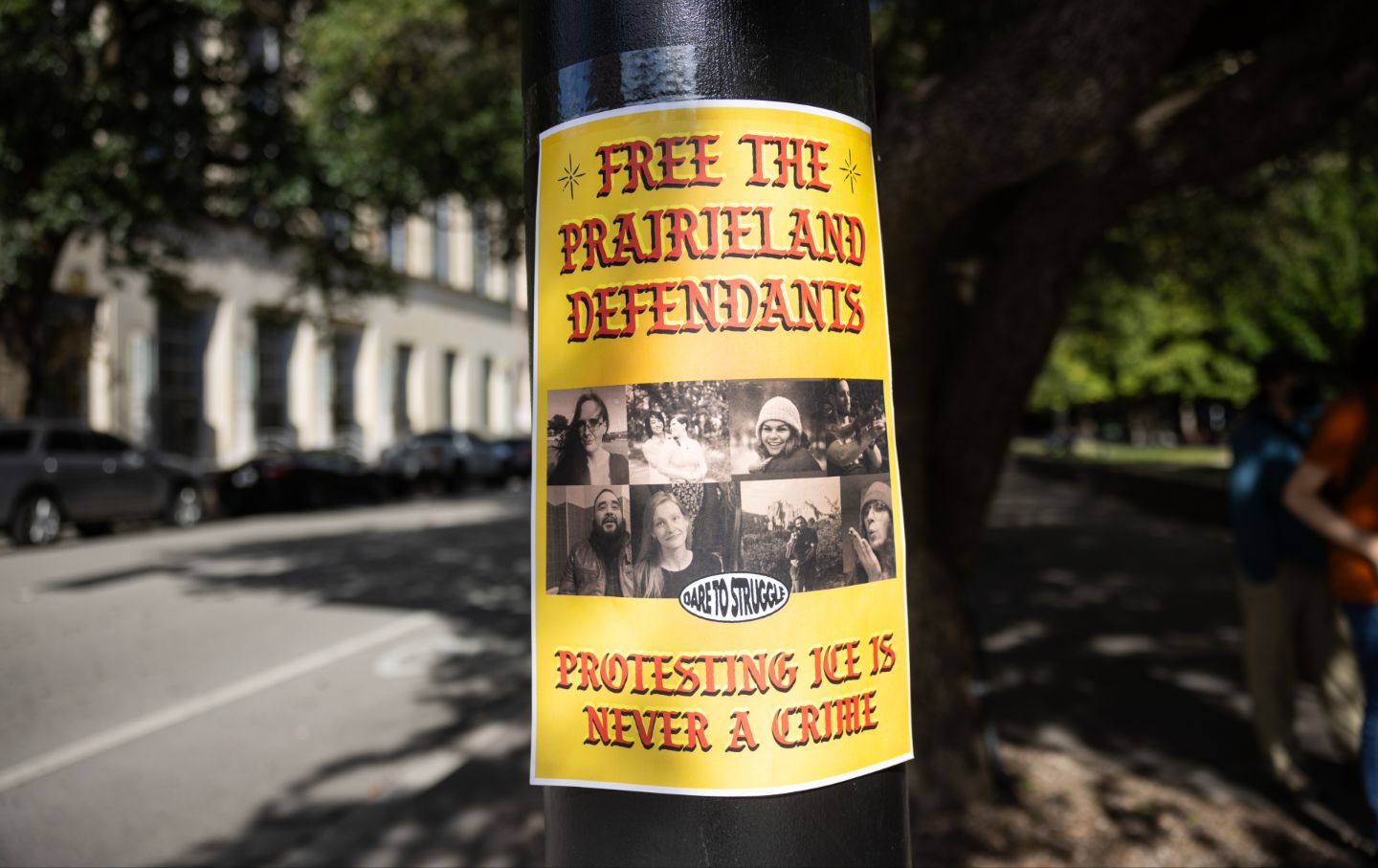
A Message From Prairieland Prisoner Autumn Hill: “Don’t Be Afraid” A Message From Prairieland Prisoner Autumn Hill: “Don’t Be Afraid”
I talked to the political prisoner about the politics of love, her case, surviving as a trans woman in a men’s prison, and how she makes it through the day.
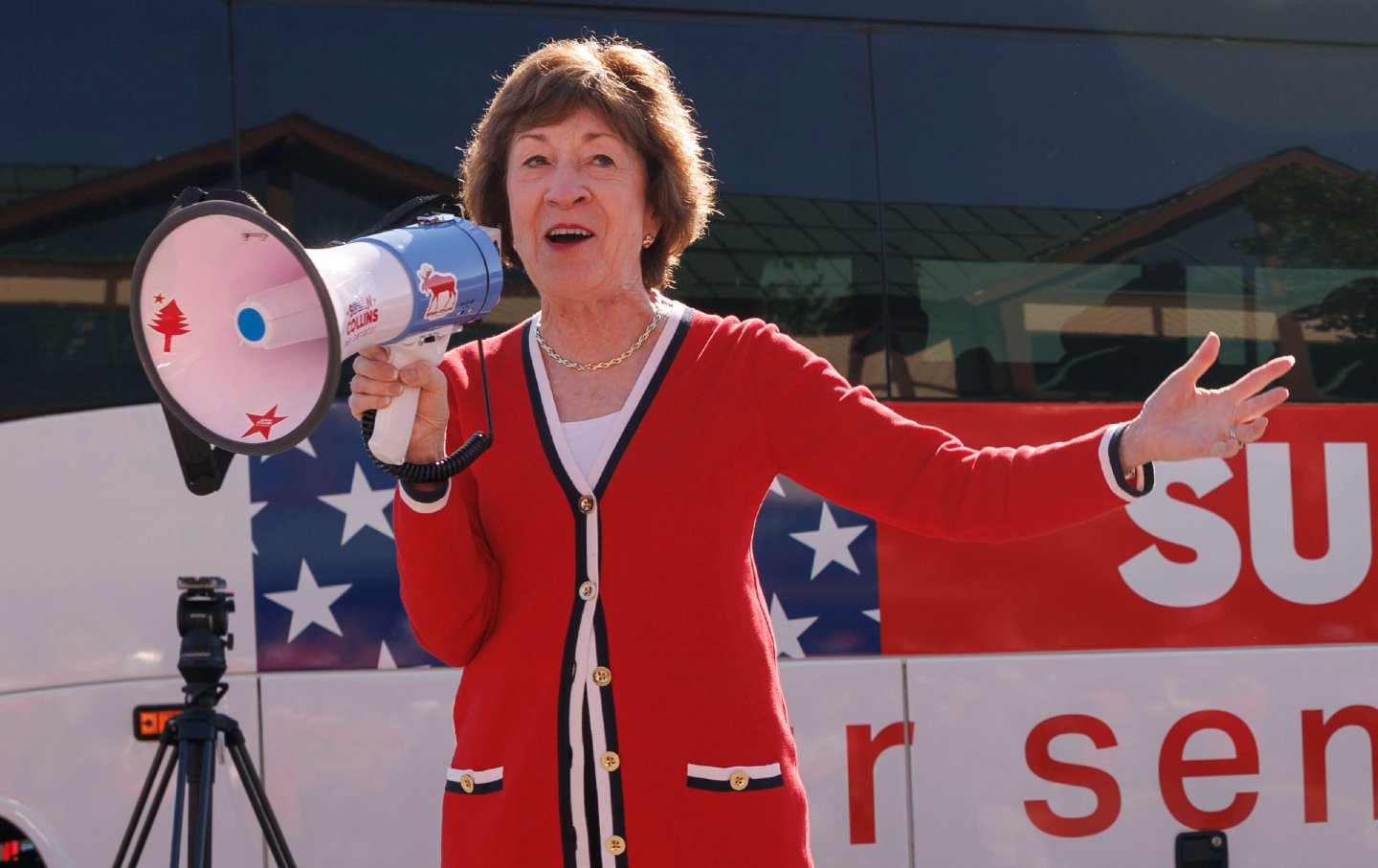
Susan Collins Is Corrupt. She Still Might Be Reelected. Susan Collins Is Corrupt. She Still Might Be Reelected.
Despite being embroiled in scandal, the Maine senator is benefiting from Democratic Party divisions.

