
Eugene Debs, Walter Reuther, Shawn Fain, and Labor’s Anti-War Legacy
The UAW president’s high-profile advocacy for a cease-fire in Gaza renews a tradition of advocacy for peace and justice by class-conscious union leaders. And he’s not alone.
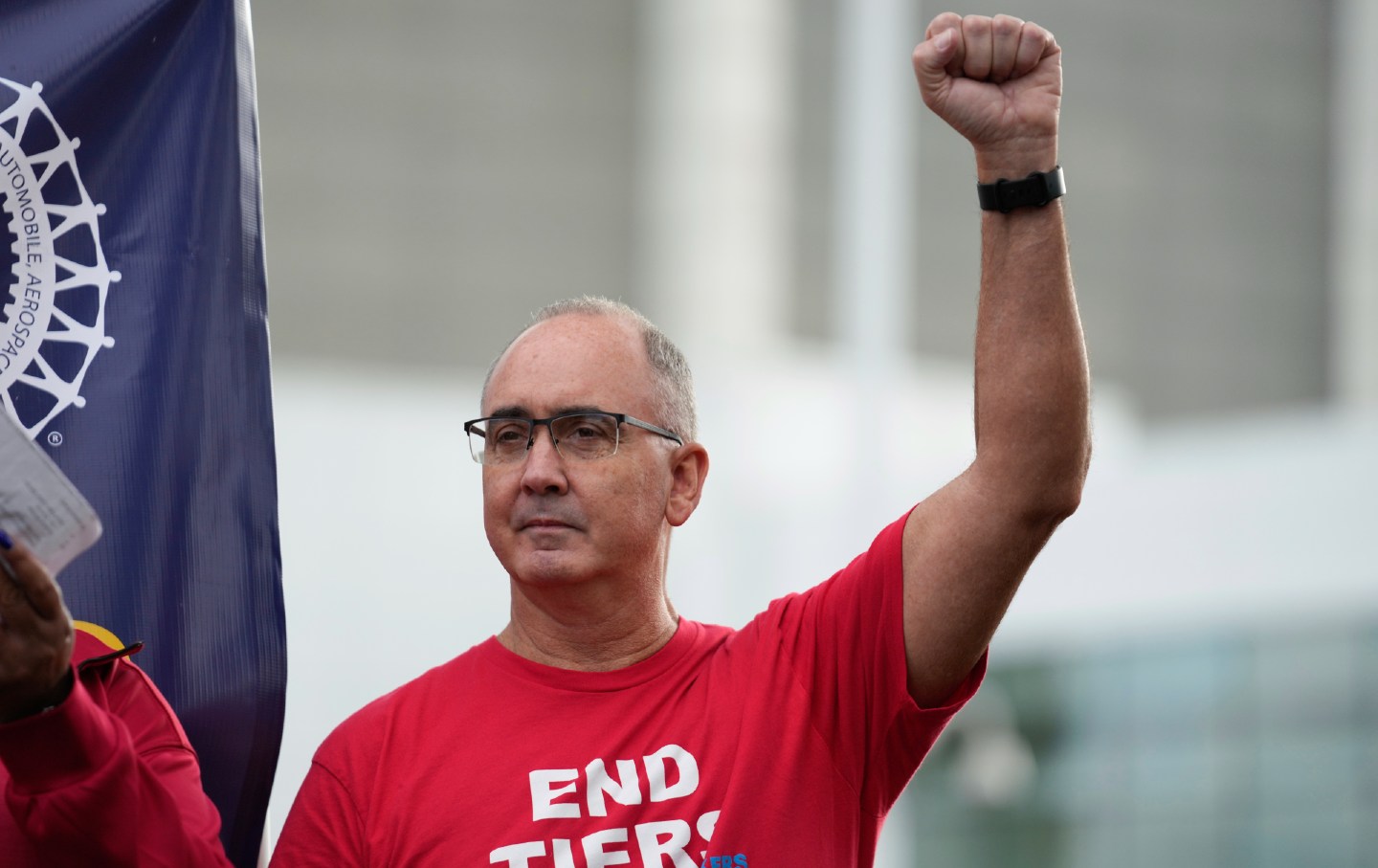
United Auto Workers President Shawn Fain raises his fist at a rally in Detroit on September 15, 2023.
(Paul Sancya / AP Photo)Eugene Victor Debs went to jail as a labor leader—and frequent Socialist Party presidential candidate—who opposed World War I. At a 1918 rally in Canton, Ohio, Debs told the crowd, “The working class have never yet had a voice in declaring war. If war is right, let it be declared by the people—you, who have your lives to lose.”
That sort of statement didn’t sit well with powerful Democrats and Republicans in Washington, D.C., or with more conservative labor leaders who followed the government line during World War I.
But Debs believed that working-class advocates had a duty to speak out not just on economic issues but also on questions of war and peace.
So did United Auto Workers union President Walter Reuther and other progressive union leaders who in the 1960s and early 1970s courageously opposed the Vietnam War.
And so, too, do the labor leaders and organizations that now support a cease-fire in Gaza.
There is history here, a history that goes back, at the very least, to the resolutely anti-war stance of Debs, who had made his name as an organizer of railroad workers and a cofounder of the militant Industrial Workers of the World union. “I know of no reason why the workers should fight for what the capitalists own, or slaughter one another for countries that belong to their masters,” explained the onetime president of the American Railway Union, who announced as the United States prepared to enter into World War I in the spring of 1917, “I will never go to war for a capitalist government.”
Close to a million voters agreed with Debs sufficiently that they voted for him when he ran for president in 1920 from his jail cell at the Atlanta Federal Penitentiary.
Debs’s legacy of opposing militarism and advocating for peace and justice has lived on among the most energetic and engaged unions of the contemporary American labor movement, as was illustrated Thursday, when UAW President Shawn Fain joined US Representatives Rashida Tlaib (D-Mich.), Cori Bush (D-Mo.), Ilhan Omar (D-Minn.), and others last week at a Washington, D.C., event calling for a cease-fire in Gaza. For Tlaib, the only Palestinian American member of Congress and an outspoken advocate for a cease-fire, it was an especially poignant moment. She noted, “I’m a proud daughter of a UAW worker, and I know my Yaba [father], if he was here, he would be so proud. The UAW taught him he deserved human dignity, even though he only had a fourth-grade education, even though he was Palestinian, even though he was Muslim. On that assembly line, he was equal to every single human being on that line. Who did that for him? The United Auto Workers did that for him.”
Fain, for his part, delivered a clear call for a change in US policy.
“The only path forward to peace and social justice is a cease-fire,” said the UAW leader, who explained:
The world has seen enough slaughter and devastation. Peace is the only way forward… We union members, we know we must fight for all workers and suffering people around the world. We must fight for humanity. That means we must restore peoples’ basic rights and allow water, food, fuel and humanitarian aid to enter Gaza. We must also call for the release of all hostages. I thank our UAW members for speaking out and pushing us to come out in support of a ceasefire. It was the right thing to do. Now it’s time for the rest of our elected officials to step up and do what it takes to end the violence. And I call on the rest of the labor movement to join us in this mission for peace and social justice for all of humanity.
A number of unions have stepped up. Thursday’s event in D.C. featured representatives of the United Electrical workers union and the American Postal Workers Union, both of which back a cease-fire. There was also a representative from the National Labor Network for a Ceasefire.
That network is growing rapidly. Dozens of union locals, regional and state organizations and coalitions have endorsed a call for labor support of a cease-fire, which was issued in October by UE, a legendary militant union with a long history of supporting Palestinian rights, and United Food and Commercial Workers Local 3000, which represents more than 50,000 workers in Oregon, Washington, and Idaho. “We, members of the American labor movement, mourn the loss of life in Israel and Palestine. We express our solidarity with all workers and our common desire for peace in Palestine and Israel, and we call on President Joe Biden and Congress to push for an immediate ceasefire and end to the siege of Gaza,” reads the call, which declares, “We cannot bomb our way to peace.”
Among the signers of the call are some of the most active state and local labor organizations in the country, including the Massachusetts Teachers Association, the Oregon Education Association, the Chicago Teachers Union, the Boston Teachers Union, the Seattle Education Association, Service Employees and Teamsters locals from across the country, and the New Jersey Industrial Union Council. The Coalition of Labor Union Women and the Philadelphia Labor for Black Lives Coalition signed on—and, of course, so has the IWW.
Popular
“swipe left below to view more authors”Swipe →Last week, the executive council of 1199SEIU, the large and politically influential healthcare union, called for “the immediate cessation of hostilities in the Gaza Strip, to allow for urgent humanitarian relief amid the collapse of the territory’s health and other infrastructure.”
When Fain appeared in Washington on Thursday, he was joined by other UAW leaders, including Brandon Mancilla, the newly elected director of UAW Region 9A, which represents growing locals in New York and the Northeastern US. Mancilla said at the event that “a long-needed conversation is happening within the labor movement, and our ignorance and silence around Palestine and Israel is finally ending.”
There is still work to do in that regard. For instance, the AFL-CIO executive council has so far resisted a move by American Postal Workers Union president Mark Dimondstein to get the union federation to adopt a pro-cease-fire stance—though an October 11 AFL-CIO statement did feature a call “to end the bloodshed of innocent civilians, and to promote a just and long-lasting peace between Israelis and Palestinians.”
More on Labor and the Israel-Gaza War:
Among the largest unions in the country, the UAW stands out as the largest and loudest organization to formally endorse a cease-fire. That’s not surprising for those who are familiar with the union’s history. As the Vietnam War intensified, UAW President Reuther broke with the AFL-CIO and many Democrats to oppose the US involvement in the conflict. At the height of the war, Reuther argued, as one of the most prominent labor leaders in the country, “We must mobilize for peace rather than for wider theaters of war in order to turn our resources and the hearts, hands and minds of our people to the fulfillment of America’s unfinished agenda at home.”
Mancilla has recalled the former UAW president’s anti–Vietnam War stance as he has advocated for unions to support a cease-fire. What Reuther meant with his argument that unions must mobilize for peace, Mancilla said, “was that the labor movement would not be able to achieve the transformative goals it has for social justice, for worker justice, for economic justice, if it turned a blind eye to what was happening across the world. We opposed fascism in World War II. We ended up opposing the Vietnam War. We opposed apartheid in South Africa, and we mobilized union resources in the entire labor movement to join us in that fight. We opposed the Contra War in Central America in Nicaragua that the Reagan administration, with our tax dollars and with our resources was mobilizing.”
As the UAW advocates for a cease-fire in Gaza, it carries forward the labor legacy of Eugene Victor Debs, who warned during World War I, “The master class has had all to gain and nothing to lose, while the subject class has had nothing to gain and all to lose—especially their lives.” And of Reuther who, in one of his last major statements before his death in 1970, declared that “we cannot successfully preach non-violence at home while we escalate mass violence abroad.”
More from
John Nichols 

Minnesota Has Ilhan Omar’s Back Minnesota Has Ilhan Omar’s Back
Minnesotans say the raid on Omar’s home was all about politics. They also argue that it will backfire and generate boosted turnout for DFL candidates.
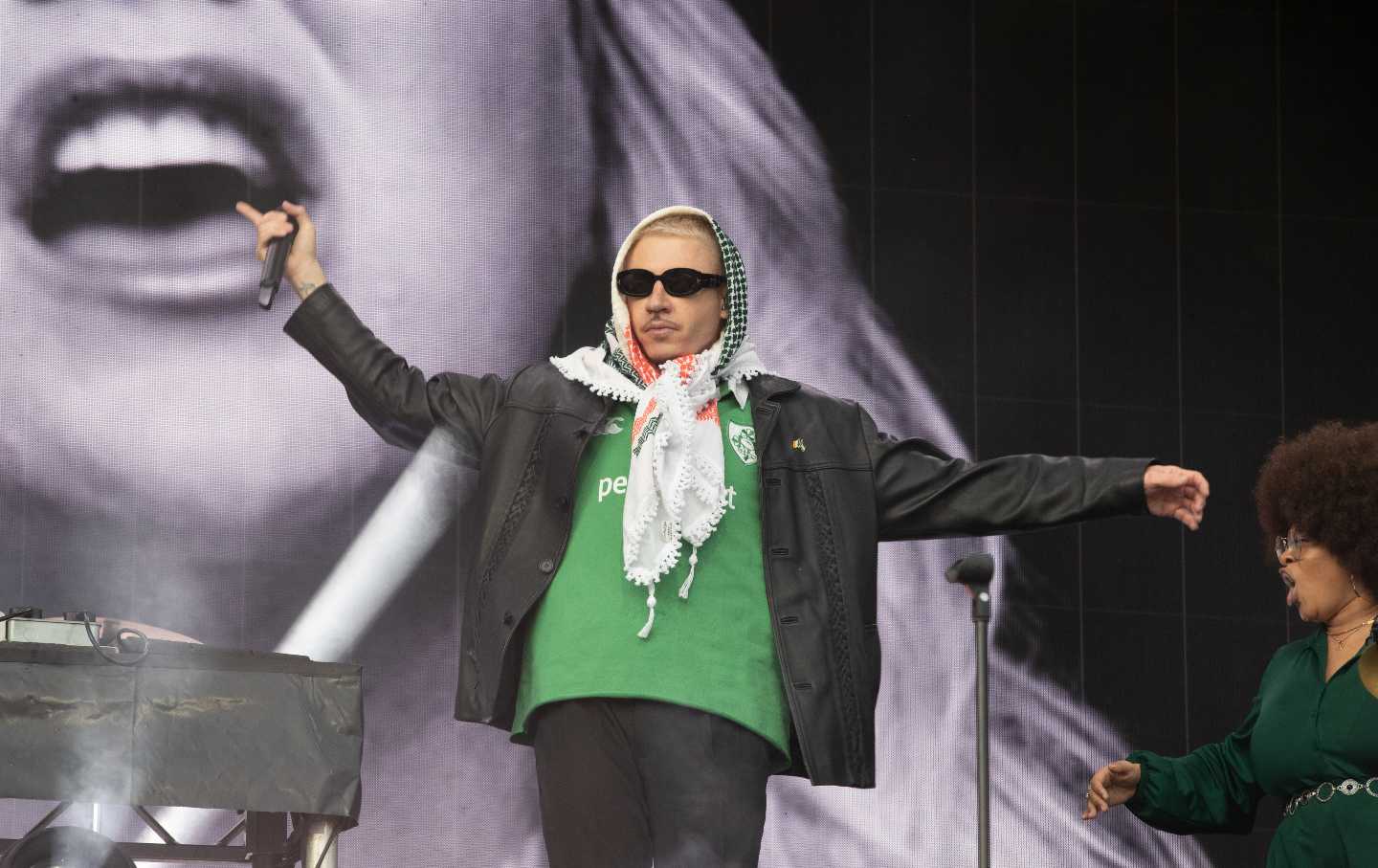
The First Amendment Applies to Concert Stages Too The First Amendment Applies to Concert Stages Too
Protests like that of Macklemore on Palestine should never be silenced by billionaire owners.

The Moral Clarity of Tennessee Gubernatorial Candidate Jerri Green The Moral Clarity of Tennessee Gubernatorial Candidate Jerri Green
Even before her state botched another execution, gubernatorial candidate Jerri Green was telling Tennesseans that “the death penalty has always been inhumane, expensive, and biase...
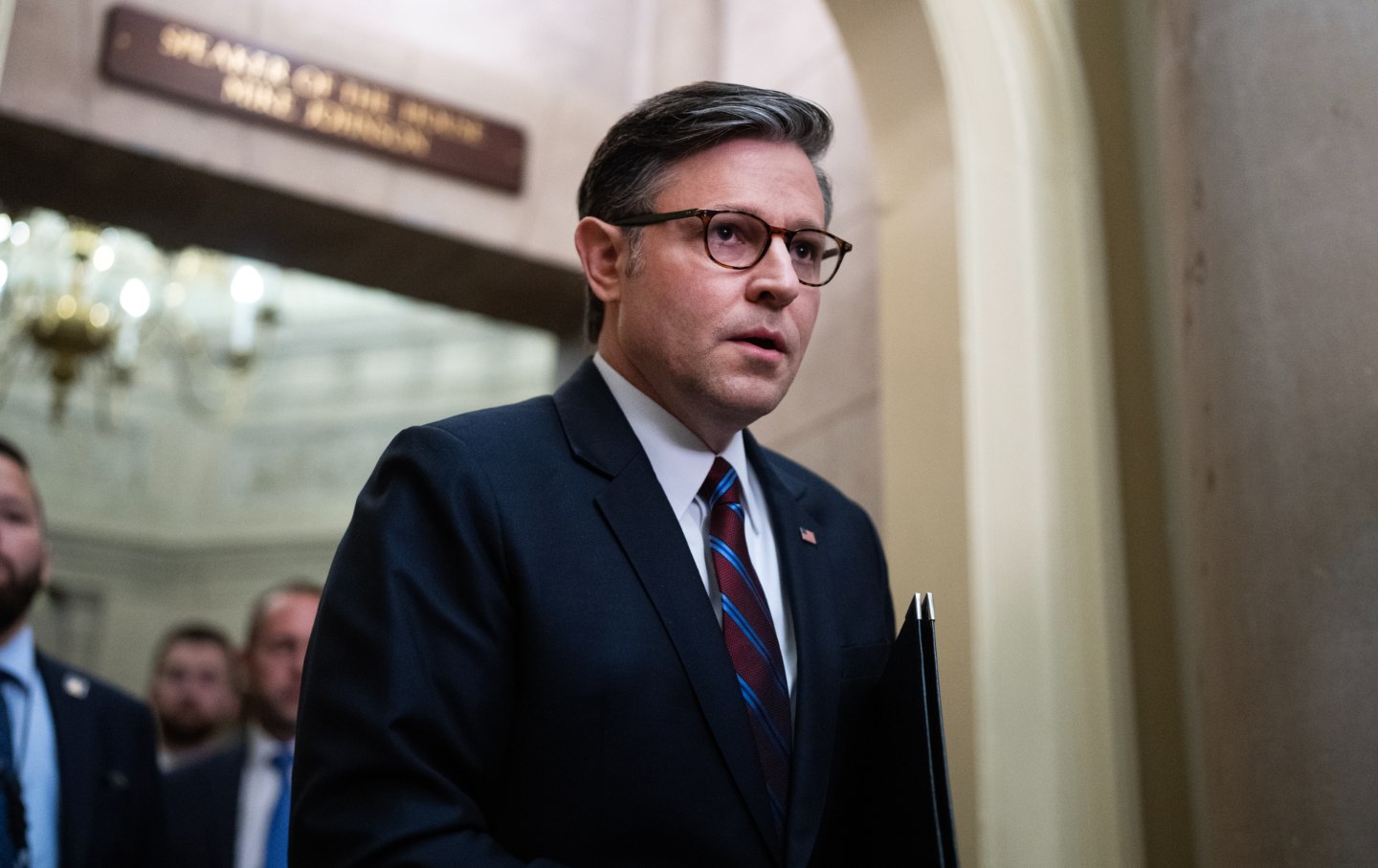
Mike Johnson Is the Most Dangerous House Speaker in American History Mike Johnson Is the Most Dangerous House Speaker in American History
His decision to shut the House down at a moment of crisis around AI is the act of a reckless charlatan.
The Right-Wing Attacks on Abdul El-Sayed Keep Faltering The Right-Wing Attacks on Abdul El-Sayed Keep Faltering
With energetic campaigning and savvy responses to the media’s Hasan Piker obsession, the Michigan Democrat is maintaining solid poll numbers.
The Fight for Serious AI Regulation Just Won a Big Victory in Massachusetts The Fight for Serious AI Regulation Just Won a Big Victory in Massachusetts
After his primary win, Ed Markey says he’s ready to take on “the criminal enterprises” of Big Tech.

