
A Cooler Future Means a World With Less Pavement
Amid climate-fueled heat waves and floods, cities around the country are rethinking the streetscape.
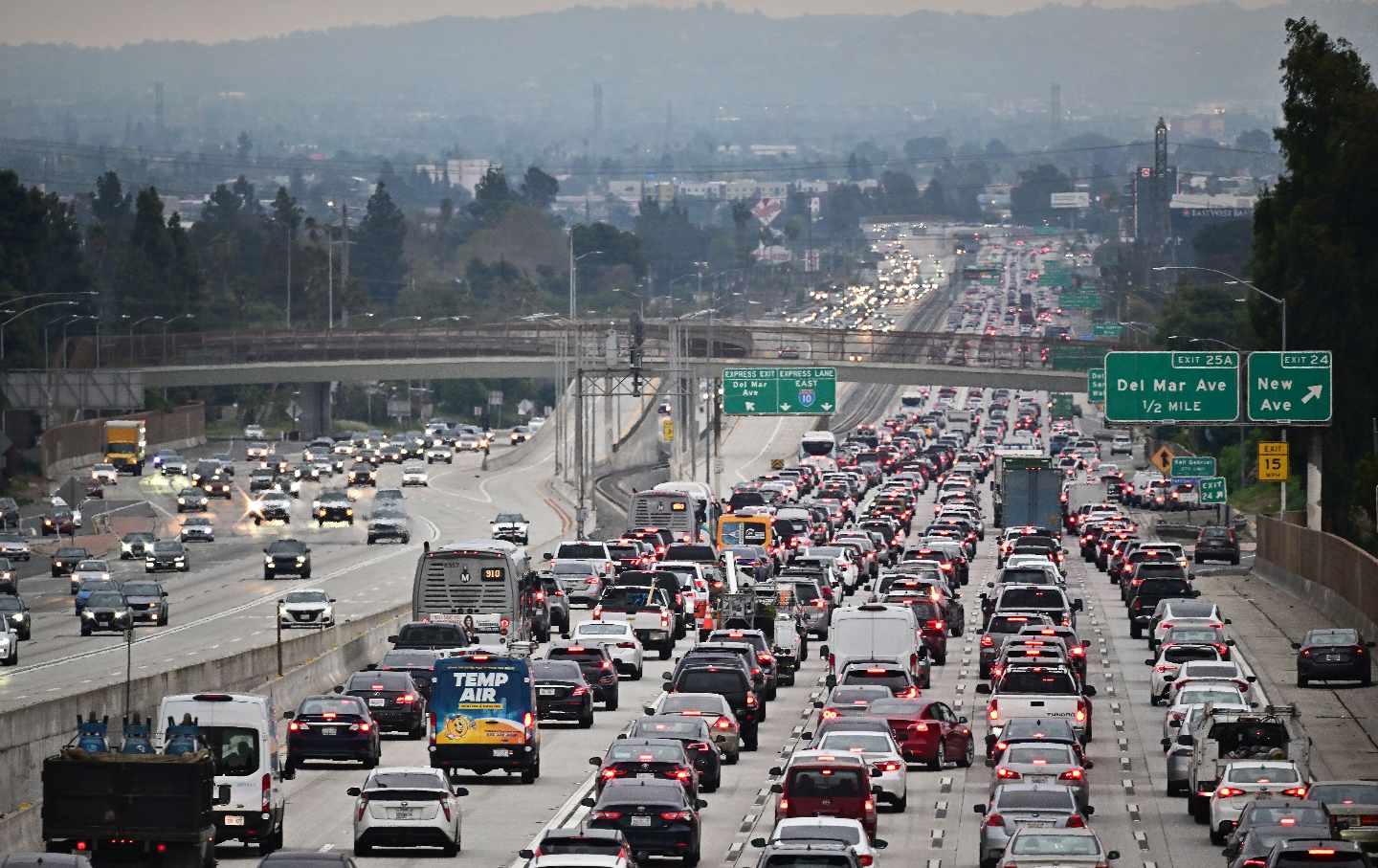
Traffic on a Los Angeles freeway during the evening rush-hour commute on April 12, 2023.
(Frederic J. Brown / GettyThis article originally appeared in Nexus Media News.
It all started because a man named Arif Khan wanted a garden. In 2007, he had recently moved into a house in Portland, Ore., whose backyard was covered in asphalt. Some friends helped him tear up the impervious surface, and soon after, they won a small grant to carry out a similar project in front of a local café.
“It was a one-off,” said Ted Labbe, cofounder of Depave, an urban greening movement. “But it was so successful that the next year we got solicited to do three projects, and then five the year after that. It just kept escalating.” In the 15 years since breaking ground on Khan’s backyard, Depave has completed 75 projects in schoolyards, churches, and other community spaces across Portland.
The Depave movement has spread across the United States and Canada in recent years as climate-related extreme heat and flooding have made some cities rethink the wisdom of all that heat-absorbing, impervious surface area.
Depave’s newest chapter is in Chicago, where about half of the population lives in areas where temperatures are at least eight degrees higher than the city’s base temperature, a disparity that can prove deadly in heat waves. More than 60 percent of the city is covered in impervious surfaces, and when record rains fell in early July, more than 12,000 residents reported flooding in their basements.
“Environmental justice communities are suffering from a lot of pavement-related issues,” said Mary Pat McGuire, a professor of architecture at the University of Illinois, and the founder of Depave Chicago. “We’re trying to bring attention to it so that the city will start treating this as a critical part of climate adaptation and social justice.”
Since launching in 2022, McGuire and a group of volunteers have been holding listening sessions across the city to identify local needs. She and her cohort recently finished drawing up plans for their pilot project: greening a public schoolyard in West Englewood, a low-income neighborhood in southwest Chicago.
“They teach the Montessori method, which is very hands-on,” McGuire said. Depave consulted with sixth, seventh, and eighth graders, along with teachers, parents, and school board members to draw up a blueprint for the new schoolyard. It includes pollinator gardens, an outdoor classroom, log structures, bioswales, and shady trees. “Green infrastructure isn’t clean, neat and tidy,” McGuire said. “We’re going to get messy.”
Paved roads and parking lots take up about 30 percent of urban areas in the United States. (In some cities, like New York, that figure is closer to 61 percent.) Parking lots alone cover more than 5 percent of developed land in the lower 48 states, according to the US Geological Survey.
“We’ve had a love affair with paving things for several generations,” said Brendan Shane, climate director at the nonprofit Trust for Public Land. “We have too many unnatural paved surfaces and not enough natural surfaces, and that’s creating these urban heat islands [and] rapidly flooding neighborhoods.”
Extreme heat and flooding are particularly acute in low-income communities of color, which typically have less green space than wealthy, white neighborhoods, a legacy of redlining practices.
Replacing asphalt with greenery has benefits beyond lowering temperatures and reducing flood risk. It’s also associated with lower stress levels, a reduction in noise, fewer traffic-related injuries, and even restoration of local biodiversity. It can also improve air quality: Asphalt releases hazardous air pollutants into communities, especially in extreme heat and direct sunlight.
“We want to bring it to the city’s attention that this is a critical part of climate adaptation and solving social inequity,” McGuire said.
Popular
“swipe left below to view more authors”Swipe →Amid climate-fueled heat waves and floods, cities around the country are rethinking the streetscape. In Phoenix, Ariz., where asphalt can get so hot during heat waves it can give third-degree burns, officials are painting surfaces with reflective grey paint. Nashville, Tenn., which experienced deadly floods back in 2010, has transformed alleyways into blooming, bee-filled rain gardens.
More than a decade ago, Chicago invested $14 million in building what it dubbed the “greenest street in America.” The two-mile stretch of Blue Island Avenue and Cermak Road in the Pilsen neighborhood sports rain gardens, permeable pavements, and solar-powered street lights.
“There are a lot of great strategies and plans out there,” says Vincent Lee, a principal at Arup, an engineering and architecture firm. Last year, Arup released a study examining the “sponginess”—or ability to absorb rainfall—of several cities and making the case for cities to invest in nature-based solutions to prevent flooding. “But implementation is a major challenge due to lack of funding, outdated policies and codes and minimal cross-sector collaboration.”
Many advocates say schoolyards are ideal sites for greening projects because they represent an opportunity to educate students about climate resilience. Space to Grow, another Chicago organization, has overhauled 34 schoolyards over the last decade, replacing asphalt with permeable sports fields, rain gardens, and other porous surfaces.
“Our schools are the center of the community, and we want to make sure kids are excited to be in those spaces,” said Meg Kelly, Space to Grow’s director.
According to the organization’s data, replacing asphalt with permeable sport fields, rain gardens, and other porous surfaces has reduced ground temperatures by up to 54 degrees Fahrenheit and captured more than 3.5 million gallons of stormwater, alleviating neighborhood flooding.
McGuire said she wants Depave Chicago to help neighbors avoid the next flood or find respite from the next heat wave, but she also wants to help Chicagoans envision a different future for their city.
“It’s about changing attitudes towards concrete,” she said. “We’ve been missing an opportunity to embrace nature in the city, and I’m just trying to get people to look at the world around them and dream of something different.”
More from The Nation
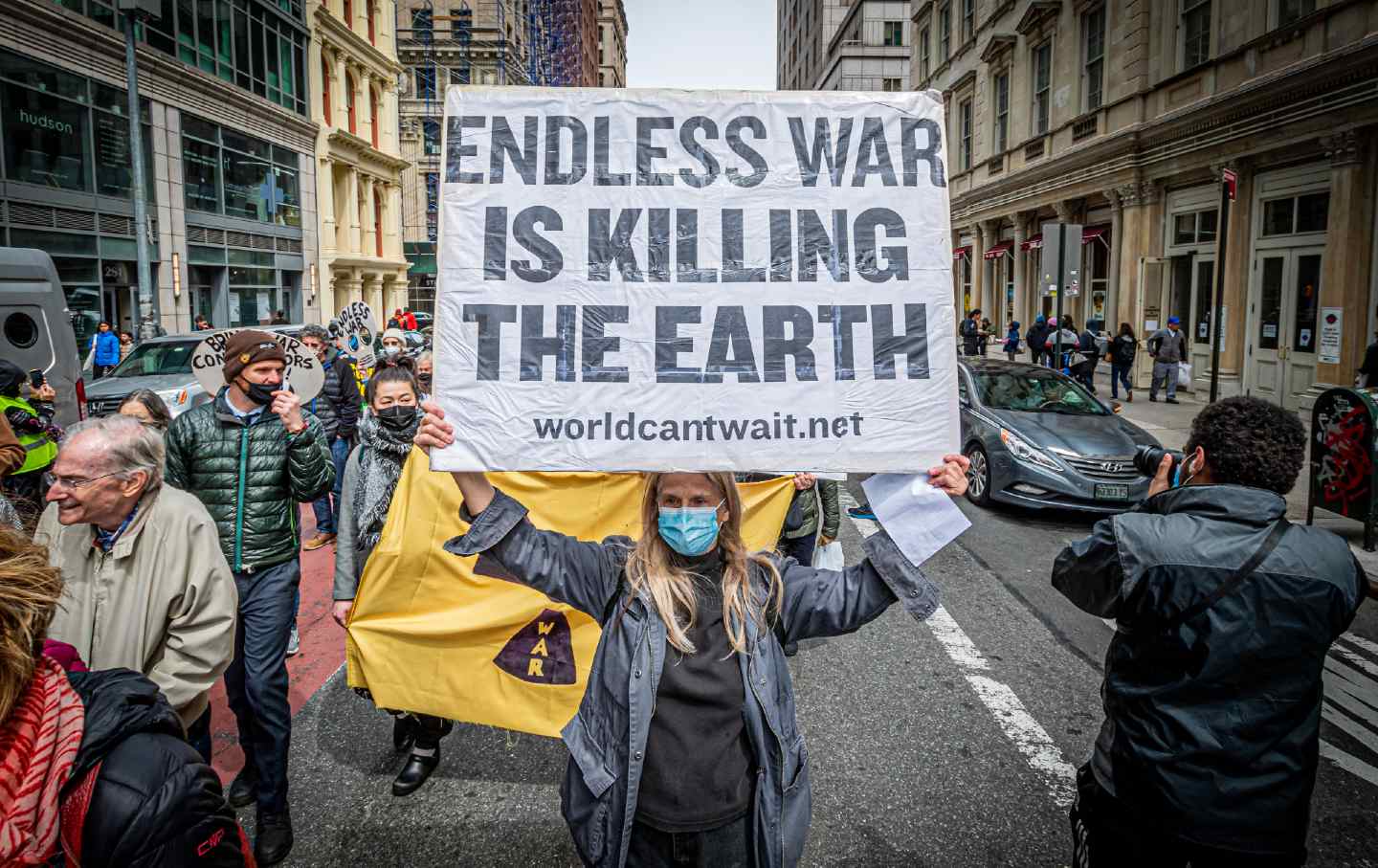
Abby Martin on the Climate Cost of US Empire Abby Martin on the Climate Cost of US Empire
The filmmaker discusses military pollution, her reporting in Hawai’i, and why the climate and antiwar movements belong together.

Trump Is Making Deals With Big Oil Trump Is Making Deals With Big Oil
Democrats and the press should be paying attention to how this pay-to-play behavior relates to the midterms
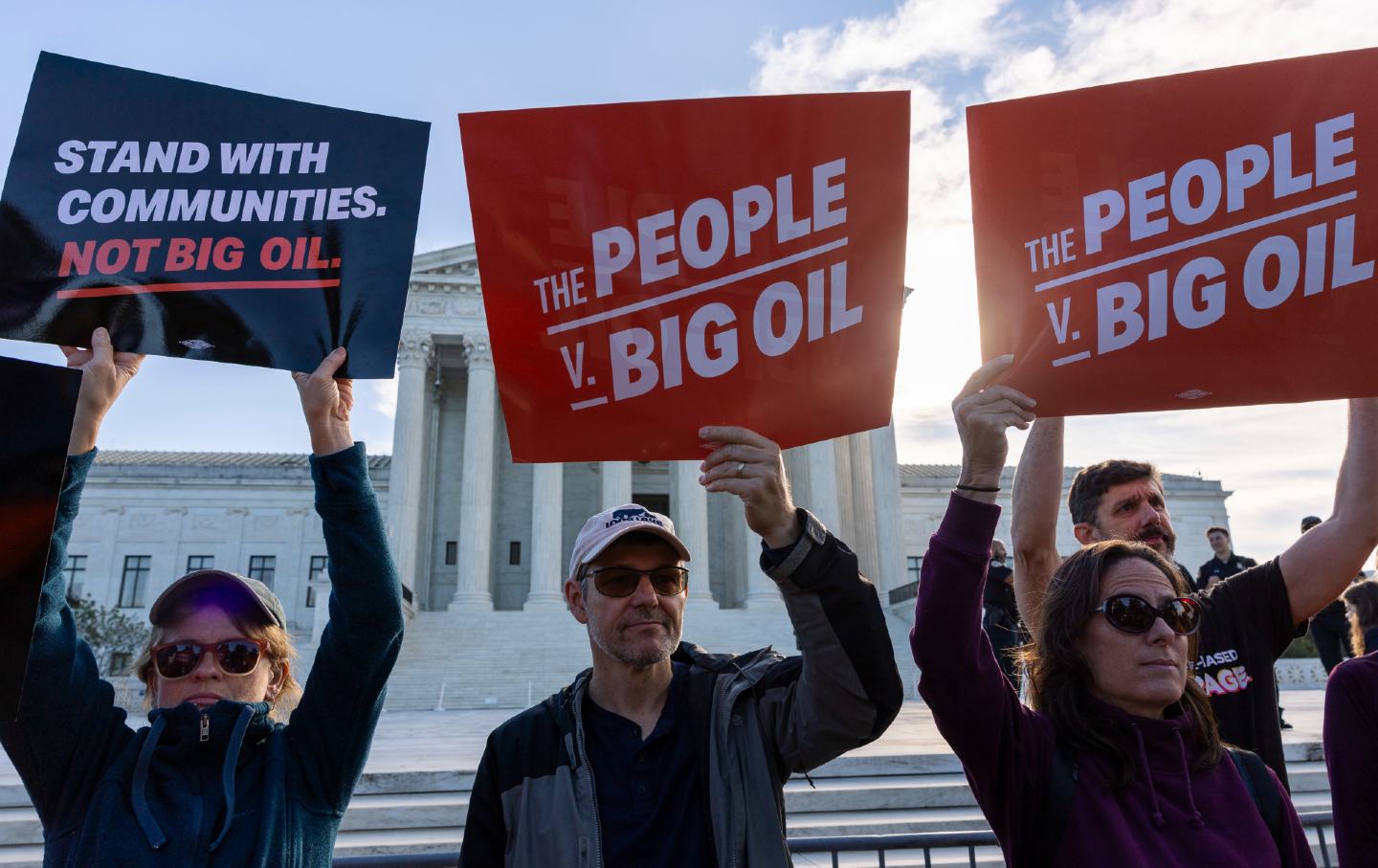
This Lawsuit Could Make Big Oil Pay for the Harm It’s Caused This Lawsuit Could Make Big Oil Pay for the Harm It’s Caused
The question is whether the Supreme Court will let it.
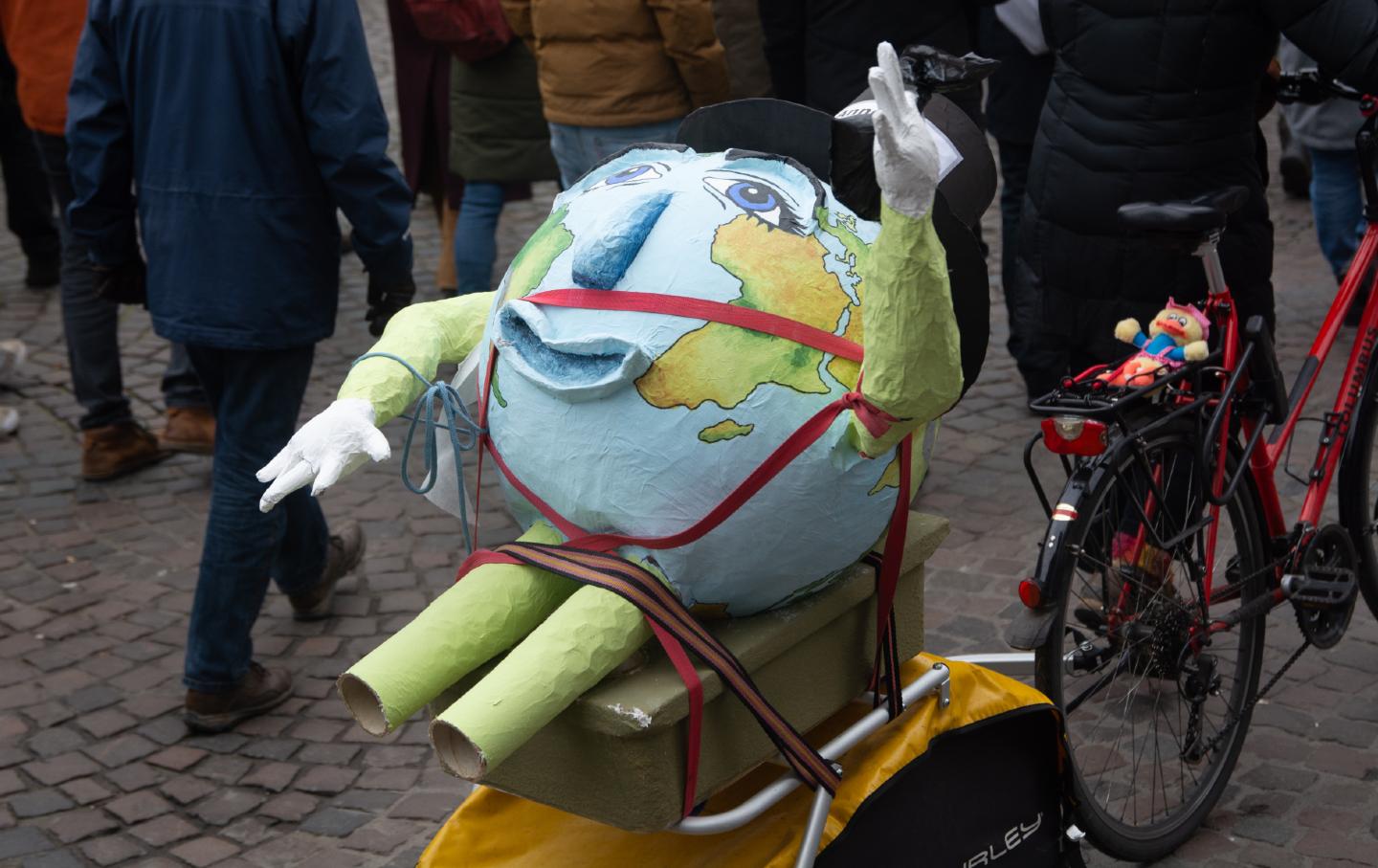
Germany and California Make Up an Environmental Superpower Germany and California Make Up an Environmental Superpower
The world’s third- and fourth-largest economies have pledged to environmental protections. Will others follow suit?

Gavin Newsom Comments on Climate Gavin Newsom Comments on Climate
On the sidelines of the UN General Assembly meeting and New York Climate Week, the California governor called AOC “the real damn deal.”
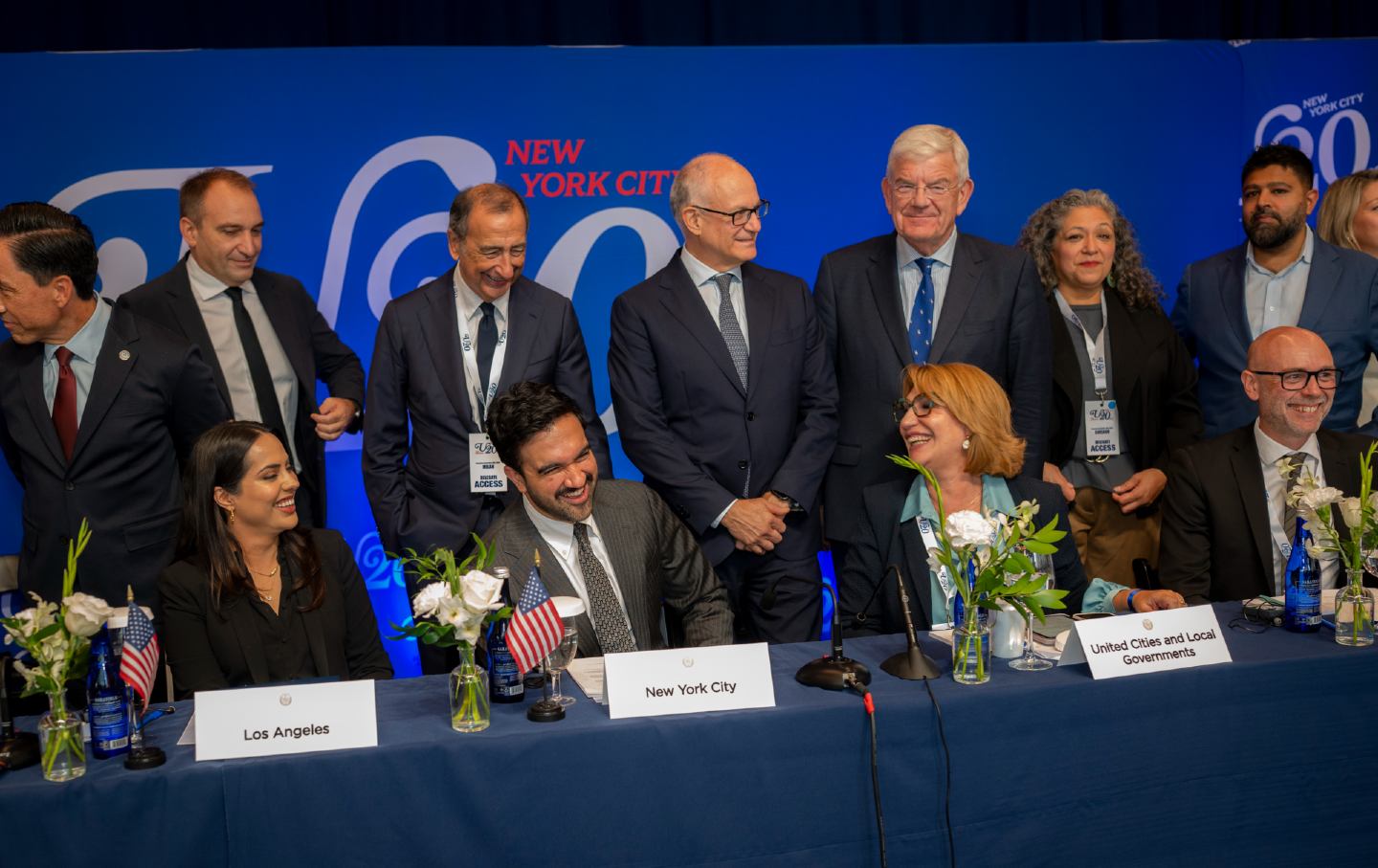
Cities as Climate Labs: Inside the U20 Summit Cities as Climate Labs: Inside the U20 Summit
Mayors at the Urban 20 Summit worked across borders to confront the climate crisis at the local level.

