Universities Shouldn’t Forget About Undocumented Students
Many colleges ignored the undocumented community once President Biden took office, but CUNY’s new efforts show how higher education can better support these students.
For Krissia Bonilla, going to college was much more difficult than it was for her peers. As she was protected by the Deferred Action for Childhood Arrivals (DACA) program, she wasn’t sure how to apply. The guidelines weren’t clear, and even the staff at her school were confused. “My high school counselor didn’t know what to do.”
More than 427,000 undocumented students are enrolled in postsecondary education, representing about two percent of all college students. Undocumented students are ineligible for federal financial aid: They cannot access Pell Grants, student loans, or federal work study. Only 23 states offer undocumented students access to in-state tuition. Just 17 states, including New York, offer state-funded financial aid for undocumented students, according to the Higher Ed Immigration Portal.
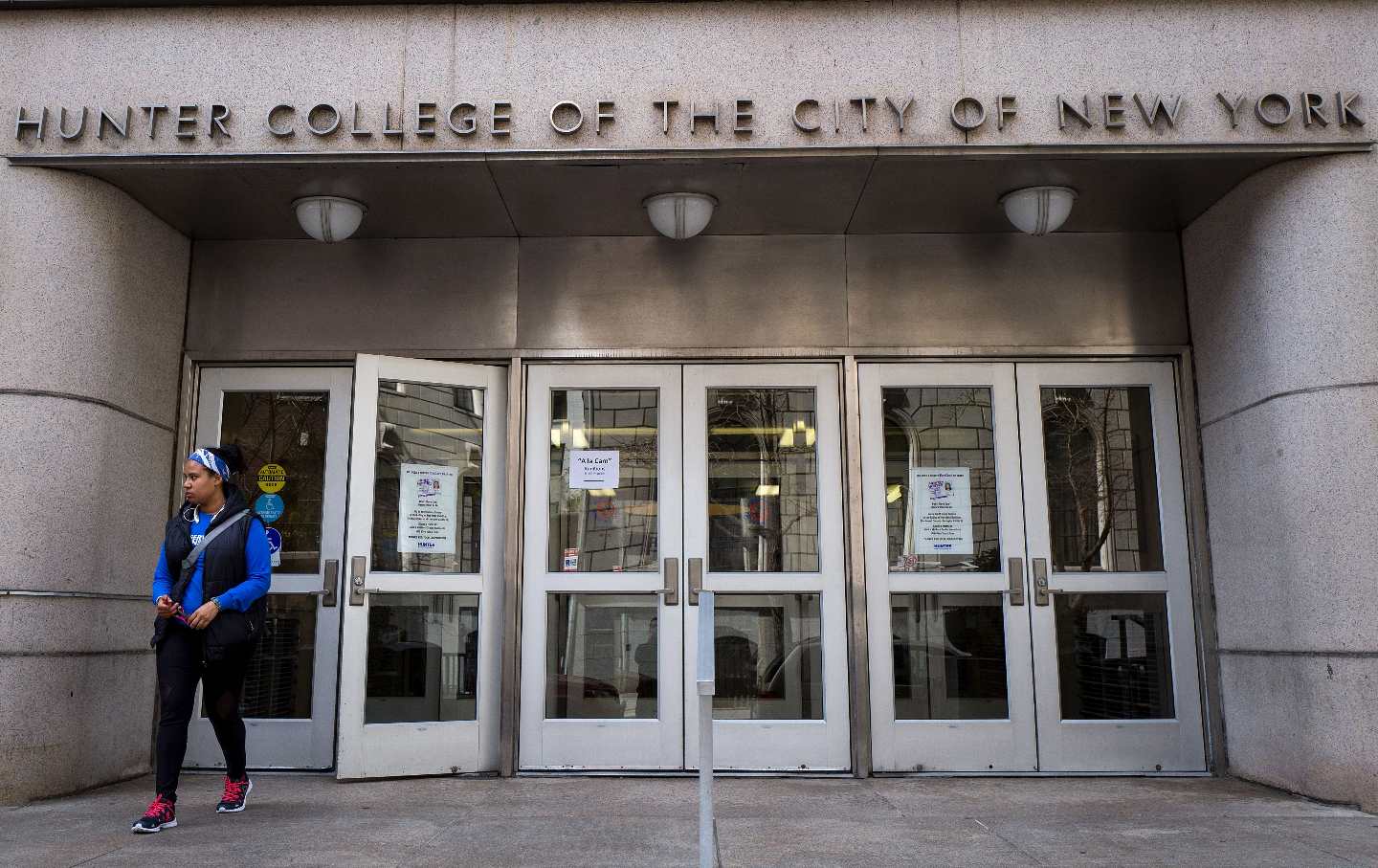
Unsure of the relevant laws, Bonilla began asking outside organizations for help. Bonilla eventually found a nonprofit called The Door, which offers services to young people in New York City from mental health counseling and crisis assistance to college prep and career development. With The Door’s help, she applied to the City University of New York. CUNY spans 25 campuses across the city’s five boroughs and serves 275,000 degree-seeking students. “As the nation’s largest urban public university system, CUNY is dedicated to educating and advocating for the immigrant students and families who make up the lifeblood of our city and state.”
After undocumented students are enrolled, though, they face new challenges. For example, registering for a major can require a Social Security number for certification, and not all internships and fellowships allow undocumented students. In December 2021, the system hired Cynthia Carvajal as the director of undocumented and immigrant student programs, a first-of-its-kind position to address policies that affect undocumented students. As a formerly undocumented immigrant herself, Carvajal’s role is part of CUNY’s efforts to ensure that immigrant students get the resources they need as they matriculate through four years of school. “I have students who want to do the nursing program, and they cannot get a straight answer about whether they can or cannot do it,” said Albert Lee, a student success specialist at CUNY’s Borough of Manhattan Community College.
According to Carvajal, colleges have paid even less attention to undocumented students during the Biden administration. “Because of the loud and visible violence towards the undocumented community during the Trump administration, there was a higher sense of urgency to support undocumented students during that time.” Under Biden, many of the Trump-era policies related to immigration remain in place. “For the ones who are undocumented, the urgency is still there,” said Carvajal.
After helping undocumented students for more than five years, Lee also searches for outside opportunities, stipends, and grants for which undocumented students can apply. “My job requires me to do more. I have to find resources for my students.” Having adequate funding and resources for undocumented students is critical. “What matters most is that there is money placed specifically for this population,” said Carvajal. CUNY has an “Immigration Success Liaison” on each school campus. Liaisons are trained to support immigrant and undocumented students and are educated about financial aid and enrollment, among other matters. The university has also partnered with The Dream.US since 2014 to provide scholarships up to $39,000 for undocumented students. While some universities have institutional scholarships that require students to provide social security numbers or legal documents, CUNY’s scholarships are open to every student regardless of immigration status.
During the pandemic, the university started new initiatives to support undocumented students. When the Trump administration excluded undocumented students from emergency financial relief disbursed to college students under the federal CARES Act during the pandemic, CUNY created the Chancellor’s Emergency Relief Fund, providing more than 1,400 CUNY undocumented students with emergency grants of $500. In the second round of relief, CUNY allocated 5 percent as discretionary funds to continue supporting them.
In 2019, CUNY opened two immigrant student success centers, at John Jay College and Brooklyn College, to “organize workshops, support groups and other programming and resources to alleviate obstacles faced by students who are immigrants, including those who are undocumented.” According to Diverse: Issues In Higher Education, there are “only 30 such centers in the United States as of 2018, with 25 of them concentrated in California. The centers were often funded by temporary grants and run by part-time staff.” As director, Carvajal will oversee the expansion of the centers to other CUNY campuses. “These centers create an opportunity for students to receive important academic and legal information, develop a sense of belonging and connect with other immigrant students across and within their diaspora,” writes the university.
Other schools are unveiling different initiatives. The University of California formed a task force to examine the 1986 federal law that prohibits the hiring of immigrants without legal status. If it is able to revise this policy, it will be the first university in the country open to hiring undocumented students. A resolution is expected by November. Along with CUNY, TheDream.US has partnered with dozens of colleges, including Rutgers University, Morgan State University, Arizona State University, and Oglethorpe University. “We are proud to have 70+ Partner Colleges across the United States—all committed to serving and graduating DREAMers.”
CUNY’s strong advocacy for undocumented students’ well-being and future in this country stands as both an example and a challenge to other state systems. “CUNY takes great pride in its strong advocacy for undocumented immigrants and Dreamers, along with the fact that so many leading advocates in our community are DACA recipients themselves,” wrote the university’s chancellor, Felix V. Matos Rodriguez, on the 10th anniversary of the program. “Our country’s future depends on their success yet partisan gridlock is leaving our brightest minds behind. We again call on our lawmakers to keep working to provide the path to U.S. citizenship that all DACA recipients and undocumented youth who call this country home have more than earned.”
Disobey authoritarians, support The Nation
Over the past year you’ve read Nation writers like Elie Mystal, Kaveh Akbar, John Nichols, Joan Walsh, Bryce Covert, Dave Zirin, Jeet Heer, Michael T. Klare, Katha Pollitt, Amy Littlefield, Gregg Gonsalves, and Sasha Abramsky take on the Trump family’s corruption, set the record straight about Robert F. Kennedy Jr.’s catastrophic Make America Healthy Again movement, survey the fallout and human cost of the DOGE wrecking ball, anticipate the Supreme Court’s dangerous antidemocratic rulings, and amplify successful tactics of resistance on the streets and in Congress.
We publish these stories because when members of our communities are being abducted, household debt is climbing, and AI data centers are causing water and electricity shortages, we have a duty as journalists to do all we can to inform the public.
In 2026, our aim is to do more than ever before—but we need your support to make that happen.
Through December 31, a generous donor will match all donations up to $75,000. That means that your contribution will be doubled, dollar for dollar. If we hit the full match, we’ll be starting 2026 with $150,000 to invest in the stories that impact real people’s lives—the kinds of stories that billionaire-owned, corporate-backed outlets aren’t covering.
With your support, our team will publish major stories that the president and his allies won’t want you to read. We’ll cover the emerging military-tech industrial complex and matters of war, peace, and surveillance, as well as the affordability crisis, hunger, housing, healthcare, the environment, attacks on reproductive rights, and much more. At the same time, we’ll imagine alternatives to Trumpian rule and uplift efforts to create a better world, here and now.
While your gift has twice the impact, I’m asking you to support The Nation with a donation today. You’ll empower the journalists, editors, and fact-checkers best equipped to hold this authoritarian administration to account.
I hope you won’t miss this moment—donate to The Nation today.
Onward,
Katrina vanden Heuvel
Editor and publisher, The Nation