What Are the Real Reasons for the Global South Food Crisis?
Don’t ignore the role of financial speculation.
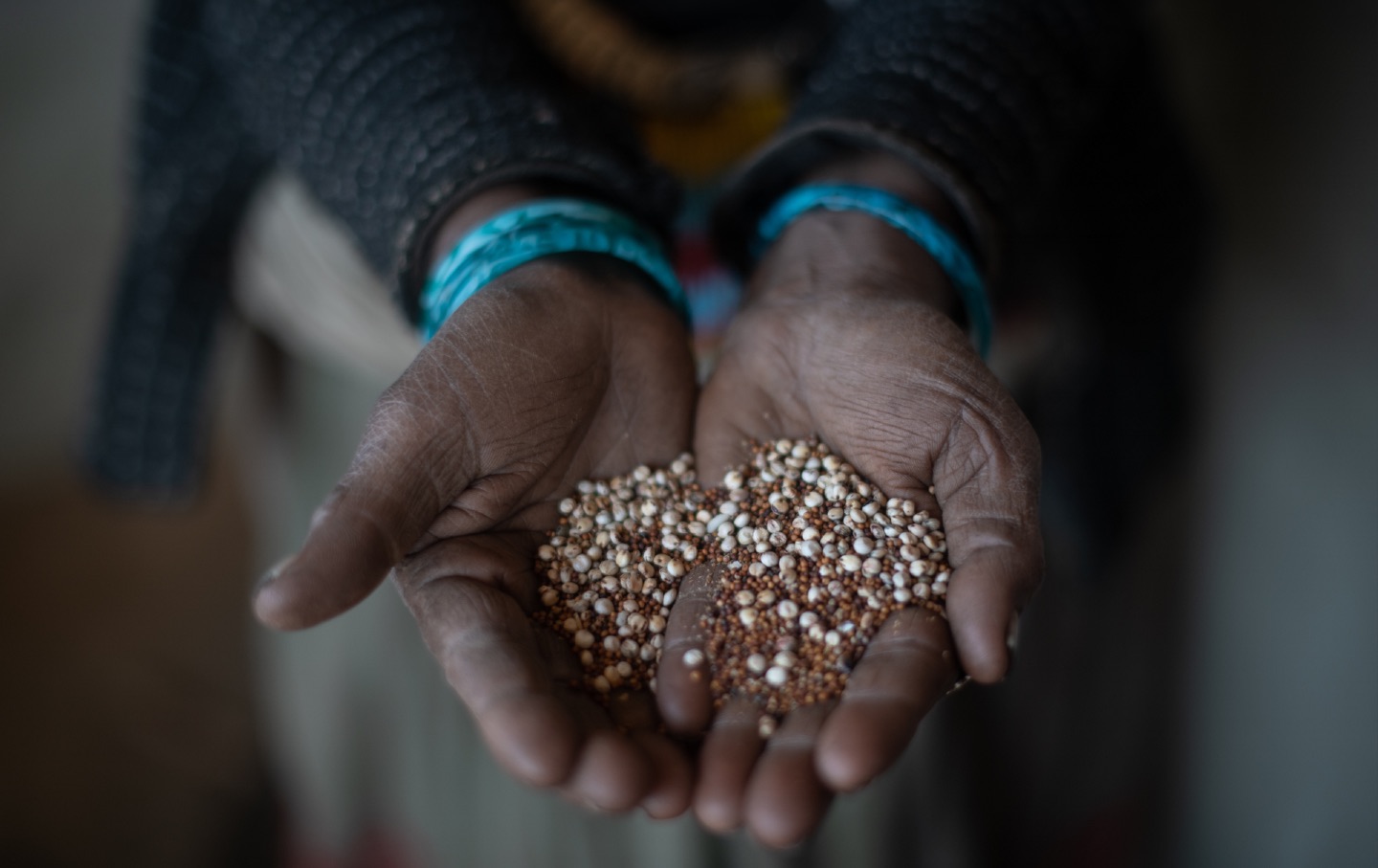
The global food crises, exacerbated by the Black Sea grain initiative’s end, disproportionately impacts the Global South. But will the resumption of these grain shipments bring closure to the extreme hunger rampant in many countries? Serious research provides solutions, if the underlying and real reasons for the crises are recognized and addressed.
Factors like war, the breakdown of distribution and transportation (Russia-Ukraine), changed climate patterns (Pakistan floods), reduced exports from major exporters (India’s ban on selective rice exports) lead to price increases. However, decades of research has established that there is enough food production to feed the world; the problem of food insecurity lies elsewhere.
For example, wheat prices started increasing in 2021 and were pushed up after the Russian invasion of Ukraine and the imposition of sanctions. But global wheat production increased in the same period and could have compensated for this gap. Four companies (Archer Daniel Midland, Bunge, Cargill and Louis Dreyfus) control 70 to 90 percent of global grain trade. They have made huge profits during the war as food grains became unaffordable and 345 million experience acute food insecurity. Olivier De Schutter, United Nations special rapporteur on extreme poverty argued that these companies could have done more to prevent the hunger crisis in the first place. As African Union Chairperson and Senegal President Macky Sall said Africa has become collateral damage in the sanctions game.
Similarly, fertilizer costs and natural gas prices soared after sanctions were placed on Russia. But studies like one from the Institute for Agriculture and Trade Policy reveal that the profits of the world’s nine major fertilizer companies increased even more than the rise in costs. Research from the International Food Policy Research shows that such concentration increases market exertion allowing producers to take advantage of price spikes in raw materials to the detriment of farmers. So this crisis was an opportunity for the MNCs—while billions of small farmers in low income countries were bankrupted.
Private investment and foreign aid promote increased use of chemical fertilizers, and the use of high yielding and genetically modified seeds. These changes have made farmers in the Global South vulnerable. (Of equal concern, it is worth noting that these chemical fertilizers are big emitters of greenhouse gasses.)
Financial activity in commodity futures markets has also hiked prices. A report by the G-20 (2012) showed “excessive volatility” over future prices leads to serious flaws in the price systems and negatively impacts developing countries. Recommendations from experts like at the Global Development and Environmental Institute, among others, call for more effective reforms to reduce financial speculation.
The FAO warns that the number of people facing acute food insecurity and requiring life-saving food assistance is growing at an alarming rate. Urgent steps are required to address the global food crises in a holistic way. Vulnerable countries might be supported in creating food reserves and buffer stocks. Further, there is an urgent need to limit the massive expansion and exposure of crops and lands to biofuels. Industrialized countries like the US for example use corn and soya for ethanol and feeding livestock. The competing demands drive prices upwards and create artificial shortages. The practice of leasing millions of acres of lands to industrial agriculture, as in Africa also needs to be controlled. Such unregulated markets compromise the food production capacity of developing countries and dispossess small farmers. Food importing countries are then forced to use their dollar reserves to import food and fuel; the result,they fall into the debt trap.
Experience establishes that agroecological technologies like crop rotation, natural fertilizers and pesticides and alternatives that were traditionally used should be encouraged and subsidized by governments in a rational and sustainable way. These would boost productivity, preserve soil quality, increase output, and protect both farmers and land. Since the 18th G-20 Summit will take place in India in September, and global agriculture is high on the agenda, new regulations related to food security should be passed.
The link between the producers and consumers of food must not be broken. The Global South is dependent on food crops cultivated on small farms that reach consumers through local markets. When food systems are dominated by multinational corporations, production and distribution is overtaken by them, and this link is threatened. As Michael Fakhri, UN Special Rapporteur on the Right to Food argues that without taking into account peoples’ real needs the disconnect will continue. A break in the link between local supply and local consumption signals a break of the global food economy. Global policy makers need to make serious and urgently needed changes that take into account the food system as a whole.