
Needed: A Sober Assessment of Putin’s Russia to Help End the War
Putin’s ultimate goal isn’t recreating empire or seeking war with NATO—it’s staying in power.
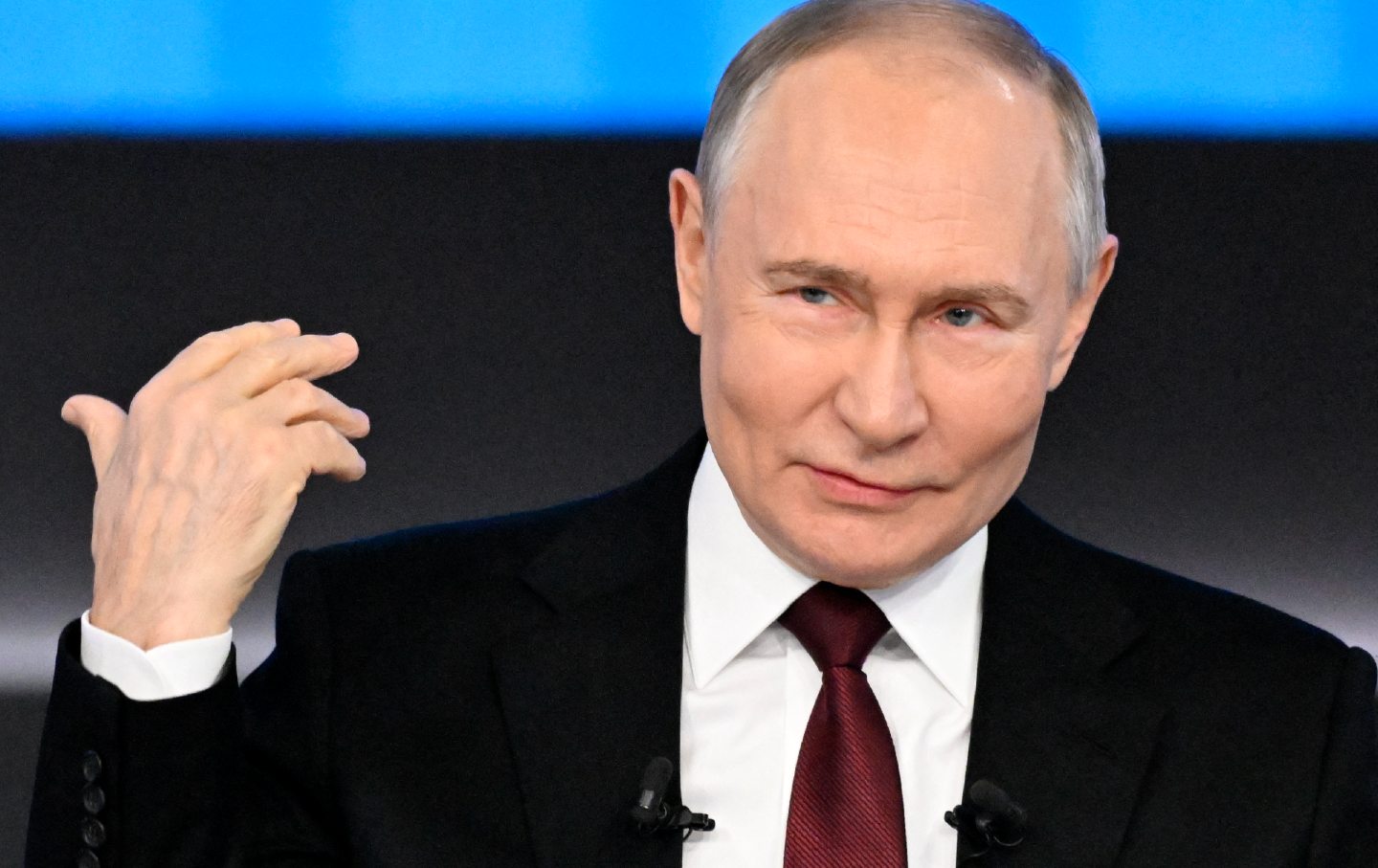
In pressing for greater military spending to counter Russia, NATO Secretary-General Marc Rutte argues that the “danger is moving toward us at full speed.” He is hardly alone in saying so.
Yet what exactly is the extent of this danger? Amid both speculation that incoming President Trump will pull support for Ukraine and demands for NATO to boost its military budget, a clearheaded assessment of Russia is needed, one that comprehends not only its strengths but the full range of its challenges.
In making his case, Rutte emphasizes that “Russia’s economy is on a war footing,” producing “huge numbers of tanks, armored vehicles and ammunition.” Andrea Kendall-Taylor and Michael Kofman, two of the most widely quoted experts on the Russian war, contend in Foreign Affairs that “Putin is now more committed than ever to the war with Ukraine,” adding that “Putin’s ultimate objectives are to relitigate the post–Cold War order in Europe, weaken the United States, and usher in a new international system.” Yet, unlike Rutte they have almost nothing to say about Russia’s wartime economy.
That is surprising, since many analysts now point to the economy as Russia’s greatest weakness. A labor shortage has become a hard limit. Demographic decline is compounded by soldiers sent to the front, with as many as 700,000 killed and injured, while close to a million other Russians have fled the country. The lack of workers feeds inflation, which in turn leads to bruising interest rates. Economists inside Russia and out speculate about looming stagflation and bankruptcies.
Ever higher bonuses—rather than patriotic fervor—are required to lure prospective soldiers to battle, further fueling inflation and pulling workers from the civilian economy. As a result, in the words of Yakov Feygin, “the war economy is paid for out of the wages of the working population.”
The challenges are hardly limited to the economic sphere. Currently, Putin’s core supporters—state employees and pensioners—are suffering the most, as their pay lags well behind inflation. As military spending weighs more heavily, the editors of The Bell, an authoritative outlet on Russia’s economy, foresee that “dampened growth and high inflation will, in turn, make inequality more visible, fueling popular discontent.”
No longer worried about losing votes to high gasoline prices, the outgoing Biden administration has announced new “sweeping sanctions” on Russia’s oil exports. Yet Russia’s major challenges are structural and will not disappear even if the war in Ukraine ends and sanctions are somehow lifted. The February 2022 invasion of Ukraine was preceded by a decade of declining living standards. Curiously, even the more cautious forecasts of when Russia’s economy will reach a full-blown crisis—within the next several years—coincides almost precisely with when others predict Russia will be able to rearm and attack again.
Capabilities aside, statesmen and pundits all too often pretend to know Putin’s intentions, as when NATO Supreme Commander General Cavoli confidently states that “Russia [does not] intend to stop with Ukraine.” Robert Kagan contends in The Atlantic that Putin will only accept “total capitulation” in Ukraine. In backing up his assertion, he repeats the words “Putin believes” no less than 10 times in a single article, as if he has a unique mind meld with the Kremlin leader.
Yet here is one assumption that can be made with some level of confidence: Putin’s ultimate goal isn’t recreating empire or seeking war with NATO—it’s staying in power. While to outsiders Putin’s hold on power might seem wholly secure, he is an authoritarian leader obsessed about “color revolutions” and popular uprisings elsewhere, such as the brutal end meted out to Libya’s Moammar El-Gadhafi. Recall that the conflict with Ukraine began in 2014 when massive protests forced President Yanukovych to flee to safe haven in Russia, leaving all of his ill-gotten gains behind, a fate that has now befallen to Syria’s Assad.
As the political scientist Adam Przeworski noted some years ago, the “authoritarian equilibrium rests mainly on lies, fear or economic prosperity.” For over a decade now Putin has relied on propaganda and repression—lies and fear—a practice that he pushed into overdrive with the full-scale invasion of Ukraine. Yet, as the population’s economic pain deepens, the threat of disequilibrium rises, and with that, so does the potential for instability.
Russia is hardly on the brink of collapse. But there is now credible empirical evidence that both the general population and Russian elites are suffering from war-weariness. While Putin may choose to continue the war, or rearm and attack again, such actions would come with substantial political risks.
Hence, it is time to reevaluate the rhetoric coming out of Western capitals and think tanks about Russian military might. Such assessments overlook the fact that, after three years of war and massive losses, Russia has been unable to capture even all of Donetsk. It has now lost its ally in Syria, and it has alienated its long-time allies Armenia (over Nagorno-Karabakh) and Azerbaijan (by shooting down an Azeri passenger airliner).
Nevertheless, Denmark’s center-left prime minister, Mette Frederiksen, says it’s “naïve” not to expect Russia to rearm within a few years with the ability to attack NATO; hence, she joins the urgent calls for increased military spending. Unlike some others, Frederiksen notes openly that such spending on weaponry will mean cuts in welfare, “since you cannot spend your penny…or your euro, or your krone, two times.”
Yet here is one prediction worth pondering: As Russia has found out, since increases in military spending come at the cost of the broader economy, they are likely to fuel social discontent. In Europe’s case, this could well lead to greater support for the extreme right, including political figures who push for closer ties to Putin’s Russia.
Popular
“swipe left below to view more authors”Swipe →But then there may be other reasons for the lack of a clearheaded perspective. While war is a burden for some, for others it is a bonanza. In an interview in the Financial Times, Adm. Rob Bauer, chair of NATO’s military committee, calls banks and pension funds “stupid” for believing that “it is not ethical to invest in defense capabilities because they kill people.” He asks them, “Why are you not convinced by trillions of dollars?”—adding that “there is so much money to be spent over the next 20 years.” Meanwhile, stock prices of military industrial firms continue to surge.
Interestingly, Biden’s outgoing national security adviser Jake Sullivan argues that Russia is “in a weakened state” after three years of war. Perhaps weakening Russia was the Biden administration’s plan all along. If so, that raises some troubling questions. Jean-Daniel Ruch, the Swiss ambassador to Turkey during the Istanbul negotiations shortly after the war began, is the latest observer to the talks to attest that the US and UK “pulled the plug on the negotiations” just as they appeared close to a settlement. The reason, Ruch alleges, is that they wanted to “first weaken Russia.” Indeed, shortly after the negotiations foundered, US Secretary of Defense Lloyd Austin declared, “We want to see Russia weakened.”
That goal has arguably been achieved. Yet it has come at the cost of as many as 100,000 Ukrainian soldiers killed and 400,000 wounded, not including civilian casualties, and the looming expense of rebuilding the shattered country. The conditions for ending the war now will almost certainly be worse for Ukraine than they would have been had the negotiations come to fruition soon after the war began. It’s beyond time to seek an end to this war. Finding a lasting settlement will not be easy. But facile assumptions of Russia’s strengths and what “Putin believes” should not stand in the way.
Support independent journalism that does not fall in line
Even before February 28, the reasons for Donald Trump’s imploding approval rating were abundantly clear: untrammeled corruption and personal enrichment to the tune of billions of dollars during an affordability crisis, a foreign policy guided only by his own derelict sense of morality, and the deployment of a murderous campaign of occupation, detention, and deportation on American streets.
Now an undeclared, unauthorized, unpopular, and unconstitutional war of aggression against Iran has spread like wildfire through the region and into Europe. A new “forever war”—with an ever-increasing likelihood of American troops on the ground—may very well be upon us.
As we’ve seen over and over, this administration uses lies, misdirection, and attempts to flood the zone to justify its abuses of power at home and abroad. Just as Trump, Marco Rubio, and Pete Hegseth offer erratic and contradictory rationales for the attacks on Iran, the administration is also spreading the lie that the upcoming midterm elections are under threat from noncitizens on voter rolls. When these lies go unchecked, they become the basis for further authoritarian encroachment and war.
In these dark times, independent journalism is uniquely able to uncover the falsehoods that threaten our republic—and civilians around the world—and shine a bright light on the truth.
The Nation’s experienced team of writers, editors, and fact-checkers understands the scale of what we’re up against and the urgency with which we have to act. That’s why we’re publishing critical reporting and analysis of the war on Iran, ICE violence at home, new forms of voter suppression emerging in the courts, and much more.
But this journalism is possible only with your support.
This March, The Nation needs to raise $50,000 to ensure that we have the resources for reporting and analysis that sets the record straight and empowers people of conscience to organize. Will you donate today?
More from The Nation
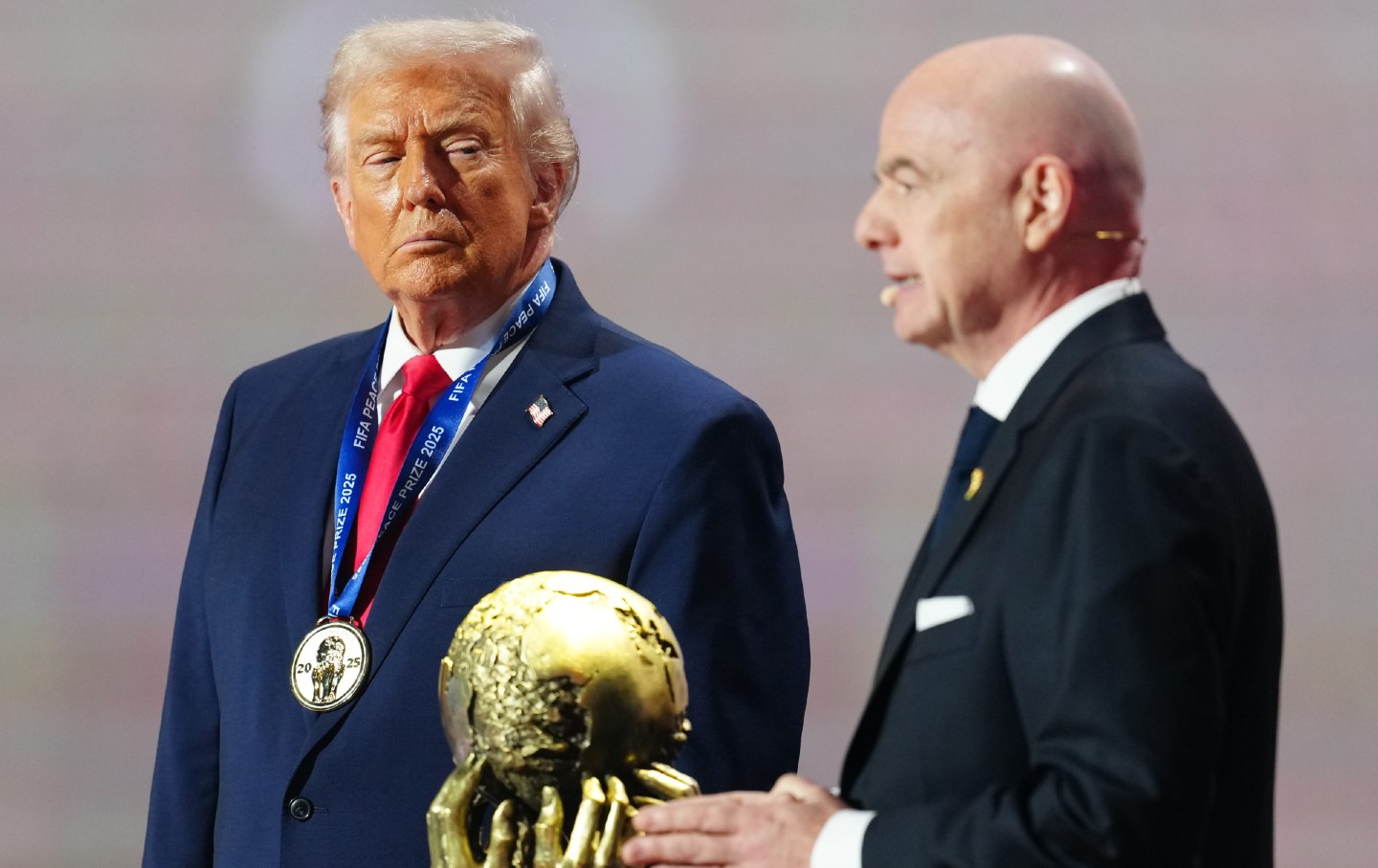
Trump and His Soulless Cronies Have Managed to Suck the Joy Out of the World Cup Trump and His Soulless Cronies Have Managed to Suck the Joy Out of the World Cup
Not even soccer is immune from Trump’s reverse Midas touch.
Garbage In, Carnage Out Garbage In, Carnage Out
The harrowing lessons of the Pentagon’s recently dissolved partnership with Anthropic.
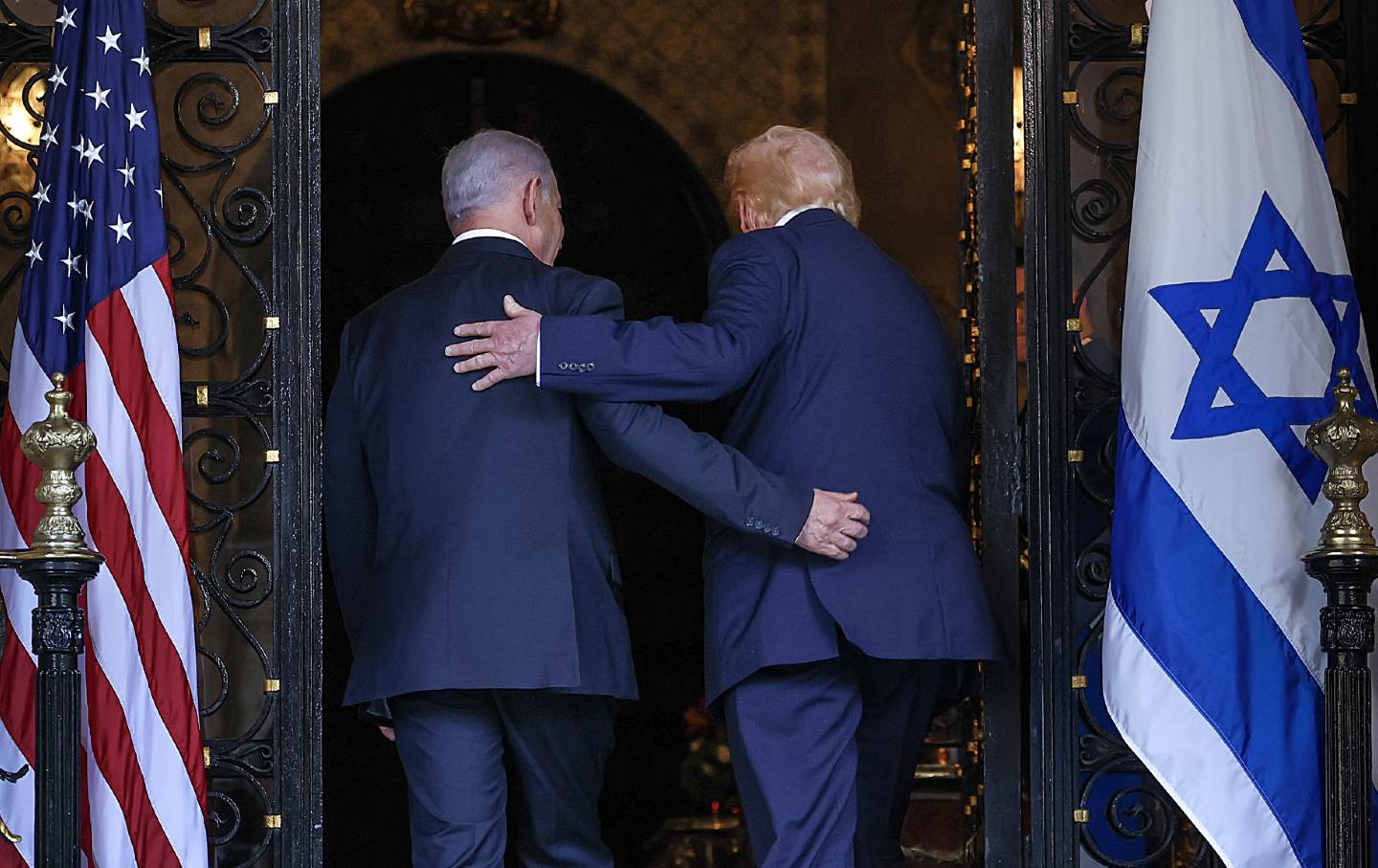
The Iran War Could Be Catastrophic for the US-Israel Alliance. Good. The Iran War Could Be Catastrophic for the US-Israel Alliance. Good.
As Israel’s role in pushing the war with Iran comes into ever sharper focus, it’s up to us to turn outrage into change.
An Unlawful War An Unlawful War
The precedent being set by the US in launching this war of aggression against Iran will long live in infamy.
Trump and Netanyahu Want to Turn Iran Into a Failed State Trump and Netanyahu Want to Turn Iran Into a Failed State
This war looks designed to cause maximum chaos and instability. The world will pay a high price.

The War on Terror Paved the Way for Trump’s Rise—Now He’s Making It His Own The War on Terror Paved the Way for Trump’s Rise—Now He’s Making It His Own
Only the total abolition of the DHS can restore freedom.

