
No Matter What, Palestinians Will Never Give Up
The last year has shown that our love of life, and our fight for our freedom, will never be extinguished.
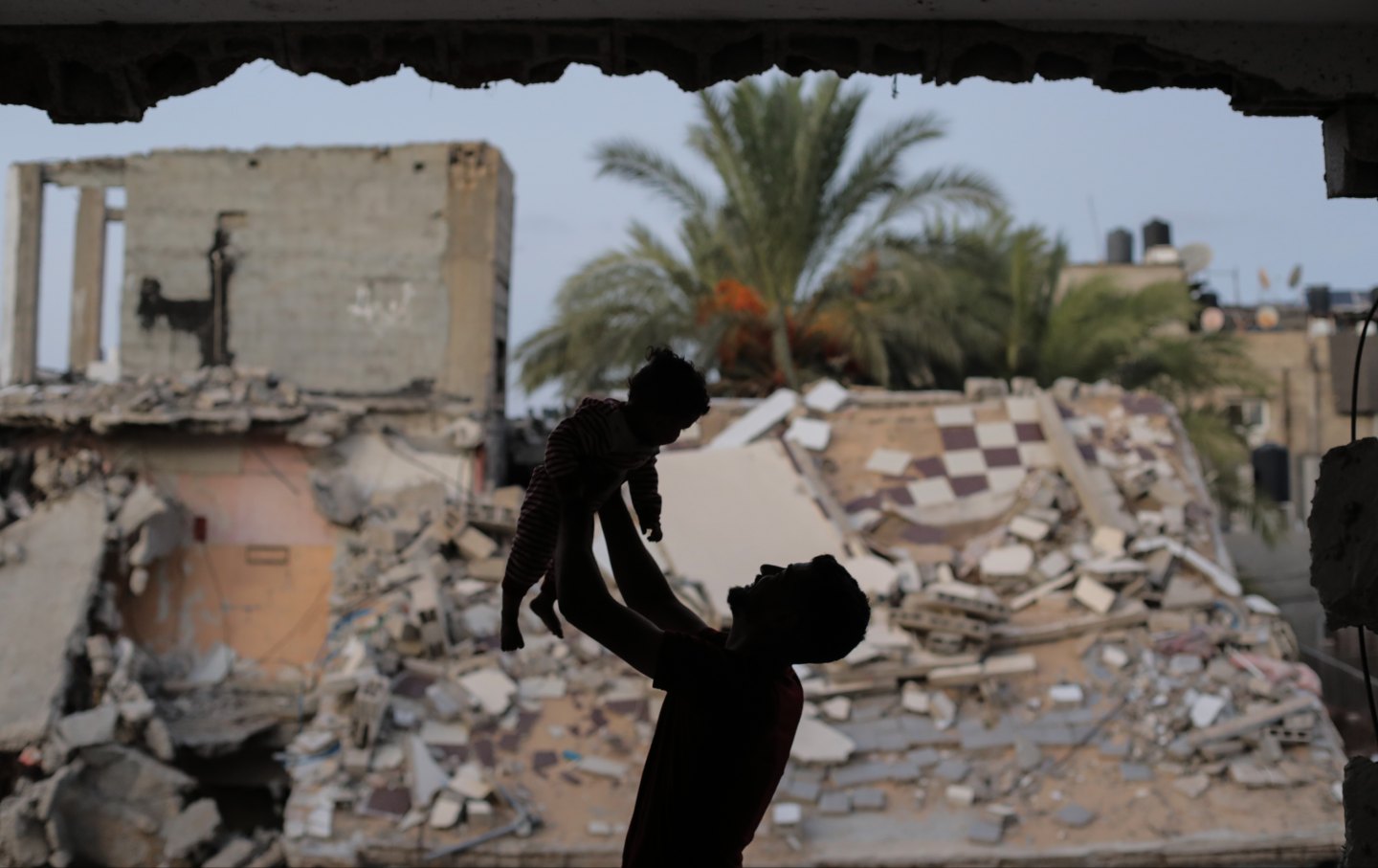
A man plays with a baby as Palestinians struggle with power outages due to Israeli attacks that destroyed the infrastructure in Gaza City, Gaza, on October 13, 2024.
(Hassan Jedi / Anadolu via Getty Images)In the last year, the world has seen the sumud, or steadfastness, of my people over and over again. You could witness it in the children who planned a press conference to beg the world to recognize their humanity after the first Al-Shifa Hospital massacre, the mothers who continued to find ways to feed their families after Palestinians were killed trying to retrieve flour, or the parents who rebuilt their tents for the fourth time after the unfathomable atrocity of massacring people in a “safe zone.”
The killing of innocent civilians is a terrible reality that Palestinians have been forced to endure with sickening regularity—including this week’s horrific attacks on north Gaza, which shocked the conscience of people across the world. Yet, even as our very existence is met with genocide, the people of Gaza embody sumud—the unbreakable refusal to submit to subjugation. It is the moral backbone of Palestinian resistance.
Gazans love life. Despite the ongoing bombardment, despite the killings, despite everything. They have devised makeshift solutions to daily life—like a hand-washing machine made from a bicycle, a clay oven made from mud and straw to bake bread, and generators assembled from whatever machine parts they can find. These are just a few acts of stubborn perseverance under siege, of sumud crystallized.
Sumud in the diaspora must be an active force propelling us to make Palestinian liberation possible. The first step is to squash the sense of protest fatigue or feeling emotionally spent by the struggle. We have no excuse to grow weary when Gazans create sumud by their life and blood.
Historically, sumud has been both active and passive. Passively, the Palestinians in Gaza and the West Bank embody it by remaining on their land—hence the Palestinian phrase “existence is resistance.” Actively, sumud has meant replanting the olive trees burned after each settler assault, rebuilding the homes demolished with an underlying assumption that it may be demolished again, and resisting forced expulsion from the land.
In the diaspora, our sumud must be equally tangible, not an abstract ideal. Sumud cannot simply be just about bearing witness to death and dispossession, as some would suggest. Sitting with the images of inhumanity is a minimum. We have to believe that what we do in our daily lives is having an impact, and not succumb to the despair that Israeli society so desperately wants to create.
The second step is a commitment to providing the means for survival and resistance. This material support is not just charity but a deeper solidarity with the Palestinian cause. That means pressing elected officials in the United States and elsewhere to stop funding and arming another nation’s war. We in the Palestinian diaspora, alongside our peers in the West, must continue to use our privilege in a “free” nation to protest by every means. We must hold corporations who profit off the violence accountable through boycotts and divestment. We must work to end the complicity of organizations sending weapons or technologies to Israel.
We must also be granular and targeted in our support, from sending eSIMs so Gazan journalists can continue doing necessary work to helping Western doctors establish telemedicine services to alleviate some pressure from decimated hospitals that are left in Gaza.
Israel has tried to break sumud. The physical destruction alone has been part of this effort: over 60 percent of Gazan homes destroyed after more bombs dropped than the totality of World War II; the ethnocide of bombing of mosques, churches, libraries, museums, and so much more; the planting of Israeli flags over the ruins of Gazan society; the publishing of plans to turn parts of Gaza into Israeli resorts; and holding over 9,000 Palestinians in Gaza and the West Bank hostage, where they are arbitrarily detained and tortured in detention camps.
Israel’s efforts have been similar in Gaza and the West Bank for decades: the burning of Palestinian olive trees, a symbol of our connection to the land; banning the Palestinian flag; and expanding illegal settlements that erase Palestine from the map. However, Palestinians have never cowered to Israel’s horrors—and they never will. In fact, as the world has become increasingly used to Palestinian blood, and done nothing to stop it, we must reaffirm the right of Palestinians to defend their land and fight for their freedom.
Israel has been unable to subdue Gaza despite relentless military campaigns. Now, the Zionist project has shifted focus to the West Bank, targeting refugee camps in Jenin, where the population has been deeply entrenched in the struggle for liberation.
The refugee camps in the West Bank, particularly in Nablus, Jenin, and Tulkarem, are not merely places where the displaced survive. They are incubators of the collective Palestinian consciousness, which continues to reject colonialism and the violence that sustains it. Israel’s tactics in the West Bank are strikingly similar to those it has used in Gaza. The siege mentality, the demolition of homes, the targeted assassinations of resistance leaders—these are tools of occupation that have been wielded for decades. And yet, just as these measures have failed in Gaza, they are destined to fail in the West Bank. Occupation, no matter how brutal, cannot erase the will of a people determined to be free.
Now, we see our Lebanese neighbors, and brothers in struggle, experiencing the same acts of state-sponsored violence—villages across the south forced to flee as their homes are indiscriminately bombed under the pretext of fabricated claims of occupation officials. They, too, exercise resistance by simply existing on the land and refusing to submit to the acts of terror inflicted upon them.
Sumud is a uniquely Palestinian motif that has taken root on our land over generations. Our sumud has emerged in the context of our people’s ongoing dispossession and struggle for self-determination. It is our collective will to maintain our identity even as Western colonial powers would aim to deny the word “Palestine” itself.
Palestinians have shown what it means to see our land get stolen yet still believe in our right to return to it. We have taught the world what it means to live under occupation yet still hope for a better future. We have shown what it means to live through generations of ethnic cleansing yet never lose pride in our being.
Hope is a nonnegotiable part of the struggle. It was at this time last year that I finally understood the sumud of my people—our inability to be crushed and a spirit of resistance that exists in every trace of the Palestinian landscape.
More from The Nation

Trump and Netanyahu Want to Turn Iran Into a Failed State Trump and Netanyahu Want to Turn Iran Into a Failed State
This war looks designed to cause maximum chaos and instability. The world will pay a high price.

The War on Terror Paved the Way for Trump’s Rise—Now He’s Making It His Own The War on Terror Paved the Way for Trump’s Rise—Now He’s Making It His Own
Only the total abolition of the DHS can restore freedom.
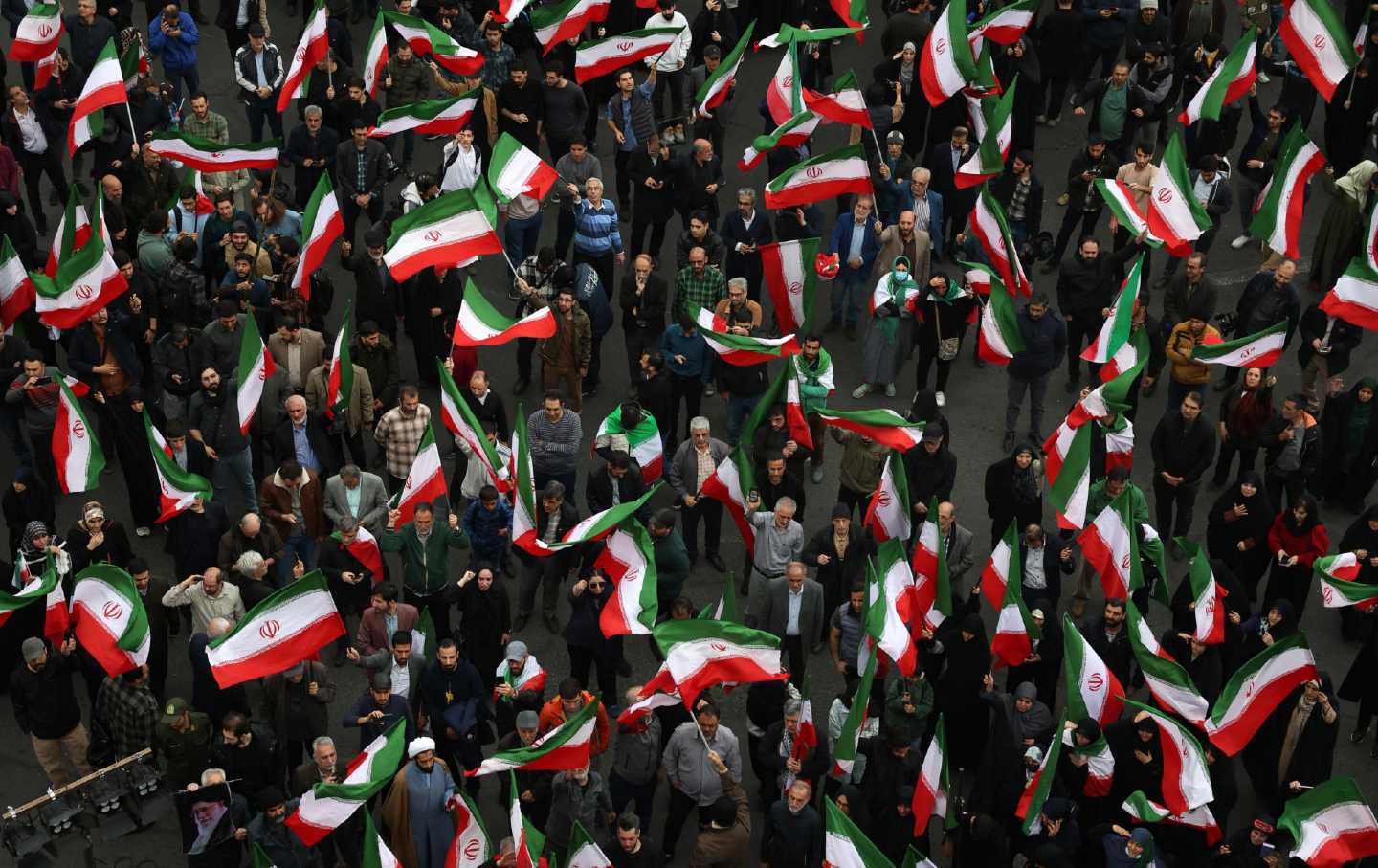
The Iranian Voices America Isn’t Hearing The Iranian Voices America Isn’t Hearing
We need to listen to those who oppose both the Islamic Republic’s authoritarianism and foreign military escalation.
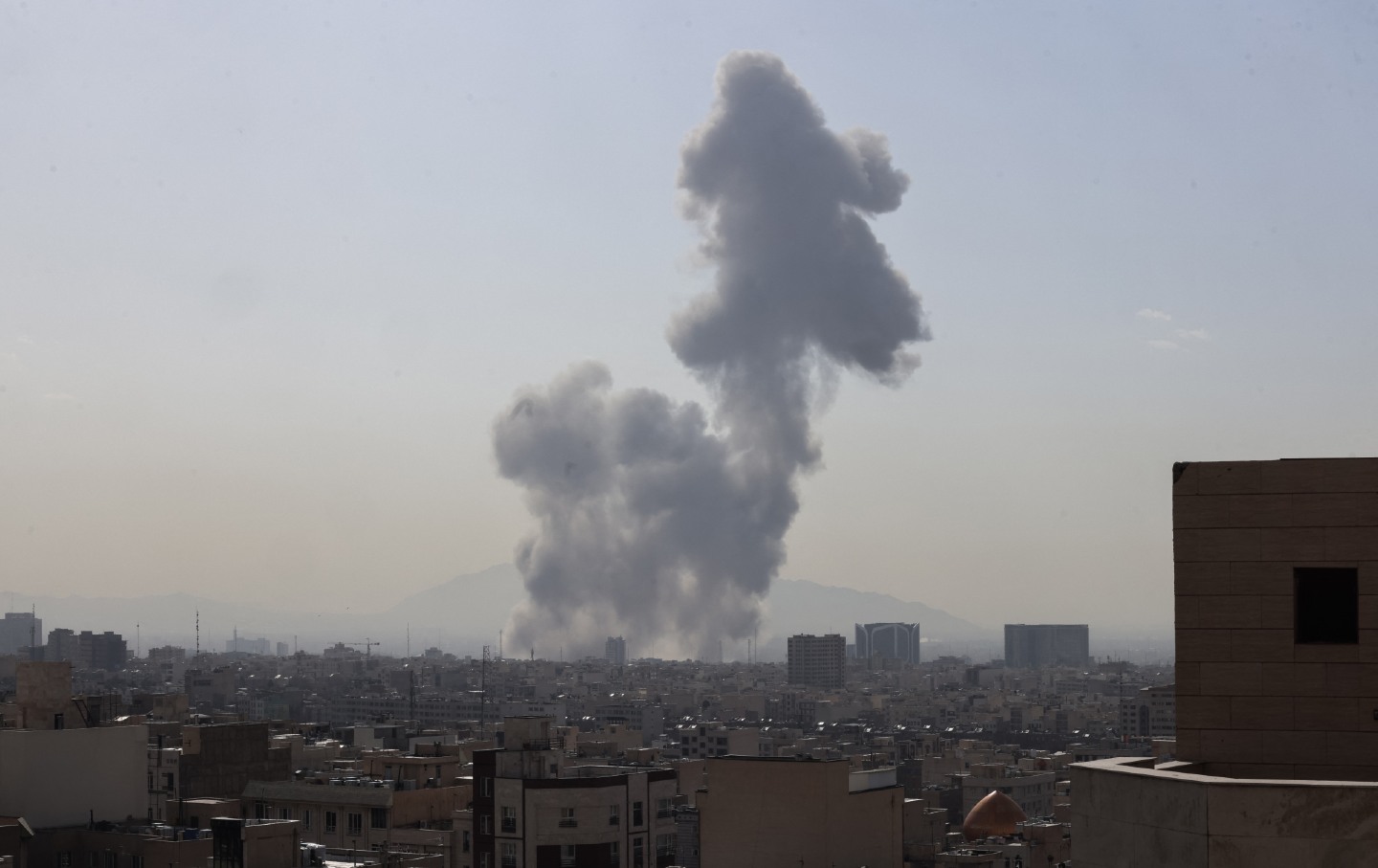
The US Attacks Iran in a War of Aggression The US Attacks Iran in a War of Aggression
The US has waged many wars—but this is one of the most senseless we've ever seen.
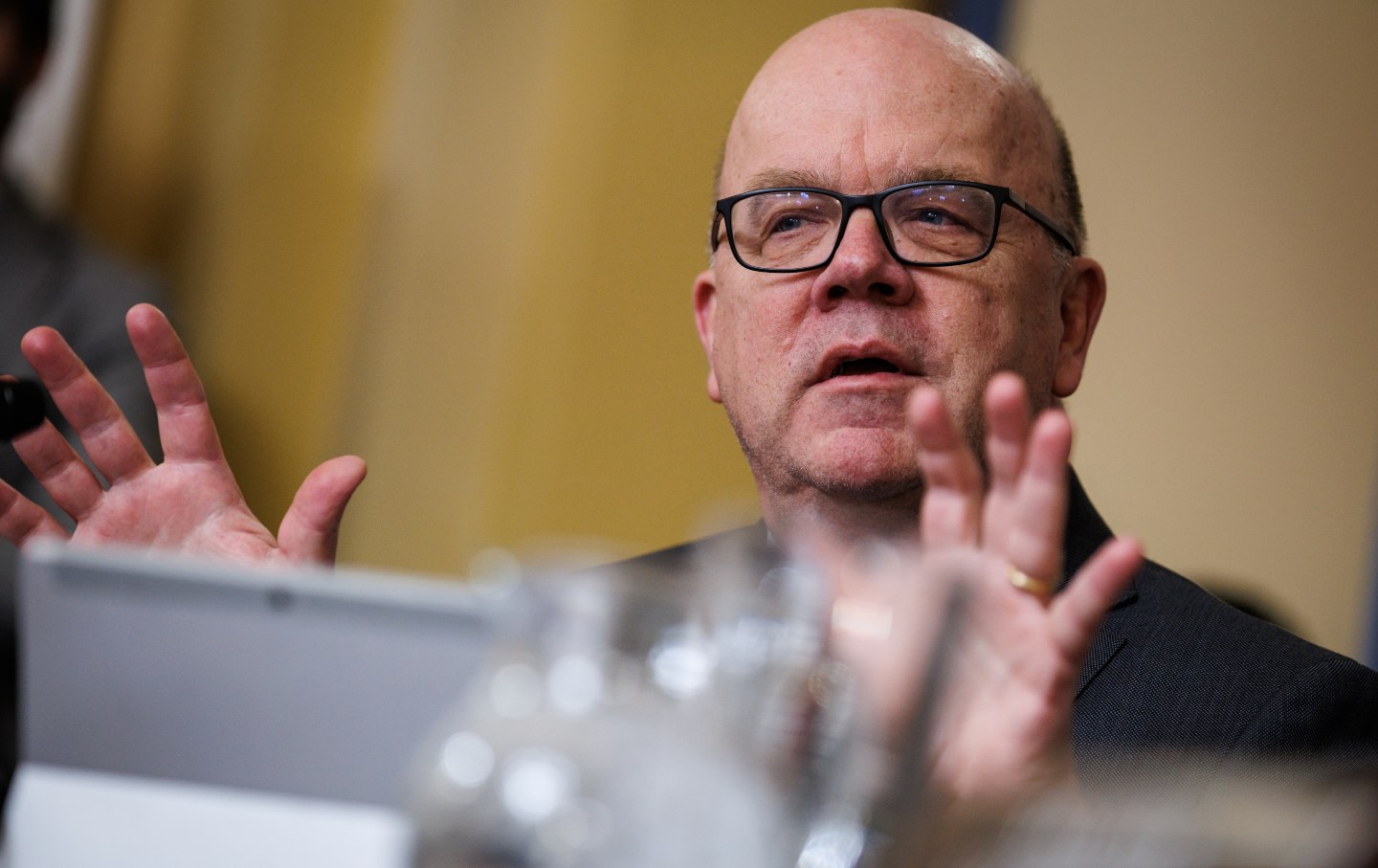
Opposing Trump’s Cruel Assault on the Cuban People Opposing Trump’s Cruel Assault on the Cuban People
An interview with Representative Jim McGovern.
A New Report on Alexey Navalny’s Death A New Report on Alexey Navalny’s Death
Boris Kagarlitsky and hundreds of unknown political prisoners remain in Russia’s prisons.

