What to Expect From the Upcoming NATO Summit
Will the rearmament agenda bring more security—or lead to a self-inflicted economic and social crisis?
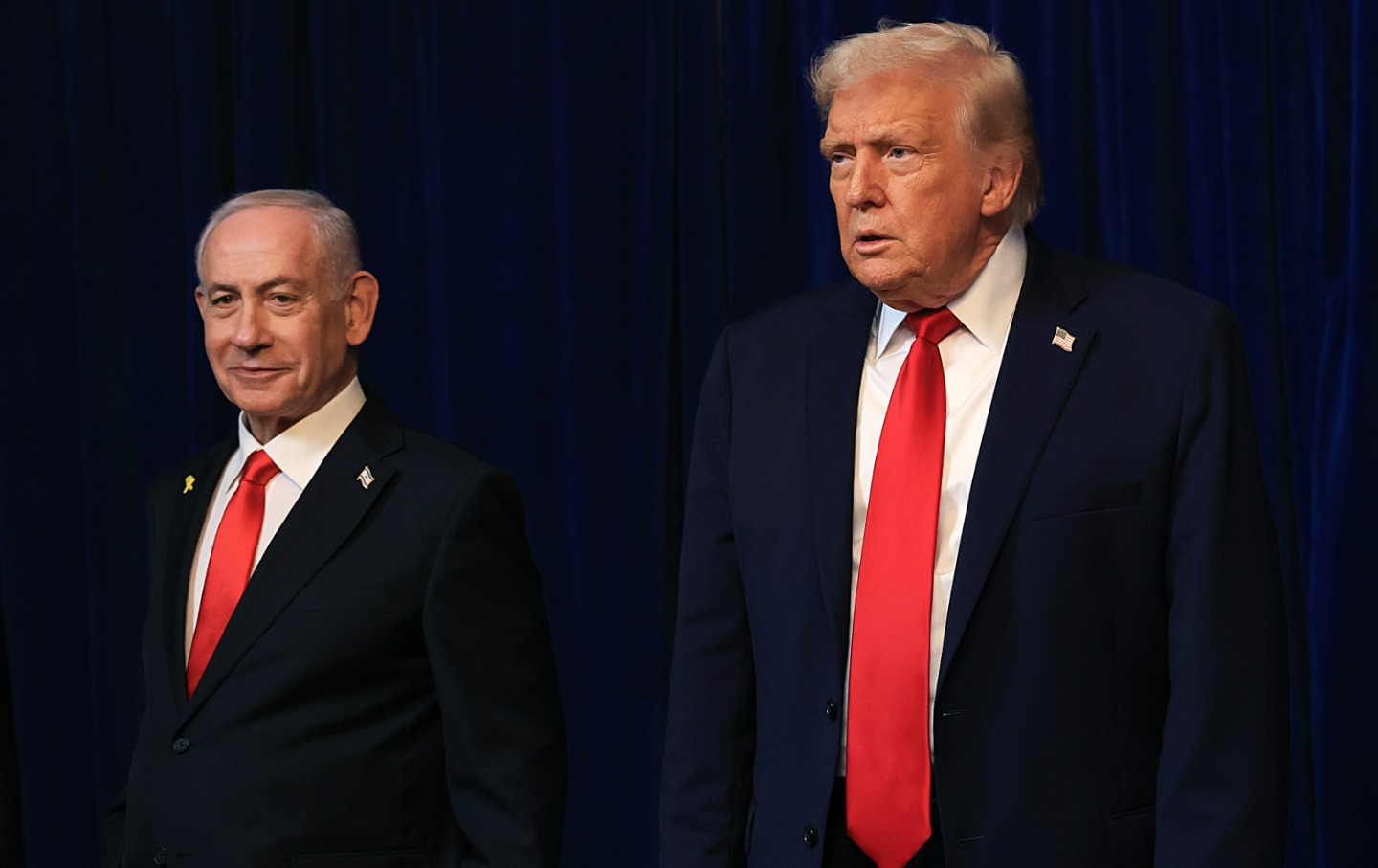
NATO is facing the greatest crisis in its history. What appears to be its strength is increasingly accelerating its internal decline. Like Mephistopheles in Goethe’s Faust, the alliance often achieves the opposite of what it intends. Nowhere is this contradiction more evident than in the lead-up to the NATO summit in The Hague, with its sweeping militarization agenda. President Donald Trump has proposed nearly doubling NATO’s military spending—to three trillion dollars, or 5 percent of GDP. European allies seem willing to follow his lead. For Germany, the implications are stark: nearly half of its federal budget—around 225 billion euros—would be directed toward military expenditures. The result would likely be a self-inflicted economic and social crisis.
If enacted, such plans would fundamentally transform European societies—turning them into nations where social justice and economic stability are subordinated to military buildup. The rationale in Europe is also increasingly at odds with American intelligence assessments. While German intelligence agencies, the Bundeswehr and mainstream media and think tanks warn of a possible Russian attack in 2029, the combined threat assessments from all 17 US intelligence agencies of the last two years suggest otherwise: Russia is neither planning nor preparing a conventional attack on NATO territory. Given NATO’s overwhelming military superiority, any such move by Moscow would be suicidal.
Meanwhile, transatlantic tensions over NATO’s strategic purpose are mounting. The Trump administration has pushed for an even stronger pivot toward China and, as outlined at the Washington summit in 2024, seeks to “Asianize” NATO through a web of bilateral military agreements. Trump appears interested in freezing the war in Ukraine, leaving European states to deplete their resources in a long-term standoff with Russia. While Trump favors negotiation and rejects a full-scale trade war with Moscow, European strategies increasingly aim to economically and militarily exhaust Russia. Recent EU sanctions targeting the Russian merchant fleet—aimed at halting oil exports via the Baltic Sea—risk triggering a dangerous escalation.
NATO was never a neutral alliance; it was founded to project US geopolitical power. In exchange for security, European nations surrendered considerable sovereignty. Today, the alliance is buckling under the weight of its internal contradictions. In the area of trade, the USA and its European allies are on the brink of a trade conflict. Joint rearmament efforts may attempt to cover these cracks but largely benefit the military-industrial complex, which—like an addict—demands ever-greater profits. Ultimately, the costs are borne by taxpayers, with the middle class at risk of being endangered. German arms manufacturers like Rheinmetall, now in shared ownership by US investment funds such as BlackRock, Goldmann Sachs, and Stanley Morgan are poised to profit enormously.
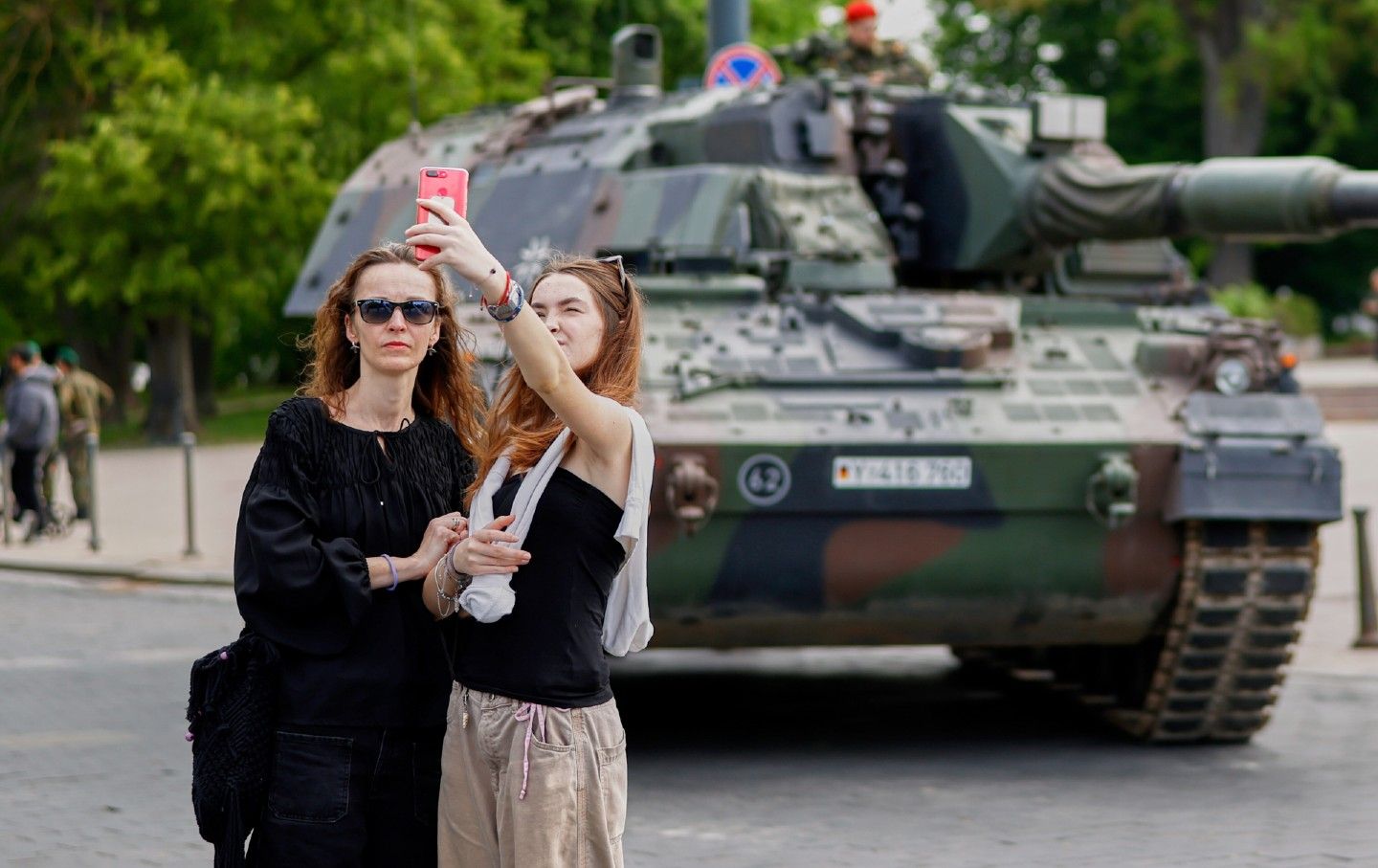
Germany’s increasingly assertive role in this dynamic is often underestimated. The government now positions itself as the military guarantor of Eastern Europe. For the first time since World War II, a German tank brigade has been stationed abroad—in Lithuania, near the Russian border. Given Germany’s historical legacy, this move signals an alarming degree of historical amnesia. The occupation policies of World War I—and the war of annihilation against the Soviet Union accompanied by genocide against Slavic peoples—remain insufficiently confronted. Today, a renewed drive for “eastern expansion” animates German policy, as seen in Chancellor Friedrich Merz’s pledge to make the Bundeswehr “Europe’s strongest army.”
Historians warn that major wars often begin not with sudden acts of aggression but with prolonged rearmament and the erosion of trust. In the face of these developments, it is time to revive the call for détente and disarmament—even if, as during the Cold War, such voices are dismissed as naïve or denounced as traitorous.
Support independent journalism that does not fall in line
Even before February 28, the reasons for Donald Trump’s imploding approval rating were abundantly clear: untrammeled corruption and personal enrichment to the tune of billions of dollars during an affordability crisis, a foreign policy guided only by his own derelict sense of morality, and the deployment of a murderous campaign of occupation, detention, and deportation on American streets.
Now an undeclared, unauthorized, unpopular, and unconstitutional war of aggression against Iran has spread like wildfire through the region and into Europe. A new “forever war”—with an ever-increasing likelihood of American troops on the ground—may very well be upon us.
As we’ve seen over and over, this administration uses lies, misdirection, and attempts to flood the zone to justify its abuses of power at home and abroad. Just as Trump, Marco Rubio, and Pete Hegseth offer erratic and contradictory rationales for the attacks on Iran, the administration is also spreading the lie that the upcoming midterm elections are under threat from noncitizens on voter rolls. When these lies go unchecked, they become the basis for further authoritarian encroachment and war.
In these dark times, independent journalism is uniquely able to uncover the falsehoods that threaten our republic—and civilians around the world—and shine a bright light on the truth.
The Nation’s experienced team of writers, editors, and fact-checkers understands the scale of what we’re up against and the urgency with which we have to act. That’s why we’re publishing critical reporting and analysis of the war on Iran, ICE violence at home, new forms of voter suppression emerging in the courts, and much more.
But this journalism is possible only with your support.
This March, The Nation needs to raise $50,000 to ensure that we have the resources for reporting and analysis that sets the record straight and empowers people of conscience to organize. Will you donate today?