A Day for Gaza
Today, The Nation is turning over its website exclusively to stories from Gaza and its people. This is why.
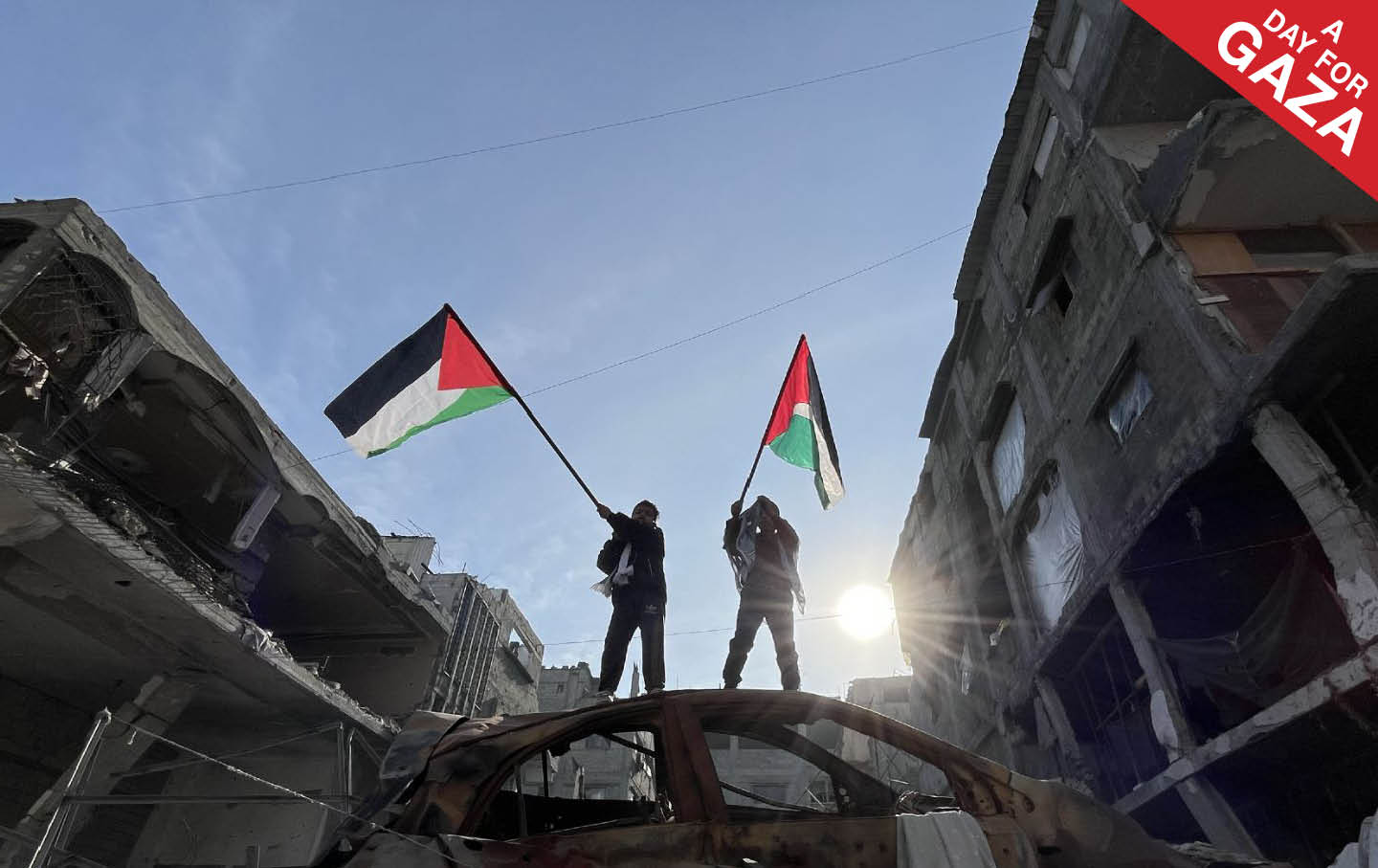
Two children wave Palestinian flags in Gaza City on January 19, 2025.
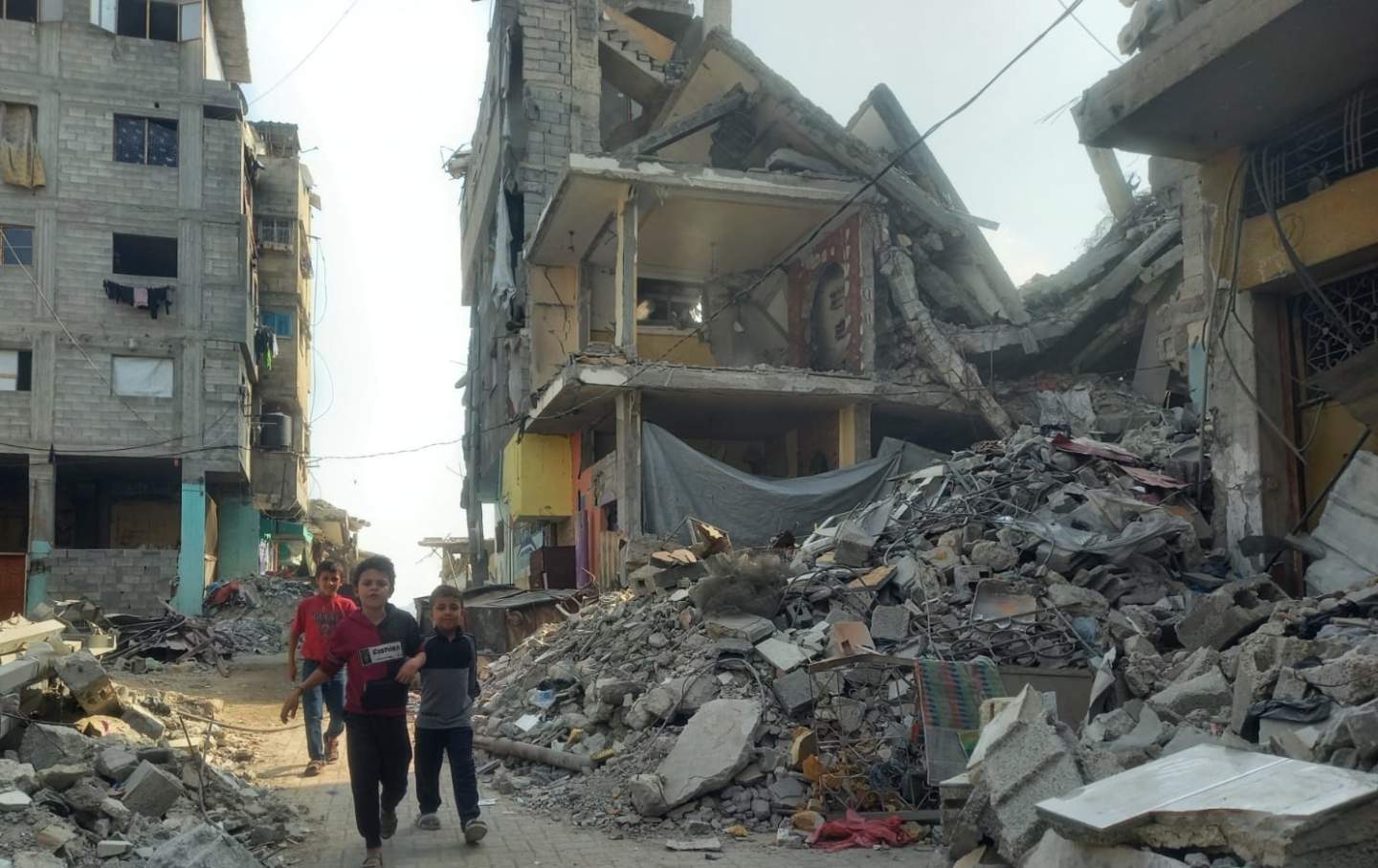
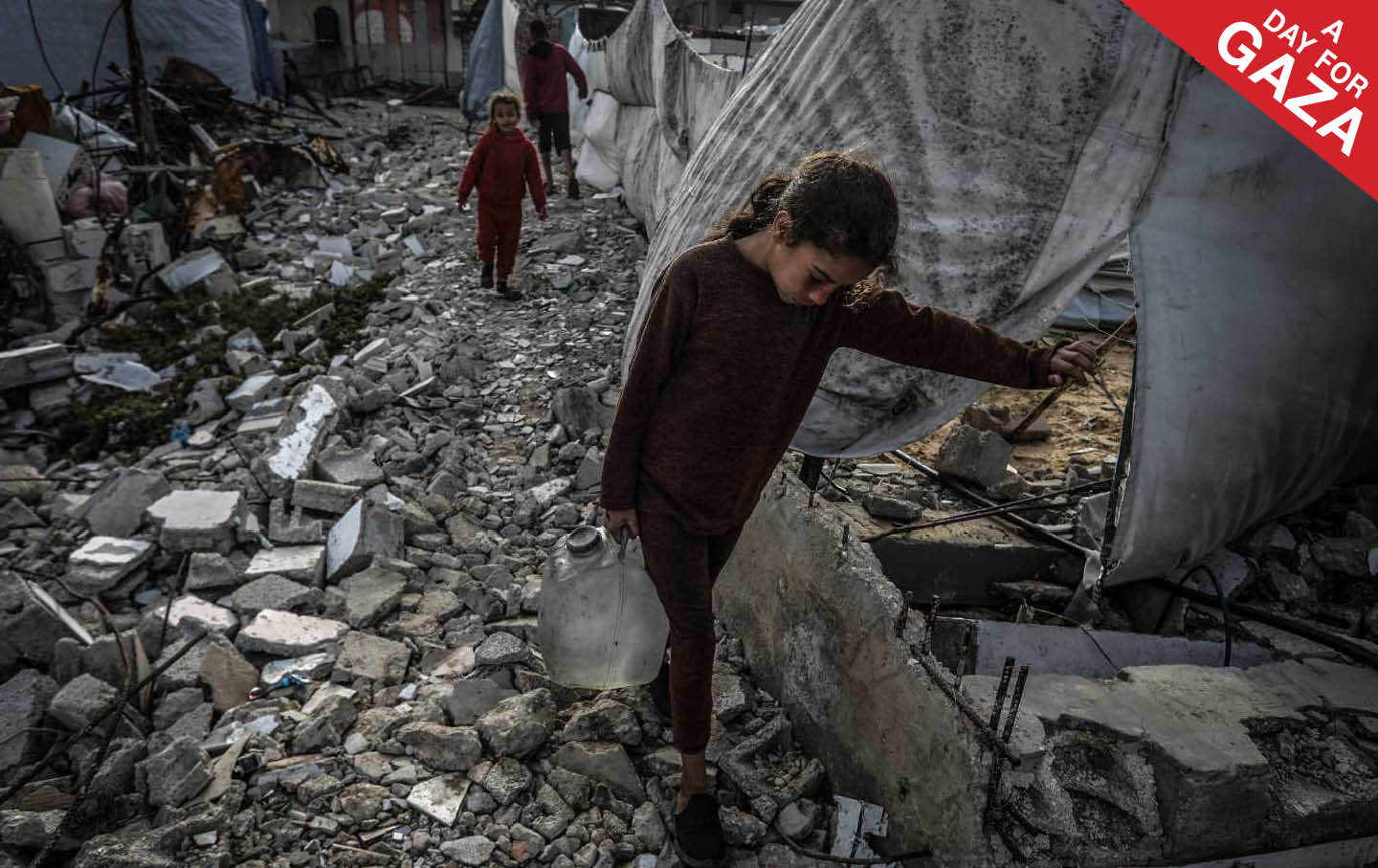
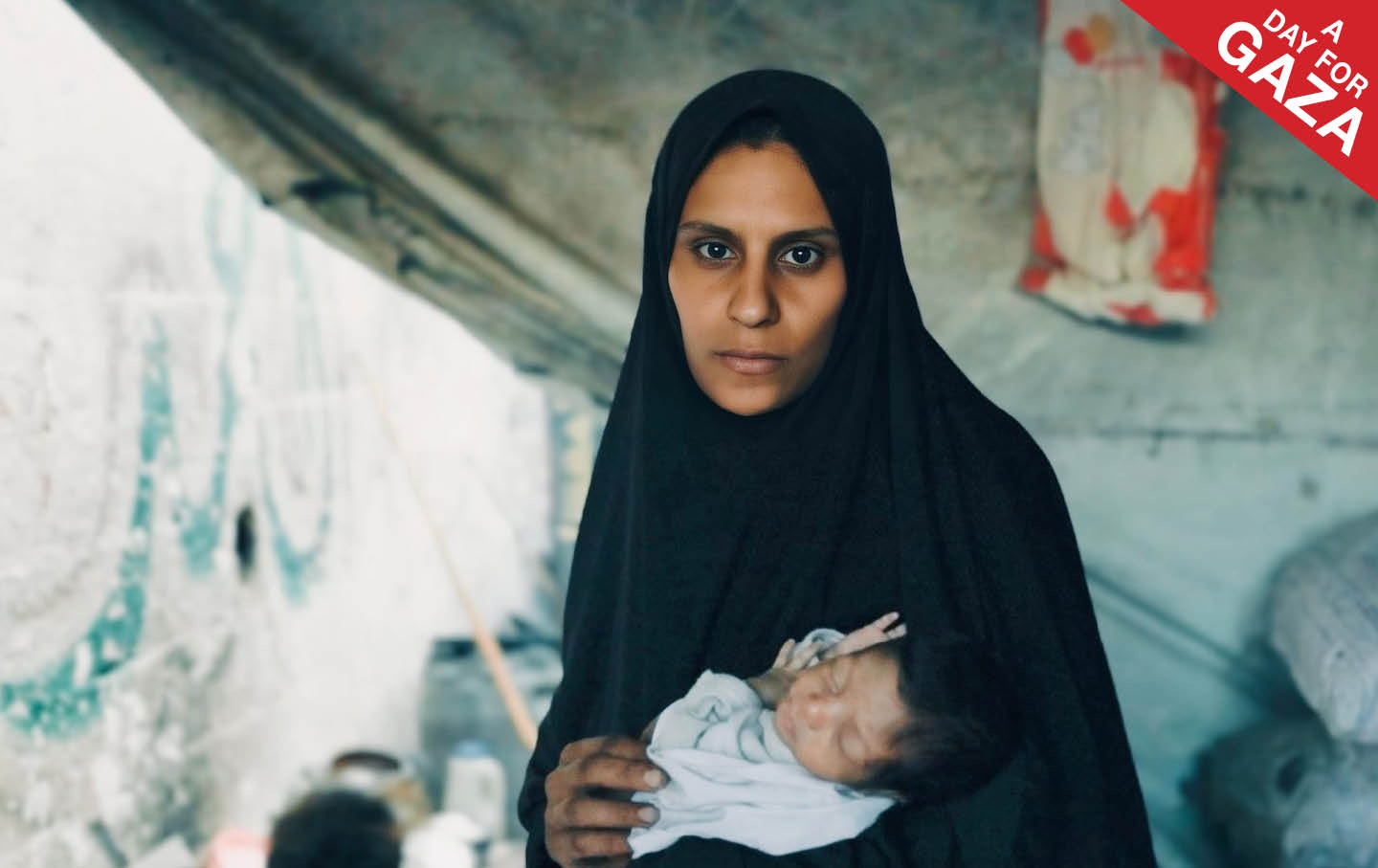
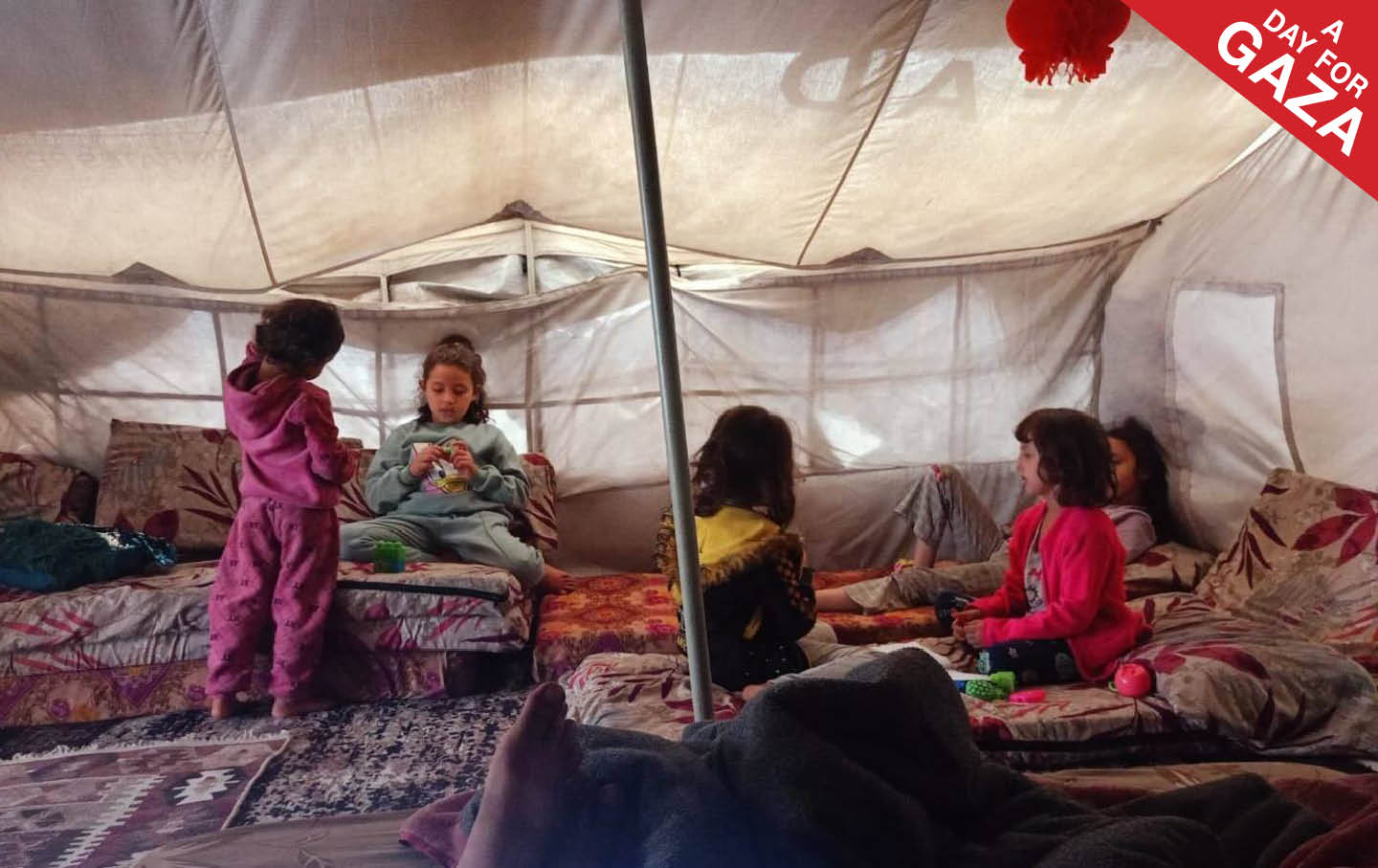
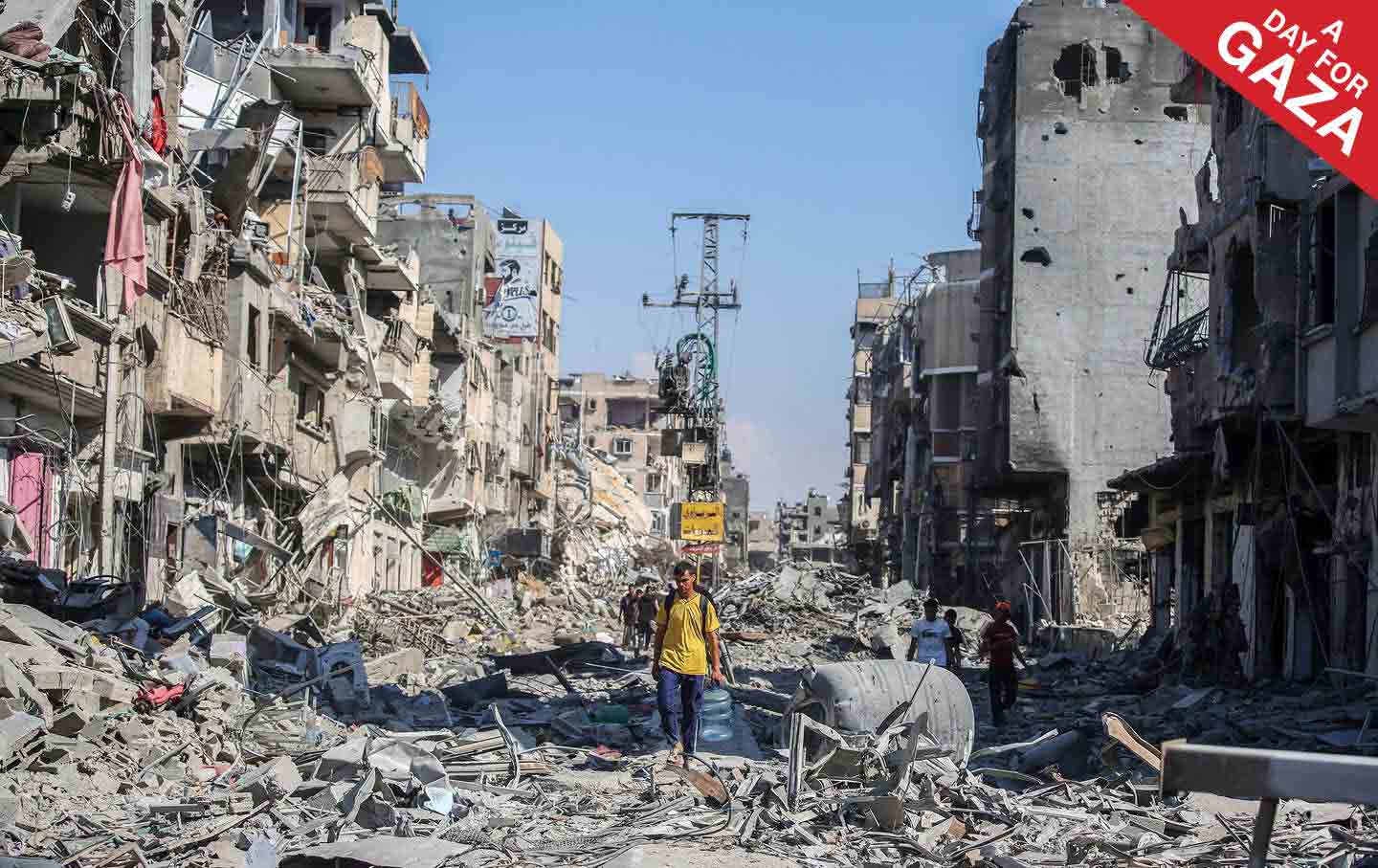
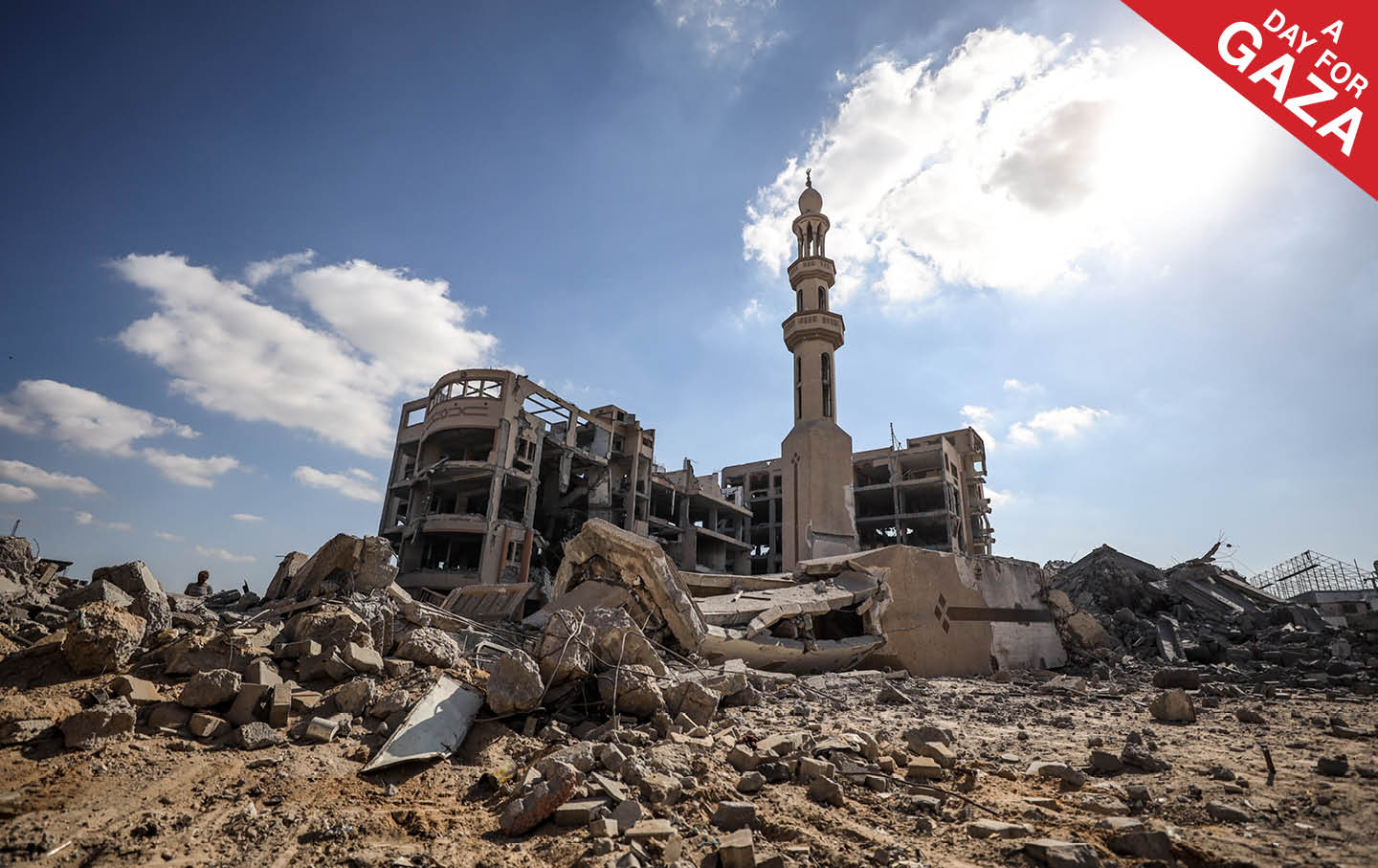
(Ferial Abdu / Anadolu via Getty Images)Gaza has been suspended in a bloody limbo for months. Despite the much-hyped ceasefire between Israel and Hamas—declared on October 10, 2025—peace has not arrived in the Gaza Strip. The bombings have continued, killing at least 509 people; hunger persists; aid trickles in rather than flows; and Israel remains in control of nearly 60 percent of the terrain. Hundreds of thousands of people continue to live in threadbare tents. Meanwhile, US promises of a “technocratic governance” mask a colonial project bestowed on a people with no say.
The ceasefire has bred apathy among us—and disinterest from a press that was already turning away. According to a recent study by the media watch group FAIR, US media coverage of Gaza has fallen to its lowest three-month average since the genocide began two-and-a-half years ago. The message is clear: There’s nothing to see here.
Read All the Stories
-
A Ceasefire in Name Only
-
The Gaza Street That Refuses to Die
-
A Catalog of Gaza’s Loss
-
My Sister’s Death Still Echoes Inside Me
-
What Gaza’s Photographers Have Seen
-
How to Survive in a House Without Walls
-
What Edward Said Teaches Us About Gaza
-
What Happens to the Educators When the Schools Have Been Destroyed?
-
At the Doorstep of Tomorrow
-
“We Have Covered Events No Human Can Bear”
The Nation disagrees. We believe the story of Gaza remains as essential as it was on October 9, 2025, and that those who live in its ruins are the best ones to tell it. So today, February 3, we are turning our website over to Gaza and its people in an initiative we are calling “A Day for Gaza.” There will be no work shared that is not about Gaza, and no pieces published that are not written by people who are in or from Gaza.
The writers who have shared stories with us have done so in conditions that veer toward the impossible. They have written through hunger and grief, while huddling in makeshift shelters, and while listening to the thud of still-falling bombs—and they have done so, as Engy Abdelal writes, because they want “to tell the world that [they] have a future just as… [they] have had a past.” What they have created, in the process, is not only a record of Israel’s ongoing violence but also a testament to what Gaza was—and might yet be.
Nation contributing writer Mohammed R. Mhawish opens the series with a piece exposing the hollowness of the ceasefire, asking, “What do you call a ceasefire agreement under which people keep dying?” It’s a question that echoes across many of the articles, including Ali Skaik’s “The Street That Refuses to Die,” which transports readers to the Colorful Block, one of the author’s favorite places in Gaza. There, Skaik introduces us to family members, old acquaintances, and a 33-year-old street philosopher who observes, “The suffering got worse after the ceasefire. The war of rockets ended, and the cold war began.”
Deema Hattab also ventures out in search of what is, and what was, in “A Catalog of Gaza’s Loss,” her loving reconstruction of some of the intellectual and cultural sites that have been destroyed. And in “How to Survive in a House Without Walls,” Rasha Abou Jalal, a PhD student and writer, explains what it’s like to try to rebuild a home out of rubble and determination. In “My Sister’s Death Still Echoes Inside Me,” Asmaa Dwaima grieves the unfathomable loss of her sister, who was “present in everything, leaving traces of herself everywhere.”
The rest of the pieces (you can find the full collection here) pick up these themes and expand on them. Written by professional journalists as well as academics, poets, parents, and even a dentist, they represent the breadth of literary and political life that has persisted despite the ongoing war in Gaza. They include literary criticism, dreams, and personal testimony.
In sharing “A Day for Gaza,” we hope to breach the silence that has descended around Gaza, and to do so by offering a microphone to some of the 2 million people whose stories demand to be told. We also want to extend an invitation—and a challenge—to our colleagues across the media industry to recommit to telling the story of Gaza. We owe its people—and the hundreds of our fellow journalists who have given their lives to bring us the truth from Gaza—nothing less.
Collectively, the pieces from “A Day for Gaza” embody an enduring affirmation of Gaza’s refusal, in the face of the world’s neglect, to be erased. We are honored to turn The Nation over to these writers, photographers, and thinkers, to provide a place for them to tell their stories, and we urge other media outlets to do the same.
Your support makes stories like this possible
From Minneapolis to Venezuela, from Gaza to Washington, DC, this is a time of staggering chaos, cruelty, and violence.
Unlike other publications that parrot the views of authoritarians, billionaires, and corporations, The Nation publishes stories that hold the powerful to account and center the communities too often denied a voice in the national media—stories like the one you’ve just read.
Each day, our journalism cuts through lies and distortions, contextualizes the developments reshaping politics around the globe, and advances progressive ideas that oxygenate our movements and instigate change in the halls of power.
This independent journalism is only possible with the support of our readers. If you want to see more urgent coverage like this, please donate to The Nation today.