
The Creator of “Adolescence” Backs a Social Media Ban for Kids—but It’s the Wrong Move
Although the dangers young people face online are all too clear, the solution is pragmatism, not prohibition.

The latest hit Netflix show has surpassed 100 million views and cracked the top five of the platform’s all-time biggest English-language series—without CGI monsters, ornate gowns or Jenna Ortega. Instead, Adolescence is a four-episode limited series about a 13-year-old British boy accused of stabbing his female classmate to death. And as the story unfolds, the pernicious influence of cyberbullying and social media radicalization on the main character comes into focus.
The show has sparked conversations about the much-discussed male loneliness epidemic and the pervasive influence of hypermasculine online personalities. It has set off public debate from India to Australia to the United States about how we raise boys in an era when social media increasingly serves as an endless trough of misogynist messaging. In the United Kingdom, where the series became the first streaming show to top the country’s TV ratings, it has stirred intense conversations on news panels and in Parliament. Even the prime minister jumped into the fray after watching the show with his teenage children.
But while Adolescence has become a lightning rod for these debates, the show itself takes a nuanced approach to topical themes of male isolation, vulnerability, and violence. Adolescence never lectures its audience, and it is not prescriptive; instead, it leaves viewers with more questions than answers. And the popularity of the show could help foster meaningful conversations about a healthier approach to media consumption and participation for all.
Adolescence’s protagonist, Jamie, is far from alone in his loneliness. In the last few years, writing about the post-Covid escalation in isolation has become something of a cottage industry. From Jonathan Haidt’s The Anxious Generation to Jean Twenge’s Generations, youthful despair is the issue that has launched a thousand podcast appearances. Despite this abundance of coverage, the problem persists that young people remain lonely: In the UK, 16-to-29-year-olds are the loneliest age group, and in the US, 40 percent of teens report feeling chronically hopeless. Youth suicide rates have increased by almost two-thirds since 2007.
More than half of US teens have come to spend almost five hours on social media every day, on platforms that can not only exacerbate loneliness but also encourage antisocial behavior. The two most popular platforms among 13-to-17-year-olds are YouTube and TikTok, both of which use algorithms that are as powerful as they are dangerous. YouTube, for example, recommends right-leaning videos even to viewers who haven’t interacted with that type of content. The Department of Homeland Security has also reported that TikTok promotes extremist discourse, including “tactical guidance” from the January 6 insurrectionists.
The results have been tragic. Last July, a 26-year-old man in England murdered his ex-girlfriend Louise Hunt, along with her sister Hannah, and her mother, Carol. Prosecutors later revealed that he had binge-watched videos of Andrew Tate, a kickboxer facing rape allegations in the UK and a criminal investigation in Romania over alleged human trafficking. Crimes like this one bring Adolescence disturbingly close to the threshold of documentary.
But what is too easily missed is that it’s not only young men being manipulated and radicalized online. More than a decade ago, a 12-year-old girl stabbed her friend in tribute to a fictional online character called Slender Man. While girls are far less likely to commit acts of violence against others, they are more likely to adopt self-harming behaviors such as self-injury, eating disorders, and suicide attempts, all of which are inflamed by YouTube algorithms.
Now, Adolescence’s creator is offering a well-intentioned solution: banning access to social media for teenagers. Australia has already passed such an embargo for anyone under 16, and though it won’t take effect until later this year, it still exemplifies the idea’s unfeasibility. The law will enforce restrictions through age-verification technology, which the platforms will have to implement themselves, a bit like asking Al Capone to enforce temperance.
Even if they do, patronizing young people by telling them they can’t be trusted with a technology they’ve been using their whole lives is unlikely to work. Those who want to keep using social media will find a way to do so. VPNs can easily circumvent regional barriers, as Russians discovered when Vladimir Putin banned Facebook and Instagram in 2022. And websites like YouTube don’t require an account to view videos, granting them an almost un-closeable loophole.
That’s why this crisis seems better addressed through pragmatism than prohibitionism. After all, teenagers themselves recognize the harm that social media can pose—perhaps better than anyone—and 94 percent of them say they want their schools to offer instruction in media literacy. The British prime minister, Keir Starmer, intends to kick-start that education by screening Adolescence in secondary schools nationwide. But in the US, our official head of state owns a multibillion-dollar social media company—as does our unofficial head of state—so a similar move seems unlikely.
Then again, if there is going to be a cultural shift toward mitigating the risks of social media, it will probably not come from senators hectoring parents and their children about screen time. Instead, it will take more delicate, patient, thoughtful conversations like the kind organically taking place in response to Adolescence. And in the classroom, there may not be a one-size-fits-all approach, but Media Literacy Now’s database of more than 130 lesson plans—on everything from digital citizenship to detoxing your feed—could be a good start. (And to be clear: Adults would benefit just as much, if not more, from brushing up on these topics.)
Adolescence has resonated so deeply with so many by presenting a complex, human story that defies simple answers. In that spirit, it seems unlikely that anything would be solved by trying to get young people to quit algorithms cold turkey. But perhaps with enough empathy, respect, and humility, we could all help each other scroll responsibly.
Support independent journalism that does not fall in line
Even before February 28, the reasons for Donald Trump’s imploding approval rating were abundantly clear: untrammeled corruption and personal enrichment to the tune of billions of dollars during an affordability crisis, a foreign policy guided only by his own derelict sense of morality, and the deployment of a murderous campaign of occupation, detention, and deportation on American streets.
Now an undeclared, unauthorized, unpopular, and unconstitutional war of aggression against Iran has spread like wildfire through the region and into Europe. A new “forever war”—with an ever-increasing likelihood of American troops on the ground—may very well be upon us.
As we’ve seen over and over, this administration uses lies, misdirection, and attempts to flood the zone to justify its abuses of power at home and abroad. Just as Trump, Marco Rubio, and Pete Hegseth offer erratic and contradictory rationales for the attacks on Iran, the administration is also spreading the lie that the upcoming midterm elections are under threat from noncitizens on voter rolls. When these lies go unchecked, they become the basis for further authoritarian encroachment and war.
In these dark times, independent journalism is uniquely able to uncover the falsehoods that threaten our republic—and civilians around the world—and shine a bright light on the truth.
The Nation’s experienced team of writers, editors, and fact-checkers understands the scale of what we’re up against and the urgency with which we have to act. That’s why we’re publishing critical reporting and analysis of the war on Iran, ICE violence at home, new forms of voter suppression emerging in the courts, and much more.
But this journalism is possible only with your support.
This March, The Nation needs to raise $50,000 to ensure that we have the resources for reporting and analysis that sets the record straight and empowers people of conscience to organize. Will you donate today?
More from The Nation

The Real Reason Americans Love Guns The Real Reason Americans Love Guns
With a weak social safety net, a gun offers a false sense of personal power and security.

The Endless Hypocrisy of Bari Weiss The Endless Hypocrisy of Bari Weiss
She claims to be a free speech champion. But as her actions at CBS News keep showing, she seems to think free speech should run only in a rightward direction.
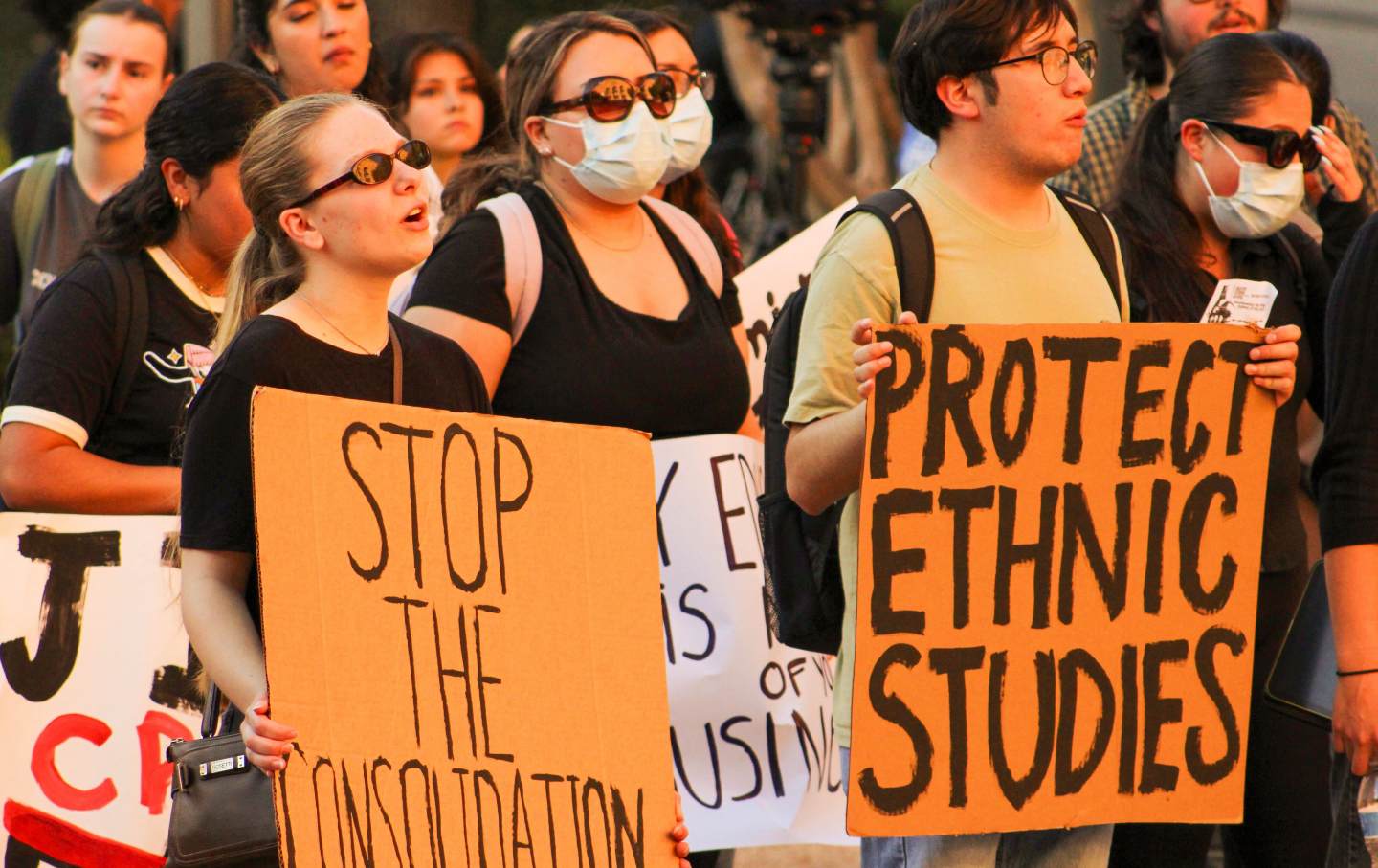
What Will Be Left After the University of Texas Destroys Itself? What Will Be Left After the University of Texas Destroys Itself?
UT-Austin has collapsed its race, ethnic, and gender studies into a single program while a new policy asks faculty to avoid “controversial” topics. But the attacks won’t end there...
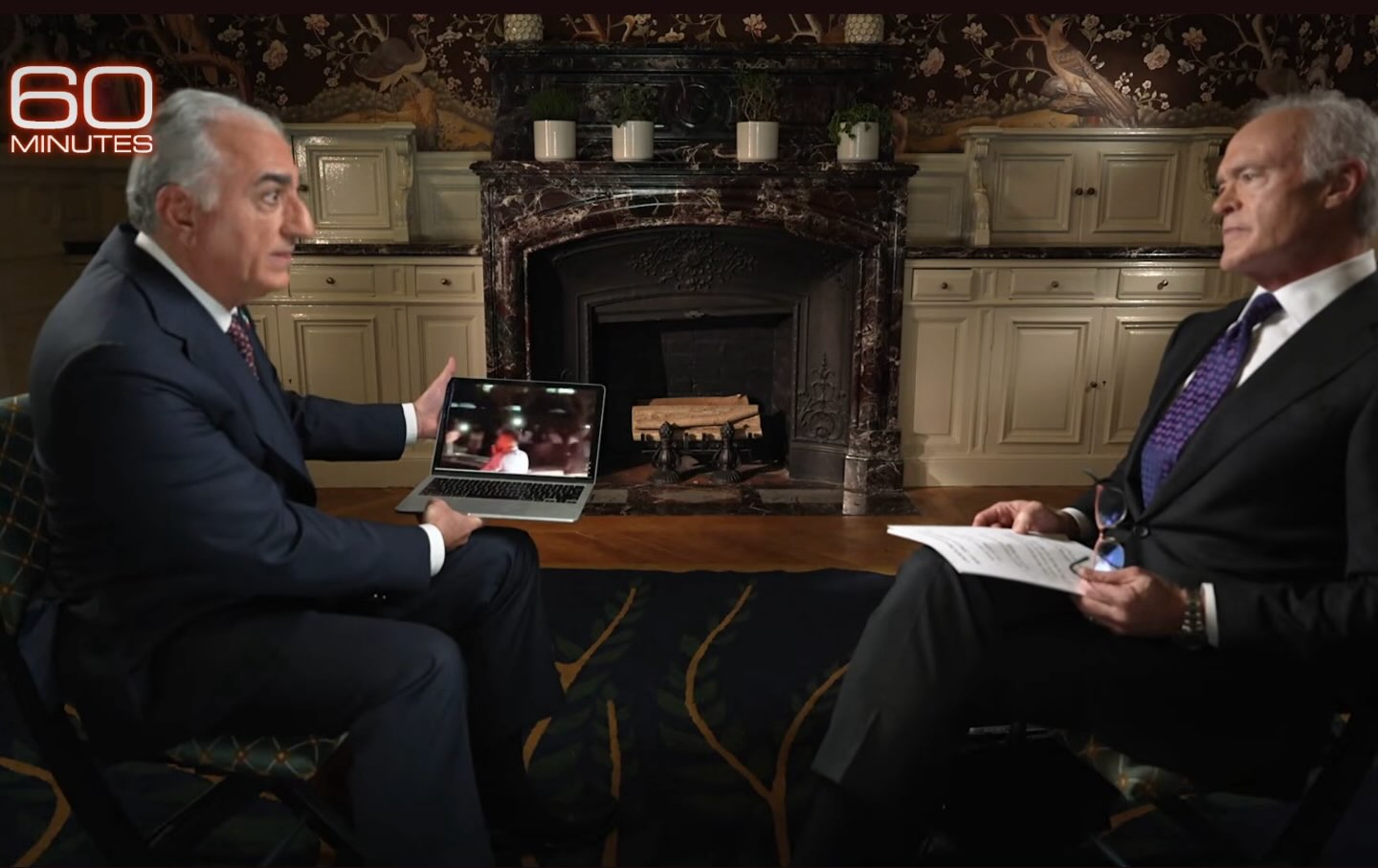
The Corporate Media Is Head Over Heels for the Iran War The Corporate Media Is Head Over Heels for the Iran War
Donald Trump’s attack may be surreal, unjustified, and illegal. But that’s not stopping the press from turning the propaganda dial way up.

The Disturbing History of ICE’s “Death Cards” The Disturbing History of ICE’s “Death Cards”
The Vietnam-era practice is yet another example of ICE agents thrilling to the brutality they have been encouraged to cultivate.

The Red State–Blue State Healthcare Divide Is Dangerous for Everyone The Red State–Blue State Healthcare Divide Is Dangerous for Everyone
Whether or not you have access to independent, scientifically sound public health guidance may depend on how your state voted for governor.

