Kaepernick and the Movement He Inspired
I once thought the protests of athletes after George Floyd’s murder would launch a new era of sports activism. Ten years after Kaepernick first kneeled, I revisit what I wrote.
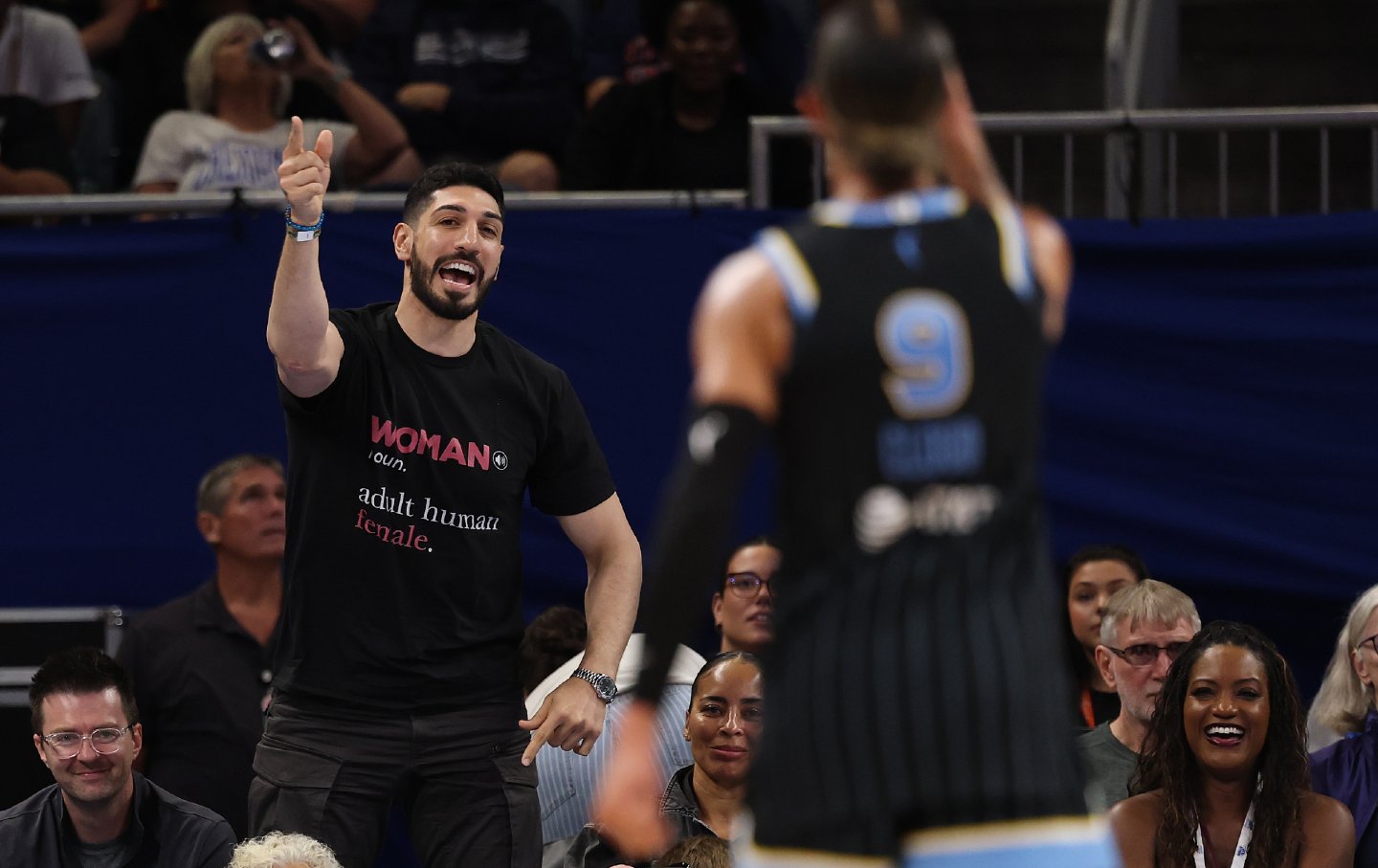
Next week, I will publish a piece on the 10 years since Colin Kaepernick first took a knee during the national anthem. But before that drops I wanted to share an adapted introduction to my 2021 book, The Kaepernick Effect: Taking a Knee, Changing the World. I still stand by most of my analysis, but I was wrong to think that the 2020 protests of athletes following the police murder of George Floyd would launch a new era of activism in sports. For both athletes and the broader resistance movements, the protests that summer were not a jumping-off point—they were a capstone. My next piece is going to examine why so much promise came to an end—but also why it could quickly start again. Natasha Cloud’s facing down that anti-trans jackass and former NBA player Enes Kanter is just one recent exhibit of a person of uncommon courage proclaiming dissent on the field of play in the face of a whirlwind of prejudice. Please read this before you read part two.
—Dave Zirin
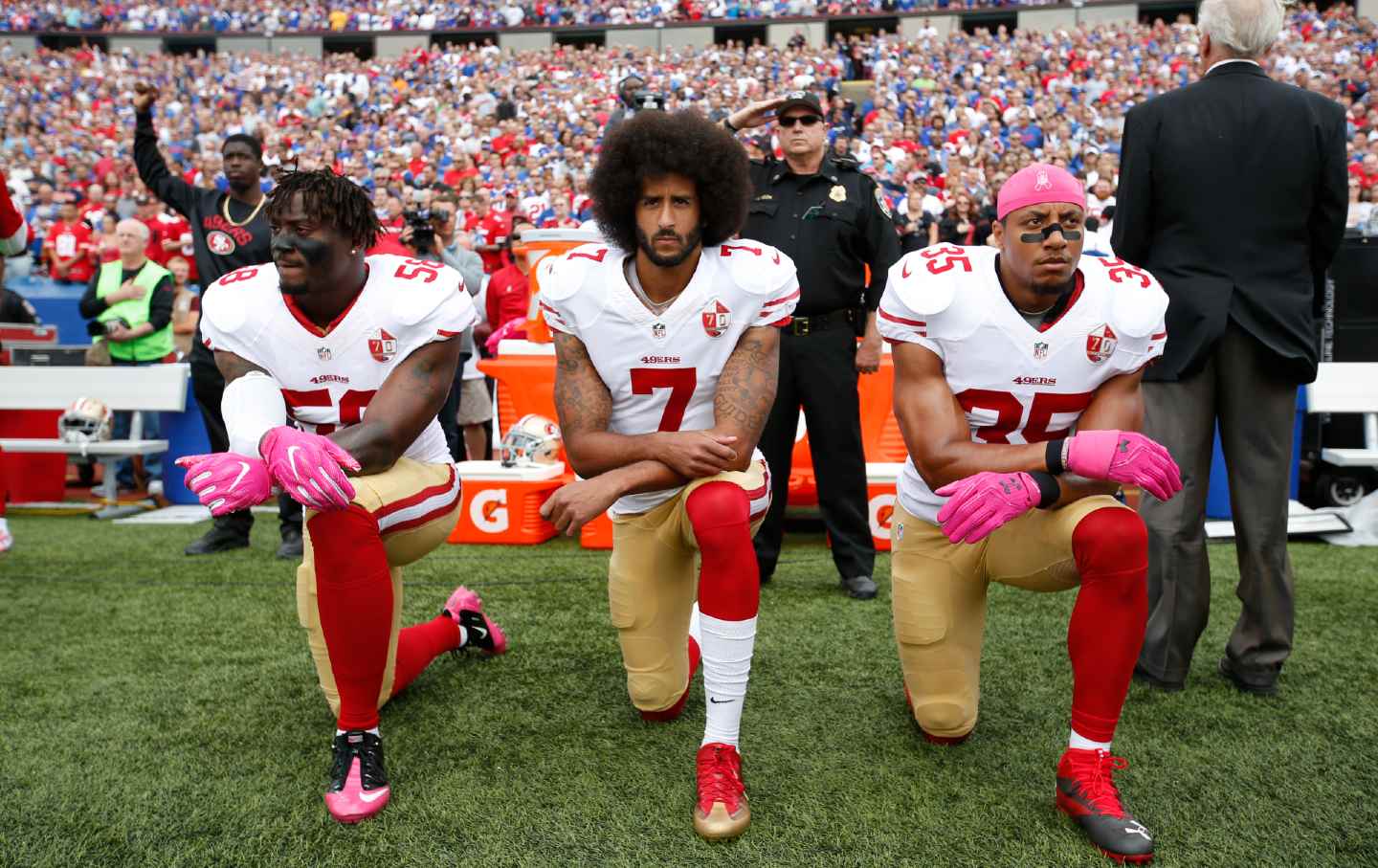
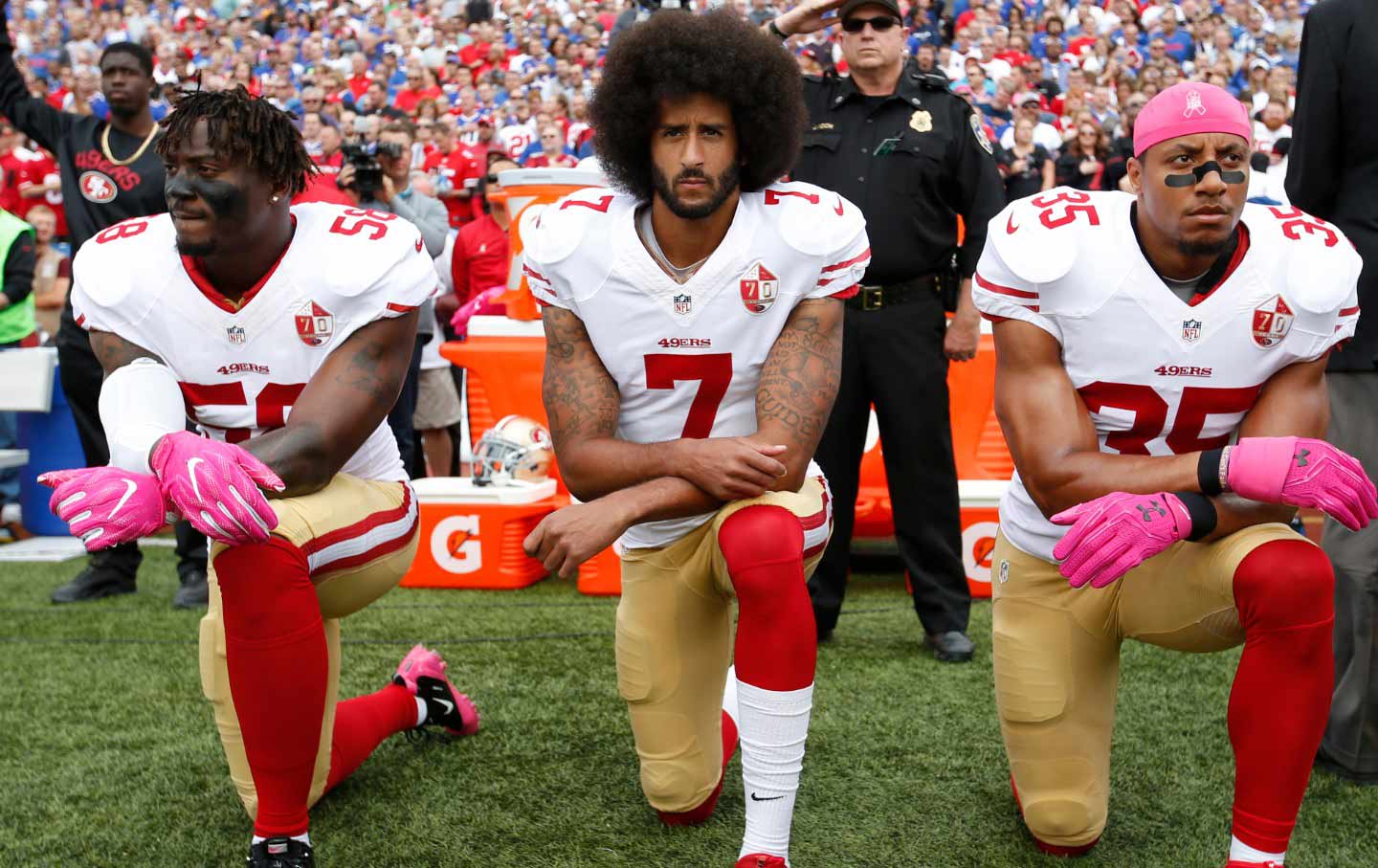
When Colin Kaepernick’s knee hit the ground during the national anthem in August 2016, a debate was launched about police violence, patriotism, racism, and the history of the anthem itself. Through his actions, Kaepernick had also forged a link with both the Black Lives Matter movement and an often-buried history of radical athletes: people like Muhammad Ali, Tommie Smith and John Carlos, and Billie Jean King.
Kaepernick’s actions also provoked something deep, ugly, and primordial in the (white) American consciousness. They prompted a violent and highly racialized rage among a self-branded “alt-right” of fascists being marshaled together to support the 2016 candidacy of Donald Trump. The unrepentantly divisive and proudly bigoted Trump said on the campaign trail that Kaepernick “maybe should find another country to live in.” This comment, with its “Go back to Africa” overtones, provoked a deluge of death threats leveled at Kaepernick in city after city during the 2016 season. Even with all that, Kaepernick was moved into the starting lineup and with the world breathing down his neck had a remarkable year, throwing for 16 touchdowns and just four interceptions, while leading the NFL in yards per carry. Then came Kaepernick’s exile. A league that accepts players—and owners—who have abused women, driven under the influence of alcohol, and even killed people could not stand the thought of having an avowed anti-racist among “their” players, even one who engaged in community service to the extent that Kaepernick did. While taking a knee, week in, week out, Kaepernick gave away more than $1 million to the kinds of grassroots community organizations that have trouble keeping the lights on.
NFL ownership, politicians of both stripes, and their media water-carriers were afraid of Kaepernick’s message. They were afraid because his words were politically different from those of other athletes who had raised their voices after the police killings in the summer of 2016. His words were different because, as welcome as the outspokenness of other athletes was, they were calling for peace, whereas Kaepernick was calling for justice. Through his peaceful protest, he was proclaiming that as long as there is a gap between the values the flag purports to represent and the real world, then the fight will continue.
In this regard, Kaepernick stood in the tradition of Muhammad Ali. The great Ali did not try to “build a bridge” between the pro–Vietnam War establishment and anti-war activists. He took a side. He took a side in order to win a political fight against an unjust war.
And yet for so many frothing members of the sports media, the same press that had praised Ali to the heavens upon his death just a few months earlier, Kaepernick was an enemy. The irony of praising Ali while bashing Kaepernick was lost upon them. Tragically, many in my profession lived up to Hunter S. Thompson’s description of sports writers as “chimps masturbating in a zoo cage.”
But it was not just right-wingers, frothing sports columnists, and a racist president putting Kaepernick on blast. Liberals, people who ostensibly should have been supporting Kaepernick, also critiqued his actions. Their most common response to the anthem protest against police violence was, “I support his goal, but not his methods.” This was “the line,” from NFL commissioner Roger Goodell to Hall of Fame receiver Jerry Rice to quarterback Drew Brees. It was also the widely trumpeted view of then–New York Times columnist David Brooks and a host of liberal Beltway pundits. Brooks, without irony, even invoked Dr. Martin Luther King Jr. to justify his position for why Kaepernick should stop protesting.
As for the NFL, Roger Goodell’s league exiled Kaepernick after the 2016 season. But at least Goodell supported Kaepernick’s goals. NFL owners decided that Kaepernick had more value as a ghost story than as a quarterback. He was more important to franchise owners as an object lesson to haunt a new generation of players, a warning to not speak out.
Despite their efforts, he has become a spirit, inspiring in 2020 a new generation of athletes to take the field of play and use it as a platform for protest. We have seen that dramatically in the aftermath of the police murder of George Floyd, as an unprecedented number of “jocks for justice” have stepped forward, taken a knee, demonstrated in the streets, and even gone on strike to demand justice.
In 2020, not only did athletes offer their solidarity, their words, and their money to the protests. They put on their marching shoes. This was such a change from 1968, when athletes were often sent to demonstrations after King was assassinated to calm things down, even in their sports uniforms. On college campuses in the 1960s, athletes were at times used to surround buildings that were occupied by student protesters in order to keep out food and supplies. Today, football players at the Universities of Mississippi and Alabama are marching for racial justice, not attacking the protesters.
But as we see athletes making themselves heard, we must also remember the legion of young women and men—athletes from all sports, and in incredibly diverse locales across the country—taking a knee, provoking conversations, and enduring their own backlash, without Kaepernick’s financial insulation from his years as an NFL quarterback. The actions of young athletes from 2016–19 were a preview of the 2020 protests that rocked the United States. They hit cities large and small and their struggle spotlighted sports—normally a conservative force in our society—as a center for fighting racial injustice. They built a movement that put racist police brutality on trial in their communities, placing the very nature of both the anthem and patriotism up for debate.
In my conversations and interviews with more than one hundred athletes who took a knee, certain common threads are clear. They are bound together by a belief in racial justice. They are bound together, in almost every example, by the All-American trauma they experienced after the 2012 killing of 14-year-old Trayvon Martin, their generation’s Emmett Till. They are bound together by the idea that they needed to take Kaepernick’s effort to start a conversation and put it into action. They are bound together by the strength to withstand backlash. They braved death threats. They stood up to bigots. They were in some cases threatened with expulsion from their team. One high school football announcer in Alabama said that they should be lined up against a wall and shot. And yet they were undeterred, provoking a dialogue that this country did not want to have. They laid the foundation not only for the protests, but also for the unprecedented outpouring of athlete activism we saw in the summer of 2020. They created that space through struggle. Their actions could not be more relevant. Just because their warning fell on deaf ears does not mean it is too late to hear what they were trying to say.